
Thank you to all the subscribers to our Early Access program…we thank you for your continued support.
We are excited to offer this new service to keep you informed and up-to-date on the latest Dinar and currency news.
“Tidbits From TNT” Friday Morning 7-11-2025
TNT:
Tishwash: American magazine: Iraq quietly re-enters international trade
A report by the American economic analysis magazine Procurement Magazine examined the significant economic and geopolitical benefits and returns of the Iraqi Development Road initiative, extending from the Grand Faw Port to the Turkish border.
The report noted that it will be a viable alternative to other trade channels, competing with them in terms of shorter distances and lower costs, transforming the country into a regional logistics hub while creating a multi-source economy beyond oil alone.
TNT:
Tishwash: American magazine: Iraq quietly re-enters international trade
A report by the American economic analysis magazine Procurement Magazine examined the significant economic and geopolitical benefits and returns of the Iraqi Development Road initiative, extending from the Grand Faw Port to the Turkish border.
The report noted that it will be a viable alternative to other trade channels, competing with them in terms of shorter distances and lower costs, transforming the country into a regional logistics hub while creating a multi-source economy beyond oil alone.
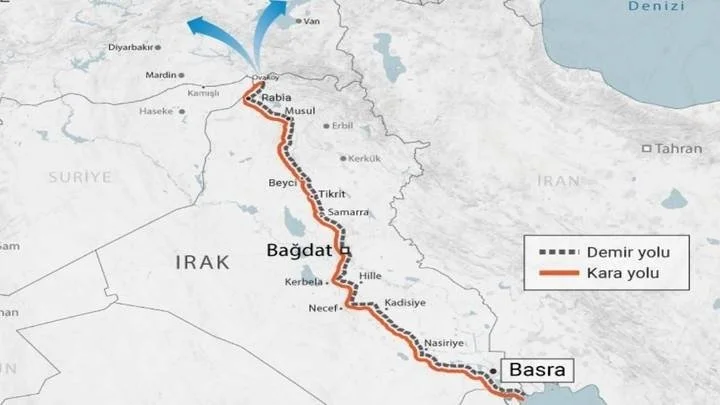
The report notes that Iraq's Development Road project represents a transformative $17 billion infrastructure initiative aimed at connecting the Gulf to Europe. With global shipping facing challenges stemming from regional instability and bottlenecks such as the Suez Canal, Iraq is quietly redefining its role in international trade.
This logistics corridor, stretching from the Grand Faw Port in southern Iraq to the Turkish border, represents a strategic alternative that will reshape supply and transportation chains between Asia and Europe.
This major project has been described as "one of the most important infrastructure projects in Iraq since the 1920s." This faster route delivers direct benefits to procurement by enabling faster supply routes, reducing storage costs, and improving responsiveness to market changes.
The global importance of Iraq's development route has been highlighted amid the ongoing Red Sea crisis, exacerbated by conflicts in the Middle East, where shipping delays have become commonplace. In this context, the Iraqi land corridor offers a practical alternative. In recent weeks, truck drivers from Poland and Germany have completed journeys from Europe to the Gulf via Iraq in just ten days, less than half the time required by sea through the Suez Canal.
The journey from Turkey to Kuwait now takes just seven days, and digital border crossings have reduced waiting times by 92%. The TIR (Terrestrial International Transports International) system, which ensures the safe and efficient movement of goods across borders, is already operational, enhancing the flow of cross-border procurement and supply chains. Hamad Al-Hakim, a transport infrastructure expert at the University of Baghdad, told the Middle East Observer earlier this year:
“The development road is expected to become a vital trade corridor, not only for Iraq but for the entire region. By connecting the Gulf to Europe via Turkey, it will serve as a new Silk Road, revitalizing ancient trade routes and promoting economic integration.” This corridor provides a practical alternative to the Suez Canal, meaning greater route diversification and a reduced risk of disruption, thus ensuring more reliable supply chains.
At the heart of the Iraq Development Road project is the Grand Faw Port, currently under construction in the city of Al-Faw. This deep-water port features the world's longest breakwater, at 14.5 kilometers long, and is expected to handle 7.5 million containers annually, capable of receiving the world's largest container ships. A 1,200-kilometer road and railway extend from the port to Turkey, and the project is expected to be fully operational by 2028. In addition to the transportation infrastructure, the project plans to develop at least ten new cities along the railway route, along with several industrial zones and logistics centers. The development of these areas will provide new opportunities for local supply.
The development road is not just a logistics project; it represents a geopolitical transformation, charting Iraq's transformation from a war-torn country to a pivotal regional link. The project is supported by Turkey, Qatar, and the United Arab Emirates, who recognize its potential to boost regional trade and reduce reliance on vulnerable maritime routes.
Kurdistan Region President Nechirvan Barzani said of the project: "The Development Road Project represents a crucial step towards building a more stable and prosperous Iraq, based on a diversified economy and enhancing regional cooperation with neighboring countries."
Türkiye's participation is pivotal, as it represents the northern endpoint of the corridor, which will connect to Europe via the cities of Mersin and Istanbul.
"The project provides a catalyst for economic prosperity that can benefit the entire region," said Ranj Alaaldin, a fellow at the Middle East Council on International Affairs. As global trade networks seek to bolster their resilience in the face of geopolitical volatility, Iraq is proving to offer not just a backup plan but potentially a major new artery for trade. This project will redraw the region's economic map, transforming Iraq into an alternative trade artery at the heart of Eurasia. This means transforming the country from an importer of opportunities to an exporter of corridors, creating a diversified economy that moves away from its reliance on oil alone. link
************
Tishwash: Next Monday, the Federal Court will consider two lawsuits related to the payment of salaries to Kurdistan Region employees.
The Federal Supreme Court is scheduled to hold its first session next Monday (July 14, 2025) to consider two lawsuits related to the payment of salaries to employees in the Kurdistan Region.
In the first lawsuit, filed against Federal Finance Minister Taif Sami, the plaintiffs demanded “to ensure that the Federal Ministry of Finance continues to pay salaries in the Kurdistan Region on a monthly basis and on the specified dates, without regard to disputes between the federal government and the regional government due to the interpretation of the federal general budget law or any other reasons.”
According to the text of the lawsuit, the request included issuing a judicial order obligating the Federal Ministry of Finance to pay the salaries of employees, retirees, martyrs’ families, and social welfare beneficiaries in the region “immediately,” starting this month and until the resolution of this lawsuit.
In the same context, the court is considering another lawsuit, also without pleading, filed against the Prime Minister and the Federal Minister of Finance, each in his official capacity.
In their statement of claim, the plaintiffs demanded “a ruling to keep the salaries of employees in the Kurdistan Region away from political conflicts and actual agreements.” link
***************
Tishwash: Iraq launches project to issue local electronic payment cards
Iraq has launched a project to issue a local electronic payment card, aiming to enhance financial trust between the public and the government. This is part of Baghdad's efforts to strengthen its digital infrastructure and provide secure and reliable electronic payment solutions that support the national economy.
The Central Bank of Iraq confirmed - in an official letter addressed to all banks and electronic payment companies - that this national system for local electronic payment cards will be implemented gradually, and that the card identifiers (BIN) and application identifiers (AID) will be issued exclusively by the Central Bank.
The cards represent an additional local option for use within Iraq exclusively in Iraqi dinars. The bank emphasized that they do not replace or restrict existing international cards such as Visa Card and MasterCard, but rather complement the financial system and provide a national alternative, according to the bank.
Release date
Government economic advisor Alaa Al-Fahd expects the national electronic payment card to be launched before the end of 2025, as part of the Central Bank of Iraq's efforts to implement comprehensive financial and banking reforms.
Al-Fahd told Al Jazeera Net that this national card will achieve several key objectives, most notably improving the quality of financial services and reducing fees. It will be a purely local card, he emphasized, noting that it will not replace existing international cards, such as Visa and MasterCard, but will work in tandem with them to enhance the options available to citizens. link
************
Mot .. Not Funny – K

Mot: . Grandma Always Said

Iraq Economic News and Points To Ponder Thursday Evening 7-10-25
Iraq Affirms Its Keenness To Enhance Cooperation With The United States
Political | 10/07/2025Mawazine News - Baghdad - Deputy Prime Minister and Minister of Foreign Affairs Fuad Hussein affirmed on Thursday the Iraqi government's keenness to enhance cooperation with the United States.
The ministry said in a statement received by Mawazine News that "Deputy Prime Minister and Minister of Foreign Affairs, Fuad Hussein, met with the Chargé d'Affaires at the US Embassy in Iraq, Ambassador Stephen Fagin." The ministry added that "the meeting discussed the latest developments in the political situation in Iraq, especially the relationship between the federal government and the Kurdistan Regional Government, with a focus on financial challenges and related problems."
Iraq Affirms Its Keenness To Enhance Cooperation With The United States
Political | 10/07/2025Mawazine News - Baghdad - Deputy Prime Minister and Minister of Foreign Affairs Fuad Hussein affirmed on Thursday the Iraqi government's keenness to enhance cooperation with the United States.
The ministry said in a statement received by Mawazine News that "Deputy Prime Minister and Minister of Foreign Affairs, Fuad Hussein, met with the Chargé d'Affaires at the US Embassy in Iraq, Ambassador Stephen Fagin." The ministry added that "the meeting discussed the latest developments in the political situation in Iraq, especially the relationship between the federal government and the Kurdistan Regional Government, with a focus on financial challenges and related problems."
He continued, "The two sides touched on the conditions of American companies operating in the Kurdistan Region, and the relations between Baghdad and Erbil regarding the management of oil extracted from fields located within the region."
According to the statement, Fuad Hussein stressed "the importance of reaching realistic solutions that ensure the equitable management of national wealth and achieve the public benefit of Iraq."
During the meeting, the minister affirmed "the Iraqi government's keenness to enhance cooperation with the United States in various fields, and to support political and economic stability in the country, in a way that serves the common national interest." https://www.mawazin.net/Details.aspx?jimare=263701
Rafidain Bank Announces Raising Electronic Tax Settlements To More Than 4 Trillion Dinars During The First Half Of This Year.
Thursday, July 10, 2025 | Economic Number of reads: 141 Baghdad / NINA / Rafidain Bank announced, on Thursday, that electronic collection settlements increased to more than 4 trillion dinars during the first half of the current year 2025.
The bank said in a statement: "It achieved a qualitative leap in the volume of electronic collection settlements transferred to government departments, as the total settlements implemented in the first half of 2025 exceeded 4.03 trillion dinars, compared to about 1.89 trillion dinars in the same period in 2024, reflecting an annual growth of nearly 113%."
It added, "Data from the Electronic Collection Settlements Department showed an expansion in the base of government agencies activating the system from 1,395 agencies by the end of January 2024 to 1,979 agencies by the end of June 2025, which directly contributed to the escalation of the pace of electronic collection."
He pointed out that "May 2025 recorded the highest monthly settlement value at 761 billion dinars, compared to 571 billion dinars in May 2024, confirming the improvement in the system's operational efficiency and the consolidation of government institutions' confidence in the electronic payment services provided by the bank."
The bank explained that "this performance falls within its comprehensive strategy to support the government's digital transformation program and enhance collection efficiency and public revenues, while adhering to the highest standards of transparency and financial governance, in line with official directives aimed at building an integrated and effective financial system." /End https://ninanews.com/Website/News/Details?key=1240032
The Ministry Of Commerce Reveals The Iraqi Government's Measures To Confront US Customs Duties.
Economy | 10/07/2025 Mawazine News - Baghdad - The Ministry of Trade confirmed, on Thursday, that the US decision to impose a 30% customs duty on Iraqi imports to the United States is part of the reciprocal tariff policy pursued by the Trump administration to control the US trade deficit.
Ministry spokesman Mohammed Hanoun said in a statement that "these duties directly impact Iraqi exports to the United States, which amounted to approximately $7.4 billion in 2024, with a US trade surplus of $5.8 billion."
He added that "the ministry, in coordination with the Ministries of Foreign Affairs and Finance, has launched a negotiating team" to discuss with the US negotiating team the aim of postponing implementation, reducing tariff rates, or exempting some vital sectors.
Hanoun continued, "The Iraqi embassy in Washington has been tasked with conducting immediate contacts with its American counterparts to explain the extent of the financial and economic impact.
The opening of markets has also been accelerated to reduce dependence on a single export destination, and the agricultural and industrial sectors will be supported to enhance their competitiveness and secure alternative markets."
Regarding burden-sharing and mitigating the domestic impact, Hanoun indicated that "the ministry has developed plans to provide exemptions or partial support to affected small and medium-sized enterprises.
The measures include temporary financial support for Iraqi exporters whose interests are affected by fees, ensuring the speedy processing of customs transactions and logistical procedures, in addition to strengthening infrastructure and legislation.
The government will work to accelerate the economic reform process by amending tax and fee systems and improving the business environment."
Within the framework of a medium-term strategy, Hanoun confirmed that development projects will be added to the 2025 budget to increase local production and boost exports.
He noted that "the ministry is fully prepared to avoid any negative impacts on supply chains and local product prices. It also affirms the government's commitment to protecting the interests of Iraqi producers and exporters alike, ensuring sustainable economic growth, and diversifying trade partnerships.
The ministry continues to coordinate with all national and international entities to overcome the difficulties resulting from the US decision." https://www.mawazin.net/Details.aspx?jimare=263697
Last June, Iraq Exported 6 Million Barrels Of Oil To The United States.
Economy | 10/07/2025 Mawazine News - Follow-up The US Energy Information Administration announced, on Thursday, that Iraq's oil exports to the United States exceeded six million barrels during last June.
The administration stated in a table reviewed by Mawazine News, that "Iraq exported 6.433 million barrels of crude oil to the US during last June, up from 5.548 million barrels last May."
It added that "Iraq exported an average of 213,000 barrels per day of crude oil to the US during the first week of June, while it exported an average of 183,000 barrels per day in the second week, an average of 212,000 barrels per day in the third week, and an average of 164,000 barrels per day in the fourth week."
The US Energy Information Administration explained that "Iraq ranked sixth in its exports to the US during last month after Canada, which ranked first as the largest oil exporter to the US, followed by Mexico, then Saudi Arabia, Brazil, and Nigeria."
The administration noted that "Iraq ranked second among Arab countries as the largest exporter of oil to the United States, after Saudi Arabia, which came in first with exports of 10 million barrels, and Libya came in third with exports of 4.166 million barrels." https://www.mawazin.net/Details.aspx?jimare=263691
Gold Prices Rise Globally
Economy | 04:17 - 10/07/2025 Mawazine News - Follow-up Gold prices rose today, supported by a weaker dollar and the possibility of a US interest rate cut later in the year, while investors await more details on US trade policy. Spot gold rose 0.4% to $3,327.42 per ounce by 11:08 GMT.
US gold futures rose 0.5% to $3,336.40 per ounce.
In the currency market, the dollar index, which measures the value of the greenback against a basket of currencies, fell 0.2%, making gold less expensive for holders of other currencies. https://www.mawazin.net/Details.aspx?jimare=263696
For current and reliable Iraqi news please visit: https://www.bondladyscorner.com
Stablecoins are the Bridge to the New Financial System
Stablecoins are the Bridge to the New Financial System
Wealthion: 7-10-2025
In a recent and truly eye-opening discussion on Wealthion, Chris Perkins, Managing Partner and President of CoinFund, joined forces with macro thinker and founder of Visserlabs, Jordi Visser, to dissect the profound and imminent impacts of AI and crypto on the global economy and investment landscape.
Their conversation wasn’t just about market trends; it was a blueprint for a coming financial and societal revolution.
Stablecoins are the Bridge to the New Financial System
Wealthion: 7-10-2025
In a recent and truly eye-opening discussion on Wealthion, Chris Perkins, Managing Partner and President of CoinFund, joined forces with macro thinker and founder of Visserlabs, Jordi Visser, to dissect the profound and imminent impacts of AI and crypto on the global economy and investment landscape.
Their conversation wasn’t just about market trends; it was a blueprint for a coming financial and societal revolution.
Jordi Visser laid out a series of audacious predictions, arguing that we are on the cusp of a significant societal and financial shift. His core contention: traditional business cycles are dead, the Fortune 500 as we know it will cease to exist, and Stablecoins are the indispensable bridge to the future.
Visser paints a vivid picture of a world where economic assumptions are fundamentally challenged.
He posits that the familiar rhythm of business cycles, with their predictable booms and busts, is drawing to an end. This isn’t just another downturn; it’s a structural transformation where new paradigms of value creation and destruction will dictate economic flow.
A provocatively bold statement from Visser is his belief that the Fortune 500 will not exist in the 2030s. This isn’t hyperbole, but a sober assessment of how rapidly AI and other disruptive technologies will erode the competitive advantages of established giants.
AI, he argues, will be a merciless force, destroying large, entrenched businesses that fail to adapt. In this new landscape, Visser even suggested a “new party” forming, citing Elon Musk in a broader context, hinting at a political and financial revolution driven by these technological shifts.
Central to Visser’s vision is the role of Stablecoins. He sees them not merely as a niche crypto asset but as a critical linchpin for the future of global finance.
Thanks to pending legislation like the “Genius Act” and the “Clarity Act,” Visser believes investors and financial institutions will increasingly view Stablecoins as the essential bridge between traditional and digital investing.
Crucially, these acts could solidify the U.S. Dollar’s position as the global reserve currency forever, by extending its reach and functionality through a compliant stablecoin infrastructure. Beyond institutional adoption, Stablecoins offer a vital, accessible money alternative for people in countries plagued by volatile local currencies, providing financial stability and a pathway to the digital economy.
The future, as Visser sees it, is a seamless flow from Stablecoin to DeFi to AI, fundamentally impacting developing nations and global foreign exchange (FX) markets, which he identified as “The Next Big Thing.”
The discussion also highlighted a potentially game-changing innovation: Robinhood’s breakthrough act to take private equity public through tokenization.
This “Robin Hood-like move” could revolutionize access to investment opportunities previously reserved for institutional or accredited investors. By tokenizing private equity, companies could bypass traditional, cumbersome IPO processes, democratizing wealth creation and offering a new liquidity paradigm.
This represents “The Next Investing Revolution,” opening up a vast new frontier for investors.
While AI is predicted to decimate many established businesses, the panelists also discussed the future of other cryptocurrencies. Visser sees a huge upside coming for Ethereum.
This potential boom is linked to the emergence of “treasury companies” and institutional adoption, highlighted by ventures like Tom Lee’s new ETH Treasury Company, Bitmine. As more businesses and financial entities explore the benefits of blockchain technology, Ethereum’s ecosystem is poised for significant growth.
However, in this disruptive landscape, Visser believes Bitcoin will ultimately be the “only game in town” when it comes to a truly decentralized, unassailable store of value, particularly as AI’s destructive power reshapes traditional industries.
The discussion on Wealthion with Chris Perkins and Jordi Visser was more than just a market outlook; it was a profound contemplation of a world being rapidly reshaped by technological forces.
From the demise of traditional business cycles and the Fortune 500 to the rise of stablecoins as a global bridge and the tokenization of private equity, the insights offer a compelling, albeit challenging, vision of the future. Investors, institutions, and individuals alike must now grapple with these seismic shifts to navigate and thrive in the economy of tomorrow.
Iraq Economic News and Points To Ponder Thursday Afternoon 7-10-25
The National Bank's Controversial Monopoly On Remittances: Profits For Jordan, While Iraqi Banks Are Excluded From The Scene.
Economy 2025-07-10 | 1,256 views Alsumaria News – Economic The issue of foreign remittances in Iraq has sparked widespread controversy in banking and economic circles, due to what experts describe as an "unprecedented monopoly" of money transfer operations by the National Bank of Iraq (NBI), which has prevented other Iraqi banks from entering the market.
This has, according to observers, deprived the country of significant financial resources and diverted remittance profits to the Jordanian budget, given that the bank is owned by Jordanian individuals.
The National Bank's Controversial Monopoly On Remittances: Profits For Jordan, While Iraqi Banks Are Excluded From The Scene.
Economy 2025-07-10 | 1,256 views Alsumaria News – Economic The issue of foreign remittances in Iraq has sparked widespread controversy in banking and economic circles, due to what experts describe as an "unprecedented monopoly" of money transfer operations by the National Bank of Iraq (NBI), which has prevented other Iraqi banks from entering the market.
This has, according to observers, deprived the country of significant financial resources and diverted remittance profits to the Jordanian budget, given that the bank is owned by Jordanian individuals.
Monopoly In The Remittance Market
experts confirmed Banking to Sumaria News that "the National Bank, with the support of influential parties, has obtained near-exclusive control over foreign remittances from Iraq to other countries, while the operations of a number of other private Iraqi banks have been restricted and prevented from accessing the electronic remittance platform, which is managed under the supervision of the Central Bank.
" They added that "the current situation does not reflect a healthy, competitive economy, but rather resembles a policy of systematic exclusion of some banks in favor of just one bank," warning that "this monopoly opens the door wide to corruption and strikes at the core of the principle of transparency."
Profits From Remittances Outside Iraq
In a significant development, informed banking sector sources revealed that "the profits earned by the National Bank from foreign remittance commissions are not recycled within Iraq.
Rather, a large percentage is transferred to Jordan, where they are added to the budgets of the parent companies that own the bank. This drains hard currency and harms the national economy."
A former government financial advisor confirmed to Sumaria News that "what is happening today amounts to a systematic transfer of hard currency from Iraq abroad, through seemingly legal means, but suspicious in terms of their sovereign and economic impact." He added that "Iraq is losing huge sums of dollars daily due to these policies."
Marginalization Of Iraqi Banks
Economists called for an urgent investigation into the remittance mechanism, specifically the reasons why reputable Iraqi banks are being prevented from directly dealing with this issue, despite their possession of the necessary technical infrastructure and expertise.
A source at one of the excluded Iraqi banks told Sumaria News, "The Central Bank does not explain the reasons, and requests from private banks are repeatedly ignored."
He asserted that the matter has gone beyond mere competition to become a systematic strangulation of national institutions.
Demands For A Parliamentary Investigation
For its part, the Parliamentary Finance Committee called for "a comprehensive parliamentary investigation into this matter," urging the government to "intervene urgently to halt this financial hemorrhage that is draining the state treasury." She stressed "the need for remittance policies to be transparent and serve the Iraqi economy, not the interests of individuals or foreign companies."
The Central Bank Is Under Question
Despite Sumaria News' attempts to obtain clarification from the Central Bank of Iraq, the relevant authorities declined to comment, raising further questions about the bank's role in managing this sensitive issue and whether there are plans to restructure the remittance system to ensure fairness and competitiveness.
The continuation of this situation puts the reputation of the Iraqi banking sector at risk at a time when the state is seeking to bolster confidence in national financial institutions and attract investment.
It appears that continuing to monopolize remittances, while transferring their profits abroad,
will not serve Iraq's economic or political interests.
This calls for urgent action by regulatory and legislative authorities to restore order and ensure equal opportunities for all banks. https://www.alsumaria.tv/news/economy/532986/احتكار-المصرف-الأهلي-للحوالات-المثير-للجدل-أرباح-للأردن-ومصارف-عراقية
Monetary Policy In Iraq, Monetary Stability Approach, And Digital Transformation
Samir Al-Nusairi The book
"Monetary Policy in Iraq, Monetary Stability Methodology, and Digital Transformation 2023-2025"
by Iraqi economic and banking advisor Samir Al-Nusairi was recently published by the Balit Center for Printing and Publishing in Baghdad.
Copies of the book were deposited at the National Library and Archives in Baghdad for the year 2025.
This is the author's thirteenth book during his twenty-year career in executive banking and as a consultant to the boards of directors of Iraqi private banks.
This is preceded by an accumulated economic background and experience of thirty years in governmental economic institutions and important participations in local, Arab and international conferences, during which he won dozens of awards and certificates of appreciation and honor.
He also published more than 700 specialized articles on economic and banking reform in Iraqi, Arab and international magazines and newspapers, and gave many lectures to Iraqi university students and participated in their annual scientific conferences.
In all his published books, the author has been keen to document and archive the
journey of challenges,
achievements,
policies,
procedures and
applications of monetary policy of the Central Bank of Iraq, especially for the period (2003-2025).
Dr. Governor of the Central Bank, Ali Mohsen Al-Alaq, reviewed the contents of the book and expressed his thanks and appreciation to Al-Nusairi, wishing him success and urging him to give more in serving the Iraqi economy and banking sector.
Professor Dr. Khalil Muhammad Hassan Al-Shamaa also evaluated and valued Al-Nusairi's scientific efforts and gave a detailed presentation of the chapters and topics of the book, including its narratives, proposals and solutions to the challenges and obstacles to achieving monetary and financial stability, as well as the achievements of the Central Bank, with government cooperation and support, in the transition from a cash economy to a digital economy during the years (2023-2025).
The evaluation praised the book's inclusion of the most important strategies and policies adopted by the Central Bank of Iraq, as it represents a precise scientific journey by Al-Nusairi that focused on economic and monetary developments in Iraq.
The new book includes
five chapters and
thirty-three sections.
All of these chapters emphasize that economic reform begins with banking reform.
In the first chapter, he was able to conduct a precise and comprehensive analysis of the
opportunities, challenges, and steps taken by the Central Bank of Iraq to pursue monetary stability,
while reviewing the foundations of monetary policy for the years (2023-2024), so that he can complete the banking reform process in 2025 in the new book.
The second chapter comprehensively covered electronic payments, linking digital ransformation with the development of electronic payment programs,along with activation projects.
It intelligently explored the relationship between current and future payment system development projects, and provided an assessment of the relationship between this effort and
information assessment,
cybersecurity, and
artificial intelligence.
In the third chapter, he focused his efforts on the Central Bank of Iraq's third strategy,
defining the strategy's objectives and reform methodology, and addressing key issues such as
regulating foreign trade financing,
lending strategy,
foreign reserve management and hedging policies,
improving investment, and
sources of monetary policy.
In this chapter, Al-Nusairi was able to link the many banking areas and activities addressed by the reform plan.
Chapter Four discusses how government support for the banking reform project can be provided,
as well as the International Monetary Fund's support for the reform plan, with a focus on
international economic relations and the
government and Central Bank of Iraq's vision for the comprehensive banking reform process.
In the fifth chapter, he addresses the causes of exchange rate fluctuations and recovery measures,
emphasizing the relationship between the exchange rate, the financial and banking reform process, the relationship between the official and parallel dollar exchange rates, government decisions, and
strategies for enhancing confidence in the banking sector.
Thus, the author was able to expertly compile a synthesis of contemporary topics.
At the end of the book's presentation, we wish Counselor Samir Al-Nassiri continued success in this successful academic journey. views 725 https://economy-news.net/content.php?id=57142
For current and reliable Iraqi news please visit: https://www.bondladyscorner.com
Seeds of Wisdom RV and Economic Updates Thursday Afternoon 7-10-25k
Good Afternoon Dinar Recaps,
Trump Administration Imposes 50% Tariff on Brazilian Imports
In a dramatic escalation of trade tensions, the Trump administration has announced a sweeping 50% tariff on all Brazilian imports, citing political censorship, judicial overreach, and unfair trade practices as justification. The move, shared via President Trump’s Truth Social account, has been swiftly condemned by Brazilian President Luiz Inácio Lula da Silva, who promised reciprocal action under Brazil’s Economic Reciprocity Law.
Good Afternoon Dinar Recaps,
Trump Administration Imposes 50% Tariff on Brazilian Imports
In a dramatic escalation of trade tensions, the Trump administration has announced a sweeping 50% tariff on all Brazilian imports, citing political censorship, judicial overreach, and unfair trade practices as justification. The move, shared via President Trump’s Truth Social account, has been swiftly condemned by Brazilian President Luiz Inácio Lula da Silva, who promised reciprocal action under Brazil’s Economic Reciprocity Law.
Tariffs Justified by Bolsonaro’s Treatment and Social Media Censorship
President Trump claimed the new tariffs were necessary due to Brazil’s “unjust treatment” of former President Jair Bolsonaro in the courts and the nation’s legal actions against U.S.-based social media platforms.
“The U.S. must move away from a longstanding and very unfair relationship created by Brazil’s tariff policies,”
— President Donald Trump
According to Trump, the trade imbalance and court-ordered censorship in Brazil have become a “major threat” to the U.S. economy and national security. He emphasized that any retaliatory tariffs issued by Brazil would trigger additional levies beyond the initial 50%.
Brazil Responds: “We Will Not Accept Tutelage”
President Lula issued a strong response on X (formerly Twitter), asserting Brazil’s sovereignty and defending its judicial system:
“Any unilateral tariff increases will be addressed in accordance with Brazil’s Economic Reciprocity Law.
Sovereignty, respect, and the unwavering defense of the interests of the Brazilian people are the values that guide our relationship with the world.”
— President Luiz Inácio Lula da Silva
Lula rejected the tariffs outright, asserting that Brazil “will not accept any tutelage” and reaffirmed the legitimacy of Brazil’s legal system in addressing both domestic and international concerns.
Tariffs May Affect 22 Countries — BRICS in the Crosshairs
The 50% import levy is not exclusive to Brazil. Trump reportedly sent similar letters to 22 countries, imposing unilateral tariffs up to 50%, all set to take effect August 1st. Among them, Brazil appears to face some of the steepest penalties.
While Trump also threatened BRICS and allied nations with an additional 10% tariff for promoting what he calls an anti-American agenda, it remains unclear if this will directly affect Brazil, which has advocated for de-dollarization and multipolar trade. Notably, there was no mention of the BRICS penalty in Trump’s letter to Lula.
Geopolitical and Economic Implications
This move signals a return to aggressive tariff diplomacy under Trump’s second-term foreign policy, prioritizing U.S. national interests and economic leverage over multilateral engagement.
If fully implemented, these tariffs could:
Strain U.S.–Brazil relations
Undermine BRICS' push for non-dollar trade settlements
Trigger retaliatory measures that may affect agricultural, industrial, and energy exports
Conclusion: Trade War or Political Posturing?
The Trump administration’s tariff blitz is set to redefine the U.S.–Brazil economic relationship. Whether this leads to a full-scale trade war or forced negotiations will depend on how Brazil and other targeted nations respond in the coming weeks.
With Trump signaling zero tolerance for anti-American narratives, and Brazil doubling down on economic sovereignty, global markets will be watching closely ahead of the August 1st enforcement deadline.
@ Newshounds News™
Source: Bitcoin.com
BRICS Omits De-Dollarization & New Currency at 2025 Summit
Despite growing expectations, BRICS leaders made no mention of de-dollarization or the formation of a new common currency during the 17th annual summit, held in Rio de Janeiro this past Sunday and Monday. The two-day event, which has in the past strongly emphasized building an alternative to U.S. dollar dominance, concluded without major economic policy announcements.
Significantly, Chinese President Xi Jinping and Russian President Vladimir Putin did not attend the summit, with proceedings instead led by India’s Prime Minister Narendra Modi and Brazil’s President Luiz Inácio Lula da Silva.
De-Dollarization and Common Currency Left Off the Agenda
The absence of any discussion on launching a new BRICS currency or reducing dependence on the U.S. dollar marks a sharp departure from the bloc's earlier rhetoric. These topics were central to past summits and widely promoted as pillars of the BRICS agenda aimed at restructuring global financial power.
However, the 2025 summit offered no policy progress or roadmaps for either initiative.
“The development indicates that the bloc is not serious about the issues and is only beating around the bush,”
— Watcher.Guru analysis
Instead of bold declarations, BRICS members limited financial discussions to voluntary bilateral trade using local currencies, a step seen as symbolic rather than systemic.
Discontent with IMF and World Bank Still Front and Center
Although de-dollarization was not formally addressed, the alliance continued to criticize Western-led financial institutions. Leaders expressed frustration with the International Monetary Fund (IMF) and World Bank, accusing both of bias toward the U.S. and other Western powers while neglecting the needs of the Global South.
They argued that the current global financial order remains skewed, offering insufficient access to credit and capital for developing economies—particularly those in Africa, Latin America, and Southeast Asia.
Summit Lacks Momentum Without Russia and China
The absence of key players like Russia and China may have contributed to the lack of strategic direction at the summit. Their presence has historically driven the more ambitious aspects of the BRICS agenda, particularly in currency and trade realignment.
Without them, the summit felt cautious and subdued, leading many to question whether BRICS still holds the resolve to challenge the U.S.-led financial system.
What’s Next for BRICS?
While de-dollarization and the proposed BRICS currency were sidelined at this year’s summit, officials stopped short of abandoning these ambitions entirely. Leaders emphasized that trade in local currencies will remain an option and may become more formalized in the future.
Still, the lack of clarity or commitment suggests that BRICS is struggling to present a unified financial vision amid growing global attention on multipolarity.
Whether this pause is temporary or reflective of deeper divisions within the bloc remains to be seen.
@ Newshounds News™
Source: Watcher.Guru
~~~~~~~~~
Seeds of Wisdom Team RV Currency Facts Youtube and Rumble
Newshound's News Telegram Room Link
Follow the Roadmap
Follow the Timeline
Seeds of Wisdom Team™ Website
Thank you Dinar Recaps
Iraq Economic News and Points To Ponder Thursday Morning 7-10-25
18 Islamic Banks Banned From Dealing In Dollars...And Liquidation Looms!
July 8, 2025 Last updated: July 8, 2025 Al-Mustaqillah/- In a move that sparked widespread controversy within economic circles, data from the Central Bank of Iraq revealed the inclusion of a group of Islamic banks on a list of banks prohibited from dealing in dollars.
This raised questions about the true reasons and motives behind this move, as well as the repercussions it could cast a shadow over the future of these banks and the Islamic financial sector as a whole.
18 Islamic Banks Banned From Dealing In Dollars...And Liquidation Looms!
July 8, 2025 Last updated: July 8, 2025 Al-Mustaqillah/- In a move that sparked widespread controversy within economic circles, data from the Central Bank of Iraq revealed the inclusion of a group of Islamic banks on a list of banks prohibited from dealing in dollars.
This raised questions about the true reasons and motives behind this move, as well as the repercussions it could cast a shadow over the future of these banks and the Islamic financial sector as a whole.
List Of Banks Covered By The Ban:
Elaph Islamic
Kurdistan International Islamic Bank
Islamic Cooperation
Islamic Giving
Islamic Advisor
Islamic world
Islamic South
Islamic Arabic
Light of Islamic Iraq
Zain Iraq Islamic
International Islamic
Islamic Clutch
Al-Ansari Islamic Bank
International Islamic Trust
Al Rajhi Islamic
Islamic paper
Asia Islamic Iraq
Islamic Spectrum
Islamic money
What Are The Reasons For The Ban?
Despite the absence of an official, explicit explanation from the Central Bank,
informed sources point to several possible reasons, most notably:
Suspicions of dollar smuggling are now being leveled against several Iraqi banks as Washington and Baghdad seek to control the black market and reduce currency smuggling to neighboring countries.
Failure to comply with international financial compliance standards, particularly those related to anti-money laundering and counter-terrorist financing (AML/CFT) standards.
Some of these banks are linked to names or entities subject to US sanctions, which automatically places them under suspicion,even without an official announcement from the US Treasury Department.
The weakness of internal control systems in some of these banks makes them fertile ground for violations or illegal uses of the dollar.
Serious Repercussions: Liquidation Is Imminent?
According to an informed economic source for Al-Mustaqilla,
some banned Islamic banks may be headed for voluntary or forced liquidation in the coming period,
given their inability to continue financial operations without dealing in dollars.
The dollar is a vital nerve in the Iraqi economy, whether for trade, transfers, or international client obligations.
What Does This Mean For The Islamic Financial Sector?
Declining trust: Customers may lose confidence in Islamic banks in general,
even those not covered by the ban.
Increased pressure on other banks: As these banks exit the dollar market,
customers will turn to other banks, potentially causing congestion or pressure on their services.
Implications for investors: Especially those who use these banks as intermediaries to finance projects or investments based on foreign currency.
Where Are Things Headed?
The ball is now in the court of the Central Bank of Iraq, which is expected to provide an official and transparent explanation of the reasons behind the ban, to ensure it does not create a financial panic and reassure the local market and investors.
Islamic banks subject to the ban must also take the initiative to quickly settle their legal and commercial situations and work to improve compliance systems, to avoid escalating the situation to the point of liquidation or cancellation of the license.
https://mustaqila.com/حظر-18-مصرفاً-إسلامياً-من-التعامل-بالدول/
New Banking Sanctions Shake Iraq's Financial Sector Amid Mounting US Pressure.
Iraqi investment in the grip of the US dollar. July 8, 2025 Last updated: July 8, 2025
Al-Mustaqilla/ - The Central Bank of Iraq announced the inclusion of a number of investment banks on a list of those banned from dealing in US dollars,
a move that sparked widespread concern in economic and financial circles and brought to the forefront old questions about the future of the Iraqi banking system in light of growing international pressure.
List Of Banks Covered By The Ban
The list published by the Central Bank on its official website included 12 private investment banks, the most prominent of which are:
Middle East Iraqi Investment Bank
Iraqi Investment Bank
Dar Al Salam Investment
Babylon consumption
Sumer Commercial Bank
Mosul Bank for Development and Investment
Union Bank of Iraq
Ashur International Investment Bank
Trans-Iraq Investment Bank
Al-Huda Bank
Erbil Investment and Finance Bank
Hammurabi Commercial Bank
US Pressure And Undeclared Sanctions
Although the Central Bank has not issued an official explanation regarding the reasons for the ban,
an informed source told Al -Mustaqilla that the decision is linked to indirect US sanctions,
based on suspicions regarding these banks' failure to comply with anti-money laundering and foreign transfer standards, in addition to their weak financial compliance systems.
The source explained that some of these banks may face liquidation in the near term,
as a result of international isolation and the freezing of their dollar transactions,
which will make it more difficult for them to continue operating in the local market.
Attempts To Comply And Return To The Global Financial System
In contrast, some of the banned banks have begun taking steps to rectify their situation.
They are working to improve their compliance and internal control systems, contracting with international financial audit firms, and seeking to open channels of negotiation with US and international entities to ease the measures imposed on them.
Worrying Repercussions For The Iraqi Market
The decision directly impacted the Iraqi market, particularly with regard to investor confidence,
project financing, and imports.
Among The Most Significant Potential Repercussions:
The dollar exchange rate rose on the parallel market as a result of reducing the number of banks allowed to trade it.
The banking sector's ability to finance major investment projects has declined.
Withdrawal of local and foreign capital in search of a more stable financial environment
Urgent Banking Reforms To Avoid Collapse
Observers believe that what is happening does not amount to a passing crisis, but rather represents a critical test of the Iraqi financial system's ability to reform and remain within the global financial system.
In this context, the need to implement radical reforms, including
Updating the legal structure of banking supervision
Enhancing transparency and financial disclosure
Re-evaluating the role of investment banks in the national economy
The Window For Reform Is Narrowing
Recent developments confirm that Iraq stands at a critical financial crossroads,
requiring clear political and banking will to implement genuine reforms before the banking system loses what remains of internal and external confidence. https://mustaqila.com/عقوبات-مصرفية-جديدة-تهز-القطاع-المالي/
For current and reliable Iraqi news please visit: https://www.bondladyscorner.com
Seeds of Wisdom RV and Economic Updates Thursday Morning 7-10-25
Good Morning Dinar Recaps,
SEC’s Hester Peirce: “Tokenized Securities Are Still Securities”
U.S. Securities and Exchange Commission (SEC) Commissioner Hester Peirce, often referred to as the agency’s “Crypto Mom”, has reaffirmed the regulator’s stance that tokenized versions of traditional securities remain subject to existing securities laws — regardless of the underlying technology.
Good Morning Dinar Recaps,
SEC’s Hester Peirce: “Tokenized Securities Are Still Securities”
U.S. Securities and Exchange Commission (SEC) Commissioner Hester Peirce, often referred to as the agency’s “Crypto Mom”, has reaffirmed the regulator’s stance that tokenized versions of traditional securities remain subject to existing securities laws — regardless of the underlying technology.
SEC Warns Market Participants on Tokenized Offerings
In a statement released Wednesday, Peirce urged companies exploring tokenized financial products to engage directly with the SEC. Her remarks come amid a wave of innovation from both crypto-native firms and traditional financial institutions experimenting with on-chain tokenization.
“As powerful as blockchain technology is, it does not have magical abilities to transform the nature of the underlying asset,”
— Hester Peirce, SEC Commissioner
She warned that firms distributing tokenized stocks, bonds, or other instruments must still comply with the federal securities laws.
Robinhood and the Tokenization Wave
Though Peirce did not name specific companies, her comments closely follow Robinhood’s recent launch of a tokenization-focused Layer-2 blockchain, aimed at offering tokenized U.S. stocks and ETFs to investors in Europe.
Robinhood has also reportedly submitted a proposal to the SEC in May 2025, seeking a regulatory framework for tokenized real-world assets (RWAs). The move suggests a growing recognition among industry players of the legal complexities surrounding tokenized finance.
A Call for Engagement and Flexibility
Peirce emphasized that the Commission is open to innovation — if market participants proactively engage and work within legal boundaries.
“When unique aspects of a technology warrant changes to existing rules or where regulatory requirements are outdated or unnecessary, we stand ready to work with market participants to craft appropriate exemptions and modernize rules,”
— Hester Peirce
Her comments echo those made frequently by former SEC Chair Gary Gensler, who often urged crypto firms to “come in and talk.” But this statement comes at a time when the regulatory climate is beginning to shift under the leadership of new Chair Paul Atkins and the Trump administration’s broader support for digital assets.
Awaiting Clarity from Congress
Peirce’s statement also arrives as Congress prepares to vote on the Digital Asset Market Clarity Act — a long-awaited legislative framework that aims to define regulatory roles for the SEC and the Commodity Futures Trading Commission (CFTC).
If passed, the bill could:
Clarify oversight responsibilities for digital assets
Provide legal certainty for tokenized securities and commodities
Accelerate institutional adoption of real-world asset tokenization
Conclusion: Tech Innovation Still Requires Legal Caution
While blockchain and tokenization are transforming finance, the SEC’s message remains consistent: the medium does not change the law.
Hester Peirce’s latest comments serve as both a warning and an invitation: innovation is welcome, but compliance with securities law is non-negotiable.
@ Newshounds News™
Source: Cointelegraph
~~~~~~~~~
DLT Platform Hedera Joins Project Acacia to Advance Digital Finance in Australia
In a major step toward building Australia’s next-generation financial infrastructure, Hedera has officially joined Project Acacia, a collaborative initiative led by the Reserve Bank of Australia (RBA) and the Digital Finance Cooperative Research Centre (DFCRC). The project is designed to explore digital money, tokenized assets, and real-world financial use cases powered by distributed ledger technology (DLT).
Hedera Brings Hashgraph Efficiency to Australian Digital Finance
On July 10, Hedera was formally included in the Acacia initiative, where it will contribute its Hashgraph-based DLT—known for high-speed, secure, and low-cost transactions—to a suite of pilot programs. These programs aim to test wholesale tokenized assets, improve settlement efficiency, and reduce systemic risks in Australia’s financial sector.
“Project Acacia will allow industries and regulators to work together to reshape the financial services industry while boosting efficiency and fostering economic growth,”
— Reserve Bank of Australia
The project's focus includes evaluating how DLT can enhance transparency and innovation in wholesale banking and cross-border settlement systems, aligning with broader governmental goals for economic modernization.
Multiple Blockchain Platforms Join the Mission
Hedera is not alone in this national initiative. Other prominent DLT platforms selected for Project Acacia include:
Redbelly Network – Focused on compliant tokenization of real-world assets.
R3 Corda – Specializing in asset and currency tokenization across regulated financial markets.
Canvas Connect – A zero-knowledge layer-2 solution prioritizing privacy and financial interoperability.
EVM-compatible networks – Supporting Ethereum-based smart contracts, ideal for programmable finance.
Together, these platforms will test various CBDC scenarios, settlement models, and tokenized asset flows to evaluate their integration with Australia's traditional banking infrastructure.
Australia Positions Itself as a Global DLT Leader
By anchoring Hedera and other advanced blockchain platforms into its national pilot program, Australia is signaling a serious commitment to technological innovation in finance. The effort also aligns with broader global trends toward central bank digital currencies (CBDCs) and the tokenization of real-world assets (RWAs).
The Australian Securities and Investments Commission (ASIC) emphasized the importance of this research in tackling regulatory risks and identifying growth opportunities within the digital asset economy.
Final Thought
As countries around the world race to define their roles in the digital asset revolution, Australia’s Project Acacia—now strengthened by Hedera’s participation—could serve as a model for collaborative innovation between governments, regulators, and the blockchain industry.
If successful, it may mark the beginning of a fully tokenized financial ecosystem, with Australia at the forefront.
@ Newshounds News™
Source: Coinpedia
~~~~~~~~~
Seeds of Wisdom Team RV Currency Facts Youtube and Rumble
Newshound's News Telegram Room Link
Follow the Roadmap
Follow the Timeline
Seeds of Wisdom Team™ Website
Thank you Dinar Recaps
MilitiaMan & Crew: Iraq Dinar News-Monetary Stability-Budget-Oil & Salaries a key focus
MilitiaMan & Crew: Iraq Dinar News-Monetary Stability-Budget-Oil & Salaries a key focus
7-9-2025
The Crew: Samson, PompeyPeter, Petra, Daytrader, Sunkissed, GIGI and Militia Man
Welcome to our latest video where we dive deep into the current state of Iraq's economy and the implications for the Iraqi Dinar.
In this episode, we explore the key insights from Al-Nusairi's groundbreaking book on monetary stability, alongside expert analyses from Mazhar Mohammed Saleh regarding the successful measures in place to ensure economic resilience.
MilitiaMan & Crew: Iraq Dinar News-Monetary Stability-Budget-Oil & Salaries a key focus
7-9-2025
The Crew: Samson, PompeyPeter, Petra, Daytrader, Sunkissed, GIGI and Militia Man
Welcome to our latest video where we dive deep into the current state of Iraq's economy and the implications for the Iraqi Dinar.
In this episode, we explore the key insights from Al-Nusairi's groundbreaking book on monetary stability, alongside expert analyses from Mazhar Mohammed Saleh regarding the successful measures in place to ensure economic resilience.
What We Cover:
Monetary Stability: Discover the principles and strategies outlined in Al-Nusairi's book that aim to stabilize the Iraqi Dinar during a digital transformation.
Expert Analysis: Hear from Mazhar Mohammed Saleh as he shares his similar opinion's that Iraq has succeeded on stabilizing prices and curbing inflation.
Budget Insights: There is a vital issue that has yet to be put into place regarding the Tripartites Budget tables.
Join us for an insightful discussion and expert analysis on these pressing issues.
Iraq Economic News and Points To Ponder Wednesday Afternoon 7-9-25
Al-Sudani: We Will Not Allow Iraq To Become Part Of The Arena Of Wars And Conflicts, And We Will Not Allow Anyone To Outbid Our Principles
Wednesday, July 9, 2025, | Politics Number of reads: 188 Baghdad / NINA / Prime Minister Mohammed Shia Al-Sudani stressed that Iraq will not be allowed to be part of the arena of wars and conflicts.
Al-Sudani said, during his visit to the host of the Emir of the Bani Hassan tribes in the Al-Haidariya district, Sheikh Hussein Ali Al-Muhammad Al-Hasnawi, and Sheikh Abdul Hadi Al-Hasnawi, the representative, in the holy Najaf Governorate: "Iraq is in the midst of a region rife with violence, and the war began there with the aggression launched by the Zionist entity against the Islamic nation.
Al-Sudani: We Will Not Allow Iraq To Become Part Of The Arena Of Wars And Conflicts, And We Will Not Allow Anyone To Outbid Our Principles
Wednesday, July 9, 2025, | Politics Number of reads: 188 Baghdad / NINA / Prime Minister Mohammed Shia Al-Sudani stressed that Iraq will not be allowed to be part of the arena of wars and conflicts.
Al-Sudani said, during his visit to the host of the Emir of the Bani Hassan tribes in the Al-Haidariya district, Sheikh Hussein Ali Al-Muhammad Al-Hasnawi, and Sheikh Abdul Hadi Al-Hasnawi, the representative, in the holy Najaf Governorate: "Iraq is in the midst of a region rife with violence, and the war began there with the aggression launched by the Zionist entity against the Islamic nation.
The ongoing attacks in Gaza, Lebanon, Yemen, and the latest of which was on the Islamic Republic of Iran, oblige us to take our clear principled position, act wisely, and adhere to preserving the supreme interests of Iraq and Iraqis. We will not allow our country to be part of the arena of wars and conflicts."
He added: "We will not allow any party or entity to outbid our principles, especially when talking about the rule of law that protects everyone, and the state, with its official institutions, is concerned with the decision of peace, war, or foreign relations," stressing: "Restricting arms to the state is one of the fundamentals of building the state, and the government is proceeding according to a plan to achieve this goal."
He continued: "Our program is consistent with the basic principles announced by the supreme authority, when it outlined a work plan for all those who assume responsibility, prioritizing support for the state and its sovereignty, through respect for the law and combating corruption.
We are continuing the process of building, developing, and rebuilding our country, with an equal and non-discriminatory view for all Iraqis, with their diverse spectrums."
He continued: "It is time for the citizen to feel that the state, with all its institutions, provides services and implements the law. Today, we launched the executive work to expand the Najaf refinery, reaching a refining capacity of 90,000 barrels/day, and we will soon begin building the additional hydrogenation units."
Al-Sudani met with sheikhs and dignitaries of the district, and the general public, and was informed of their living and social conditions, and received their requests and needs.
He thanked the Bani Hassan tribes for the kind invitation and presence among our people in the Al-Haidariya district, which constitutes the intermediate station on the path of visitors and a shelter for all visitors of Abu Abdullah Al-Hussein (peace be upon him) during the days of the dictatorial regime, and today they serve his visitors, stressing that his visit to the holy Najaf Governorate is a continuation of the implementation of the government’s program and a confirmation of the title of the government of services, as all governorates are witnessing today service projects that are compatible with the hopes and sacrifices of the Iraqis. /End https://ninanews.com/Website/News/Details?key=1239869
Among Them Is Iraq.. Four Arab Countries Possess More Than A Thousand Tons Of Gold Reserves.
Economy | 09/07/2025 Mawazine News - Follow-up The World Gold Council announced on Wednesday that Iraq and four other Arab countries together possess more than 1,000 tons of global gold reserves.
In its latest table for July, reviewed by Mawazine News, the council stated that "the top five Arab countries, namely Saudi Arabia, Lebanon, Algeria, Iraq, and Libya, possess a combined 1,092.9 tons of gold," indicating that "the remaining Arab countries listed, namely Egypt, Qatar, Kuwait, Jordan, the UAE, and Syria, possess a combined 495.3 tons."
It added that "Iraq maintained its 29th global ranking out of 100 countries listed in the table, as its gold holdings amount to 162.7 tons, representing 16.8% of its remaining reserves."
The council noted that "the United States of America tops the list of the world's largest gold holders, with 8,133 tons, followed by Germany with 3,350 tons, then Italy with 2,451 tons, while Iceland and Hong Kong came in last with holdings of 2.1 and 2 tons, respectively."
It is worth noting that the World Gold Council, headquartered in the United Kingdom, includes among its members the world's largest gold mining companies and has extensive experience and in-depth knowledge of the factors affecting global gold markets. https://www.mawazin.net/Details.aspx?jimare=263650
Iraq Is The Third Arab Country In Terms Of Refinery Production.
Wednesday, July 9, 2025, | Economic Number of readings: 110 Baghdad/ NINA / Iraq ranked third in the Arab world in the list of refinery production of petroleum products in 2024, according to data from the Energy Research Unit.
The data showed that global refinery production increased by 807,000 barrels per day during the past year, reaching 93.631 million barrels per day, compared to 92.823 million barrels per day in 2023.
Saudi Arabia continued to lead the Arab countries in terms of refinery production, followed by Kuwait in second place, while Iraq rose to third place after surpassing the UAE, which witnessed a decline in its production.
Iraq recorded an increase in refinery production in 2024 by 60,000 barrels per day, reaching 988,000 barrels per day, compared to 928,000 barrels per day in 2023.
The UAE ranked fourth in the Arab world, followed by Algeria, then Egypt, Qatar, while Libya came at the bottom of the list. /End https://ninanews.com/Website/News/Details?key=1239858
The Dollar Exchange Rate Against The Dinar Remains Stable In Local Markets.
Wednesday, July 9, 2025, | Economic Number of reads: 184 Baghdad / NINA / The dollar prices stabilized in the markets of Baghdad and Erbil governorates, on Wednesday.
The exchange rates recorded stability in the Al-Kifah and Al-Harithiya stock exchanges, recording 141,250 dinars for every $100.
The selling prices stabilized in exchange shops in the local markets in Baghdad, as the selling price reached 142,250 dinars for every $100, while the purchase price reached 141,000 dinars for every $100.
In Erbil, the dollar also recorded stability, as the selling price reached 142,300 dinars for every $100, and the purchase price was 141,000 dinars for every $100. /End https://ninanews.com/Website/News/Details?key=1239837
Gold Prices Decline In Baghdad And Erbil Markets.
Wednesday, July 9, 2025, Economic Number of readings: 145 Baghdad / NINA / The prices of foreign and Iraqi gold decreased on Wednesday in the local markets of the capital, Baghdad, and Erbil.
The selling prices of gold in the wholesale markets on Al-Naher Street in Baghdad this morning were recorded at 651 thousand dinars per mithqal of 21-karat Gulf, Turkish and European gold, with a purchase price of 647 thousand dinars.
The selling price of one mithqal of Iraqi 21-karat gold was recorded at 621 thousand dinars, while the purchase price was 617 thousand.
As for the goldsmiths, the selling price of one mithqal of 21-karat Gulf gold ranged between 655 and 665 thousand dinars, while the selling price of one mithqal of Iraqi gold ranged between 625 and 635 thousand dinars.
In Erbil, prices also witnessed a decrease, as the selling price of 22-carat gold reached about 684 thousand dinars, 21-carat gold reached 653 thousand dinars, while the selling price of 18-carat gold reached about 560 thousand dinars. /https://ninanews.com/Website/News/Details?key=1239845
For current and reliable Iraqi news please visit: https://www.bondladyscorner.com
Elites Are Repositioning: Gold, Debt, and the Global Reset Already Underway | Nomi Prins
Elites Are Repositioning: Gold, Debt, and the Global Reset Already Underway | Nomi Prins
Kitco News: 7-9-2025
The global financial system is entering a new phase - and Nomi Prins, Founder of Prinsights Global and best-selling author, joins Kitco News Anchor Jeremy Szafron on site at the 2025 Rule Symposium in Boca Raton to break it down.
Prins explains how BRICS nations are challenging dollar dominance through gold accumulation, strategic trade alliances, and parallel monetary systems.
Elites Are Repositioning: Gold, Debt, and the Global Reset Already Underway | Nomi Prins
Kitco News: 7-9-2025
The global financial system is entering a new phase - and Nomi Prins, Founder of Prinsights Global and best-selling author, joins Kitco News Anchor Jeremy Szafron on site at the 2025 Rule Symposium in Boca Raton to break it down.
Prins explains how BRICS nations are challenging dollar dominance through gold accumulation, strategic trade alliances, and parallel monetary systems.
She outlines how China’s sovereign moves are accelerating a long-term shift away from U.S. debt, and why investors should prepare now for what she calls a 'capital redirection decade.'
From central bank actions to political inflection points, Prins shares where this monetary transformation is headed—and why gold, strategy, and timing matter more than ever.
Key Topics:
-The quiet shift away from the U.S. dollar
-China, BRICS, and the rise of gold-backed policy
-Sovereign demand and what it means for gold
-U.S. fiscal credibility and the next monetary order
-Prins’s framework for navigating financial fragmentation
-What investors need to know now about capital flows
00:00 Introduction
01:25 Central Banks and Gold Investments
02:45 Economic Distortions and Federal Reserve Policies
05:16 Global Trade and Tariff Impacts
07:38 Investment Opportunities in Commodities
09:30 Geopolitical Influences on Markets
14:08 Strategic Investments and Future Outlook
24:46 Conclusion
If the Fed Cuts, Long-Term Yields are Going to Rise in their Face
If the Fed Cuts, Long-Term Yields are Going to Rise in their Face
Arcadia Economics: 7-9-2025
Amidst escalating geopolitical tensions and a turbulent financial landscape, few voices command the attention of Dr. Jim Willie, famously known as the “Golden Jackass.” With a reputation for prescient, albeit often contrarian, analysis, Willie offers critical insights into the forces shaping both the Middle East and global financial markets.
As financial markets keenly await the Federal Reserve’s next move, particularly heading into July, speculation is rampant regarding a potential rate cut. Conventional wisdom often suggests that central bank rate cuts are intended to stimulate the economy by lowering borrowing costs across the board, including long-term interest rates. However, Willie offers a starkly different outlook.
If the Fed Cuts, Long-Term Yields are Going to Rise in their Face
Arcadia Economics: 7-9-2025
Amidst escalating geopolitical tensions and a turbulent financial landscape, few voices command the attention of Dr. Jim Willie, famously known as the “Golden Jackass.” With a reputation for prescient, albeit often contrarian, analysis, Willie offers critical insights into the forces shaping both the Middle East and global financial markets.
As financial markets keenly await the Federal Reserve’s next move, particularly heading into July, speculation is rampant regarding a potential rate cut. Conventional wisdom often suggests that central bank rate cuts are intended to stimulate the economy by lowering borrowing costs across the board, including long-term interest rates. However, Willie offers a starkly different outlook.
He contends that if the Fed proceeds with a rate cut, long-term US interest rates are not only unlikely to fall but are poised to “rise in their face.” This counter-intuitive prediction directly challenges market expectations and suggests underlying systemic pressures could override the Fed’s intended policy direction.
While the full rationale is explored in his analysis, such a scenario often implies a lack of market confidence in the central bank’s ability to manage the economy, accelerating inflation expectations, or a flight from sovereign debt amidst growing instability.
Beyond the intricate dance of monetary policy, Dr. Willie also lends his considerable insight to the fraught geopolitical situation engulfing the Middle East. With tensions between Iran, Israel, and the United States continuously simmering, Willie dissects the latest dynamics.
He offers a perspective on how these global flashpoints could ripple through the financial system, exacerbating existing vulnerabilities or creating new ones.
His analysis underscores the critical interconnectedness of global politics and financial stability, suggesting that events in one sphere inevitably influence the other. For Dr. Jim Willie, the “Golden Jackass,” these are not isolated concerns but pieces of a complex puzzle that demand a holistic understanding.
Dr. Jim Willie’s unique perspective and bold predictions serve as a crucial counter-narrative to mainstream financial commentary.
For a comprehensive understanding of these complex issues – from the potential fallout of a Fed rate cut on long-term yields to the intricate geopolitical dynamics shaping the Middle East – the full video discussion from Arcadia Economics featuring Dr. Jim Willie is essential viewing.
It promises further insights and information that challenges conventional wisdom and prepares viewers for the potential shifts ahead.
Iraq Economic News and Points To Ponder Wednesday Morning 7-9-25
Government Advisor: 3 Factors That Have Stripped The Parallel Exchange Market Of Its Price Influence And Diversified Our Financial Reserves
2025/07/07 Reads: 840 Times {Economic: Al Furat News} The Prime Minister's Economic Advisor, Mazhar Mohammed Salih,confirmed that the stability of the price structure and the decline in annual inflation rates in Iraq are the result of the success of three integrated economic policies that operated in a coordinated manner within the framework of the state's general economic policy. Saleh said in a statement to {Al Furat News} that:
Government Advisor: 3 Factors That Have Stripped The Parallel Exchange Market Of Its Price Influence And Diversified Our Financial Reserves
2025/07/07 Reads: 840 Times {Economic: Al Furat News} The Prime Minister's Economic Advisor, Mazhar Mohammed Salih,confirmed that the stability of the price structure and the decline in annual inflation rates in Iraq are the result of the success of three integrated economic policies that operated in a coordinated manner within the framework of the state's general economic policy. Saleh said in a statement to {Al Furat News} that:
"Fiscal policy has contributed significantly to supporting prices through the general budget,
whose expenditures constitute more than 13% of the gross domestic product," noting that
"this support has been reflected in the expansion of social safety nets through food baskets, fuel price subsidies, and support for farmers, in addition to the provision of wide-ranging government services."
He added, "Monetary policy, in turn, has achieved tangible success in maintaining the external value of the dinar by controlling domestic liquidity levels through the introduction of electronic payment systems and increasing demand for foreign currency at local banks through their correspondents abroad.
This has contributed to reducing financial transfer times and implementing compliance rules related to money movement risks."
Saleh pointed out that "the third of these policies was price defense through the establishment of a hybrid market network, which provided a wide supply of goods at stable prices and directly impacted the local market by creating price competition that reduced opportunities for speculation.
As a result of these three factors, the effects of the parallel exchange market (the black market) were neutralized, especially with regard to generating inflationary expectations, whose effects have gradually faded."
He stated that "there are commodity stocks available to the state and the private sector, some of which have a shelf life of three to five years, especially with regard to spare parts and durable goods, which enhances market stability in the medium term."
Regarding the increase in gold reserves, Saleh explained that
"this is a successful monetary policy tool for diversifying Iraq's foreign reserves portfolio," noting that
"gold represents a safe haven against fluctuations in global exchange rates and interest rates." ‘
He added that "this diversification, which includes various foreign currencies and monetary gold,
is based on precise international standards to protect the country's assets from value fluctuations between currencies."
Regarding the impact of OPEC+ decisions, Saleh emphasized that
"Iraq is part of the international consensus within the organization regarding oil production levels, and
that the national oil policy enjoys great flexibility that enables it to maintain export levels within Iraq's quota, thus mitigating the impact of the decline in oil prices on public revenues."
He noted in this context that
"Triennial Budget Law No. 13 of 2023 includes flexible financial tools to address any emergency gaps through the possibility of resorting to bridge borrowing from the local financial market,
supported by monetary policy that provides sustainable liquidity through open market instruments, in accordance with the provisions of Central Bank of Iraq Law No. 56 of 2004."
The advisor concluded his remarks by emphasizing that "the economic stability Iraq is witnessing today is the result of the integration of fiscal, monetary, and pricing policies into a unified framework
that promotes sustainable development and supports the implementation of the government's program and comprehensive economic reforms." https://alforatnews.iq/news/مستشار-حكومي-3-عوامل-جردت-سوق-الصرف-الموازي-من-تأثيراته-السعرية-وتنوع-احتياطاتنا-المالية
International Financing To Liberalize The Railway Sector
Economic 07/09/2025 Dr. Maytham Adham Al-Zubaidi In a remarkable move aimed at modernizing the transportation sector and boosting economic growth in Iraq, the World Bank has approved $930 million in financing for an ambitious project to expand and modernize Iraq's railway network.
This project falls within the "Development Road," which seeks to transform Iraq into a regional logistics hub linking the Gulf region to Europe via Turkey.
However, the importance of this project goes beyond simply improving infrastructure;
it represents a qualitative leap in
liberating the railway sector from monopoly,
enhancing competitiveness, and
opening the door to vital private sector participation.
The project encourages the establishment of dry ports and logistics centers in cooperation with the private sector, creating a new competitive environment and giving national and foreign companies the opportunity to enter the modern transportation system.
This transformation not only reduces costs,
but also improves efficiency and creates competition in terms of quality and service.
Improving rail transport means
opening up markets to producers and consumers,
reducing shipping time and costs, and
enhancing competitiveness as a lever for economic development domestically and regionally.
Shifting a significant portion of road freight to rail will also
break the dominance of certain groups of companies that control the land transport sector,
creating a more equitable and competitive market balance.
The renewed railway line is expected to transport about (6.3) million tons of goods and more than (2.85) million passengers by 2037, which will enhance the connection between the governorates and drive economic activity across the country.
In addition, the project does not neglect the social aspect of job creation and sustainable development.
It is expected to provide more than 3,000 direct jobs during the construction phase,
in addition to approximately 22,000 job opportunities annually by 2040 in the field of operations and support services.
The project also includes specialized training programs for railway sector workers, with special attention paid to the participation of women.
The World Bank's railway modernization project in Iraq, if implemented properly and thoughtfully,
will not merely be a technical financing exercise,
but rather a genuine structural reform aimed at building a more open and diversified economy based on partnership, competition, and transparency.
As Iraq enters a new phase of development after years of challenges, this initiative represents a turning point in building a competitive, sustainable, and equitable infrastructure. https://alsabaah.iq/117161-.html
Shorter Route Linking Turkey To Kuwait Through Iraq Now Operational
Iraq Amr Salem July 8, 2025 303 2 min Container trucks on a road. Photo: IRU
Baghdad (IraqiNews.com) – In a remarkable development, a new roadway corridor connecting Turkey to Kuwait across Iraq is now operating, significantly lowering transit times and increasing commercial effectiveness.
Major Turkish logistics company Hasbayrak International Transport successfully completed the first cargo across this route using the International Road Transport (TIR) transit system, according to the International Road Transport Union (IRU).
Three trucks carrying fresh fruit and vegetables left Turkey and arrived in Kuwait in just four days,
a substantial improvement over the customary 45-day sea route.
TIR-registered trucks crossed into Iraq at the Al Abdali border crossing and completed customs processes at the Sulaybia Dry Port, demonstrating the country’s operational preparedness.
The step also signified the formal resurrection of TIR in Kuwait, in collaboration with Kuwaiti authorities.
Iraq’s Border Ports Commission started applying the
International Road Transport (TIR) transit system in the country in the beginning of April.
As the only worldwide transit system, TIR permits the shipment of commodities in sealed load compartments under customs supervision from a country of origin to a country of destination d through a multilateral and mutually recognized system.
https://www.iraqinews.com/iraq/shorter-route-linking-turkey-to-kuwait-through-iraq-now-operational/
All Iraqi Government Institutions Now Using E-Payment Systems, Says Official
Iraq Jawad Al-Samarraie July 8, 2025 674 A person in Iraq using a POS machine to make an electronic payment. Photo by: INA
Baghdad (IraqiNews.com) – All official government institutions in Iraq are now using electronic systems for payments and revenue collection,
marking a major milestone in the country’s digital transformation strategy, Government Media spokesperson Haider Majeed announced on Tuesday (July 8, 2025). Majeed stated
this nationwide shift, a key priority of the government program, aims to enhance transparency,
simplify procedures for citizens, and combat corruption by reducing reliance on cash transactions.
“This reflects the government’s strategic effort to modernize the financial infrastructure,” he said.
The directive has also been extended to all private sector entities with direct public interaction, including clinics, pharmacies, stores, and fuel stations.
Majeed noted there has been “wide acceptance” of e-payments from citizens, which has encouraged businesses to adopt the new systems.
The move is expected to improve the efficiency of government revenue and tax collection,
reduce financial leakage, and boost financial inclusion by encouraging more citizens to use modern banking services.
The General Secretariat of the Council of Ministers is overseeing the nationwide implementation.
https://www.iraqinews.com/iraq/all-government-institutions-adopt-e-payment-systems-2025/
For current and reliable Iraqi news please visit: https://www.bondladyscorner.com
Seeds of Wisdom RV and Economic Updates Wednesday Morning 7-9-25
Good Morning Dinar Recaps,
5 Countries Where Crypto Is (Surprisingly) Tax-Free in 2025
As governments tighten their grip on digital assets, a handful of nations are charting a radically different course—offering legal, zero-tax treatment for crypto. From offshore havens to EU surprises, here are five countries where cryptocurrency remains tax-free in 2025, making them attractive destinations for investors, traders, and crypto entrepreneurs.
Good Morning Dinar Recaps,
5 Countries Where Crypto Is (Surprisingly) Tax-Free in 2025
As governments tighten their grip on digital assets, a handful of nations are charting a radically different course—offering legal, zero-tax treatment for crypto. From offshore havens to EU surprises, here are five countries where cryptocurrency remains tax-free in 2025, making them attractive destinations for investors, traders, and crypto entrepreneurs.
1. Cayman Islands: No Tax, Full Compliance
Tax Status: No income tax, no capital gains tax, no corporate tax — and yes, that includes crypto.
Who Benefits: Traders, DeFi treasuries, offshore crypto funds.
Regulatory Framework: The updated Virtual Asset (Service Providers) Act is fully operational as of April 2025, providing legal clarity for exchanges, custodians, and platforms.
Why it matters: With a stable, USD-pegged currency, English common-law protections, and a pro-investor business climate, the Cayman Islands remain the world’s most complete crypto tax haven.
2. United Arab Emirates: Tax-Free Across All Emirates
Tax Status: Zero tax on crypto trading, staking, mining, or sales — across all seven emirates.
Regulators:
Dubai’s VARA (Virtual Asset Regulatory Authority)
Dubai Financial Services Authority (DIFC)
Abu Dhabi Global Market (FSRA)
Why it matters: The UAE is more than a tax shelter — it’s a global regulatory hub for crypto innovation. With world-class infrastructure and business-friendly visa regimes, it’s fast becoming the go-to destination for crypto founders and high-net-worth individuals.
3. El Salvador: Bitcoin Legal Tender and Tax-Free
Tax Status: No capital gains or income tax on Bitcoin transactions.
Adoption: Bitcoin is legal tender; widely used with Lightning wallets like Chivo.
Future Plans: Bitcoin City — a zero-tax, geothermal-powered city for crypto miners, investors, and startups.
Why it matters: El Salvador remains a bold global experiment, proving that state-backed crypto adoption and tax exemption can go hand-in-hand — at least for now.
4. Germany: Long-Term Holders Rejoice
Tax Status: Hold crypto for 12+ months and pay zero tax on sales or swaps.
Additional Benefit: Annual short-term gains under €1,000 are also tax-free.
Why it matters: As an EU powerhouse, Germany’s progressive stance is unexpected. It rewards hodlers with tax exemption and allows local EU-based investors to enjoy legal relief without going offshore.
5. Portugal: Europe’s Sun-Soaked Tax Haven
Tax Status: Long-term capital gains on crypto (held over 1 year) are tax-exempt.
NHR Program (before March 31, 2025 cutoff): Offers 20% flat tax on domestic income and exemption for foreign-source crypto income.
Caveats:
Short-term gains (<1 year) taxed at 28%
Staking and professional activity also taxed
Why it matters: Despite tightening rules, Portugal remains one of the few EU nations offering meaningful tax benefits to long-term crypto investors, retirees, and remote workers.
Where Is Crypto Tax-Free in 2025?
These five countries—Cayman Islands, UAE, El Salvador, Germany, and Portugal—are not just regulatory outliers. They are actively shaping the future of global crypto policy by creating pro-growth, pro-innovation tax environments for digital assets.
Zero tax: Cayman, UAE, El Salvador
Long-term exemption: Germany, Portugal
Yet, proceed with caution:
Residency or relocation is often required.
Regulatory frameworks vary.
Tax status can change rapidly based on political or IMF pressures.
“In a tightening global regulatory climate, these five nations offer rare crypto tax relief — but it may not last forever.”
Planning to relocate for crypto tax advantages?
Consult a local tax advisor, monitor regulatory shifts, and ensure legal compliance. Because in 2025, tax freedom in crypto still exists — just not everywhere.
@ Newshounds News™
Source: Cointelegraph
~~~~~~~~~
Ripple Picks BNY Mellon to Back RLUSD Stablecoin Amid $500M Surge
Ripple’s U.S. dollar-backed stablecoin, RLUSD, just got a major boost — with Wall Street's oldest bank, BNY Mellon, now serving as the official custodian of its reserves. This move signals growing institutional confidence in Ripple's crypto-fintech strategy and places RLUSD in the center of what some are calling “Stablecoin Summer.”
BNY Mellon Now Custodies RLUSD Reserves
In a landmark development, BNY Mellon — the oldest bank in the United States — will act as primary custodian for RLUSD’s reserves.
“As primary custodian, we are thrilled to support the growth and adoption of RLUSD by facilitating the seamless movement of reserve assets and cash to support conversions,”
— Emily Portney, Global Head of Asset Servicing, BNY Mellon
This partnership marks a major trust upgrade for Ripple’s stablecoin, aligning it with one of the most trusted institutions in global finance.
RLUSD Market Cap Surges Past $500 Million
Launched in December 2024, RLUSD has already crossed the $500 million mark in just seven months — an impressive feat in a fast-evolving market.
RLUSD is fully backed 1:1 by cash and U.S. Treasuries, offering transparency and security.
Built to complement Ripple’s payments network and XRP token, RLUSD is already seeing early adoption in institutional and cross-border use cases.
Ripple Eyes National Banking Charter and Fed Access
Ripple isn’t stopping at a stablecoin. The company has officially:
Applied for a U.S. national banking charter
Requested a Federal Reserve master account
These steps would allow Ripple to hold reserves directly with the Fed, effectively integrating crypto into the traditional banking system. It’s a bold move — and a strong signal that Ripple is serious about long-term regulatory alignment.
AMINA Bank Brings RLUSD to Global Institutions
Adding to RLUSD’s institutional push, Swiss-based AMINA Bank — a licensed, FINMA-regulated institution — has announced:
Custody and trading support for RLUSD
Availability on mobile and desktop platforms
Infrastructure built for institutional-grade reliability
This gives RLUSD global banking credibility and expands its reach into European and international markets.
The Bigger Picture: “Stablecoin Summer” in Full Swing
Ripple’s move comes amid a wave of pro-stablecoin momentum in the U.S.:
The Trump administration is relaxing crypto restrictions
Congress is advancing stablecoin legislation
Tech giants like Amazon, Uber, Apple, Walmart, and Airbnb are exploring stablecoin use cases
This institutional wave is what analysts are calling Stablecoin Summer — and RLUSD is now right in the middle of it.
What’s Next for RLUSD?
With BNY Mellon backing reserves and global custody support from AMINA, Ripple is positioning RLUSD as a top-tier stablecoin contender.
Next milestone? $1 billion market cap may be closer than expected.
@ Newshounds News™
Source: Coinpedia
~~~~~~~~~
Seeds of Wisdom Team RV Currency Facts Youtube and Rumble
Newshound's News Telegram Room Link
Follow the Roadmap
Follow the Timeline
Seeds of Wisdom Team™ Website
Thank you Dinar Recaps