
Thank you to all the subscribers to our Early Access program…we thank you for your continued support.
We are excited to offer this new service to keep you informed and up-to-date on the latest Dinar and currency news.
Venezuela Abandoning The Bolivar And Adopting The U.S. Dollar Would Be The Biggest Currency Switch Since The Advent Of The Euro
Venezuela Abandoning The Bolivar And Adopting The U.S. Dollar Would Be The Biggest Currency Switch Since The Advent Of The Euro, Hanke Says
Jason Ma, Shawn Tully Updated Sat, August 22, 2026 Fortune
Steve Hanke earned the moniker "Money Doctor" after advising governments across the globe on how to use currencies to get inflation under control.
The professor of applied economics at Johns Hopkins University is now helping Venezuela and has been named a special advisor to a leading member of the country's National Assembly.
******************
He told Fortune's Shawn Tully that his solution for Venezuela's 400% inflation is full adoption of the U.S. dollar, meaning bolivars and the central bank would be abandoned. The idea is to remove the risk of a central bank printing money to help the government pay its bills, stoking higher prices.
"Taming inflation is the key to restoring stability in Venezuela, and all the other progress flows from that," Hanke explained. "Stability isn't everything, but without stability, which means stable prices, you have nothing. And there's no better case study showing that's true than Venezuela."
He should know. The Money Doctor persuaded Montenegro in 1999 to dump the Yugoslav dinar for the Deutsche mark. He also oversaw Ecuador's switch from the sucre to the U.S. dollar in 2000, marking the first dollarization in Latin America since Panama a century earlier.
Then in 2009, Hanke became an informal advisor to the prime minister of Zimbabwe, which dollarized and reined in inflation. But a new government ditched the dollar in 2013, and hyperinflation returned.
Hanke is now on his second attempt in Venezuela, after his plan for a currency board in the mid-1990s failed to win a majority in the National Assembly. This time, he sees 50%-80% odds that dollarization will be approved.
"It would be the biggest switch from domestic currencies to an alternative since the introduction of the euro in 1999," he told Fortune's Tully.
Despite the ambitious plans, the U.S. dollar is already in integral part of the Venezuelan economy. Due to the collapsing bolivar, which has tanked 78% against the greenback over the past year alone, most consumers buy virtually everything with dollars.
In fact, almost everyone not working for the government or receiving aid and pensions from the government uses dollars. Hanke said this "spontaneous dollarization" raises the chances of an official currency switch.
But the prospect of losing the central bank, which acts as a lender of last resort, and essentially handing over monetary policy to the Federal Reserve are still daunting obstacles.
Even Argentine President Javier Milei, who campaigned on dollarization, backed off the idea after he took office. While he helped cool inflation sharply by slashing subsidies and the budget deficit, the annual rate is still high.
Argentina must also continue defending the peso, which is pegged to the dollar. Regional elections last year that crushed Milei's party sent the peso into a tailspin, and Treasury Secretary Scott Bessent came to the rescue with a currency swap line.
Still, Hanke sees dollarization as the key to unlocking Venezuela's economy, which is highly dependent on oil exports. A currency switch would induce a big surge of foreign investment into the oil sector, he predicted.
Then there's the $250 billion in Venezuelan debt, which is equivalent to about 150% of GDP. Hanke said increased production would provide the dollars needed to pay the principal and interest.
The end of hyperinflation would also lower interest rates, encouraging a wave of borrowing by consumers and businesses. That would in turn ignite the housing market and drive domestic investment, he added.
"If it happens soon, Venezuela would take off from negative growth this year to positive growth next year," Hanke said.
This story was originally featured on Fortune.com
Argentina must also continue defending the peso, which is pegged to the dollar. Regional elections last year that crushed Milei's party sent the peso into a tailspin, and Treasury Secretary Scott Bessent came to the rescue with a currency swap line.
Still, Hanke sees dollarization as the key to unlocking Venezuela's economy, which is highly dependent on oil exports. A currency switch would induce a big surge of foreign investment into the oil sector, he predicted.
Then there's the $250 billion in Venezuelan debt, which is equivalent to about 150% of GDP. Hanke said increased production would provide the dollars needed to pay the principal and interest.
The end of hyperinflation would also lower interest rates, encouraging a wave of borrowing by consumers and businesses. That would in turn ignite the housing market and drive domestic investment, he added.
"If it happens soon, Venezuela would take off from negative growth this year to positive growth next year," Hanke said.
This story was originally featured on Fortune.com
Jon Dowling: Where Iraq Stands Now for the Rest of the Year and Wealth Transfer Updates, August 2026
Jon Dowling: Where Iraq Stands Now for the Rest of the Year and Wealth Transfer Updates, August 2026
8-22-2026
In a recent eye-opening podcast episode hosted by Jon Dowling, guest Sandy Miarecki breaks down the mechanics of an impending financial reset.
From the quiet recall of billions in physical U.S. dollar pallets overseas to the introduction of asset-backed Treasury notes, Miarecki outlines a transition away from the Federal Reserve system.
Jon Dowling: Where Iraq Stands Now for the Rest of the Year and Wealth Transfer Updates, August 2026
8-22-2026
In a recent eye-opening podcast episode hosted by Jon Dowling, guest Sandy Miarecki breaks down the mechanics of an impending financial reset.
From the quiet recall of billions in physical U.S. dollar pallets overseas to the introduction of asset-backed Treasury notes, Miarecki outlines a transition away from the Federal Reserve system.
Furthermore, the discussion dives into how states like Florida are preparing to decouple from federal control, and how everyday people can prepare for a historic market correction.
For years, alternative financial analysts have warned that the Federal Reserve note (the fiat U.S. dollar) is unsustainable. According to Sandy Miarecki, we are now witnessing the physical dismantling of this debt-based system.
One of the most startling revelations in the podcast is the ongoing recall of billions of dollars in cash pallets held globally. Historically, the U.S. has exported physical fiat currency to stabilize foreign markets or fund offshore operations. Recalling these pallets signifies a systematic winding down of the Federal Reserve note system.
What replaces the dying fiat dollar? Miarecki explains that the financial system is transitioning toward constitutional money:
The Return of Tangible Value: New Treasury notes, backed by physical assets like gold and silver, are being prepared to restore true purchasing power.
The Role of USDTS: The transition will bridge the physical and digital worlds. A new digital Treasury system (DTS/USDTS) backed by tangible assets is set to realign global finance with constitutional principles, ensuring currency cannot be printed out of thin air by private central banks.
As the federal government faces systemic insolvency, individual states are beginning to assert their constitutional sovereignty. A prime example discussed by Miarecki is Florida’s new Clarity Act.
The Clarity Act is more than just state-level legislation—it is a testbed for states looking to decouple from federal corporate control.
Affirming Sovereignty: The act reasserts the state’s independence from unconstitutional federal mandates.
Tax Reform: By implementing localized tax structures and financial protections, Florida is building a firewall against federal overreach.
A Model for the Nation: Due to Florida’s prominence and its ties to key political figures, the state is uniquely positioned to draft the blueprint for how other states can reclaim their independence as sovereign republics rather than administrative corporate subsidiaries of Washington, D.C.
We are not just in a standard economic downturn; according to Miarecki, both the U.S. residential real estate market and the stock market are trapped in unprecedented, artificially inflated “super hyperbubbles.”
For years, the Federal Reserve has kept interest rates artificially manipulated and pumped trillions of dollars into the banking sector. This has resulted in:
Historic Real Estate Inflation: Housing prices have detached entirely from median household incomes.
Extreme Margin Debt: Stock market investors have borrowed record amounts of capital to buy equities, creating a highly leveraged house of cards.
Miarecki warns that a sharp correction of over 50% is looming in both real estate and stocks. While a systemic collapse of this scale poses immense risk to the unprepared, it also presents a historic opportunity.
As the paper-based, manipulated markets dissolve, wealth will not disappear—it will transfer. Those who position themselves in tangible, physical assets (such as gold, silver, and real property) stand to benefit from a massive realignment of global wealth.
Beyond the numbers, the podcast touches on the geopolitical undercurrents driving this reset. Miarecki and Dowling discuss potential, highly anticipated indictments and arrests of key figures linked to globalist cartels and the “cabal.”
The dismantling of the Federal Reserve is not merely an economic event; it is a political extraction of corrupt entities that have controlled global wealth for over a century. The economic adjustments we are seeing are directly correlated with these behind-the-scenes legal and political maneuvers.
The insights shared by Sandy Miarecki paint a picture of a world in transition. While the main stream media focuses on daily political theater, the true shifts are happening in the plumbing of the global financial system and state-level sovereignty acts.
Sunday Iraq News Posted by Tishwash at TNT 8-23-2026
TNT:
Tishwash: Exclusive: Parliament hosts Finance Minister to discuss the financial crisis and solutions
The First Deputy Speaker of the Iraqi Parliament, Adnan Faihan, revealed on Saturday that the Minister of Finance, Faleh Al-Sari, is expected to be hosted in Parliament to discuss the details of the financial crisis facing Iraq.
Faihan told Shafaq News Agency that "the Minister of Finance has requested to attend the House of Representatives, and the request to host him will be included on the agenda of one of the upcoming sessions, with the date of the hosting to be determined in the coming days," indicating that "the Minister wants to explain the details of the financial crisis and the expected solutions to address it."
TNT:
Tishwash: Exclusive: Parliament hosts Finance Minister to discuss the financial crisis and solutions
The First Deputy Speaker of the Iraqi Parliament, Adnan Faihan, revealed on Saturday that the Minister of Finance, Faleh Al-Sari, is expected to be hosted in Parliament to discuss the details of the financial crisis facing Iraq.
Faihan told Shafaq News Agency that "the Minister of Finance has requested to attend the House of Representatives, and the request to host him will be included on the agenda of one of the upcoming sessions, with the date of the hosting to be determined in the coming days," indicating that "the Minister wants to explain the details of the financial crisis and the expected solutions to address it."
He added that "the borrowing law will be included on the agenda of one of the upcoming sessions for its first reading."
Finance Minister Faleh al-Sari confirmed the existence of a real financial deficit that is hindering the completion of salary payments for employees, retirees and social welfare beneficiaries, noting that the total monthly obligations for salaries amount to about 7 trillion and 800 billion dinars.
For his part, Iraqi government spokesman Haider al-Aboudi confirmed that Iraq is facing "severe" financial challenges, noting that the government needs about 10.8 trillion dinars monthly to cover employee salaries and public expenditures, while the country's oil revenues do not exceed 2.5 trillion dinars.
It is worth noting that Prime Minister Ali Faleh al-Zaidi reassured employees and retirees on Friday that monthly salaries and government payments would be fully secured, while emphasizing that Iraq is going through "difficult and challenging" circumstances due to regional developments and the disruption of oil exports through the Strait of Hormuz. link
**************
Tishwash: Muzhir Muhammad Salih: The 2027 budget is based on an oil price between $50 and $60.
The Prime Minister’s financial advisor, Mazhar Muhammad Salih, described the 2027 budget as one of the most complex budgets in terms of planning, given the geopolitical challenges surrounding Iraq, suggesting the adoption of a hypothetical oil price ranging between $50 and $60 per barrel.
Saleh said in a press statement that the upcoming budget will place salaries, wages, grants, pensions and the social welfare network at the top of its priorities, stressing that these items represent a “red line” that cannot be crossed.
He added that operational spending will focus on key sectors, including the maintenance of electricity networks, national security, and the provision of medicines and food baskets, which he described as “a safety valve for the Iraqi people.”
On the investment side, Saleh stressed that the electricity sector will be given top priority, noting that “electricity today is a matter of life or death for the economy and society,” and that the government program attaches great importance to the reconstruction and maintenance of power networks and addressing the electricity crisis that has been ongoing for years.
Regarding oil revenues, he explained that adopting a price between $50 and $60 per barrel comes as a precautionary measure to counter the fluctuations in global oil markets and the risks to trade routes, especially developments related to the Strait of Hormuz and its potential impact on Iraqi exports.
Saleh predicted that Iraq would return to exporting more than 3 million barrels per day after the end of the Strait of Hormuz crisis, suggesting the possibility of preparing a supplementary budget in the middle of 2027 if financial revenues improve.
Regarding the preparation of the budget, he indicated that the draft budget law will be transferred from the Ministry of Finance to the Cabinet in the coming days, and will then be referred to the House of Representatives to complete the procedures and legislative readings.
He pointed out that the state is moving towards implementing program and performance budgeting in a partial and gradual manner, with the aim of enhancing spending efficiency and linking government spending to the results achieved, instead of being satisfied with traditional oversight of spending.
Finance Minister Faleh Sari had previously announced the formation of five ministerial committees to prepare the draft general budget law for 2027, in cooperation with the World Bank link
************
Tishwash: The First Deputy Speaker of Parliament told NINA: The Minister of Finance and the proposed loan law will soon be presented to Parliament.
Baghdad / NINA / First Deputy Speaker of Parliament Adnan Faihan confirmed that Parliament is awaiting the discussion of the proposed loan law and the hosting of the Minister of Finance in upcoming sessions.
Faihan stated to the National Iraqi News Agency ( NINA ): "The Minister of Finance has officially requested to appear before Parliament to explain the financial crisis and the possible solutions proposed for implementation."
He clarified: "The date for this meeting will be included on the agenda of one of the upcoming sessions."
He added: "The proposed loan and grant law will soon arrive from the government and will be placed on the agenda of Parliament sessions to proceed through the legislative and legal process and be put to a vote."
Regarding the delay in completing the cabinet, Fayhan affirmed that "there is a general trend among the political blocs, the government, and parliament to finalize the cabinet formation, which we expect to reach the House of Representatives soon for a vote." He pointed out that the delay in voting on the remaining ministerial candidates is linked to several factors, including entitlements, such as the Ministry of Interior portfolio, for which a candidate has not yet been decided, as well as a Kurdish disagreement over who will occupy the position of Deputy Prime Minister and who will hold the ministerial portfolio. link
************
Tishwash: Iraq Warns Against Illegal Forex and Crypto Trading
At a Glance
Forex and crypto trading prohibited
Illegal market continues to expand
Citizens face significant financial losses
Authorities warn of financial crimes
Information obtained by Channel8 indicates that illegal Forex and cryptocurrency trading continues to expand in Iraq and the Kurdistan Region despite official restrictions, with unregulated platforms exposing users to significant financial and legal risks.
Key Statements and Focus Area
Central Bank of Iraq: Forex and cryptocurrency trading through unauthorized platforms is prohibited.
Kurdistan Region Ministry of Interior: No company or mobile application has been officially licensed to conduct this type of business.
Financial regulators: Restrictions are aimed at preventing money laundering, fraud, illicit financing, and the unauthorized movement of cash outside the country.
Despite the official restrictions, an expanding underground market allows people in Iraq and the Kurdistan Region to trade foreign currencies and cryptocurrencies through unregulated platforms and brokers.
Information obtained by Channel8 indicates that millions of dollars are being exchanged daily through anonymous applications, social media brokers, and informal financial networks.
One of the most common methods is peer-to-peer trading through international cryptocurrency platforms, including Binance and OKX.
Users can also arrange transactions through brokers operating on Telegram and other social media platforms, exchanging physical cash for digital currencies such as USDT.
Some traders use privately issued MasterCards and Visa cards to fund digital wallets. Such transactions can result in bank accounts being suspended.
Unlicensed currency exchange offices also reportedly operate as intermediaries, accepting cash and transferring digital assets to customers.
Iraq currently has no comprehensive legal framework regulating or protecting cryptocurrency trading. Authorities have therefore warned that users engaging with unauthorized platforms have limited legal protection if their funds are lost or stolen.
The restrictions are also intended to combat money laundering, prevent the financing of prohibited organizations, protect citizens from fraud, and limit the movement of physical cash outside the country.
Global data cited in the report indicates that ordinary retail traders face particularly high failure rates.
The UK Financial Conduct Authority and the European Securities and Markets Authority have reported that between 70% and 89% of retail users lose money in certain high-risk trading markets.
The information also indicates that inexperienced traders can lose their capital within a short period, with many accounts reportedly lasting less than 90 days before being depleted.
Professional and institutional traders generally operate with structured risk-management systems and longer-term strategies.
By contrast, ordinary retail users are more likely to rely on short-term speculation, limited financial information, and panic-driven decisions.
Estimates cited in the report place the success rate of ordinary retail traders at around 10% to 15%, compared with 75% to 85% for institutional and professional traders.
FYI
Foreign exchange (Forex) and cryptocurrency trading platforms operate within a decentralized global network that relies entirely on digital matching systems rather than centralized physical exchanges. Because these markets lack a fixed physical location, retail users interact directly with international brokers via electronic applications or peer-to-peer (P2P) networks to trade high-risk assets.
Unlike traditional banking, the rapid fluctuations in digital currency values mean that missing capital can vanish instantly into the digital space without any physical collateral or assets left behind. Due to these structural vulnerabilities, major regulatory bodies like the UK's Financial Conduct Authority (FCA) enforce strict transparency rules worldwide to warn the public about high retail loss rates.
Locally, because Iraq lacks any formal legislative framework to monitor or tax these transactions, the Central Bank of Iraq maintains a total prohibition on digital trading to prevent unregulated cash outflows and protect citizens from international fraudulent schemes. link
News, Rumors and Opinions Sunday 8-23-2026
Ross: Take a Look at How Far We’ve Come
8-22-2026
One of my employees who invested in IQD a while back asked me for an update so I tried to formulate something concise to share with them and man… when you take a look at how far we’ve come in such a short time… so exciting:
• Official announcement: decision to delete 3 zeros is made
• Zeros deletion = Step 1 (internal cleanup). Rate move = Step 2
Ross: Take a Look at How Far We’ve Come
8-22-2026
One of my employees who invested in IQD a while back asked me for an update so I tried to formulate something concise to share with them and man… when you take a look at how far we’ve come in such a short time… so exciting:
• Official announcement: decision to delete 3 zeros is made
• Zeros deletion = Step 1 (internal cleanup). Rate move = Step 2
• ~40 trillion IQD potentially blocked via proof-of-origin checks
• Communications Minister speaking on currency is unusual (normally CBI territory)
• Zaidi’s first 100 days framed as major repositioning + serious anti-c********n
• Clawbacks and canceled contracts improve fiscal runway for a higher rate
• 2027 budget submission expected late Sept / early Oct
• Budget written at the old rate becomes obsolete if the rate moves after — creates a hard window
• Digital payment infrastructure and bank reintegration advancing
• Regional pressure has made banking + fiscal reforms non-optional
• Everything is aligning for the rate adjustment phase
Source(s):
• https://x.com/Ross_ptm/status/2091023597703983121
https://dinarchronicles.com/2026/08/22/ross-take-a-look-at-how-far-weve-come/
*************
Courtesy of Dinar Guru: https://www.dinarguru.com/
Jeff Question: "Do you think Trump is the one that has not given the green light?" No, no, no, no. Trump has already given the green light. It is a scheduled rate change date. Bankers prepared this. Bankers drafted it. Bankers schedule everything. That is what we're waiting for, a scheduled date. Rate changes first and then zeros get removed...
Boot-On-The-Ground Guru OmarThe CBI hasn't announced any new exchange rate or a timetable for lower denomination notes. It is worth watching for official CBI statement and parliamentary actions. Those are more reliable than media reports or political commentary. At this stage of the monetary reform the most important signals that we're waiting for are going to come directly from the Central Bank of Iraq, from the board of directors. That's the official statement we're waiting for.
Mnt Goat Article: “MINISTER OF COMMUNICATIONS: THE DECISION TO REMOVE ZEROS AND CHANGE THE IRAQI CURRENCY HAS BEEN FINALIZED.” This is a WOW! WOW! WOW! article... We...know from talking to my CBI contact the urgency of the situation in getting this liquidity back into the banks.
*************
Breaking: Iraq Disarmament & The $40 Trillion US Debt: What You Need to Know - IQD Update
Edu Matrix: 8-22-2026
What IQD Investors Can Do to Protect Themselves from U.S, Debt. The US national debt has reached $40 trillion, creating massive uncertainty for global markets. Understand how these financial risks connect to ongoing geopolitical tensions in the Middle East.
This analysis examines the intersection of the growing US debt crisis and the Iraq conflict's long-term impact. We break down the current state of fiscal policy and why international stability remains fragile.
This report is designed for viewers tracking how major economic shifts influence global affairs and investor sentiment. We review the latest data on gold prices as a barometer for market fear and assess the ongoing repercussions of disarmament efforts in Iraq.
By connecting these two critical narratives, you will get a clearer picture of the factors driving current market volatility and political instability.
Seeds of Wisdom RV and Economics Updates Sunday Morning 8-23-26
Good Morning Dinar Recaps,
When U.S. Debt Becomes a Global Market Problem: Bonds and the Dollar Send a New Warning
The United States has crossed the $40 trillion debt threshold at the same time that long-term Treasury yields have surged and the dollar has weakened. The combination is forcing investors to reconsider an assumption that has supported global finance for decades: that higher U.S. yields will automatically strengthen demand for both Treasuries and the dollar.
Good Morning Dinar Recaps,
When U.S. Debt Becomes a Global Market Problem: Bonds and the Dollar Send a New Warning
The United States has crossed the $40 trillion debt threshold at the same time that long-term Treasury yields have surged and the dollar has weakened. The combination is forcing investors to reconsider an assumption that has supported global finance for decades: that higher U.S. yields will automatically strengthen demand for both Treasuries and the dollar.
Overview
U.S. national debt has surpassed $40 trillion, adding urgency to concerns about the cost of financing America's persistent deficits.
The 30-year Treasury yield recently reached about 5.34%, its highest level since 2007, while Treasury has expanded its long-term bond buyback operations in an effort to support market liquidity.
At the same time, the dollar has weakened despite elevated Treasury yields, creating an unusual combination that is drawing greater attention from global investors.
Key Developments
1. $40 trillion marks a new stage for U.S. debt
The U.S. national debt has now crossed $40 trillion for the first time.
The milestone itself does not mean a financial crisis is imminent. The United States continues to possess enormous economic capacity and the dollar remains the world's dominant reserve currency.
The concern is what happens when the debt burden continues growing while the government must refinance and issue enormous quantities of new securities.
The question increasingly becomes:
How much yield must the Treasury offer to keep attracting capital?
That question matters because even a relatively small increase in the average interest rate paid on government debt can eventually translate into hundreds of billions of dollars in additional annual interest expense.
Reuters reported that U.S. interest payments have already exceeded $1 trillion annually.
**********************
2. Long-term Treasury yields are sending a warning
The 30-year Treasury yield climbed to approximately 5.34% this week, the highest level since 2007.
This is particularly significant because long-term Treasury yields influence borrowing costs throughout the financial system.
Mortgages, corporate bonds, infrastructure financing and other long-duration assets are all affected by the Treasury benchmark.
Reuters described this week's move as part of a global bond-market selloff, with investors concerned about U.S. fiscal stability, inflation and the future direction of Federal Reserve policy.
The Treasury has responded by doubling the size of certain long-term bond buyback operations to at least $4 billion per operation.
That helped push yields lower temporarily, but the market subsequently regained some of the lost ground.
This distinction is important.
The Treasury can improve liquidity in the bond market. It cannot eliminate the underlying supply of government debt or the fiscal deficits creating that supply.
3. The dollar is behaving differently than traditional models would suggest
Under normal circumstances, higher U.S. interest rates can make dollar assets more attractive.
Investors earn more by holding Treasury securities, and demand for those securities can support the dollar.
But the current environment is producing a different signal.
Long-term yields are rising while the dollar is weakening.
MarketWatch reported that the dollar suffered a significant decline following Treasury's expanded buyback announcement, as investors questioned whether the intervention could address the deeper fiscal issues behind the bond-market pressure.
That doesn't mean investors have abandoned the dollar.
It does suggest that higher yields are no longer automatically being interpreted as a positive signal for the currency.
Instead, investors may increasingly be asking why yields are rising.
If yields rise because the economy is strong, that can be supportive for the dollar.
If yields rise because investors require greater compensation for inflation, fiscal deficits or debt-related risk, the currency response can be very different.
4. The Treasury market is becoming the transmission mechanism
This is where the story becomes much larger than the United States.
The Treasury market sits at the center of global finance.
It provides a benchmark for pricing everything from corporate debt to mortgages and is a major source of liquid assets for banks, funds and international investors.
The Brookings Institution describes the Treasury market as a critical channel for government financing, Federal Reserve policy and the global pricing of financial assets.
That means a sustained repricing of U.S. government debt doesn't stay confined to Washington.
It can flow into:
Global interest rates
Currency markets
Stock valuations
Emerging-market borrowing costs
Real estate
Commodity prices
Sovereign debt markets around the world
In other words:
The Treasury market is one of the main transmission mechanisms through which U.S. fiscal problems can become global financial problems.
Why This Matters
For decades, the United States benefited from an extraordinary financial advantage.
The dollar was the world's dominant reserve currency, while Treasury securities were treated as among the safest and most liquid assets available.
That created a reinforcing cycle:
Global demand for Treasuries → demand for dollars → lower U.S. borrowing costs → continued Treasury issuance → continued global use of the dollar.
The system is still functioning.
But today's market action raises an important question:
What happens if investors begin demanding substantially more compensation to absorb additional U.S. debt?
That would represent a structural change even if the dollar remains the world's leading reserve currency.
Why It Matters to Foreign Currency Holders
This is especially important for foreign-currency holders because the value of a currency cannot be separated completely from the financial system supporting it.
The dollar remains extraordinarily important to international trade, banking and reserves.
But foreign investors are increasingly looking at total return rather than yield alone.
A Treasury yielding 5% may appear attractive.
But if the dollar declines significantly against another currency, the return for a foreign investor can be substantially reduced when converted back into that investor's home currency.
That means the relationship between Treasury yields and the dollar deserves close attention.
Higher U.S. yields are not automatically bullish for the dollar if investors believe those yields reflect rising fiscal or inflation risk.
Implications for the Global Financial Reset
The repricing is happening inside the existing system.
There is no evidence that the dollar-based financial system is about to disappear overnight.
Instead, the system is being repriced through interest rates, debt costs, currencies and capital flows.
Sovereign debt is becoming increasingly important to global financial stability.
The $40 trillion U.S. debt milestone comes at a time when many other major economies are also confronting elevated debt and borrowing requirements.
The dollar-Treasury relationship is being tested.
The unusual combination of higher long-term yields and a weaker dollar deserves attention because it suggests that yield alone may no longer be enough to determine currency demand.
Central banks face a narrower policy corridor.
If inflation remains elevated, cutting rates becomes more difficult.
But if governments must pay increasingly high rates to finance debt, keeping rates high becomes increasingly expensive.
That creates a difficult collision between monetary policy and fiscal sustainability.
Alternative assets can benefit from uncertainty.
The same concerns surrounding debt, inflation and currency purchasing power can increase interest in gold and other assets that are not directly tied to government debt.
That does not mean every alternative asset will rise. It means the incentive to diversify can increase when confidence in traditional fixed-income assets is being reassessed.
**************************
What to Watch Next
Whether the 30-year Treasury yield remains around or above 5%.
Whether the Treasury expands its bond-buyback program again.
Whether the dollar continues weakening despite elevated U.S. yields.
What new Treasury issuance will look like over the coming quarters.
Federal Reserve Chairman Kevin Warsh's policy signals, particularly regarding inflation and long-term rates.
Whether foreign investors continue increasing or reducing their Treasury exposure.
Whether rising U.S. yields begin producing greater pressure in other sovereign bond markets.
Bottom Line
The important development is not simply that U.S. debt has reached $40 trillion.
It is the combination of three signals appearing at the same time:
–A record debt burden.
–Elevated long-term Treasury yields.
–A dollar that is not strengthening in proportion to those yields.
The United States still has enormous financial advantages, and the dollar remains the world's dominant reserve currency. This is not a prediction of imminent dollar collapse.
But the market is asking a different question than it did in the era of ultra-low interest rates.
How much does the United States have to pay to keep financing its debt—and what happens to the dollar if investors increasingly view that yield as compensation for risk rather than simply an attractive return?
That is the development worth watching.
The next stage of the global financial reset may not begin with the replacement of the dollar. It may begin with the gradual repricing of the debt, the bonds and the currency that have supported the existing financial system.
Seeds of Wisdom Team
Newshounds News
Sources
~~~~~~~~~~
🌱 A Message to Our Currency Holders🌱
If you’ve been holding foreign currency for many years, you were not foolish.
You were not wrong to believe the global financial system would change.
What failed was not your patience — it was the information you were given.
For years, dates, rumors, and personalities replaced facts, structure, and proof. “This week” predictions created cycles of hope and disappointment that were never based on how currencies actually change.
That is not your failure.
Our mission here is different: • No dates • No rates • No hype • No gurus
Instead, we focus on:
• Verifiable developments • Institutional evidence
• Global financial structure • Where countries actually sit in the process
Currency value changes only come after sovereignty, trade, banking, settlement systems, and fiscal coordination are in place. History and institutions confirm this sequence.
You will see silence. You will see denials. That is not delay — that is discipline.
Protect your identity. Organize your documents. Verify everything.
Never hand your discernment to anyone who cannot show proof.
You deserve truth — not timelines.
Seeds of Wisdom Team
Newshounds News
~~~~~~~~~~
Seeds of Wisdom Team RV Currency Facts Youtube and Rumble
Newshound's News Telegram Room Link
RV Facts with Proof Links Link
RV Updates Proof links - Facts Link
Start Here room with Most Asked Questions Link
Follow the Gold/Silver Rate COMEX
Follow Fast Facts
Seeds of Wisdom Team™ Website
Thank you Dinar Recaps
Iraq Economic News and Points To Ponder Late Saturday Evening 8-22-26
A Crisis Of Confidence And A Cash Economy: Around 97 Trillion Iraqi Dinars Are Outside The Banking System
Shafaq News - Baghdad Cash held outside the banking system constitutes one of the most prominent challenges facing the Iraqi economy, given the continued reliance of a large segment of citizens and merchants on cash transactions and keeping part of their money outside banks.
While money outside the banking system does not necessarily mean that it is entirely hoarded, its sheer size raises questions about the weakness of banking transactions and the ability of banks to attract savings and convert them into loans and financing for projects and investments.
A Crisis Of Confidence And A Cash Economy: Around 97 Trillion Iraqi Dinars Are Outside The Banking System
Shafaq News - Baghdad Cash held outside the banking system constitutes one of the most prominent challenges facing the Iraqi economy, given the continued reliance of a large segment of citizens and merchants on cash transactions and keeping part of their money outside banks.
While money outside the banking system does not necessarily mean that it is entirely hoarded, its sheer size raises questions about the weakness of banking transactions and the ability of banks to attract savings and convert them into loans and financing for projects and investments.
This reality reopens the file on the relationship between citizens and banks, the reasons for the continued preference for cash, and the repercussions of a cash economy on the movement of money and economic activity, especially with the presence of dozens of banks operating in the country.
Money Outside Banks
The Prime Minister's financial advisor, Mazhar Muhammad Saleh, told Shafaq News Agency that "the fact that some cash remains outside the banking system represents one of the challenges facing the Iraqi economy, given the limited benefit the banking sector derives from these funds in deposit and credit operations, and in financing projects and investments."
Saleh explains that “money hoarded in cash, whether by households or companies, remains outside the scope of financial intermediation, which limits the ability of banks to employ savings in financing economic activity, and increases reliance on cash and the informal economy, in addition to the high cost of cash transactions and weak financial transparency.”
He emphasizes that "the problem does not lie in the use of cash itself, but rather in its transformation into a means of hoarding savings instead of directing them through financial channels towards investment and production."
He points out that “returning these funds to the economic cycle requires building trust in banks and providing real incentives for saving, through developing savings products, offering competitive returns on deposits, enhancing depositor protection, improving banking services, reducing the cost and procedures for opening accounts and transfers, and expanding electronic payments, digital wallets, and points of sale.”
Saleh concludes that "the process should not stop at the transfer of money from homes to banks, but should move from deposits to credit, from credit to investment, and ultimately to production and job creation."
The Amount Of Money Outside Banks
In contrast, financial expert and former Director General of the Central Bank, Mahmoud Dagher, offers a different interpretation of the nature of funds outside banks, stressing that they do not all represent hoarded funds.
Dagher told Shafaq News Agency that "the amount of cash issued is about 105 trillion dinars, of which about 8 trillion dinars are inside the banking system, while about 97 trillion dinars are outside it."
He explains that “about two-thirds of the money outside the banking system is used to settle cash payments between merchants, real estate sales and purchases, and pay salaries and wages, while hoarding may represent about a quarter of the money outside banks.”
Dagher links the continued reliance on cash to “insufficient trust in banks, along with prevailing customs in Iraqi society and the slow transition to electronic payment,” noting that “the transition to a broad electronic payment system requires a long period of time, with the continued development of banks and payment tools.”
The figures for monetary issuance highlight the importance of the discussion regarding the amount of money circulating outside banks. However, monetary issuance does not necessarily mean that the entire amount represents money hoarded by citizens, nor does its increase automatically mean the printing of new money.
According to Dagher's reading, the majority of money outside banks enters the market and settles cash payments, which makes distinguishing between circulating cash and hoarded money essential when assessing the size of the problem.
Cash Presence
Despite the presence of a large number of banks, cash transactions still occupy a large part of economic activity in Iraq.
The number of operating banks reached 72, including 7 government banks and 65 private banks. However, the large number of banks does not necessarily mean a high level of banking transactions, as the main challenge remains the extent to which citizens and companies use banks for saving, payment and financing.
The Central Bank is working to promote financial inclusion and expand the customer base of the banking system, in addition to expanding electronic payment methods and spreading financial literacy.
First Choice For Iraqis
Economic expert and professor of political science at Dhi Qar University, Najm Abdul Tarish, told Shafaq News Agency that "the continuation of the cash economy is linked to a set of overlapping factors, including weak confidence in banks, deeply rooted habits of dealing in cash, the expansion of the informal economy, as well as the limited use of electronic payment in some activities."
He adds that "the problem does not lie in the existence of cash within the economy, as it is a natural part of any financial system, but rather in cash becoming the primary means of settling transactions and holding savings, which reduces the money that passes through banks and limits their ability to create credit and finance economic activity."
Available data indicates that the number of payment cards in Iraq has exceeded 20 million, but their actual use is still less than their widespread use, while a number of cardholders primarily use the accounts to withdraw salaries rather than use them for daily purchases and payments.
Possible Solutions
Addressing the problem does not stop at returning the funds to the banks, as the ultimate goal is to bring them back into the economic cycle more efficiently.
When money is converted into deposits, it can give banks greater ability to provide credit, and when credit is converted into investment and productive projects, this can be reflected in growth, job creation, and increased economic activity.
Therefore, the challenge facing Iraq is not only the amount of money outside the banks, but also building a banking system that makes the citizen and the merchant find in the bank a safer, more useful and easier way than keeping money and dealing with it in cash.
Ultimately, the large amount of cash outside the banking system reveals the continued dependence of the Iraqi economy on cash transactions, at a time when the banking sector is seeking to increase its role in savings, credit, and financing the economy.
While Mazhar Muhammad Saleh believes that returning funds to the banking system requires restoring confidence and stimulating savings, Mahmoud Dagher points out that the largest portion of funds outside banks actually moves in the market and does not represent complete hoarding, while Najm Abdul Tarish links the continuation of the cash economy to weak confidence, prevailing habits, and the limited use of electronic payment.
The transition from a cash-based economy to one more reliant on banks and electronic payments remains linked to the banking sector’s ability to restore confidence, provide more efficient services, and transform funds from mere cash transactions into deposits, credit, investment, and production.
Exclusive: Parliament Hosts Finance Minister To Discuss The Financial Crisis And Solutions
Shafaq News - Baghdad The First Deputy Speaker of the Iraqi Parliament, Adnan Faihan, revealed on Saturday that the Minister of Finance, Faleh Al-Sari, is expected to be hosted in Parliament to discuss the details of the financial crisis facing Iraq.
Faihan told Shafaq News Agency that "the Minister of Finance has requested to attend the House of Representatives, and the request to host him will be included on the agenda of one of the upcoming sessions, with the date of the hosting to be determined in the coming days," indicating that "the Minister wants to explain the details of the financial crisis and the expected solutions to address it."
He added that "the borrowing law will be included on the agenda of one of the upcoming sessions for its first reading."
Finance Minister Faleh al-Sari confirmed the existence of a real financial deficit that is hindering the completion of salary payments for employees, retirees and social welfare beneficiaries, noting that the total monthly obligations for salaries amount to about 7 trillion and 800 billion dinars.
For his part, Iraqi government spokesman Haider al-Aboudi confirmed that Iraq is facing "severe" financial challenges, noting that the government needs about 10.8 trillion dinars monthly to cover employee salaries and public expenditures, while the country's oil revenues do not exceed 2.5 trillion dinars.
It is worth noting that Prime Minister Ali Faleh al-Zaidi reassured employees and retirees on Friday that monthly salaries and government payments would be fully secured, while emphasizing that Iraq is going through "difficult and challenging" circumstances due to regional developments and the disruption of oil exports through the Strait of Hormuz.
https://www.shafaq.com/ar/سیاسة/خاص-البرلمان-يستضيف-وزير-المالية-لبحث-ال-زمة-المالية-والحلول
"The New Dinar Alone Is Not Enough," Says Ziad Al-Hashemi: Changing The Currency Without Institutions Capable Of Tracking Suspicious Funds Could Lead To Costly Reforms.
Baghdad - One News The debate over changing the Iraqi currency and removing zeros has reopened a broader issue than just the shape of the dinar or its nominal value, after economist Ziad al-Hashemi considered that the project, if presented within an integrated vision, could turn from a monetary and accounting procedure into a tool to restore part of the government’s control over the money supply and contain the funds accumulated outside the official financial system.
Al-Hashemi said in a post on the “X” platform that the conflicting statements regarding the issue, between talk of a trend to change the currency and political confirmations in this direction, versus the denial of the existence of a plan to implement it, have put the public in a state of ambiguity, coinciding with rising prices and the sensitivity of any talk related to the future of the dinar.
He believed that this contradiction opens the possibility that raising the issue was a "trial balloon" to gauge public opinion before any decision was made, or an early attempt to create a popular stance against the idea and block it before it moves to the implementation stage.
Al-Hashemi explained that changing the currency is not a simple technical decision that can be implemented in isolation from the political and economic environment, but rather a process that requires extensive financial, banking and institutional requirements, and may encounter political obstacles capable of disrupting the project even if its economic justifications are available.
He pointed out that concerns about prices, inflation, and implementation costs remain real and cannot be ignored, stressing that removing zeros alone does not create economic reform unless it is linked to production, development, and the development of the banking system.
But Al-Hashemi stressed the need to separate the change of currency with the aim of simplifying accounting figures and transactions, from its use within a broader project aimed at readjusting the movement of money, tightening the noose on corruption funds, and regaining control over as much as possible of the monetary mass issued and circulating outside the official system.
According to his view, currency replacement may force large amounts of cash stored outside banks to return to exchange channels, giving institutions a greater opportunity to scrutinize the movement of funds, provided they have the necessary legal and regulatory tools to deal with suspicious funds.
Al-Hashemi believes that the unique nature of the Iraqi economy makes assessing reforms solely from the perspective of their direct costs insufficient, as some measures may impose short-term negative effects in exchange for longer-term strategic gains related to reorganizing the economy and reducing the influence of corruption networks.
He stressed that the real test of the project will not be in the design of the new dinar or the number of zeros removed, but rather in the government’s ability to turn the replacement process into an opportunity to reorganize the monetary mass, uncover funds outside the official cycle, and curb illicit funds.
Al-Hashemi concluded that the project's success remains contingent on the existence of a government and institutions possessing the will and ability to confront corruption, while changing the currency without these requirements could impose a heavy cost on the economy without achieving genuine reform. https://1news-iq.net/الدينار-الجديد-وحده-لا-يكفي-زياد-اله/
Reset Intelligence: Iran’s Banker Confirms the Oil Money is at Zero
Reset Intelligence: Iran’s Banker Confirms the Oil Money is at Zero
8-22-2026
Iraq’s Militias Lose Their Paymaster
By Reset Intelligence | @EXIT_FIAT
Iran’s central bank governor went on his own state television this week and said the words out loud: oil exports have stopped, and Tehran cannot reach its own reserves.
Reset Intelligence: Iran’s Banker Confirms the Oil Money is at Zero
8-22-2026
Iraq’s Militias Lose Their Paymaster
By Reset Intelligence | @EXIT_FIAT
Iran’s central bank governor went on his own state television this week and said the words out loud: oil exports have stopped, and Tehran cannot reach its own reserves.
Every armed faction in Iraq that still refuses to hand its weapons to the state has run for 2 decades on that money. The payroll behind the weapons just lost its bank.
The Confession
Abdolnaser Hemmati runs the Central Bank of Iran. Days after sitting in Baghdad asking after billions in trapped Iranian funds, he told state media that oil exports have fallen to zero and that Iran cannot access its own financial resources. Ship-tracking data backs him: Iranian crude through the strait collapsed 97 percent between late June and mid August.
What Moved in Iraq the Same Week
• The weapons file – Iraqi forces seized 49 drones and shut 71 f**e offices trading on the Popular Mobilization name. A counter-terror unit detained a faction intelligence chief in Dhi Qar under a judicial warrant.
• The holdouts blink – Kataib Hezbollah published a list of conditions for putting its weapons under the state. A faction that publishes terms is negotiating. And Tehran itself publicly backed Iraq’s plan to regulate faction weapons.
• The revenue rail – the Council of Ministers approved crude exports through alternative routes, contracts effective September 1, with loading stations rebuilt toward 300,000 barrels per day.
• The budget – the Kurdistan Region finalized and filed its share of the 2027 federal budget, the paper that has to carry the dinar’s next number.
• Washington – Treasury designated a Hizballah bulk-cash courier network, and Secretary Bessent holds a Monday press conference to detail what he calls the toughest sanctions in history.
Every question about the dinar has always led back to the weapons. This week the men holding them started asking what handing them over pays.
That is the short version, and it is all public record. What it means for the dinar, the order these pieces land in, and what to watch next week – that is the daily work, and it is in the full briefing.
Read the full daily briefing free for 5 days. Sign up here: resetintelligence.com
Want it straight from the horse’s mouth? The CBI Rate Alert pings you the moment the Central Bank of Iraq moves the official rate. The number itself, not a rumour about it. It comes with our free resource library and the daily breakdown of what is actually moving in Iraq. Sign up free: resetintelligence.com/rate-alert
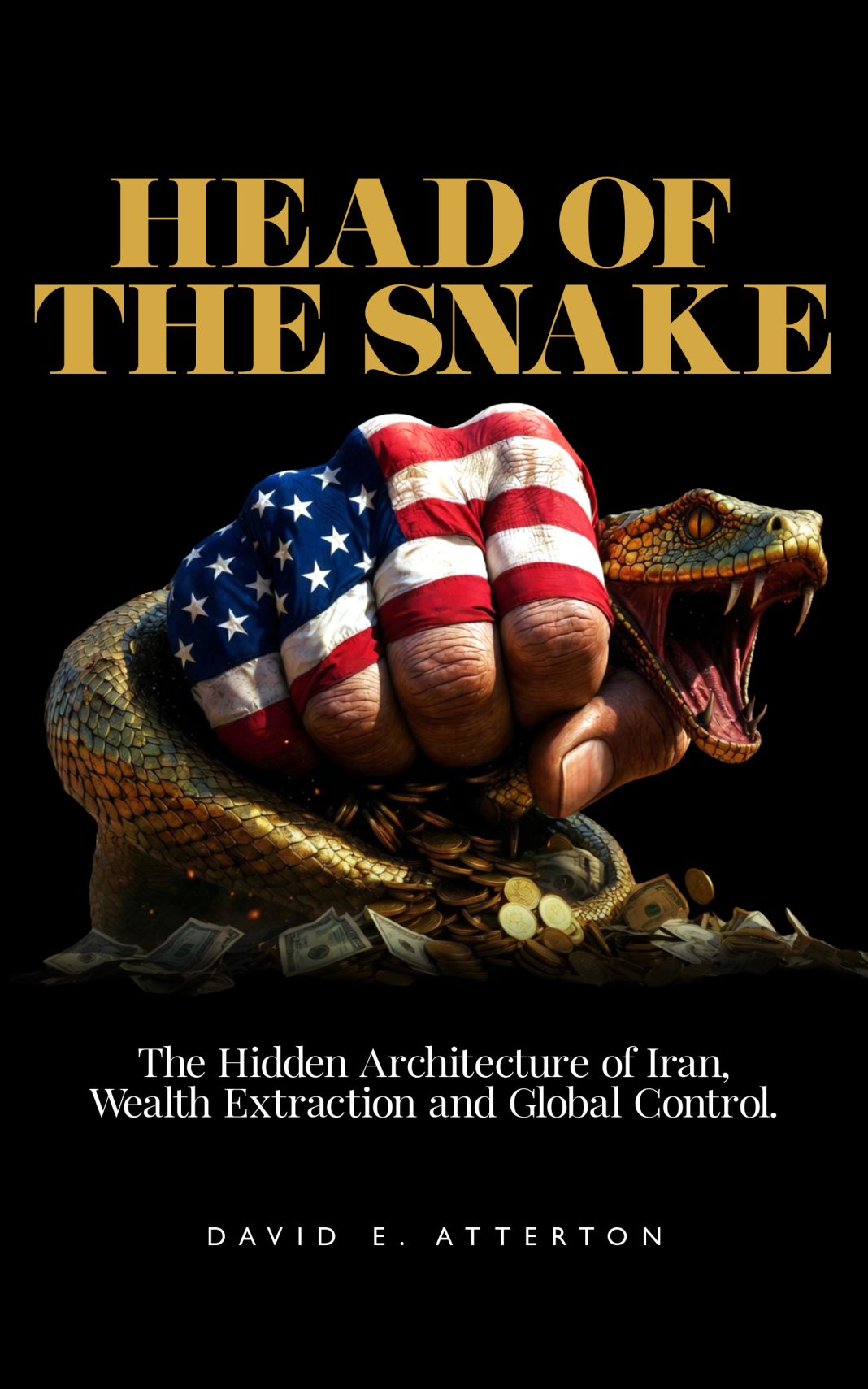
The longer story of how the region got here is in the book: Head of the Snake. The free guides and scenario reports live in the Resource Library.
Follow the daily intel free: Telegram · Facebook · Spotify · Odysee
Iraq Currency Update: Why September 15th Could Be a Significant Date | Jon Dowling
Iraq Currency Update: Why September 15th Could Be a Significant Date | Jon Dowling
8-21-2026
The intersection of geopolitical developments and global financial markets continues to present a complex landscape for investors, policy analysts, and market observers alike.
Recent reports highlight a pivotal moment marked by structural economic changes in the Middle East, major regulatory shifts in digital assets, and significant movements across precious metals and energy markets. Understanding these interwoven dynamics is essential for navigating the broader global economic landscape.
Iraq Currency Update: Why September 15th Could Be a Significant Date | Jon Dowling
8-21-2026
The intersection of geopolitical developments and global financial markets continues to present a complex landscape for investors, policy analysts, and market observers alike.
Recent reports highlight a pivotal moment marked by structural economic changes in the Middle East, major regulatory shifts in digital assets, and significant movements across precious metals and energy markets. Understanding these interwoven dynamics is essential for navigating the broader global economic landscape.
This comprehensive overview explores the latest updates regarding Iraq’s fiscal milestones, international security initiatives, emerging cryptocurrency regulations, Federal Reserve monetary policy, and the resilient rally in commodities.
A major milestone in Middle Eastern economic stabilization has been reached with the Kurdistan Regional Government (KRG) Finance Ministry officially submitting its 2027 budget proposal to Baghdad. This step demonstrates an ongoing commitment toward administrative cooperation and long-term fiscal planning. The submission reflects a shared desire to establish financial clarity and foster an environment conducive to sustained regional development.
However, full economic normalization remains dependent on several critical pieces of pending legislation. Key parameters, including finalized official currency exchange rates and the long-awaited national oil and gas law, remain under active negotiation.
Finalizing these legal frameworks is vital for establishing transparent revenue-sharing mechanisms and attracting long-term foreign investment into the region’s energy sector.
Alongside fiscal developments, strategic security operations across Iraq are undergoing a notable shift. International partners, including specialized units such as U.S. Delta Forces and French military detachments, are strengthening coordinate efforts with Iraqi counterterrorism forces. These joint operations focus on neutralizing militia influences, reinforcing state sovereignty, and maintaining stability for key government leadership, including Prime Minister Al-Zaidi.
This enhanced international cooperation points toward a decisive timeline aimed at establishing broader security benchmarks ahead of mid-September. By addressing non-state armed elements and safeguarding civil institutions, these efforts aim to build a secure environment capable of supporting systemic economic reforms and rebuilding infrastructure.
The broader geopolitical environment across the Middle East reflects complex strategic maneuvering. Recent economic sanctions and diplomatic policy adjustments targeted at regional actors aim to redefine balance-of-power dynamics. These strategic measures serve to protect trade corridors, counter destabilizing influences, and foster stronger bilateral relationships among key regional partners, including Saudi Arabia.
As state actors recalibrate their foreign policies, the focus remains on minimizing disruptions to global supply chains and stabilizing regional energy production. The broader goal of these diplomatic and economic policies is to pave the way for sustainable economic integration across the Middle East while curbing proxy activities that threaten commercial transit and civic stability.
In the financial technology sector, regulatory frameworks surrounding digital assets appear to be reaching a pivotal moment. Recent engagements between policy leaders and industry executives—such as Ripple CEO Brad Garlinghouse’s participation in high-level White House discussions—signal a growing institutional openness toward formalizing crypto regulations.
Much of this momentum aligns with the anticipated progress of regulatory initiatives like the Clarity Act. Expected policy decisions scheduled around mid-September could provide much-needed legal certainty for digital asset platforms, institutional investors, and blockchain enterprises. A clear regulatory mandate will likely reshape market sentiment, encouraging compliant financial innovation while establishing safeguards for mainstream capital adoption.
Turning to central bank policy, global markets are closely watching upcoming decisions by the Federal Reserve. Despite mixed signals regarding inflation moderation and softening employment metrics, expectations point toward potential interest rate adjustments. Analysts suggest that these policy choices reflect a delicate balancing act designed to manage inflation perceptions while supporting underlying labor market realities.
The anticipated shift in interest rate policy carries significant implications for market confidence. As borrowing costs adjust, yields across sovereign debt markets and equity valuations will need to recalibrate, directly impacting international currency movements and corporate financing strategies heading into the final quarters of the year.
Commodity markets are demonstrating robust momentum, characterized by significant rallies in precious metals like gold and silver, alongside steady performance in crude oil. Silver and gold have tested critical resistance levels, breaking past previous price caps and signaling a potential shift in broader market sentiment. Concurrently, a weakening U.S. Dollar Index (DXY) continues to provide a strong tailwind for hard assets.
These commodity price movements often act as a harbinger of wider macroeconomic adjustments. As physical assets draw renewed capital inflows, equities and real estate sectors may experience heightened volatility, prompting portfolio managers to reallocate resources toward inflation-hedging instruments and tangible store-of-value assets.
Beyond market mechanics and economic metrics, broader reflections highlight the importance of aligning financial practices with personal values and ethical principles. Navigating volatile economic cycles requires more than monitoring ticker symbols; it calls for a clear understanding of long-term priorities, stewardship, and personal integrity.
True economic security is built on foundational values that transcend paper wealth or speculative digital assets. Maintaining balanced priorities, supporting community resilience, and practicing prudent management remain timeless principles for weathering complex global transitions.
Seeds of Wisdom RV and Economics Updates Saturday Afternoon 8-22-26
Good Afternoon Dinar Recaps,
Oil Is Forcing Central Banks Back Toward Tightening: The Global Inflation-Debt Collision
The Iran conflict is creating a new problem for policymakers: oil and energy costs are pushing inflation higher at the same time that governments are already carrying heavy debt loads. For the global financial system, the question is becoming whether central banks can fight inflation without making sovereign debt and economic growth problems worse.
Good Afternoon Dinar Recaps,
Oil Is Forcing Central Banks Back Toward Tightening: The Global Inflation-Debt Collision
The Iran conflict is creating a new problem for policymakers: oil and energy costs are pushing inflation higher at the same time that governments are already carrying heavy debt loads. For the global financial system, the question is becoming whether central banks can fight inflation without making sovereign debt and economic growth problems worse.
Overview
Oil-driven inflation is changing expectations for central-bank policy, particularly in Europe, where markets are increasingly pricing a more hawkish ECB.
The Iran conflict has transformed energy prices into a monetary-policy issue, with higher oil and critically low European gas inventories threatening to keep inflation elevated.
At the same time, governments face rising borrowing costs and heavy debt burdens, creating a collision between inflation control and debt sustainability.
Key Developments
1. The ECB is being pushed toward a more hawkish position
Markets are increasingly preparing for the possibility that the European Central Bank will need to raise interest rates again as the energy shock from the Iran conflict works its way through the European economy.
Reuters reported Friday that traders are now pricing the ECB's deposit rate at nearly 3% by late 2027, a significant change from expectations only weeks earlier. Higher oil prices, tight refined-fuel supplies and extremely low European natural-gas inventories are all increasing the risk that energy inflation persists into the winter.
That matters because Europe was already dealing with a difficult growth environment.
The ECB is therefore facing the classic central-bank dilemma:
Raise rates to suppress inflation → risk weakening growth and increasing debt-service costs.
Hold rates down → risk allowing an energy shock to become embedded in broader inflation.
2. Oil has become a monetary-policy problem
The original shock came from the geopolitical conflict.
But the financial consequences extend far beyond the oil market.
Higher crude prices raise transportation and production costs, which can eventually feed into food, manufactured goods, services and consumer prices.
The ECB has already acknowledged that the energy shock from the Middle East conflict has altered its inflation outlook. Its June projections raised the 2026 inflation forecast because higher energy prices were expected to feed through into other areas of the economy.
This is particularly important because central banks cannot produce more oil with higher interest rates.
They can only attempt to reduce demand enough to prevent the temporary energy shock from becoming a persistent inflation cycle.
That makes this a fundamentally different inflation problem from one driven primarily by excessive domestic demand.
3. The Fed faces a different version of the same problem
The Federal Reserve has somewhat more room than the ECB because U.S. inflation has recently shown signs of easing.
But inflation remains above the Fed's 2% target, while the labor market has weakened.
Reuters reported last week that the combination of cooling inflation and a softer labor market could make it more difficult for Fed policymakers to justify additional tightening, even though inflation remains elevated.
That puts the Fed in a difficult position if oil rises again.
If the central bank responds aggressively to an energy-driven inflation increase, it could further weaken employment and economic activity.
If it ignores the inflation shock, expectations could become less firmly anchored.
The Fed therefore has to distinguish between inflation it can control and inflation it can only react to indirectly.
4. Debt makes the inflation problem much more dangerous
This is where the story becomes particularly important for the global financial reset.
Governments around the world have accumulated enormous amounts of debt.
Higher interest rates mean that refinancing that debt becomes increasingly expensive.
That creates a three-way collision:
Oil rises → inflation rises → central banks keep rates higher → government debt becomes more expensive to finance.
The bond market then becomes the transmission mechanism.
Higher sovereign yields increase government interest costs while simultaneously raising borrowing costs throughout the economy.
Recent pressure in global bond markets has already demonstrated how difficult it can be for governments to keep long-term borrowing costs contained when investors demand greater compensation for inflation and fiscal risk.
Why This Matters
The significance of today's story isn't simply whether the ECB or Fed raises rates.
It is the interaction between energy, inflation, interest rates and sovereign debt.
For years, central banks could respond to economic weakness with lower interest rates and governments could borrow relatively cheaply.
The current environment is different.
If oil remains elevated, central banks may have less freedom to cut rates, even when economic growth is slowing.
That creates the possibility of a more difficult economic environment:
Higher inflation + slower growth + higher debt costs.
That is the combination policymakers most want to avoid.
Why It Matters to Foreign Currency Holders
For foreign-currency holders, this is an important development because interest-rate differentials are one of the major forces behind currency movements.
If the ECB becomes more hawkish while expectations for the Fed remain relatively restrained, the euro could receive additional support against the dollar.
But the broader currency impact depends on what happens to energy prices and economic growth.
Energy-importing countries can experience a particularly difficult trade-off:
Higher oil prices increase the cost of imports while tighter monetary policy raises domestic borrowing costs.
That can put pressure on currencies even when their central banks are raising rates.
This is why the next phase of currency markets may be driven less by simple interest-rate comparisons and more by which economies can absorb the energy shock without destabilizing their debt markets.
Implications for the Global Financial Reset
Energyis becoming part of monetary policy.
The Iran conflict demonstrates how a geopolitical event can move directly from oil markets into central-bank decisions.
Sovereign debt is becoming increasingly sensitive to inflation.
If inflation remains elevated, investors may demand higher yields. That increases government financing costs precisely when debt burdens are already high.
Central banks are losing some of their policy flexibility.
A central bank can cut rates to support growth, or raise them to fight inflation—but an oil shock can require the economy to deal with both problems simultaneously.
The global financial system is becoming more fragmented around energy and monetary policy.
Oil-importing and oil-exporting nations experience the same shock very differently. That can produce divergent interest-rate policies, currency movements and capital flows.
The reset is increasingly about repricing rather than replacement.
There is still no evidence of a single event that will suddenly replace the dollar-based financial system.
Instead, the architecture is being repriced through bonds, currencies, commodities, interest rates and reserve management.
That gradual repricing may ultimately be more important than a dramatic one-day reset.
What to Watch Next
Oil prices and developments surrounding the Strait of Hormuz.
Whether higher energy costs begin appearing more clearly in European inflation data.
ECB signals regarding additional rate increases.
Federal Reserve commentary on whether inflation or employment represents the greater policy risk.
European natural-gas inventories heading into winter.
Long-term government bond yields in the U.S. and Europe.
Whether emerging-market central banks are forced to follow the major central banks rather than pursue independent easing.
Bottom Line
The global financial system is entering a more complicated monetary environment.
Oil is no longer simply an energy-market story. It is becoming an interest-rate story, a bond-market story and ultimately a debt story.
The ECB is already being pushed toward a more hawkish stance as traders assess the possibility of prolonged energy inflation, while the Fed faces the opposite problem of balancing still-elevated inflation against a softer labor market.
And underneath both decisions sits the same structural problem:
Governments have accumulated enormous debt, making prolonged high interest rates increasingly expensive.
That is why the interaction between oil, central banks and sovereign debt deserves close attention.
The next major move in the global financial reset may not come from a central bank announcement—it may come from the collision between energy prices, inflation and the cost of financing the world's debt.
Seeds of Wisdom Team
Newshounds News™ Exclusive
Sources
Reuters — Traders are bracing for an increasingly hawkish ECB
Reuters — Cooler inflation data may force Warsh's divided Fed to hold the line on rates
~~~~~~~~~~
Seeds of Wisdom Team RV Currency Facts Youtube and Rumble
Newshound's News Telegram Room Link
RV Facts with Proof Links Link
RV Updates Proof links - Facts Link
Start Here room with Most Asked Questions Link
Follow the Gold/Silver Rate COMEX
Follow Fast Facts
Seeds of Wisdom Team™ Website
Thank you Dinar Recaps
Iraq Economic News and Points To Ponder Saturday Afternoon 8-22-26
Iraq Secures Alternative Oil Export Routes Amid Hormuz Disruptions
2026-08-21 Shafaq News- Baghdad Iraq has secured alternative routes for oil exports and activated border crossings to sustain trade as disruptions through the Strait of Hormuz strain the country’s economy, Prime Minister Ali Faleh Al-Zaidi announced on Friday.
Iraq Secures Alternative Oil Export Routes Amid Hormuz Disruptions
2026-08-21 Shafaq News- Baghdad Iraq has secured alternative routes for oil exports and activated border crossings to sustain trade as disruptions through the Strait of Hormuz strain the country’s economy, Prime Minister Ali Faleh Al-Zaidi announced on Friday.
Speaking at the eighth Baghdad International Dialogue Conference, Al-Zaidi said the government has “more than one solution” to manage the regional crisis. He acknowledged “difficult and challenging circumstances,” calling restrictions in Hormuz a major economic obstacle and noting that the waterway “did not close even during the harshest days of the sanctions.”
Iraq, OPEC’s second-largest producer, relies on crude for about 90% of federal revenue, making the Strait —normally a conduit for roughly one-fifth of global oil supplies— critical to the country’s finances. Oil Minister Basim Al-Abadi recently put July exports at about 49 million barrels, while shipments have averaged around two million barrels per day since early August, their highest level since the crisis began. Al-Zaidi this week ordered oil companies to operate around the clock to boost output.
Read more: Iraq pushes new oil routes beyond Hormuz
Over the next six years, Al-Zaidi said the government aims to raise Iraq’s OPEC production quota to between eight and 10 million barrels per day.
He added that the draft budget for next year would soon be submitted, with electricity and solar power among its priorities, and assured public employees and retirees that government payments remain secure. Al-Zaidi projected that changes to domestic fuel consumption under a new economic model would save 17.8 trillion Iraqi dinars ($13.53B) annually.
On weapons outside state authority, the premier indicated that political forces had agreed on the principle of bringing them under government control and were working out a mechanism for handing them over, ruling out armed confrontation with factions. He also maintained that the government’s anti-corruption campaign retains broad political backing.
Read more: Corruption arrests in Iraq pass 210 under PM al-Zaidi
Organized by the Iraqi Dialogue Institute, the eighth Baghdad International Dialogue runs through Aug. 22, bringing together government, political, diplomatic, and academic figures to examine developments in Iraq and the region.
https://www.shafaq.com/en/Economy/Iraq-secures-alternative-oil-export-routes-amid-Hormuz-disruptions
Basrah Crude Gains Over 28% On Week
2026-08-22 Shafaq News- Basrah Basrah Heavy and Basrah Medium crude each gained $18.51 a barrel over the week, rising 30.16% and 28.62%, respectively.Both grades also rose in the final trading session, tracking gains in global oil prices.
Basrah Heavy gained $1.53 a barrel, or 1.95%, in the final session to settle at $79.89. Basrah Medium also rose $1.53 a barrel, or 1.87%, to close at $83.19.
Global oil prices moved higher. West Texas Intermediate gained $0.01, or 0.01%, to $86.84 a barrel, while Brent climbed $0.27, or 0.29%, to $94.05. https://www.shafaq.com/en/Economy/Basrah-crude-gains-over-28-on-week
Iran Allows Iraqi Oil Tankers Through Hormuz
2026-08-22 Shafaq News- Tehran Iran has allowed a number of Iraqi oil tankers to pass through the Strait of Hormuz following repeated requests from Baghdad, state-run Iranian media reported on Saturday.
The outlets did not specify how many tankers received permission, when they would cross or how much crude they were carrying.
Iraqi Parliament Speaker Haibet Al-Halbousi had urged Tehran to give Iraqi oil exports “special consideration” through Hormuz during talks in Baghdad with his Iranian counterpart Mohammad Bagher Ghalibaf, who pledged to “raise the issue” after returning to Iran.
Iraq has also been seeking arrangements with Iran and the United States to secure crude shipments through the waterway. A government source told Shafaq News earlier this week that the State Organization for Marketing of Oil (SOMO) was negotiating with US and German shipping companies over Iraqi-flagged tankers.
Kpler data showed only seven commodity vessels crossed the strait on Thursday, down from 14 a day earlier, with no very large crude carriers or liquefied natural gas tankers among them.
The disruption has sharply reduced Iraq’s southern crude exports. Shipments averaged about 1.4 million barrels per day in July, up from roughly 500,000 bpd in June and 100,000 bpd in May, but still well below pre-disruption Basrah exports of more than 3.3 million bpd.
Baghdad is also pursuing alternative export routes through Turkiye, Syria, and Jordan to reduce its dependence on Hormuz. A proposed pipeline to Syria’s Baniyas port could take about four years to build and cost at least $15 billion.
Read more: No exit but Hormuz: Iraq's economic vulnerability exposed
https://www.shafaq.com/en/Economy/Iran-allows-Iraqi-oil-tankers-through-Hormuz
US Dollar Rises Against Dinar In Baghdad And Erbil
2026-08-22 Shafaq News- Baghdad/ Erbil The US dollar edged higher against the Iraqi dinar on Saturday, hovering around 154,000 dinars per $100 in Baghdad and Erbil, the capital of the Kurdistan Region.
At the Al-Kifah and Al-Harithiya exchanges in Baghdad, the dollar traded at 154,300 dinars per $100, up from 154,150 dinars on Thursday, according to a Shafaq News market survey.
In Baghdad's local exchange shops, the selling price reached 154,750 dinars per $100, while the buying price stood at 153,750 dinars.
Rates rose in Erbil as well, where the dollar sold at 154,050 dinars per $100 and was bought at 154,000 dinars.
https://www.shafaq.com/en/Economy/US-Dollar-rises-against-dinar-in-Baghdad-and-Erbil
Gold climbs past 1M IQD in Baghdad and Erbil
2026-08-22 Shafaq News- Baghdad/ Erbil On Saturday, gold prices hovered around one million IQD per mithqal in Baghdad and Erbil markets, according to a Shafaq News market survey.
Gold prices on Baghdad’s Al-Nahr Street recorded a selling price of 1,006,000 IQD per mithqal (equivalent to five grams) for 21-carat gold, including Gulf, Turkish, and European varieties, with a buying price of 1,002,000 IQD. The same gold sold for 980,000 IQD on Thursday.
The selling price for 21-carat Iraqi gold stood at 976,000 IQD, while the buying price reached 972,000 IQD.
In jewelry stores, the selling price per mithqal of 21-carat Gulf gold ranged between 1,005,000 and 1,015,000 IQD, while Iraqi gold sold for between 975,000 and 985,000 IQD.
https://www.shafaq.com/en/Economy/Gold-climbs-past-1M-IQD-in-Baghdad-and-Erbil
Iraqi Trucks Join TIR Transit Routes For First Time
2026-08-22 Shafaq News- Baghdad Iraqi trucks have begun operating under the international TIR transit system for the first time, joining cross-border routes that had previously been handled exclusively by foreign carriers inside Iraq, the General Company for Land Transportation announced on Saturday.
Company Director Murtadha Al-Shahmani put the number of TIR journeys across Iraqi territory since the system became operational at more than 5,000. Administered by the International Road Transport Union (IRU), the network connects more than 79 countries, including Iraq.
Al-Shahmani said Iraqi trucks had begun transporting cargo from Saudi Arabia through the Arar border crossing toward Central Asia, which he called “an opportunity to generate revenue from Iraq’s position as a regional transit corridor.”
https://www.shafaq.com/en/Economy/Iraqi-trucks-join-TIR-transit-routes-for-first-time
Kirkuk Targets 1M Bpd Oil Exports Through Turkiye
026-08-22 Shafaq News- Kirkuk Iraq aims to raise crude exports through Turkiye to one million barrels per day (bpd) as Kirkuk expands production capacity, Governor Mohammed Samaan Agha told Shafaq News on Saturday.
Agha said a Turkish deputy energy minister is expected to visit Kirkuk soon for talks on oilfield development, energy infrastructure and bilateral cooperation, particularly crude exports.
He linked the export target to Iraq’s agreement with BP to redevelop major Kirkuk fields, including the Baba and Avanah domes and the Bai Hassan, Jambur and Khabbaz fields.
The fields contain more than 3 billion barrels of oil equivalent in initial gross recoverable resources. ConocoPhillips agreed in July to acquire a 42% stake in BP Energy Company of Kirkuk Limited, while Turkiye’s state-owned TPAO agreed to acquire 15%.
On August 1, Iraq and Turkiye signed a one-year agreement to continue transporting crude through the Iraq-Turkiye Pipeline to Ceyhan, covering about 750,000 bpd of capacity while negotiations continue over a broader framework.
Actual northern exports remain well below that level. Shafaq News reported on August 13 that flows through the route had fallen to around 130,000 bpd because of production suspensions in the Kurdistan Region and the halt of some Basrah crude shipments routed north.
Prime Minister Ali Al-Zaidi previously said Iraq aims to raise national oil output to between 8 million and 10 million bpd within six years while expanding export routes through Turkiye, Syria, and Jordan.
https://www.shafaq.com/en/Economy/Kirkuk-targets-1M-bpd-oil-exports-through-Turkiye
Iraq’s State Banks Scale Back Lending Without Credit Plans
2026-08-22 Shafaq News- Baghdad Most of Iraq’s state-owned banks have halted or sharply curtailed lending and several are operating without clear credit plans for 2026, an informed source told Shafaq News on Saturday.
The source said the lack of credit plans has restricted financing across a range of services, including construction and renovation loans, funding for small and medium-sized enterprises (SMEs), investment and housing projects, and electronic personal advances.
The source said the slowdown was weakening the role of state banks in financing Iraq’s economy, particularly for SMEs and investors seeking funds to launch or expand projects.
The source called on the government, parliament and its Finance Committee to examine the banks’ lending activity and question bank management over the decline in lending and advances, the absence of credit plans and limited investment financing.
Restoring lending programs is essential to supporting investment and stimulating economic activity, the source said, noting that the government program calls for investment support through loans and banking initiatives.
The source also urged state banks to adopt clear credit plans with measurable targets to direct financing toward productive sectors and investment projects and strengthen the banking system’s role in economic development.
In February, major state-owned banks, including Rafidain and Rasheed, had halted loans and advances amid liquidity shortages and a lack of clear credit planning.
Earlier this month, the government began considering leadership changes at several state banks, with managers expected to be evaluated partly on their ability to expand access to loans, salary advances and other banking services.
Read more: Iraq’s private banks: Capital Growth and the structural credit gap
https://www.shafaq.com/en/Economy/Iraq-s-state-banks-scale-back-lending-without-credit-plans
Parliament To Hear Finance Minister On Iraq’s Financial Crisis
2026-08-22 Shafaq News- Baghdad Iraqi Finance Minister Faleh Al-Sari has requested to appear before parliament to explain the country’s financial crisis and proposed solutions, First Deputy Speaker told Shafaq News on Saturday.
Adnan Fayhan said the request would be placed on the agenda of an upcoming parliamentary session, with a date expected to be set within days. He added that a borrowing bill would also be listed for a first reading.
Earlier this week, Al-Sari said a financial shortfall had disrupted payments to public employees, pensioners, and social welfare recipients, with monthly salary obligations reaching about 7.8 trillion Iraqi dinars (about $5.95 billion).
Read more: Iraq turns to bank borrowing to cover August salaries amid oil-revenue collapse
https://www.shafaq.com/en/Economy/Parliament-to-hear-finance-minister-on-Iraq-s-financial-crisis
Saturday Iraq News Posted by Tishwash at TNT 8-22-2026
TNT:
Tishwash: The governor of Kirkuk clarifies the implications of his statements regarding Article 140 and affirms: The relationship between Kurds and Turkmen is historical.
Kirkuk Governor Mohammed Samaan clarified the implications of his recent statements regarding Article 140 of the Iraqi Constitution, stressing that his remarks did not target any specific group, but rather highlighted the legal obstacles surrounding land ownership in the province, most of which is owned by Kurdish and Turkmen citizens.
Samaan explained that the ongoing legal disputes over the ownership of those lands are hindering the governorate's efforts to distribute residential plots to employees, noting that Article 140 has not yet succeeded in finding radical solutions to this issue.
TNT:
Tishwash: The governor of Kirkuk clarifies the implications of his statements regarding Article 140 and affirms: The relationship between Kurds and Turkmen is historical.
Kirkuk Governor Mohammed Samaan clarified the implications of his recent statements regarding Article 140 of the Iraqi Constitution, stressing that his remarks did not target any specific group, but rather highlighted the legal obstacles surrounding land ownership in the province, most of which is owned by Kurdish and Turkmen citizens.
Samaan explained that the ongoing legal disputes over the ownership of those lands are hindering the governorate's efforts to distribute residential plots to employees, noting that Article 140 has not yet succeeded in finding radical solutions to this issue.
At the same time, he emphasized the depth of the historical relations between the Kurds and the Turkmen, noting that Article 140 represents a constitutional text that is respected and agreed upon by all parties.
In another matter related to the financial file, the governor of Kirkuk revealed that there are outstanding financial obligations owed to contractors by the governorate, estimated at about 250 billion dinars, explaining that he took over his duties in light of accumulated financial debts and previous debts.
He confirmed that communication and efforts are continuing with the federal government in Baghdad to secure a portion of these entitlements and disburse them to those who are entitled. link
************
Tishwash: Government spokesperson: We are preparing to complete the sovereignty process on September 30th.
Government spokesman Haider al-Aboudi confirmed on Friday that the first 100 days of Prime Minister Ali Faleh al-Zaidi’s government represent a launch towards a clearer path to consolidate state sovereignty, noting that the government has been working since gaining the confidence of the House of Representatives on May 14, 2026, to translate its sovereign priorities through executive plans.
Al-Aboudi said in statements followed by Kalima News, “The government held 15 cabinet sessions during the past 100 days, and the standard of its performance was based on taking responsibility for the decision, strengthening sovereignty, protecting national independence, and building foreign relations based on common interests.”
He added that "the government is moving forward towards a state that protects its citizens, addresses emerging and inherited challenges, and continues institutional and economic reform to ensure a decent living and prevent risks that threaten public revenues."
He pointed out that "September 30th represents a crucial milestone for completing the path to sovereignty, so that Iraq will be 'fully sovereign' in its decisions, security, and land, free from any external dictates, and without the presence of any force outside the authority of the state."
He explained that "this path is based on constitutional and legal powers, and adheres to the government's program to restrict weapons to the authorized military and security institutions, stressing that the choice is sovereign and constitutional to complete the building of a state of law capable of protecting its territory and national decision."
Al-Aboudi stressed that “Iraq’s sovereignty is not ‘divisible,’ but that does not prevent Iraq from opening up to its regional and international environment based on mutual respect and common interests, from the position of an independent state.”
He concluded by saying: "The first hundred days are the beginning of a clearer path, in which the state advances with its institutions, and Iraq advances with its confidence and ability to protect its security, interests, and national decision." link
************
Tishwash: A crisis of confidence and a cash economy: Around 97 trillion Iraqi dinars are outside the banking system.
Cash held outside the banking system constitutes one of the most prominent challenges facing the Iraqi economy, given the continued reliance of a large segment of citizens and merchants on cash transactions and keeping part of their money outside banks.
While money outside the banking system does not necessarily mean that it is entirely hoarded, its sheer size raises questions about the weakness of banking transactions and the ability of banks to attract savings and convert them into loans and financing for projects and investments.
This reality reopens the file on the relationship between citizens and banks, the reasons for the continued preference for cash, and the repercussions of a cash economy on the movement of money and economic activity, especially with the presence of dozens of banks operating in the country.
Money outside banks
The Prime Minister's financial advisor, Mazhar Muhammad Saleh, told Shafaq News Agency that "the fact that some cash remains outside the banking system represents one of the challenges facing the Iraqi economy, given the limited benefit the banking sector derives from these funds in deposit and credit operations, and in financing projects and investments."
Saleh explains that “money hoarded in cash, whether by households or companies, remains outside the scope of financial intermediation, which limits the ability of banks to employ savings in financing economic activity, and increases reliance on cash and the informal economy, in addition to the high cost of cash transactions and weak financial transparency.”
He emphasizes that "the problem does not lie in the use of cash itself, but rather in its transformation into a means of hoarding savings instead of directing them through financial channels towards investment and production."
He points out that “returning these funds to the economic cycle requires building trust in banks and providing real incentives for saving, through developing savings products, offering competitive returns on deposits, enhancing depositor protection, improving banking services, reducing the cost and procedures for opening accounts and transfers, and expanding electronic payments, digital wallets, and points of sale.”
Saleh concludes that "the process should not stop at the transfer of money from homes to banks, but should move from deposits to credit, from credit to investment, and ultimately to production and job creation."
The amount of money outside banks
In contrast, financial expert and former Director General of the Central Bank, Mahmoud Dagher, offers a different interpretation of the nature of funds outside banks, stressing that they do not all represent hoarded funds.
Dagher told Shafaq News Agency that "the amount of cash issued is about 105 trillion dinars, of which about 8 trillion dinars are inside the banking system, while about 97 trillion dinars are outside it."
He explains that “about two-thirds of the money outside the banking system is used to settle cash payments between merchants, real estate sales and purchases, and pay salaries and wages, while hoarding may represent about a quarter of the money outside banks.”
Dagher links the continued reliance on cash to “insufficient trust in banks, along with prevailing customs in Iraqi society and the slow transition to electronic payment,” noting that “the transition to a broad electronic payment system requires a long period of time, with the continued development of banks and payment tools.”
The figures for monetary issuance highlight the importance of the discussion regarding the amount of money circulating outside banks. However, monetary issuance does not necessarily mean that the entire amount represents money hoarded by citizens, nor does its increase automatically mean the printing of new money.
According to Dagher's reading, the majority of money outside banks enters the market and settles cash payments, which makes distinguishing between circulating cash and hoarded money essential when assessing the size of the problem.
Cash presence
Despite the presence of a large number of banks, cash transactions still occupy a large part of economic activity in Iraq.
The number of operating banks reached 72, including 7 government banks and 65 private banks. However, the large number of banks does not necessarily mean a high level of banking transactions, as the main challenge remains the extent to which citizens and companies use banks for saving, payment and financing.
The Central Bank is working to promote financial inclusion and expand the customer base of the banking system, in addition to expanding electronic payment methods and spreading financial literacy.
First choice for Iraqis
Economic expert and professor of political science at Dhi Qar University, Najm Abdul Tarish, told Shafaq News Agency that "the continuation of the cash economy is linked to a set of overlapping factors, including weak confidence in banks, deeply rooted habits of dealing in cash, the expansion of the informal economy, as well as the limited use of electronic payment in some activities."
He adds that "the problem does not lie in the existence of cash within the economy, as it is a natural part of any financial system, but rather in cash becoming the primary means of settling transactions and holding savings, which reduces the money that passes through banks and limits their ability to create credit and finance economic activity."
Available data indicates that the number of payment cards in Iraq has exceeded 20 million, but their actual use is still less than their widespread use, while a number of cardholders primarily use the accounts to withdraw salaries rather than use them for daily purchases and payments.
Possible solutions
Addressing the problem does not stop at returning the funds to the banks, as the ultimate goal is to bring them back into the economic cycle more efficiently.
When money is converted into deposits, it can give banks greater ability to provide credit, and when credit is converted into investment and productive projects, this can be reflected in growth, job creation, and increased economic activity.
Therefore, the challenge facing Iraq is not only the amount of money outside the banks, but also building a banking system that makes the citizen and the merchant find in the bank a safer, more useful and easier way than keeping money and dealing with it in cash.
Ultimately, the large amount of cash outside the banking system reveals the continued dependence of the Iraqi economy on cash transactions, at a time when the banking sector is seeking to increase its role in savings, credit, and financing the economy.
While Mazhar Muhammad Saleh believes that returning funds to the banking system requires restoring confidence and stimulating savings, Mahmoud Dagher points out that the largest portion of funds outside banks actually moves in the market and does not represent complete hoarding, while Najm Abdul Tarish links the continuation of the cash economy to weak confidence, prevailing habits, and the limited use of electronic payment.
The transition from a cash-based economy to one more reliant on banks and electronic payments remains linked to the banking sector’s ability to restore confidence, provide more efficient services, and transform funds from mere cash transactions into deposits, credit, investment, and production. link
************
Tishwash: Al-Aboudi: September 30th is a milestone for consolidating state authority and limiting power.
Government spokesman Haider al-Aboudi affirmed that the first 100 days of Prime Minister Ali Faleh al-Zaidi’s government represent the beginning of a clearer path to consolidate state sovereignty, noting that the government has been working since gaining the confidence of the House of Representatives on May 14, 2026, to address national issues according to “state logic.”
Al-Aboudi said, in a statement followed by (Al-Mada), that the government, after one hundred days and holding 15 cabinet sessions, has been keen since its first day to ensure that the standard of its performance is “bearing responsibility in decision-making, consolidating state sovereignty, and protecting national decisions from dictates,” in addition to strengthening Iraq’s foreign relations on the basis of mutual interests.
He added that the government is moving towards building a state that protects its citizens and addresses inherited and emerging challenges, in parallel with continuing institutional and economic reform in a way that ensures a decent life and reduces the risks that threaten public treasury revenues.
Al-Aboudi pointed out that the government views September 30 as a pivotal moment in completing the path of national sovereignty, until Iraq is fully sovereign in its decisions, security, and land, and no will is imposed on it from outside its institutions, nor do the instruments of power remain outside the authority of the state.
He explained that implementing this path is based on the constitutional and legal powers of the government and its program to consolidate state authority and confine the instruments of power to the legally authorized military and security institutions, stressing that the issue represents a “state choice and constitutional commitment,” and is not a separate procedure from the project of building state institutions.
The government spokesman stressed that all instruments of power should be under the command of the state, and that sovereign decisions should be issued exclusively by its constitutional institutions, in order to ensure the rule of law and the protection of Iraqi lands and national decision-making.
He added that “Iraq’s sovereignty is not subject to division,” while stressing that Baghdad continues to be open to its regional and international surroundings and to establish its foreign relations on the basis of mutual respect and common interests, starting from the position of an independent state capable of making its own decisions.
Al-Aboudi concluded that the first hundred days are just the beginning of a path through which the government seeks to strengthen the authority of state institutions and their ability to protect security, interests and national decision-making, considering that the next stage will witness greater clarity in the implementation of these directions. link
News, Rumors and Opinions Saturday 8-22-2026
Ariel: Iraq’s Digital Currency Transition
8-21-2026
Convergence Events: Iran Militia Abandonment, Digital Currency Pivot, Midterm Contingency Protocol
Why Iran Walked Away:
The U.S. Treasury campaign Operation RIAL COLLAPSE (I made that up) ran for approximately 18 months. It was not a sanctions regime. Sanctions are public-facing and performative.
Ariel: Iraq’s Digital Currency Transition
8-21-2026
Convergence Events: Iran Militia Abandonment, Digital Currency Pivot, Midterm Contingency Protocol
Why Iran Walked Away:
The U.S. Treasury campaign Operation RIAL COLLAPSE (I made that up) ran for approximately 18 months. It was not a sanctions regime. Sanctions are public-facing and performative.
What Treasury executed was a systemic financial strangulation protocol. Working through Treasury’s Office of Foreign Assets Control, the Financial Crisis Enforcement Network, and a cooperative liaison with the Iraqi Central Bank’s newly digitized clearinghouse, the U.S. systematically identified and froze every secondary and tertiary financial channel Iran used to move currency.
Iraq’s Digital Currency Transition:
Iraq’s announcement that it is going digital is not separate from the U.S. Treasury campaign. It is the second phase of it.
The dinar has been manipulated for years through black-market currency auction operations run through the Central Bank of Iraq. The weekly currency auctions which were nominally managed to stabilize the dinar were in fact a mechanism through which billions of dollars were siphoned to militia networks, Iranian intermediaries, and corrupt Iraqi political figures. The auctions were a Cabal revenue pipeline.
Digitization kills this pipeline. A fully digital currency system with transparent ledger tracking makes the currency auction manipulation functionally impossible. Every transaction is traceable. Every intermediary is identifiable. Every siphon point is exposed.
This is what the user’s original analysis regarding the deletion of three zeros from the dinar connects to. The redenomination is not merely a cosmetic currency reform.
It is the replacement of the old manipulated dinar with a new digital instrument that carries no legacy baggage. The old dinar was the currency of corruption. The new digital dinar is the currency of accountability.
Read Full Article:
https://www.patreon.com/Prolotario1/posts/convergence-iran-167240113
https://dinarchronicles.com/2026/08/21/prolotario-iraqs-digital-currency-transition/
************
Courtesy of Dinar Guru: https://www.dinarguru.com/
Militia Man 1310 is not a REER. 1310 is the current official exchange rate the Central Bank of Iraq uses for formal transactions. It is an administered rate, not a market determined one. A REER (Real Effective Exchange Rate) is different. It's a managed move that looks at the dinar's real value against a basket of currencies adjusted for inflation... The Iraqi dinar is not freely commercially traded on major global markets the way currencies like the euro, yen or pound are...1310 is not a Real Effective Exchange Rate...
Stephen For everyone wanting to poo-poo on the dinar investor and say, 'Look, they're telling us they're redenominating their currency. It's going to be a neutral event.' This is exactly what I always expected. If there was going to be a revaluation or reinstatement of Iraq's dinar to its former value or increase it to a dollar...it would be accompanied by talk of a redenomination...
Jeff They'll probably have 90 days to turn in large notes to get small ones. That's in-country. The 90-day expiration of the large notes will apply to everybody. When the rate changes we're all going to have 90-days to run them in. In Iraq they're going to get smaller notes. Outside of Iraq you're going to do a currency swap and get your country's native currency. In our case we'll be turning in large note to the dollar.
************
Are World's Elites About To DUMP Everything? | Michael Pento
Liberty and Finance: 8-20-2026
Michael Pento warns that multiple historic financial bubbles are now converging, with equities, real estate, credit, and leverage all reaching extreme levels simultaneously.
He argues that AI investment is increasingly fueled by debt and circular financing rather than organic cash flow, potentially creating another major vulnerability in the credit markets.
Pento predicts the next market crash could be extraordinarily severe, with stocks potentially falling 50% and home prices declining 25–30%, while banks and municipalities face mounting losses.
He also warns that the government and Federal Reserve may lack the balance-sheet capacity to respond as they have in previous crises, potentially producing rising long-term interest rates and prolonged stagflation.
Pento says investors should closely monitor credit spreads, real interest rates, financial conditions, and the Fed's balance sheet—and argues that gold and liquidity could become increasingly important.
INTERVIEW TIMELINE:
0:00 Intro
1:30 Circular financing
6:55 Real estate bubble
13:50 Bank failures
18:00 Housing fraud or inflation fraud?
21:00 Hedging against crisis
Iraq Economic News and Points To Ponder Late Friday Evening 8-21-26
Iraq Faces A Difficult Period... Al-Zaydi: We Have More Than One Solution To The Economic Crisis, And The Budget Will Soon Be Before Parliament - 8/21/2026
Latest News Friday, August 21, 2026 Baghdad - One News - 8/21/2026 Prime Minister Ali al-Zaidi affirmed that Iraq is going through a “critical” phase, given the escalating tensions in the region and the repercussions of the closure of the Strait of Hormuz on trade and the economy, stressing that the government has a range of alternatives and solutions to deal with the economic pressures and maintain the country’s stability.
Iraq Faces A Difficult Period... Al-Zaydi: We Have More Than One Solution To The Economic Crisis, And The Budget Will Soon Be Before Parliament - 8/21/2026
Latest News Friday, August 21, 2026 Baghdad - One News - 8/21/2026 Prime Minister Ali al-Zaidi affirmed that Iraq is going through a “critical” phase, given the escalating tensions in the region and the repercussions of the closure of the Strait of Hormuz on trade and the economy, stressing that the government has a range of alternatives and solutions to deal with the economic pressures and maintain the country’s stability.
Al-Zaydi said, during his participation in the proceedings of the “Eighth Baghdad Dialogue” conference, that regional developments have placed Iraq before major economic and trade challenges, especially with the closure of the Strait of Hormuz, which represents a major passage for energy and trade in the region.
He pointed out that the Strait of Hormuz did not witness a closure even during the years of the embargo on Iraq, considering that the current circumstances require the government to move quickly to secure alternative routes and reduce the repercussions of the regional crisis on the Iraqi interior.
The Prime Minister explained that the government has begun activating border crossings and enhancing their capacity to accommodate the movement of goods and trade, as part of a plan aimed at diversifying import and export routes and reducing reliance on a single crossing in light of the turmoil in the region.
In the financial file, Al-Zaydi announced that the government is preparing to send the draft budget to the House of Representatives soon, stressing that "the next stage" will witness reform measures to address the economic and financial challenges and enhance the state’s ability to cope with current pressures.
He stressed that the government is not dealing with the crisis through a single option, emphasizing that it has “more than one solution” to the economic problems, and that work is underway on several parallel tracks to ensure the continuation of economic activity and to secure the country’s needs. (Possible monetary value increase)
The Prime Minister's remarks come at a time when Iraq is facing the direct repercussions of regional tensions and the closure of the Strait of Hormuz, amid challenges related to trade, energy, and public revenues. This has prompted the government to intensify its efforts to activate land border crossings and seek alternatives that mitigate the crisis's impact on Iraqi markets and the economy. https://1news-iq.net/العراق-أمام-فترة-عصيبة-الزيدي-لدينا-أ/
Al-Fayyad Criticizes The Factions: The “Resistance” Phase Cannot Continue As A Permanent Occupation, And Disarmament By Force Will Bring Chaos - 8/21/2026
Baghdad - One News - 8/21/2026 The head of the Popular Mobilization Forces, Faleh al-Fayyad, stated that the “resistance” phase cannot continue as a permanent occupation, calling for the transfer of responsibilities to state institutions upon reaching the stage of stability.
Al-Fayyad said regarding the bombing of the Popular Mobilization Forces headquarters, that the statements, indications, and accounts that were conveyed from the American and Saudi sides before the bombing of Iraq indicate that the targeting was in Basra, while most of the martyrs fell in Mosul. So where is Basra in relation to Mosul? We did not record any sacrifices or martyrs in Basra.
He stressed that no one but the Commander-in-Chief of the Armed Forces could remove him from his position, while warning against dealing with the issue of disarming the factions by force. https://1news-iq.net/الفياض-يلمز-الفصائل-مرحلة-المقاومة-ل/
Qasim Al-Araji, Supporting Al-Zaydi's Proposal: Confining Weapons Is A Sovereign Decision, And Dialogue Is The Way To Achieve It
Latest News Friday, August 21, 2026 Baghdad - One News - 8/21/2026 The security advisor to the Prime Minister, Qasim al-Araji, confirmed on Friday that what Prime Minister Ali al-Zaidi presented during the eighth Baghdad Dialogue Conference confirms the state’s steadfastness in its national choices, foremost among them being the restriction of weapons to state institutions and the consolidation of the rule of law.
Al-Araji said in a post published on his account on the “X” platform that restricting weapons represents a sovereign Iraqi decision that is accomplished through dialogue and national understanding, in a way that preserves stability and puts the interest of Iraq and its people above all considerations.
He added that consolidating security, the rule of law, and preserving national decision-making are fundamental pillars for building a strong state, a stable economy, and an attractive investment environment.
Al-Araji pointed out that Iraq is proceeding with a balanced national vision that enhances its position and protects its interests, explaining that its foreign relations are based on mutual respect and a balance of interests, which consolidates its presence as an active partner in promoting the security, stability and prosperity of the region.
Al-Araji's statements come in support of what the Prime Minister put forward during the Baghdad Dialogue Conference regarding the issue of restricting weapons, and the emphasis on achieving it through dialogue and national understanding, within a path aimed at strengthening the authority of the state and preserving national decision-making.
https://1news-iq.net/قاسم-الأعرجي-مؤيداً-طرح-الزيدي-حصر-الس/
Trump Unveils 'Unprecedented' Financial Siege Against Tehran - 8/20/2026
2026-08-20 / 03:43 Shafaq News- Washington US President Donald Trump on Thursday launched a new push to isolate Iran economically, threatening countries and companies that maintain financial or commercial ties with Tehran with “severe economic consequences.”
In a post on Truth Social, Trump accused Iran of failing to seize an opportunity for a deal with Washington, declaring the “MOST CRUSHING ECONOMIC OPERATION EVER TAKEN AGAINST ANY COUNTRY.”
“This will be Economic Warfare and Isolation on an unprecedented scale,” he wrote, portraying Iran as severely weakened after months of conflict, with its navy disappearing, its air force destroyed and its military factories reduced to rubble.
Donald J. Trump TRUTH @realDonaldTrump
No one has given the Islamic Republic of Iran a greater opportunity to make a Deal than me. TRAGICALLY, for them, they have failed to take it. Therefore, today, I am announcing the MOST CRUSHING ECONOMIC OPERATION EVER TAKEN AGAINST ANY COUNTRY!
This will be Economic Warfare and Isolation on an unprecedented scale. Their navy is gone, their air force is destroyed, their military factories are now rubble, their currency is worthless, and their country is hanging by a thread.
Today, I am also announcing that ANY country that allows its financial institutions, businesses, airports, or government entities to provide any type of lifeline to Iran will itself face TREMENDOUS Economic Consequences.
Oil smuggling, swap lines, cash transfers, exchange houses, ship registries, front companies — It all needs to stop NOW. You know who you are.
This will be an ECONOMIC D-DAY, and we need all of our Allies to stand with the United States of America to isolate, and defeat, the Iran threat. These maniacs are on the ropes, and these HISTORIC MEASURES will cripple them and their ability to project terror worldwide.
IRAN WILL NEVER HAVE A NUCLEAR WEAPON. THANK YOU FOR YOUR ATTENTION TO THIS MATTER. President DONALD J. TRUMP
He also described Iran’s currency as worthless and “hanging by a thread,” warning that countries allowing their banks, companies, airports or government agencies to support Iran could face massive punitive measures.
Axios, citing US officials, previously reported that Washington was preparing new economic measures against Iran as it seeks to increase pressure on Tehran and bring it back to the negotiating table.
The two countries signed an interim memorandum on June 17 aimed at ending nearly six months of war and paving the way for a broader agreement. The 60-day negotiating period set by the United States expired on Monday without a permanent settlement, while Trump indicated that no talks with Iran were underway or scheduled.
https://www.shafaq.com/en/World/Trump-unveils-unprecedented-financial-siege-against-Tehran
Reuters: Trump Threatens Economic Consequences Against Any Country Providing A "Lifeline" To Iran, And The UAE Preempted This
latest news Thursday, August 20, 2026 Washington - One News - 8/20/2026 Reuters reported that US President Donald Trump warned of economic consequences against any country that provides “any kind of lifeline to Iran,” at a time when the United States is seeking to end a war it started alongside Israel about six months ago.
The agency noted that Trump’s threats and announcements on social media do not always translate into detailed policies or actions implemented in the manner described in his posts.
She added that Trump did not specify what steps the United States would take against any country that provides support to Iran, which could apparently include US allies who helped broker peace talks, nor did he name any country.
She added that the United Arab Emirates, which hosts a major US military base, announced the suspension of all commercial activities, trade exchanges and financial transactions with Iran until further notice.
https://1news-iq.net/رويترز-ترمب-يهدد-بعواقب-اقتصادية-ضد-أي/