
Thank you to all the subscribers to our Early Access program…we thank you for your continued support.
We are excited to offer this new service to keep you informed and up-to-date on the latest Dinar and currency news.
Seeds of Wisdom RV and Economics Updates Friday Afternoon 8-7-26
Good Afternoon Dinar Recaps,
U.S. Labor Market Weakens as Treasury Yields Fall — A New Test for Federal Reserve Policy
Unexpected job losses are reshaping rate expectations while investors confront a more uncertain path for U.S. monetary policy and government borrowing costs
Good Afternoon Dinar Recaps,
U.S. Labor Market Weakens as Treasury Yields Fall — A New Test for Federal Reserve Policy
Unexpected job losses are reshaping rate expectations while investors confront a more uncertain path for U.S. monetary policy and government borrowing costs
OVERVIEW
U.S. employers unexpectedly cut 23,000 jobs in July, reversing expectations for continued job growth and raising fresh questions about the strength of the American economy.
Treasury yields fell as investors reduced expectations for an immediate Fed rate increase, with the 10-year Treasury yield moving down toward 4.64% following the employment report.
The development comes as Fed Chairman Kevin Warsh pushes for a more data-driven, market-led policy approach, potentially shifting more responsibility for determining borrowing costs onto bond markets at a time of elevated inflation and heavy government debt issuance.
KEY DEVELOPMENTS
1. U.S. Labor Market Delivers an Unexpected Warning
The July employment report showed that U.S. employers cut 23,000 jobs, sharply missing expectations for an increase of approximately 80,000 jobs.
The weakness was compounded by revisions that reduced previously reported employment gains for May and June by a combined 103,000 jobs. The data suggests that the labor market may be losing momentum even as inflation remains above the Federal Reserve’s target.
2. Treasury Yields Respond as Rate Expectations Shift
The bond market reacted quickly to the weaker employment numbers. The 10-year Treasury yield fell to about 4.64%, while the two-year yield, which is particularly sensitive to expectations for Federal Reserve policy, also declined.
Lower yields can temporarily reduce borrowing pressure across the economy, but the broader picture remains complicated. Long-term Treasury yields have recently remained elevated, reflecting investor concerns about inflation, government borrowing and the amount of debt the market must absorb.
3. Warsh’s Federal Reserve Strategy Puts More Weight on Markets
Reuters reports that Fed Chairman Kevin Warsh is deliberately providing less forward guidance, arguing that monetary policy should respond more directly to incoming economic data rather than rely heavily on forecasts.
That approach means investors may have to determine more of the future path of interest rates themselves. Reuters noted that longer-term Treasury yields surged after the Fed's most recent meeting, with the 30-year yield reaching its highest level since 2007.
This represents an important structural change because the Treasury market is being asked to play a greater role in determining the price of money while the federal government continues to operate with substantial borrowing requirements.
4. The Fed Faces a Difficult Inflation-versus-Employment Balance
The weaker labor market could give the Federal Reserve more time before raising rates, but inflation remains the opposing force.
Markets are now watching the next round of inflation data closely. The July employment report may reduce pressure for an immediate September rate increase, but persistent inflation could keep monetary policy restrictive.
This creates a difficult policy environment: raising rates could further weaken employment, while easing too quickly could allow inflation to remain elevated.
5. Global Markets Are Repricing the U.S. Economic Outlook
The employment report immediately affected global markets. U.S. stocks moved higher, Treasury yields declined and the dollar weakened as investors reassessed the likelihood of near-term rate increases.
The significance extends beyond Wall Street. U.S. interest rates influence global borrowing costs, currency values, capital flows and sovereign bond markets around the world.
WHY IT MATTERS
The combination of weaker employment, elevated inflation and high Treasury yields puts the Federal Reserve in an increasingly difficult position.
For the economy, higher borrowing costs can restrain investment, housing and consumer spending. For markets, uncertainty over the Fed's reaction function can increase volatility as investors attempt to price future policy without the level of guidance they have historically received.
The bigger issue is the Treasury market itself. If investors demand higher yields to hold long-term U.S. debt, the government faces higher financing costs, which can place additional pressure on future budgets.
This is why today's employment report is more than a jobs story. It is another signal that monetary policy, government debt and financial markets are becoming increasingly interconnected.
WHY IT MATTERS TO FOREIGN CURRENCY HOLDERS
Currency values: Changes in U.S. interest-rate expectations can quickly influence the dollar against other major currencies.
Purchasing power: Persistent inflation can continue to affect the real value of currencies and household purchasing power.
Capital flows: Changes in Treasury yields can redirect global investment between U.S. assets, foreign markets and hard assets.
Exchange-rate pressure: A weaker dollar can alter the relative value of foreign currencies and influence international trade and commodity prices.
IMPLICATIONS FOR THE GLOBAL RESET
Pillar 1: Debt
The most direct structural implication is Debt. Higher Treasury yields increase the cost of financing existing and future U.S. government borrowing.
If long-term yields remain elevated, governments around the world may face greater pressure to reconsider debt levels, fiscal sustainability and the cost of maintaining large borrowing programs.
Pillar 2: Assets
The second directly affected pillar is Assets. Changes in Treasury yields influence how investors value stocks, bonds, currencies, gold and other stores of value.
As investors reassess the reliability of traditional fixed-income assets, capital can move between sovereign debt, equities, commodities and alternative assets, contributing to broader changes in global asset allocation.
CONCLUSION
Today's employment report provides another indication that the U.S. economy may be entering a more complicated phase, with labor-market weakness emerging while inflation remains elevated.
At the same time, the Federal Reserve is moving toward a policy framework in which markets may have to interpret economic data with less forward guidance. That places greater importance on Treasury yields as a real-time measure of investor expectations and confidence.
For the broader financial system, the critical question is no longer simply whether the Fed raises or lowers rates. It is how markets, government debt and monetary policy will interact as the global financial system adjusts to a higher-cost borrowing environment.
The Global Reset is not defined by one announcement—it is revealed through the gradual restructuring of debt, markets and the systems that determine the price of money.
Seeds of Wisdom Team
Newshounds News™ Exclusive
SOURCES
Reuters — "Jobs report will offer fresh test of Fed Chairman Warsh's less-guidance stance"
Associated Press — "US stocks jump as employers unexpectedly cut 23,000 jobs"
~~~~~~~~~~
Seeds of Wisdom Team RV Currency Facts Youtube and Rumble
Newshound's News Telegram Room Link
RV Facts with Proof Links Link
RV Updates Proof links - Facts Link
Start Here room with Most Asked Questions Link
Follow the Gold/Silver Rate COMEX
Follow Fast Facts
Seeds of Wisdom Team™ Website
Thank you Dinar Recaps
More Iraq News Posted by Tishwash at TNT 8-7-2026
TNT:
Tishwash: A new shipment of $500 million in cash has arrived in Iraq.
Payment of $500 million
Allocating funds for travelers and remittances
To boost liquidity
A source reported in press statements that a new batch of cash dollars had arrived in Iraq, sent by the US Federal Reserve to the Central Bank of Iraq.
TNT:
Tishwash: A new shipment of $500 million in cash has arrived in Iraq.
Payment of $500 million
Allocating funds for travelers and remittances
To boost liquidity
A source reported in press statements that a new batch of cash dollars had arrived in Iraq, sent by the US Federal Reserve to the Central Bank of Iraq.
Within the framework of periodic agreements between the Central Bank of Iraq and the US Federal Reserve
Controlling the demand for foreign currency
The source told the official agency that "the US Federal Reserve sent a new batch of cash dollars to the Central Bank of Iraq worth $500 million."
He added that "the amount sent will be invested in transactions related to travelers and foreign remittances, with the approval of the Central Bank of Iraq."
This payment comes as part of the periodic agreements between the Central Bank of Iraq and the US Federal Reserve to supply the local market with dollar liquidity and to cover the needs of travelers and foreign remittances, at a time when Baghdad is seeking to stabilize the exchange rate. link
************
Tishwash: The United States begins dismantling its air defense systems in Iraq as the withdrawal date approaches.
The United States has begun reducing its military presence in Iraq by dismantling its last air defense systems in the Kurdistan region, as the scheduled end of its forces' mission in the country approaches at the end of September.
Reports indicate that Patriot missile batteries stationed near Erbil International Airport have begun withdrawing, after playing a key role in countering missile and drone attacks targeting the region in recent months.
This development comes as the Iraqi government continues to implement its plan to restrict weapons to the state, and emphasizes that no armed formations will be allowed outside the framework of official institutions after the end of September, at a time when efforts continue to end the mission of the international coalition against ISIS.
Observers believe that reducing air defense systems raises concerns about the Kurdistan Region's ability to confront any future attacks, especially in light of the absence of an independent air defense system and the continued security tensions in the region.
In contrast, analysts point out that the American withdrawal may not be complete, but may take the form of a reorganization of the military presence, while maintaining limited defensive capabilities to protect American interests and diplomatic and military facilities inside Iraq.
Experts also link the future of the American presence to the course of growing economic relations between Baghdad and Washington, especially after the signing of dozens of investment agreements in the fields of energy, technology and infrastructure, which reflect a trend towards expanding bilateral cooperation outside the security framework.
Experts confirm that the next phase will determine the nature of the Iraqi-American partnership, in light of the continued security and regional challenges, and whether Washington will maintain a limited defensive presence in Iraq, or proceed towards a broader withdrawal while relying on economic and strategic cooperation between the two countries. link
************
Al-Zaidi Retains Control of Defense and Interior Ministries; No Appointments Imminent as Strict Criteria Disqualify Candidates
Last updated: August 7, 2026 – 1:15 AM
Informed government sources have revealed that Prime Minister and Commander-in-Chief of the Armed Forces, Ali Faleh Al-Zaidi, does not currently intend to finalize appointments for the Ministries of Defense and Interior. He prefers to maintain their administration on an acting basis, given his confidence in the performance of current leadership and his direct oversight of the two security institutions' operations.
According to the sources, Al-Zaidi has established rigorous professional and security criteria for selecting candidates for these ministries. They emphasized that names circulating in political circles are baseless and that the matter remains on hold as the government focuses on more pressing issues—foremost among them the financial crisis, the expansion of economic and investment partnerships, and managing the repercussions of regional developments.
The sources explained that while relevant political blocs have the right to nominate candidates in accordance with their constitutional entitlements, the final decision rests with the Commander-in-Chief. He will not approve any candidate who fails to align with the standards he has set for managing the two security institutions.
This stance follows the Parliament's vote of confidence in Al-Zaidi’s government months ago—a government formed only partially, with several portfolios, including Defense and Interior, remaining vacant due to persistent political disagreements over candidates. Since assuming the premiership, Al-Zaidi has initiated sweeping changes within military and security institutions, redrawing the high-level command structure. These moves coincided with an unprecedented campaign against financial and administrative corruption, resulting in the dismissal and arrest of officials, as well as the recovery of funds and assets worth billions of dinars.
As part of the security sector restructuring, he tasked Senior Undersecretary Hussein Al-Awadi with managing the Ministry of Interior in an acting capacity. He also brought former Interior Minister Lieutenant General Abdul Amir Al-Shammari back to the forefront by appointing him Director of the Office of the Commander-in-Chief of the Armed Forces.
Al-Zaidi capped these changes by dissolving the Joint Operations Command and merging it with the Office of the Commander-in-Chief and the National Operations Center into a unified security entity. Observers view this move as part of a broader initiative to consolidate command and control, accelerate the plan to restrict arms to state control, reorganize the security apparatus, and integrate the Popular Mobilization Forces into official defense institutions. link
*************
Tishwash: Iraq adopts Apple as a trusted platform to promote electronic payments
The head of the executive body of the Media and Communications Commission, Baligh Abu Kalal, announced on Thursday that Apple has been approved as a verified digital platform to operate in Iraq, after completing all the requirements and procedures stipulated in the framework regulations for digital platforms and services.
Abu Kalal said in a statement received by Shafaq News Agency that the accreditation includes classifying Apple as a trusted digital service provider for its services represented by ( App Store , Apple Music , Apple Podcasts , Apple Arcade , and Apple Ads ), after it has met the technical and legal requirements approved by the Media and Communications Commission, which allows the provision of these services within an official regulatory framework that is consistent with the laws and regulations in force in the Republic of Iraq.
He pointed out that the adoption of global digital platforms falls within a strategy aimed at aligning the services of international companies with Iraqi legislation, ensuring the protection of users’ rights, supporting the digital economy, and developing the investment environment in the information technology sector.
He added that the commission continues to work with major international companies and platforms to complete licensing and accreditation procedures, which will contribute to expanding the scope of digital services, regulating electronic payment operations, and enhancing Iraq’s presence in the global digital economy link
*************
Tishwash: IMAX technology enters Iraqi cinemas; Minister Sarwa says it's a step towards keeping pace with developed countries.
Mall of Iraq (Baghdad)
On Thursday (August 6, 2026), the capital Baghdad witnessed the opening of the first “IMAX” theater in Iraq, located inside the Mall of Iraq, in the presence of the Acting Minister of Culture, Tourism and Antiquities, Sarwa Abdul Wahid, who affirmed the ministry’s support for investment and artistic projects aimed at developing the film and theater industry in the country.
As Iraq officially entered the era of modern cinematic display technologies, those in charge of the project revealed plans to establish the second IMAX theater in Baghdad, in addition to the largest private theater with a capacity of more than 5,000 spectators to host Arab and international concerts and artistic performances, stressing that the prices of tickets for the new theater are among the lowest in the world.
Culture: Developing cinema requires competition
Acting Minister of Culture, Tourism and Antiquities, Sarwa Abdul Wahid, confirmed to 964 Network that the ministry supports artistic and investment projects that contribute to the development of the cinema and theater sectors, considering the opening of the first IMAX theater in Iraq as an important step that reflects the existence of cultural investments that keep pace with what exists in developed countries.
She added that developing the film industry requires an investment mindset based on competition, stressing that complete reliance on the state in managing this sector will not achieve the desired success, noting that the ministry is open to supporting projects that contribute to the production and screening of films.
5 years to reach the first IMAX in Iraq
Zaid Al-Khafaji, CEO of Iraqi Cinema, told 964 Network that work on the IMAX project took more than 5 years due to the strict technical requirements imposed by the technology's owner, explaining that the team was finally able to complete all the requirements and obtain the official license.
He added that the success of the project prompted the company to plan to establish a second IMAX theater in the Karkh district, explaining that Baghdad received an exception due to its size and population, even though the company's policy usually stipulates that there should be only one theater in each city.
The largest private theater in Iraq
Al-Khafaji revealed a new direction for the company towards investing in the theater sector, explaining that Iraq lacks a hall that can accommodate concerts and major artistic performances. Therefore, work is underway on a project to establish a theater that can accommodate more than 5,000 spectators, to host Arab and foreign singers and artists and public events.
He added that ticket prices in Baghdad are among the lowest globally for IMAX theaters, noting that they start from 15,000 dinars for front seats, 18,000 dinars for middle seats, and 25,000 dinars for VIP seats, despite deducting percentages from the ticket value for the benefit of IMAX and film production companies. ink
News, Rumors and Opinions Friday 8-7-2026
Ross: The Solution that will Boomerang the IQD Revaluation
8-7-2026
Iraq does not revalue the Dinar to escape crises of this severity BUT sink-or-swim is the only thing that historically forces Baghdad to move on structural files that have been stalled for years.
The solution that will provide a boomerang towards the revaluation of IQD.
Ross: The Solution that will Boomerang the IQD Revaluation
8-7-2026
Iraq does not revalue the Dinar to escape crises of this severity BUT sink-or-swim is the only thing that historically forces Baghdad to move on structural files that have been stalled for years.
The solution that will provide a boomerang towards the revaluation of IQD.
1. Real expenditure rationalization and non-oil revenue expansion.
2. Acceleration of the long-delayed Oil & Gas Law / Hydrocarbon Law framework. This is the single biggest structural unlock for sustained higher oil revenue and FDI.
3. Banking-sector cleanup, better customs collection (ASYCUDA push), and tighter control over regional revenue transfers. Better customs collection and forcing the Region to transfer what it owes directly improves the federal cash position without new borrowing.
4. Possible formal borrowing authority that comes with conditions or oversight. The version that helps the longer-term case is borrowing that is explicitly tied to reform milestones, spending limits, transparency requirements, and parliamentary or external oversight.
5. Serious corruption cleanup and recovery of public/stolen funds. Recovering looted or mismanaged public money is pure liquidity that does not create new debt. It strengthens reserves, reduces the need for printing or emergency borrowing, and signals that the system is finally being cleaned.
6. Continued push on digital payments / reduced cash economy (cuts leakage and improves tax collection).
7. Clear, enforced resolution of the Kurdistan oil and revenue-sharing mechanism so the federal budget is no longer constantly bleeding.
8. Full completion of the cabinet under al-Zaidi and a functioning government that can actually pass and implement the above (vote coming 8/15-20).
None of these items equals an automatic higher dinar rate.
Collectively they shrink the fiscal hemorrhage, raise the quality of revenue, reduce leakage, and make the revalued currency defensible.
All of this is achievable and Baghdad has no choice but to act swiftly.
Lightning-speed fire under Iraq’s a*s progress is and will continue to unfold.
How long can Iraq hold its breath under water?
Source(s):
• https://x.com/Ross_ptm/status/2085407872738066717
https://dinarchronicles.com/2026/08/07/ross-the-solution-that-will-boomerang-the-iqd-revaluation/
************
Courtesy of Dinar Guru: https://www.dinarguru.com/
Walkingstick [Iraqi bank friend Aki update] The shortage in liquidity in the markets is causing a big demand on the 3-zero notes...It means the rate is going in the right direction...There are no more 3-zero notes...now there's a huge demand for the 2-zero notes and shortly there will be a great demand for the 1-zero notes...after the 1-zero notes will be the lower notes...Every day our rate fluctuates...The important part is the direction it's going. Every day our currency is gaining value. That's why the RI and the RD will be here soon. We are geared up to go international.
Stephen The last 6 months we have seen change happen like never before. As someone who has been involved in this investment since 2011, Iraq has let deadlines come and go. They have meant nothing to Iraq. But...since the Trump administration has gotten involved with them, we have a new prime minister who is getting rid of corruption, he's signing big deals, it's putting pressure on the HCL law...we have Starlink which is going to allow citizens to do online banking, we have all of these banking reforms being implemented right now. This stuff is happening right before our very eyes...We are in very exciting times.
Jeff There's a massive currency shortage. They're claiming it's due to lack of oil revenues from the war... Iraq talks to you out of both sides of their mouth...You need to think about this from both sides...What are things that might happen when the rate's about to change? ...January through June, they kept telling us, 'Hey, we're eventually going to have to adjust the salary pay scales.' What causes that? ...A rate change force them to have to adjust salary pay scales...Is it possible they're not paying salaries because they need to adjust the pay scale? ...New currency denominations impact the budget and the salary pay scales...All possibly suggest the rate is about to change. Those are things Iraq can't tell you. Iraq had no problem paying salaries during the first half of the year but when you hit the second half of the year it's magically a big problem, which is potentially a new budget period.
************
IQD Update: Is Iraq's Dinar About to Get a Major Makeover?
Edu Matrix: 8-7-2026
Iraq Economic News and Points To Ponder Friday Morning 8-7-26
Official Source: $500 Million Cash Shipment Arrives In Iraq
Iraqi News Agency Thursday, August 6th, 2026 / 19:52 INA – Baghdad An official source announced the arrival of a new shipment of US dollar banknotes in Iraq valued at $500 million.
The source told the Iraqi News Agency (INA) that “the US Federal Reserve has sent a new shipment of US dollar banknotes to the Central Bank of Iraq worth $500 million.”
Official Source: $500 Million Cash Shipment Arrives In Iraq
Iraqi News Agency Thursday, August 6th, 2026 / 19:52 INA – Baghdad An official source announced the arrival of a new shipment of US dollar banknotes in Iraq valued at $500 million.
The source told the Iraqi News Agency (INA) that “the US Federal Reserve has sent a new shipment of US dollar banknotes to the Central Bank of Iraq worth $500 million.”
He added that “the funds will be allocated for transactions related to travelers and foreign remittances, subject to the approval and regulations of the Central Bank of Iraq.”
Under The Direction Of The Commander-In-Chief Of The Armed Forces, The Security And Combat Readiness Levels Of The Security And Military Forces Have Been Raised
latest news Friday, August 7, 2026 Baghdad - One News The Security Media Cell announced today, Thursday, that, under the direction of the Commander-in-Chief of the Armed Forces, it was decided to raise the level of security readiness and combat preparedness of all security and military forces, within the framework of enhancing the readiness of security formations and raising their ability to carry out the tasks assigned to them.
The cell stated in a statement that the decision includes implementing training exercises and field movements for military units, within procedures aimed at maintaining the highest levels of readiness and operational capability.
She added that this step comes within the framework of maintaining the high readiness of all security forces formations and enhancing their efficiency in performing security and military duties, which contributes to consolidating security and stability, and protecting citizens and public interests throughout the country. https://1news-iq.net/بتوجيه-من-القائد-العام-للقوات-المسلحة/
Three Tankers Dock At Basra To Load Iraqi Crude
2026-08-06 16:05 Shafaq News- Basra Three oil tankers with a combined storage capacity of 5.3 million barrels docked at Iraq's southern Basra port on Thursday to load crude oil, a source familiar with the matter told Shafaq News.
Two of the vessels have a capacity of 2 million barrels each, while the third can carry 1.3 million barrels.
Iraq normally exports about 3.6 million barrels per day, including around 3.4 million bpd through its southern Basra terminals, according to Iraqi Oil Ministry figures, before the US-Israeli war on Iran caused the sharpest oil-revenue decline among Gulf producers.
Read more: No exit but Hormuz: Iraq's economic vulnerability exposed
https://www.shafaq.com/en/Economy/Three-tankers-dock-at-Basra-to-load-Iraqi-crude
Dollar Gains As Iran Deal Doubts Lift Safe-Haven Demand
2026-08-07 01:16 Shafaq News The dollar drifted higher against the yen and euro on Friday, building on the previous day's gains as doubts about an Iran peace deal buffed the U.S. currency's appeal as a haven.
The greenback also drew support from higher Treasury yields after a Financial Times report citing sources close to Federal Reserve Chair Kevin Warsh pointed to the potential for a September interest rate hike, depending on incoming data.
The monthly U.S. payrolls report, due later on Friday, could provide more clues on the Fed's rate path.
The dollar rose slightly to 158.505 yen in the Asian morning, after gaining 0.4% on Thursday, putting it on course to rise around 0.7% this week as it recovered from a bout of joint Japan-U.S. intervention that sent the U.S. currency tumbling from near a four-decade high above 163 yen on Thursday to a 13-week low of 155.20 on Monday.
Against the euro , the greenback edged up to $1.1521 after strengthening about 0.3% in the prior session.
Tensions continued to play out in the Gulf after Reuters reported a proposed deal between Iran and Oman to help end the U.S.-Iran conflict could give Tehran control over inbound traffic through the Strait of Hormuz.
The U.S. did not immediately comment on the proposal. President Donald Trump has said that a deal to reopen the strait was imminent, but U.S. officials have repeatedly insisted that they would never agree to Iranian control of access to the world's most important trade route for energy supplies.
Brent crude rose a little over a dollar on Friday to trade at $83.55 per barrel, after settling up more than $3 in the previous session.
The heightening inflation risks weighed on Treasuries, sending yields higher.
"USD was supported by higher oil prices (following) news that a deal between the U.S. and Iran to reopen the strait is further away than hoped," said Kristina Clifton, an economist at Commonwealth Bank of Australia.
She and other analysts also pointed to the FT report saying Warsh was open to a September hike if inflation data is strong, although Clifton added, "We expect the Fed to wait until December before starting a modest tightening cycle."
A divided U.S. central bank left rates unchanged last month, but Warsh said he was committed to bringing inflation down.
U.S. nonfarm payrolls are forecast to have risen by 80,000 last month after an increase of 57,000 in June, according to a Reuters survey of economists. The unemployment rate is expected to hold steady at 4.2%.
Against sterling , the dollar strengthened slightly to $1.3449.
The Australian dollar weakened a touch to $0.7029 and the kiwi dollar edged down to $0.5866. (REUTERS)
https://www.shafaq.com/en/Economy/Dollar-gains-as-Iran-deal-doubts-lift-safe-haven-demand
Gold Hits Seven-Week High Before US Payrolls
2026-08-07 03:39 Shafaq News Gold rose more than 1% on Friday and was set for its biggest weekly gain since January, helped by weaker oil prices, while investors awaited key U.S. nonfarm payrolls data for clues on the interest rate outlook.
Spot gold was up 1.1% at $4,285.89 per ounce, by 0635 GMT, after hitting a seven-week high on Thursday. Prices gained 6% for the week.
U.S. gold futures rose 1.1% to $4,344.90.
Hopes of peace in the Middle East pushed inflation expectations lower, allowing gold to surge from a multi-week consolidation above $4,000, said Matt Simpson, a senior analyst at StoneX.
U.S. President Donald Trump told reporters that he believed the war with Iran would be over soon.
Crude oil prices were headed for a weekly loss. Lower energy prices help ease inflation concerns and reduce expectations of higher-for-longer interest rates. Gold is an inflation hedge, but elevated interest rates tend to weigh on its appeal as it offers no yield.
The U.S. Labor Department's nonfarm payrolls report for July is due at 1230 GMT.
"Regardless of how NFP plays out, $4,000 has proven to be a solid support level - and I suspect bulls are waiting for dips to take advantage of a much-needed correction higher towards $4,600. NFP may provide some noise over the near term, but price action has spoken, and gold looks like it wants to rally," Simpson added.
Traders currently see a 55% chance of a U.S. rate hike in September, according to the CME FedWatch Tool.
"Going into August, we are somewhat friendlier towards gold and expect a wider trading band to set in," Marex said in a note.
Silver prices are testing the upper end of a trading range that has held for nearly two months, and a breakout could pave the way towards $68, it said.
Spot silver climbed 3.3% to $63.48, platinum rose 1.5% to $1,755.90 and palladium gained 0.3% to $1,374.30. All three metals were headed for weekly gains. (Reuters)
https://www.shafaq.com/en/Economy/Gold-hits-seven-week-high-before-US-payrolls
Seeds of Wisdom RV and Economics Updates Friday Morning 8-7-26
Good Morning Dinar Recaps,
BRICS Strengthens Alternative Trade Architecture: Global Financial System Continues Its Structural Shift
As BRICS prepares for its 2026 Summit, member nations are accelerating efforts to expand local-currency trade and strengthen alternative payment infrastructure, signaling another step toward a more multipolar global financial system.
Good Morning Dinar Recaps,
BRICS Strengthens Alternative Trade Architecture: Global Financial System Continues Its Structural Shift
As BRICS prepares for its 2026 Summit, member nations are accelerating efforts to expand local-currency trade and strengthen alternative payment infrastructure, signaling another step toward a more multipolar global financial system.
Overview
India's BRICS presidency is accelerating discussions on expanding local-currency trade, payment connectivity, and financial cooperation ahead of the September BRICS Summit.
Rather than pursuing a single BRICS currency, members continue focusing on practical alternatives that reduce reliance on traditional dollar-based payment systems.
These developments represent a gradual restructuring of global trade architecture that could influence international finance for years to come.
Key Developments
1. BRICS Summit Preparations Intensify
India's presidency of BRICS continues gathering momentum through a series of ministerial meetings leading up to the September 2026 Leaders' Summit.
Finance ministers, central bank officials, and trade representatives are working to strengthen economic cooperation while expanding mechanisms that facilitate trade among member nations. The meetings reflect the bloc's long-term strategy of building stronger financial connections without disrupting global markets.
2. Focus Shifts Toward Practical Trade Solutions
Recent discussions continue emphasizing local-currency settlement, payment interoperability, and financial cooperation instead of creating a common BRICS currency.
Member countries increasingly view expanding settlement in national currencies as a practical way to lower transaction costs, reduce exchange-rate exposure, and improve resilience in international trade. This gradual approach has gained support because it builds on existing financial infrastructure rather than replacing it overnight.
3. Payment Infrastructure Continues to Evolve
A major objective remains improving cross-border payment efficiency.
BRICS members are examining ways to better connect national payment systems and explore interoperable digital payment technologies that could simplify international commerce. These initiatives are designed to complement existing financial networks while providing businesses with additional settlement options.
4. Global Markets Continue Watching the Shift
Although the U.S. dollar remains the world's dominant reserve currency, investors increasingly recognize that global trade is becoming more diversified.
Rather than replacing the dollar, BRICS nations are gradually expanding the use of alternative settlement mechanisms where practical. This measured evolution reflects changing trade relationships and a broader trend toward a more diversified international financial system.
Why It Matters
The evolution of global trade architecture is occurring through incremental policy changes rather than dramatic announcements. Expanding local-currency settlement and payment interoperability can reduce transaction costs, improve financial resilience, and diversify international commerce.
While these developments do not eliminate the role of the U.S. dollar, they demonstrate how major economies are steadily building additional financial infrastructure alongside the existing system.
Why It Matters to Foreign Currency Holders
Growing use of local currencies may gradually diversify global capital flows.
Alternative payment systems could reduce settlement costs in international trade.
Broader currency diversification may influence long-term exchange rate trends.
A more multipolar financial system could create new opportunities and risks for international investors.
Implications for the Global Reset
Pillar: Trade
BRICS continues expanding the infrastructure that supports trade in local currencies and improves cross-border settlement. These efforts represent a gradual modernization of international commerce by providing additional payment channels alongside traditional systems.
Pillar: Technology
Payment interoperability and digital financial infrastructure remain central to BRICS' long-term strategy. Rather than replacing existing networks, member nations are building complementary technologies designed to improve efficiency, resilience, and financial connectivity.
Conclusion
The significance of today's developments lies not in a single announcement but in the continued, methodical expansion of alternative financial infrastructure.
As BRICS prepares for its upcoming summit, the focus remains on strengthening practical trade mechanisms that can support long-term economic cooperation.
This is not simply about BRICS expanding trade—it reflects the broader evolution of global financial architecture as nations develop additional payment systems, diversify settlement methods, and gradually modernize international commerce.
Seeds of Wisdom Team
Newshounds News™ Exclusive
Sources
Reuters — "India's BRICS Presidency Gathers Momentum with Key Ministerial Meets"
Economic Times — "India's BRICS Presidency Gathers Momentum with Key Ministerial Meets Early August"
~~~~~~~~~~
🌱 A Message to Our Currency Holders🌱
If you’ve been holding foreign currency for many years, you were not foolish.
You were not wrong to believe the global financial system would change.
What failed was not your patience — it was the information you were given.
For years, dates, rumors, and personalities replaced facts, structure, and proof. “This week” predictions created cycles of hope and disappointment that were never based on how currencies actually change.
That is not your failure.
Our mission here is different:
• No dates • No rates • No hype • No gurus
Instead, we focus on:
• Verifiable developments • Institutional evidence
• Global financial structure • Where countries actually sit in the process
Currency value changes only come after sovereignty, trade, banking, settlement systems, and fiscal coordination are in place. History and institutions confirm this sequence.
You will see silence. You will see denials. That is not delay — that is discipline.
Protect your identity. Organize your documents.
Verify everything.
Never hand your discernment to anyone who cannot show proof.
You deserve truth — not timelines.
Seeds of Wisdom Team
Newshounds News
~~~~~~~~~~
Seeds of Wisdom Team RV Currency Facts Youtube and Rumble
Newshound's News Telegram Room Link
RV Facts with Proof Links Link
RV Updates Proof links - Facts Link
Start Here room with Most Asked Questions Link
Follow the Gold/Silver Rate COMEX
Follow Fast Facts
Seeds of Wisdom Team™ Website
Thank you Dinar Recaps
Currency Reset Incoming: Central Banks Are Preparing Now | John Rubino
Currency Reset Incoming: Central Banks Are Preparing Now | John Rubino
Liberty and Finance: 8-6-2026
John Rubino joins Liberty and Finance to explain why mounting debt problems in Japan, the United States, and across the developed world could be bringing the global financial system closer to a major breaking point.
He discusses why central banks continue accumulating gold, why he believes the "everything bubble" spanning government debt, AI, and private credit is becoming increasingly unstable, and what could trigger a worldwide currency reset.
Currency Reset Incoming: Central Banks Are Preparing Now | John Rubino
Liberty and Finance: 8-6-2026
John Rubino joins Liberty and Finance to explain why mounting debt problems in Japan, the United States, and across the developed world could be bringing the global financial system closer to a major breaking point.
He discusses why central banks continue accumulating gold, why he believes the "everything bubble" spanning government debt, AI, and private credit is becoming increasingly unstable, and what could trigger a worldwide currency reset.
Rubino also examines the economic consequences of escalating geopolitical tensions, supply chain disruptions, and growing volatility in financial markets.
Finally, he shares why he believes physical gold and silver, along with greater personal resilience and local self-sufficiency, may become increasingly important as global risks continue to mount.
This interview explores the warning signs he believes investors should be watching closely in the months ahead.
INTERVIEW TIMELINE:
0:00 Intro
1:30 Japan crisis
11:10 Iran war
15:00 AI bubble
21:40 AI data centers
26:00 Currency reset
Iraq Economic News and Points To Ponder Thursday Evening 8-6-26
Iraq Is Facing A Liquidity Crisis... Will The Government Resort To Printing Money To Secure Salaries?
August 6, 2026Last updated: August 6, 2026 The Independent - Iraqi finances are facing increasing pressure as oil revenues continue to decline, at a time when the government needs about 8 trillion dinars per month to cover the salaries of employees and retirees and social welfare benefits, in addition to other government obligations and expenditures, which has brought the issue of liquidity back to the forefront of economic discussion.
Iraq Is Facing A Liquidity Crisis... Will The Government Resort To Printing Money To Secure Salaries?
August 6, 2026Last updated: August 6, 2026 The Independent - Iraqi finances are facing increasing pressure as oil revenues continue to decline, at a time when the government needs about 8 trillion dinars per month to cover the salaries of employees and retirees and social welfare benefits, in addition to other government obligations and expenditures, which has brought the issue of liquidity back to the forefront of economic discussion.
According to a report published by Al-Araby Al-Jadeed newspaper and followed up by Al-Mustaqila, the limited financial options available have prompted the proposal to print currency to return again as one of the scenarios proposed to provide liquidity, amid economic warnings that this option may have serious repercussions on inflation, the exchange rate of the dinar, and the purchasing power of citizens.
These developments come at a time when the Central Bank of Iraq is seeking to maintain monetary stability and manage liquidity levels, as it has previously warned against using the issuance of new money to finance public expenditures, stressing that financing the deficit through this route could lead to increased inflation and a decline in the value of the currency.
Economic experts believe that Iraq faces a large funding gap as a result of declining oil revenues, since the general budget depends mainly on oil exports, which means that any decrease in prices or exported quantities directly affects the state’s ability to finance its obligations.
Financial and banking expert Mahmoud Dagher said that the decline in oil revenues has created a gap between available resources and the size of monthly spending, noting that Iraq needs billions of dollars monthly to cover salaries, while revenues have fallen to levels that are not sufficient to meet obligations.
Dagher warned that resorting to increased monetary issuance or a large expansion of domestic debt could lead to additional pressures on the economy, including higher inflation, increased pressure on monetary reserves, and the potential impact on the dinar's exchange rate against the dollar.
He pointed out that the current crisis is not only related to the decline in oil prices or the decrease in exports, but also reveals structural challenges that have accumulated over the past years, including high operating spending, weak diversification of revenue sources, and the need for broader financial reforms.
For his part, economist Safwan Qusay stressed that managing liquidity during the next phase requires setting spending priorities, so that the government focuses on salaries, the social safety net and basic expenditures, while working to reduce unnecessary expenditures and increase non-oil revenues.
Qusay explained that among the possible solutions are improving the collection of taxes and fees, enhancing revenues at border crossings, recovering public funds, in addition to supporting other economic sectors to reduce dependence on oil as an almost sole source of budget financing.
He also pointed to the importance of restoring oil export levels and diversifying shipping routes, noting that any increase in exports will take time to be reflected in government revenues, which makes interim solutions necessary to manage the current crisis.
In the same context, Jamal Kojar, a member of the parliamentary finance committee, confirmed that the government faces limited options for providing liquidity in the coming months, explaining that recovering funds and maximizing revenues are part of the solution, but they may not provide large resources quickly.
He added that other options, such as increasing taxes or selling some state assets, could have economic and social repercussions, while printing money remains an option despite the risks that may accompany it.
Observers believe that the current liquidity crisis represents a real test for Iraqi fiscal policy, as protecting salaries on the one hand, and maintaining currency and price stability on the other, require solutions that go beyond temporary measures, towards a comprehensive reform that restructures spending and strengthens non-oil revenue sources.
Recent developments confirm that Iraq’s continued dependence on oil makes its economy vulnerable to repeated shocks, placing the government in a position where it must accelerate the building of a more diversified economy capable of withstanding financial crises. https://mustaqila.com/العراق-أمام-أزمة-سيولة-هل-تلجأ-الحكومة/
With Integrated Banking Solutions For Traders And Companies, The International Development Bank Expands Its Support For The Private Sector.
Economy | 05/08/2026 Mawazin News - Baghdad The International Development Bank (IDB) announced its continued support for the private sector by offering a comprehensive suite of banking solutions and services tailored to merchants, companies, and public and private sector employees. This aligns with its strategy to support business growth, enhance financial inclusion, and accelerate digital transformation in Iraq.
In a statement received by Mawazin News, the bank explained that its services include a merchant account offering solutions for managing payments and electronic collections in partnership with Al Arab Company, via point-of-sale (POS) terminals.
***************
Benefits include waiving merchant commissions, a 3.5% monthly return on the average balance, no minimum balance requirement or account management fees, and an increased daily cash withdrawal limit for debit cards to 10 million Iraqi dinars.
The bank also provides companies and institutions with integrated banking solutions encompassing financing, letters of credit, letters of guarantee, cash and liquidity management, international trade services, treasury services, and financial consulting, thereby enhancing business efficiency and supporting commercial expansion.
As part of its efforts to support the business environment, the International Development Bank (IDB) provides payroll services, along with financing, savings, investment, and digital solutions for employees. This contributes to enhancing financial stability and improving the efficiency of banking services within institutions.
The bank's Managing Director, Saed Zureikat, affirmed that the bank continues to invest in developing innovative banking solutions that meet the needs of merchants, companies, and employees, contributing to the advancement of digital transformation, empowering the private sector, and building a more competitive and sustainable economy.
The bank noted that its services are based on a strong capital base and full compliance with the regulations of the Central Bank of Iraq. It emphasized its commitment to continuously developing its banking products to support the competitiveness of the private sector and enhance the investment climate in Iraq.
The bank reiterated its commitment to further developing its banking services and products to boost the competitiveness of the private sector, support the business environment, and attract investments, in line with its vision to be the preferred financial partner for individuals and businesses in Iraq. https://mawazin.net/Details.aspx?jimare=287865
Shortages And Low-Quality Fuel Drive Restrictions In Iraq’s Nineveh
2026-08-06 Shafaq News- Nineveh A gasoline shortage in Iraq’s Nineveh province has left motorists facing long queues at fuel stations, with growing complaints over fuel quality and supply availability as authorities move to tighten distribution controls and curb unauthorized trading.
Drivers across the province told Shafaq News that the problem has extended beyond waiting times, with many describing poor vehicle performance from the gasoline being supplied, including subsidized “improved” fuel. They attributed repeated vehicle problems and engine damage to the low octane levels found in some supplies.
An official at the State Oil Products Distribution Company disclosed that new measures will be introduced to regulate fuel distribution and prevent unauthorized trading.
The planned system would require vehicle owners to obtain gasoline through a fuel card system using existing paper cards, electronic cards, or mobile-linked QR codes. The measures would also verify vehicle ownership details before fuel is supplied.
Nineveh has long relied on a fuel card system, but oil authorities are now working to strengthen monitoring mechanisms. The Provincial Council is also seeking a higher daily fuel allocation for the city, while residents have called for imported gasoline to undergo technical testing before entering the market to ensure it meets required quality standards.
In Iraq’s Kurdistan Region (KRI), fuel prices have faced pressure in recent months. Commercial gasoline exceeded 1,300 dinars ($0.99) per liter before a July price cap was introduced. In Al-Sulaymaniyah, regular gasoline reached 1,000 dinars ($0.76) per liter in June, while improved and super grades were sold for 1,200 dinars ($0.92) and 1,350 dinars ($1.03), respectively.
KRI requires between 126,700 and 140,000 barrels of fuel per day but receives about 50,000 barrels from the federal government, according to Acting Natural Resources Minister Kamal Mohammed. More than 2.709 million vehicles are registered across the region, adding further pressure on subsidized fuel supplies.
Seeds of Wisdom RV and Economics Updates Thursday Evening 8-6-26
Good Evening Dinar Recaps,
CLARITY Act at a Crossroads: Senate Faces Final Window Before August Recess
With only hours remaining before the Senate's August recess, lawmakers face mounting pressure to decide whether the Digital Asset Market CLARITY Act advances toward a historic vote or slips into an uncertain fall legislative calendar.
Good Evening Dinar Recaps,
CLARITY Act at a Crossroads: Senate Faces Final Window Before August Recess
With only hours remaining before the Senate's August recess, lawmakers face mounting pressure to decide whether the Digital Asset Market CLARITY Act advances toward a historic vote or slips into an uncertain fall legislative calendar.
Overview
The Senate has not yet filed cloture on the CLARITY Act, leaving only anarrow procedural window for action before the August recess.
Supporters remain optimistic that negotiations could still produce a breakthrough, while opponents continue raising concerns over ethics provisions and regulatory oversight.
The outcome could significantly influence the future of U.S. digital asset regulation and America's leadership in financial innovation.
Key Developments
1. Senate Clock Continues to Tick
The Senate has not yet filed a cloture motion, the procedural step required before debate can be limited and the legislation can move toward a vote.
While Senate leadership has indicated the bill remains a priority, the legislative calendar has become increasingly compressed. If cloture is not filed promptly, meaningful action before the August recess becomes increasingly difficult.
2. Supporters Say There Is Still Time
Several lawmakers continue expressing confidence that the legislation can still advance.
Senate Banking Committee Chairman Tim Scott has maintained there is still an opportunity to move the legislation before lawmakers leave Washington. Senate Republican Whip John Barrasso has also voiced support for providing greater regulatory clarity for digital assets, reinforcing continued momentum among supporters despite procedural delays.
3. Opposition Centers on Ethics and Oversight
Democratic opposition remains focused primarily on ethics provisions and regulatory safeguards.
Senator Elizabeth Warren has argued that portions of the legislation were heavily influenced by the cryptocurrency industry and has called for stronger consumer protections and stricter oversight. Other lawmakers continue negotiating revisions involving ethics enforcement, decentralized finance, and anti-money laundering provisions in hopes of attracting bipartisan support.
4. Markets Continue Watching Washington
The digital asset industry is closely monitoring every procedural development.
Many market participants believe passage of the CLARITY Act would provide long-awaited regulatory certainty by more clearly defining the responsibilities of the Securities and Exchange Commission (SEC) and the Commodity Futures Trading Commission (CFTC). Even if a final vote does not occur before recess, negotiations are expected to continue when Congress returns.
Why It Matters
The CLARITY Act represents one of the most significant attempts to modernize the regulatory framework governing digital assets in the United States.
Clear rules could reduce uncertainty for financial institutions, technology firms, and investors while encouraging responsible innovation. Conversely, additional delays could prolong regulatory ambiguity as federal agencies continue developing guidance under existing authorities.
Why It Matters to Foreign Currency Holders
Digital asset regulation may influence future payment systems and cross-border financial infrastructure.
Greater regulatory clarity could strengthen confidence in U.S. financial markets and digital asset innovation.
Global capital flows increasingly consider jurisdictions offering clear legal frameworks for emerging financial technologies.
Regulatory modernization may shape how digital assets interact with traditional currencies in international commerce.
Implications for the Global Reset
Pillar: Technology
The CLARITY Act reflects the growing effort to establish modern legal frameworks for blockchain technology and digital financial infrastructure. As governments develop rules for digital assets, regulatory certainty becomes increasingly important for innovation, investment, and long-term financial modernization.
Pillar: Assets
Digital assets continue evolving into a recognized asset class within the broader financial system. A clearer regulatory framework could improve institutional participation, market transparency, and investor confidence while helping define how digital assets fit alongside traditional financial markets.
Conclusion
The coming days will determine whether the Senate advances one of the most consequential financial technology bills considered in recent years or postpones the debate until later this year.
Although negotiations remain active, the narrowing legislative calendar leaves little room for procedural delays. Regardless of this week's outcome, the debate surrounding digital asset regulation is expected to remain a central issue for financial markets and policymakers.
This is not simply about cryptocurrency legislation—it reflects the broader effort to establish the legal framework for integrating digital assets into the future of the global financial system.
Seeds of Wisdom Team
Newshounds News™ Exclusive
Sources
~~~~~~~~~~
Seeds of Wisdom Team RV Currency Facts Youtube and Rumble
Newshound's News Telegram Room Link
RV Facts with Proof Links Link
RV Updates Proof links - Facts Link
Start Here room with Most Asked Questions Link
Follow the Gold/Silver Rate COMEX
Follow Fast Facts
Seeds of Wisdom Team™ Website
Thank you Dinar Recaps
They Changed the Rules in 2008 and 2020, it’s Happening again
They Changed the Rules in 2008 and 2020, it’s Happening again
Taylor Kenny and Keely Caul: 8-6-2026
Governments have changed the rules before and history suggests they will do it again.
In this conversation, Taylor Kenney sits down with ITM Trading Senior Analyst Keely Caul to explore what happens during a monetary reset, why financial rules often change during times of crisis, and how those changes can affect far more than the cash in your wallet.
They Changed the Rules in 2008 and 2020, it’s Happening again
Taylor Kenny and Keely Caul: 8-6-2026
Governments have changed the rules before and history suggests they will do it again.
In this conversation, Taylor Kenney sits down with ITM Trading Senior Analyst Keely Caul to explore what happens during a monetary reset, why financial rules often change during times of crisis, and how those changes can affect far more than the cash in your wallet.
From mortgages and retirement accounts to property taxes, banking access, and home ownership, they break down the risks most people never think about until it's too late.
In an era of unprecedented economic shifts, the term “monetary reset” has moved from the fringes of financial theory into the heart of mainstream economic discussion.
As global markets fluctuate and traditional currencies face new pressures, understanding the nature of ownership and the stability of your assets is more critical than ever. A recent deep-dive discussion by ITM Trading explores these complex themes, offering a roadmap for individuals looking to safeguard their financial future against systemic volatility.
At the core of the current economic transition is the steady erosion of purchasing power. For decades, many have relied on the relative stability of the US dollar, yet inflationary pressures and expanded monetary policies have begun to diminish what a dollar can actually buy.
This trend forces a reexamination of what it truly means to “own” an asset. In today’s digital-first economy, the majority of wealth is held in “paper” or digital forms—bank entries, brokerage accounts, and contractual agreements.
However, as the ITM Trading discussion highlights, these assets carry significant counterparty risk. This is the danger that the institution or government on the other side of your investment may not be able to fulfill its obligations during a crisis. When you hold a stock or a bank deposit, you are essentially a creditor to that institution. In a severe monetary reset, those digital claims can be frozen, devalued, or subject to government intervention, leaving “owners” with far less than they anticipated.
One of the most significant macro-economic trends discussed is “de-dollarization.” For nearly a century, the US dollar has served as the world’s primary reserve currency, providing the United States with unique economic leverage. Today, however, many nations are seeking to diversify their reserves and move away from dollar-dependent trade.
This shift has profound implications for domestic personal finance. As the global demand for the dollar decreases, its value may face downward pressure, further impacting the cost of living and the real value of traditional savings. For investors, this highlights the necessity of looking beyond domestic currency-denominated assets and considering a more global, diversified approach to wealth preservation.
The conversation underscores a vital distinction: the difference between financial assets and physical assets. Financial assets, such as mortgages and stock market holdings, are intrinsically tied to the health of the financial system. They are subject to market contractions and regulatory changes. In contrast, physical precious metals like gold and silver have historically served as the ultimate hedge against instability.
Gold and silver are unique because they carry no counterparty risk; they are private property that exists outside the conventional banking system. During periods of currency devaluation, these metals have historically maintained their value, acting as a “monetary insurance policy.”
While a portfolio of stocks might fluctuate based on corporate performance or government policy, physical assets provide a tangible foundation of value that is not easily manipulated by legislative changes.
The speakers point to historical precedents to illustrate the vulnerability of “responsible” financial planning during a reset. In the 1980s, Argentina experienced a crisis that saw the government freeze bank accounts and forcibly convert dollar savings into devalued local currency. Similarly, during the Great Depression in the United States, Executive Order 6102 effectively required citizens to deliver their gold to the government.
These examples serve as a sobering reminder that even if an individual manages their finances perfectly, they are still subject to the “rules of the game” set by governing bodies. When a system becomes over-leveraged, history shows that governments may resort to drastic measures to rebalance the books, often at the expense of private savers.
The path forward requires a shift in mindset from simple “growth” to “preservation and preparation.” Diversification should no longer be defined merely as owning different types of stocks, but as owning different classes of assets—specifically those that are physical and liquid.
By balancing a portfolio with physical precious metals, individuals can create a buffer against the potential contractions of the traditional financial market. This “defense” strategy ensures that even if the digital and paper systems face a reset, the individual retains a portion of their wealth in a form that is universally recognized and historically resilient.
The ongoing monetary reset is a complex, multi-faceted evolution of the global economy.
While the future remains uncertain, the principles of physical ownership and risk mitigation remain timeless. Understanding the difference between a “claim on wealth” and “actual wealth” is the first step toward achieving true financial security.
Reset Intelligence: The Ships, the Salaries, and the Signature
Reset Intelligence: The Ships, the Salaries, and the Signature
8-5-2026
The Ships, the Salaries, and the Signature
By Reset Intelligence | @EXIT_FIAT
A thousand ships are waiting inside the Gulf for one signature. So is Baghdad.
Reset Intelligence: The Ships, the Salaries, and the Signature
8-5-2026
The Ships, the Salaries, and the Signature
By Reset Intelligence | @EXIT_FIAT
A thousand ships are waiting inside the Gulf for one signature. So is Baghdad.
Iraq just let a month of public salaries go unpaid rather than touch its reserve vault. That choice tells you more than any rumour this week.
The queue
The US Treasury Secretary says the deal to reopen the Strait of Hormuz could be signed within hours, and put his own number on what is waiting behind it: hundreds if not a thousand ships sitting inside the Gulf. Oil slid toward $75 on the odds alone. The fight left in the room is over what the strait is on the other side of the signature – a service Tehran sells, or a passage Washington grants. Trump answered that one in capital letters on his own account.
The paydays that did not come
While the negotiators talked, Baghdad confirmed the quiet part with numbers. July salaries have not been paid to a large share of Iraq’s public workers. The finance ministry counted roughly 3 trillion dinars disbursed, a 3.3 trillion gap to finish the month, and a proposal on the table to pay salaries every 45 days. All of it while the reserve vault stays shut. A state does not run its money that way by accident.
The week on one page
• Hormuz deal – Washington aiming for an announcement this week; an earlier memorandum bought 60 days of free passage and the fight is over day 61
• Iraq’s budget – parliament’s finance committee says the government intends to skip the 2026 budget for a rebuilt 2027 draft. Nothing is approved, nothing tabled, and a mini-budget push is already on the record
• Friday, August 7 – Iraq’s militias set their own deadline for Baghdad to answer them, and the US Senate faces its last filing window for the CLARITY Act vote before recess
• Money going manual – Japan sold roughly $53 billion in a day to defend the yen, the US Treasury stepped into the market behind it, and the Bank of Korea is buying domestic gold for the first time in 13 years
The last time the world watched a queue of ships decide a currency’s fate was Suez, November 1956. A reserve currency went into that queue and never came out the same. What that history says about Hormuz, the dinar, and the order everything unlocks in – that is the part we connect in today’s full briefing, and it is the short version you are reading now,
A queue of ships has ended a currency era once already. The people who saw it forming were early, and the people who read about it later were not
Read the full daily briefing free for 5 days. Sign up here: resetintelligence.com
Want it straight from the horse’s mouth? The CBI Rate Alert pings you the moment the Central Bank of Iraq moves the official rate. The number itself, not a rumour about it. It comes with our free resource library and the daily breakdown of what is actually moving in Iraq. Sign up free: resetintelligence.com/rate-alert
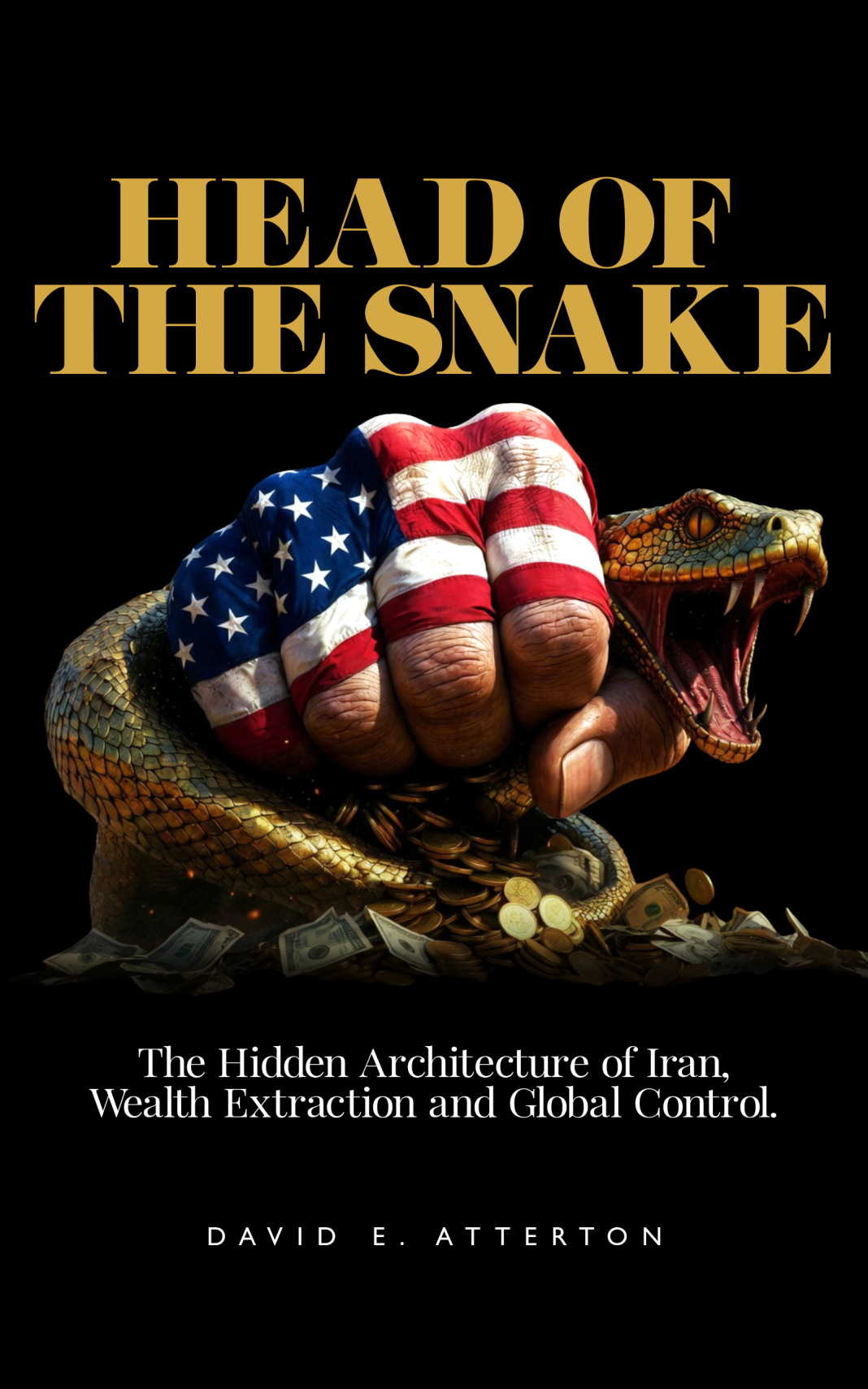
The book that mapped this design: Head of the Snake. The reference layer for the coming event: The Resources.
Follow the daily intel free: Telegram · Facebook · Spotify · Odysee
https://dinarchronicles.com/2026/08/05/reset-intelligence-the-ships-the-salaries-and-the-signatur
Seeds of Wisdom RV and Economics Updates Thursday Afternoon 8-6-26
Good Afternoon Dinar Recaps,
Oil, Inflation, and Interest Rates Collide: Markets Reprice as the Federal Reserve Faces a New Inflation Test
Rising energy prices, conflicting Federal Reserve signals, and higher Treasury yields are forcing investors to reassess the outlook for inflation, interest rates, and the broader global economy.
Good Afternoon Dinar Recaps,
Oil, Inflation, and Interest Rates Collide: Markets Reprice as the Federal Reserve Faces a New Inflation Test
Rising energy prices, conflicting Federal Reserve signals, and higher Treasury yields are forcing investors to reassess the outlook for inflation, interest rates, and the broader global economy.
Overview
Renewed concerns over the Strait of Hormuz pushed oil prices higher, increasing fears that energy-driven inflation could remain elevated.
Federal Reserve officials delivered mixed messages, with some urging patience while others warned additional rate hikes may become necessary if inflation accelerates.
Markets are increasingly recognizing how geopolitical events, energy prices, and monetary policy are becoming tightly linked across the global financial system.
Key Developments
1. Oil Prices Rise as Hormuz Risks Return
Oil markets rallied after renewed geopolitical tensions raised concerns about shipping through the Strait of Hormuz, one of the world's most important energy corridors.
Reports that Iran is considering additional restrictions affecting U.S. and Israeli shipping have renewed concerns about global crude supplies. Even the possibility of disruptions has increased energy market volatility, reminding investors how sensitive inflation remains to geopolitical developments.
2. Federal Reserve Officials Send Mixed Signals
Federal Reserve policymakers are no longer speaking with one voice.
Neel Kashkari has argued that persistent inflation and higher energy costs may eventually require additional interest rate increases, while San Francisco Fed President Mary Daly said the July decision to leave rates unchanged was appropriate until more economic data become available. Daly emphasized that policymakers need to distinguish between temporary supply shocks and sustained inflation before making further policy changes.
3. Treasury Markets Reprice Inflation Risk
Treasury yields have remained elevated as investors reassess the possibility that interest rates could stay higher for longer.
Bond markets are increasingly responding to both inflation expectations and geopolitical uncertainty. Higher yields reflect growing caution that persistent inflation could delay any future easing of monetary policy while increasing borrowing costs throughout the economy.
4. Markets Await Critical Economic Data
Attention now turns to upcoming employment and inflation reports, which could significantly influence the Federal Reserve's next policy decision.
Investors are watching whether inflation continues moderating or whether higher energy prices begin feeding into broader consumer prices. The interaction between economic data and geopolitical developments will likely determine market direction over the coming weeks.
Why It Matters
Today's market movements illustrate how quickly geopolitical events can ripple through the global financial system. Rising oil prices increase inflation risks, which can influence central bank policy, Treasury yields, equity valuations, and borrowing costs across the economy.
As markets evaluate whether current inflation pressures are temporary or more persistent, the Federal Reserve faces the difficult challenge of balancing price stability with continued economic growth.
Why It Matters to Foreign Currency Holders
Higher interest rates can strengthen the U.S. dollar relative to many foreign currencies.
Persistent inflation affects purchasing power and exchange rate expectations.
Higher Treasury yields influence global capital flows as investors seek attractive returns.
Energy market volatility can create additional pressure on commodity-linked and emerging-market currencies.
Implications for the Global Reset
Pillar: Debt
Higher Treasury yields increase borrowing costs for governments, businesses, and consumers. As interest expenses rise, managing sovereign debt becomes increasingly challenging, reinforcing why bond markets remain one of the most important indicators of long-term financial stability.
Pillar: Energy
Energy prices continue serving as a critical transmission mechanism between geopolitics and the global economy. Developments surrounding the Strait of Hormuz directly influence inflation expectations, monetary policy, and overall economic confidence.
Conclusion
Markets are increasingly recognizing that today's financial environment is being shaped by the interaction of energy security, inflation, and central bank policy rather than any single economic indicator.
Whether inflation moderates or accelerates will depend not only on domestic economic data but also on developments in the Middle East and global energy markets.
This is not simply about oil prices or interest rates—it reflects how geopolitical risk, energy security, and monetary policy have become deeply interconnected drivers of the evolving global financial system.
Seeds of Wisdom Team
Newshounds News™ Exclusive
Sources
Reuters — "Oil Jumps as Iran Reviews Bill to Ban U.S., Israeli Vessels from Hormuz"
Reuters — "Fed's Daly Says Central Bank Was Right to Hold Rates Steady at July Policy Meeting"
~~~~~~~~~~
Seeds of Wisdom Team RV Currency Facts Youtube and Rumble
Newshound's News Telegram Room Link
RV Facts with Proof Links Link
RV Updates Proof links - Facts Link
Start Here room with Most Asked Questions Link
Follow the Gold/Silver Rate COMEX
Follow Fast Facts
Seeds of Wisdom Team™ Website
Thank you Dinar Recaps
Iraq Economic News and Points To Ponder Thursday Afternoon 8-6-26
Slemani Market Spokesperson Jabar Goran Predicts Iraqi Dinar Strengthening
@Channel8English Slemani Market Spokesperson Jabar Goran Predicts Iraqi Dinar Strengthening Speaking to Channel8, Jabar Goran, spokesperson for the Slemani currency market, stated that the Iraqi dinar could strengthen against the US dollar if political conditions in Iraq stabilize and tension surrounding vital trade routes, such as the Strait of Hormuz, eases.
Key Highlights: Economic Impact: Political stability in Iraq and uninterrupted maritime trade are crucial drivers for strengthening the local currency.
Slemani Market Spokesperson Jabar Goran Predicts Iraqi Dinar Strengthening
@Channel8English Slemani Market Spokesperson Jabar Goran Predicts Iraqi Dinar Strengthening Speaking to Channel8, Jabar Goran, spokesperson for the Slemani currency market, stated that the Iraqi dinar could strengthen against the US dollar if political conditions in Iraq stabilize and tension surrounding vital trade routes, such as the Strait of Hormuz, eases.
Key Highlights: Economic Impact: Political stability in Iraq and uninterrupted maritime trade are crucial drivers for strengthening the local currency.
Exchange Rate Outlook: Goran anticipates that the US dollar exchange rate could decline to between 142,000 and 147,000 IQD per $100, reflecting a stronger position for the dinar.
8:23 AM · Aug 6, 2026 https://x.com/Channel8English/status/2085355965499515380
Prominent Officials And Mps Disappear From The Scene As New Lists Of Accused Circulate… Al-Mada: The “Dawn” Campaign Has Lost Some Of Its Momentum
latest news Thursday, August 6, 2026 Baghdad - One News - Al-Mada newspaper, quoting political sources, revealed that the “Dawn” anti-corruption campaign has not stopped, despite the decline in its media momentum during the past period, stressing that it has entered a more complicated stage due to parliamentary immunity, political balances and weapons files, amid expectations of restoring its activity after September 30.
According to the newspaper, more than one hundred MPs have been avoiding attending House of Representatives sessions since the start of the campaign, while a number of officials and prominent MPs have disappeared from the scene, coinciding with the circulation of new lists containing the names of those accused of corruption cases.
The newspaper quoted its sources as saying that the campaign has not ended, but has lost some of its momentum as a result of overlapping government priorities, foremost among them the security files, the arms control and the financial crisis, expecting it to return strongly after these files are completed.
For his part, political researcher Basil Hussein told Al-Mada that the campaign faced political and armed resistance, and that its approach to influential figures (such as Maliki) raised its political cost, noting that the multitude of challenges facing the government contributed to the decline in its momentum during the current stage.
The newspaper added, quoting political sources, that there were unwritten understandings that kept former prime ministers and a number of figures who founded the political process out of the circle of prosecution, while practical measures were limited to a small number of files, most notably within the Ministry of Oil, and included the two undersecretaries of the ministry, Adnan al-Jumaili and Ali Ma’araj.
Al-Mada indicated that the funds recovered so far are estimated at about 250 billion dinars, compared to estimates that speak of the existence of about 200 billion dollars of funds related to corruption cases.
For his part, political analyst Ghaleb al-Da'mi told the newspaper that the return of the House of Representatives to session and the end of the legislative recess made the procedures for lifting immunity more difficult, which led to a temporary lull in the campaign, without meaning that it had stopped. Source: Al-Mada Newspaper
https://1news-iq.net/مسؤولون-ونواب-بارزون-يغيبون-عن-المشهد/
An Economist Says Iraq Has Entered A Phase Of "Paying The Price" As A Result Of Accumulated Mismanagement And Corruption - Urgent
Baghdad Today - Baghdad Economic expert Ziad Al-Hashemi said on Tuesday (August 4, 2026) that Iraq has entered a phase of "paying the price" for what he described as the accumulation of failures, corruption and mismanagement over more than twenty years, considering that the current crisis is the result of the policies of successive governments, in addition to the responsibility of political parties, parliament and oversight institutions.
Al-Hashemi said, in a statement followed by “Baghdad Today”, that financial and administrative losses and failures have accumulated during the past years without real treatment, accusing political forces of being preoccupied with “dividing the spoils”, while the regulatory and legislative bodies were unable or negligent in performing their role in accountability and reform.
He added that, in his view, the responsibility is not limited to governments, but extends to the parliament that approved large budgets, the political forces that dealt with the state according to the logic of power-sharing, as well as regulatory institutions, elites, media and the public, some of whom he said contributed, to varying degrees, to the continuation of the existing approach.
Al-Hashemi pointed out that Iraq is not facing a temporary liquidity crisis, but rather is going through the repercussions of what he described as an economic and political system that relied on quotas, corruption and buying loyalties, considering that the reform opportunities that were available during the years of financial abundance were not invested in building a diversified economy that is more capable of facing crises.
He warned that continuing to address the crisis through borrowing or postponing payments, without implementing structural reforms, could prolong the economic challenges, stressing that the cost of this would be borne by the citizens.
Economic and political experts offer differing views on the causes of the crisis and ways to address it, amid repeated calls for the implementation of financial and economic reforms, diversification of income sources, and a reduction in dependence on oil. https://baghdadtoday.news/304321-.html
Iraqi Parliament Calls Emergency Session Over Fiscal Crisis
Shanya Salar
At a Glance
148 MPs back emergency session
Finance minister to brief lawmakers
Oil revenue trails monthly spending needs
Salary funding among top priorities
The Iraqi Council of Representatives will hold an extraordinary session on Saturday to address the country's worsening fiscal crisis and delayed public sector salaries, as lawmakers seek urgent measures to close a widening budget gap.
Key Statements and Focus Area
Iraq's monthly oil revenue has fallen to 2.5 trillion IQD, while monthly obligations are estimated at 10 trillion IQD.
Lawmakers will discuss emergency fiscal measures, including alternative revenue sources and possible borrowing legislation.
The session will focus on securing public sector salaries and maintaining essential government operations.
According to information obtained by Channel8, the Iraqi Council of Representatives will convene an extraordinary session on Saturday to discuss the country's growing financial challenges and delays in paying public sector salaries.
The session comes as declining oil revenues have significantly reduced government income, increasing pressure on the federal budget and prompting lawmakers to consider urgent legislative solutions.
A total of 148 members of parliament signed a formal request for the emergency session, arguing that the country's financial situation requires immediate legislative intervention.
Finance Minister Faleh al-Sari is expected to attend the session after requesting an opportunity to present the latest figures on Iraq's fiscal position and explain the government's financial outlook.
Lawmakers are expected to discuss a broader emergency fiscal strategy aimed at strengthening state revenues, maintaining market confidence, and ensuring the continuity of government spending.
Parliament is expected to examine a range of legislative options, including temporary fiscal measures, new borrowing authorizations, and proposals to reduce public spending in an effort to address the budget shortfall.
The primary objective is to secure funding for public sector salaries and other essential government obligations while addressing the widening gap between revenues and expenditures.
Iraq continues to rely on crude oil exports for more than 90% of federal revenues, leaving public finances highly exposed to fluctuations in global oil prices.
According to the figures obtained by Channel8, monthly oil revenues have fallen to approximately 2.5 trillion Iraqi dinars, while the government requires an estimated 10 trillion dinars each month to finance salaries and essential ministry operations.
The widening gap has increased pressure on the state budget and raised concerns over the government's ability to meet its financial commitments without additional policy measures.
FYI
Iraq's federal budget remains heavily dependent on oil exports, making government revenues vulnerable to movements in global energy markets. In recent months, lower oil prices have reduced monthly income while expenditure commitments have remained largely unchanged. Iraqi authorities have increasingly explored measures such as expenditure rationalization, non-oil revenue generation, and additional financing mechanisms to maintain salary payments and essential public services. https://channel8.com/english/news/63092
Thursday Iraq News Posted by Tishwash at TNT 8-6-2026
TNT:
Tishwash: Iraq and the World Bank launch steps to modernize public financial management
The Ministry of Finance, in cooperation with the World Bank, began on Wednesday implementing the requirements for preparing the roadmap for digital transformation and modernizing public financial management, within the framework of the government's program for financial and administrative reform.
The ministry stated in a statement received by Kalima News: that the Undersecretary of the Ministry of Finance, Ali Karim, held a meeting with a World Bank delegation headed by Emmanuel Salinas, in the presence of the Directors General of the Public Debt, Budget and Accounting Departments, and members of the National Digital Transformation Team.
TNT:
Tishwash: Iraq and the World Bank launch steps to modernize public financial management
The Ministry of Finance, in cooperation with the World Bank, began on Wednesday implementing the requirements for preparing the roadmap for digital transformation and modernizing public financial management, within the framework of the government's program for financial and administrative reform.
The ministry stated in a statement received by Kalima News: that the Undersecretary of the Ministry of Finance, Ali Karim, held a meeting with a World Bank delegation headed by Emmanuel Salinas, in the presence of the Directors General of the Public Debt, Budget and Accounting Departments, and members of the National Digital Transformation Team.
She added that the meeting witnessed the commencement of preparing the executive roadmap for digital transformation in the ministry, through the adoption of an integrated methodology to assess the institutional reality, identify priorities and roles, set timetables and performance indicators, in accordance with best international practices.
The Undersecretary stressed that digital transformation is one of the main pillars of financial and administrative reform, as it provides an enhancement of governance and transparency and raises the efficiency of public financial management.
For its part, the World Bank delegation renewed its commitment to continue providing technical and advisory support and transferring international expertise, which contributes to the implementation of the government program and the development of the financial management system in Iraq. link
**
Tishwash: Al-Zaydi's advisor: The Central Bank's reserves have decreased from $106 billion to $80 billion.
The Prime Minister’s financial advisor, Mazhar Saleh, revealed that the Central Bank of Iraq’s reserves have decreased from about $106 billion to about $80 billion, stressing that this level still represents an indicator of financial stability .
Saleh said in a televised interview followed by Al-Sa’a Network that “the Central Bank’s reserves reached about $106 billion at one point, before gradually decreasing to about $80 billion .”
He added that "the current reserve is still within safe levels and is an indicator of monetary stability, as the central bank continues to secure the needs of the economy and meet its obligations ."
He noted that "inflation remains at low levels, estimated at around 4.5%, which reflects continued economic stability and the absence of significant inflationary pressures ."
Saleh stressed that "what is important for the Central Bank is to maintain monetary stability and ensure the financing of the needs of the state and the
economy, even with the presence of internal debt or a relative decline in the size of reserves link
**
Tishwash: A government advisor reveals the fate of next month's salaries.
The Prime Minister’s financial advisor, Mazhar Saleh, revealed the outlines of the government’s approach to the salary crisis in the coming period, suggesting that the government will likely delay the disbursement of salaries as a temporary measure to address the liquidity crisis .
Saleh said in a televised interview followed by Al-Sa’a Network that “the government may rely on investing time by delaying the payment of salaries, in order to provide an opportunity to collect the necessary cash flows to cover expenses .”
He explained that "this measure represents a temporary solution and not a permanent one," stressing that "it cannot continue for a long period in light of the ongoing financial crisis and declining revenues ."
He noted that "the coming months will remain difficult if the oil revenue crisis continues," pointing to "a financial gap that necessitates the search for urgent financing solutions ."
Saleh added that "one of the options being considered is external borrowing," explaining that "the current Financial Management Law does not allow borrowing to cover the budget deficit in the current form, which would require new legislation if this option is adopted link
**
Tishwash: The Central Bank Governor discusses regulating digital payments with the head of the Media and Communications Commission.
The Governor of the Central Bank of Iraq, Mr. Nizar Nasser Hussein, met with the Head of the Executive Authority of the Media and Communications Commission, Mr. Baligh Abu Kalal, to discuss mechanisms for enhancing joint cooperation in regulating digital payment services and developing the legislative and regulatory environment for the digital economy in Iraq.
The meeting addressed mechanisms for regulating the operation of digital applications and electronic payment platforms to ensure their compliance with applicable Iraqi laws and regulations, and to strengthen the regulatory environment that guarantees the protection of users' rights and reinforces the principles of transparency and legal compliance.
The two sides also discussed ways to enhance cooperation in combating money laundering and the financing of terrorism by developing coordination mechanisms between the two institutions, in line with national and international standards, and to maintain the integrity of the financial and digital system in Iraq.
The meeting also addressed the reactivation of financial transactions through the TikTok application and mechanisms for regulating payments to influencers and content creators to ensure their compliance with the legal, tax, and financial frameworks adopted in Iraq, and to safeguard the rights of all parties.
In another area of discussion, the two sides addressed mechanisms for attracting and licensing global digital companies and platforms, including Apple, Google, Meta (owner of Facebook and Instagram), and other international firms, to operate legally within Iraq. This includes regulating payment processes and the digital services they offer, thereby enhancing confidence in the investment environment and the national digital economy.
They also discussed the memorandum of understanding to be signed between the Central Bank of Iraq and the Communications and Media Commission, aiming to establish an institutional framework for cooperation on shared issues, particularly the regulation of digital payments, financial technologies, and electronic services. This will contribute to supporting digital transformation and strengthening integration among state institutions.
Baghdad - Media Office link
**
Tishwash: In its regular meeting hosted by President Al-Zaydi, the State Administration declared that those carrying weapons outside the framework of the state will be treated as outlaws.
On Wednesday evening, August 5, 2026, Prime Minister Ali Faleh al-Zaidi hosted the thirty-seventh periodic meeting of the State Administration Coalition, in the presence of the President of the Republic, the Speaker of Parliament, the President of the Supreme Judicial Council, the President of the Kurdistan Region of Iraq, and the leaders of the coalition from the Iraqi national forces, where the overall political, security, economic and service conditions in the country were discussed, as well as regional developments and their repercussions on Iraq.
At the start of the meeting, the Prime Minister reviewed the efforts to enhance security and stability, improve services, implement the ministerial program, and address economic and financial challenges, stressing that the government places the protection of citizens’ interests at the forefront of its priorities.
The State Administration Coalition affirmed its support for continuing efforts to maintain security and stability, and efforts aimed at restricting weapons to the state in accordance with the ministerial program voted on by the House of Representatives, which became an effective law, and preventing the use of Iraqi lands as a launching pad for attacks on neighboring countries or dragging Iraq into conflicts that do not serve the interests of its people.
The coalition considered that whoever engages in this behavior is committing a crime of threatening the security of the country, and will be among the outlaws who must be fought, in accordance with the articles of the constitution that prohibit the use of weapons outside the will of the state, or the formation of any armed organization outside the official armed forces.
While the attendees condemned the attacks on Iraqi armed forces units and the martyrdom of a number of its members, they called for adherence to the timelines for the steps to restrict weapons after September 30, 2026, after which any armed behavior outside the framework of the state will be dealt with according to the anti-terrorism law.
The meeting also discussed the economic and financial situation, and the need to take measures to ensure the continuity of basic services and projects, diversify oil export outlets, enhance non-oil revenues, and combat waste, smuggling, and corruption.
On the regional level, the meeting affirmed Iraq’s support for efforts to promote calm and dialogue in the region, its rejection of the use of force in settling disputes, and its readiness to play a positive role in bringing together the viewpoints of the conflicting parties, in a way that contributes to preserving regional security and protecting common interests.
The participants also discussed developments in neighboring countries, and stressed the importance of strengthening border security, combating terrorism, drugs and organized crime, and developing Iraq’s relations with neighboring, regional and international countries on the basis of mutual interests, respect for sovereignty and non-interference in internal affairs.
At the conclusion of the meeting, the coalition called for expediting the formation of the government and sending the government program to the House of Representatives for discussion and approval. link