
Thank you to all the subscribers to our Early Access program…we thank you for your continued support.
We are excited to offer this new service to keep you informed and up-to-date on the latest Dinar and currency news.
Seeds of Wisdom RV and Economics Updates Saturday Afternoon 7-18-26
Good Afternoon Dinar Recaps,
EU and Gulf States Reject Iran’s Hormuz Sovereignty Claims as Global Shipping Comes Under Renewed Pressure
International leaders reaffirm freedom of navigation through the Strait of Hormuz, reinforcing opposition to unilateral control over one of the world's most important energy corridors.
Good Afternoon Dinar Recaps,
EU and Gulf States Reject Iran’s Hormuz Sovereignty Claims as Global Shipping Comes Under Renewed Pressure
International leaders reaffirm freedom of navigation through the Strait of Hormuz, reinforcing opposition to unilateral control over one of the world's most important energy corridors.
Overview
The European Union and Gulf states issued a joint declaration rejecting Iran's claims of exclusive sovereignty over the Strait of Hormuz.
The statement opposes transit permits, passage fees, and any unilateral restrictions on international shipping through the strategic waterway.
The coordinated response reinforces global support for freedom of navigation as military tensions continue to threaten energy markets and global trade.
Key Developments
1. International Coalition Rejects Iran's Maritime Claims
The European Union and Gulf states jointly rejected any claim of exclusive sovereignty over the Strait of Hormuz, reaffirming that the waterway remains an international shipping route governed by the principle of freedom of navigation. Their coordinated stance opposes any attempt to impose transit permits or passage fees on commercial vessels.
2. Global Support for Open Shipping Lanes
The joint declaration aligns with the longstanding position of the United Nations and major maritime powers, which maintain that the Strait of Hormuz is an international waterway. The statement comes amid heightened tensions following Iran's selective restrictions on vessels from countries it considers hostile.
3. Markets Continue Monitoring Energy and Shipping Risks
Although expectations remain low that the United States will impose transit fees, global markets continue watching shipping traffic, diplomatic negotiations, and military developments throughout the Gulf. Any disruption to commercial shipping through Hormuz could quickly affect oil prices, insurance costs, and worldwide supply chains.
Why It Matters
The Strait of Hormuz carries approximately one-fifth of the world's seaborne oil and liquefied natural gas, making it one of the most strategically important maritime chokepoints on Earth. International opposition to unilateral control helps preserve confidence in global shipping while reducing the immediate risk of additional barriers to international commerce.
Why It Matters to Foreign Currency Holders
For foreign currency holders, developments in the Strait of Hormuz can influence inflation, energy prices, interest-rate expectations, and currency markets worldwide. Continued geopolitical uncertainty encourages many nations to strengthen energy security, diversify trade relationships, and explore alternative payment systems as part of the broader evolution of the global financial system.
Implications for the Global Reset
Pillar 2: Trade
The Strait of Hormuz remains one of the world's most vital trade corridors. Protecting freedom of navigation helps maintain the uninterrupted movement of energy supplies and international commerce.
Pillar 3: Assets
Oil prices, commodity markets, currencies, and other safe-haven assets remain highly sensitive to geopolitical developments affecting Gulf energy exports.
Pillar 5: Energy
The dispute highlights how energy security continues to shape geopolitical decisions, global supply chains, and long-term economic stability.
Future Outlook
Global Markets Will Closely Watch Iran's Next Move
Attention will now focus on Iran's response to the joint declaration, along with shipping traffic through the Strait of Hormuz and any additional diplomatic or military developments in the Gulf. Investors will also monitor whether ongoing diplomatic efforts help stabilize maritime trade or whether renewed tensions lead to higher energy costs, increased shipping risks, and continued volatility across global markets.
This is not simply about oil—it reflects the broader transformation of the global financial system as energy security, trade flows, and geopolitical power increasingly shape the future of the world economy.
Seeds of Wisdom Team
Newshounds News™ Exclusive
Sources
Crypto Briefing — "EU, Gulf States Reject Iran's Sovereignty Claims Over Strait of Hormuz"
Reuters — Coverage of Strait of Hormuz shipping, maritime security, and Gulf diplomacy
~~~~~~~~~~
Seeds of Wisdom Team RV Currency Facts Youtube and Rumble
Newshound's News Telegram Room Link
RV Facts with Proof Links Link
RV Updates Proof links - Facts Link
Start Here room with Most Asked Questions Link
Follow the Gold/Silver Rate COMEX
Follow Fast Facts
Seeds of Wisdom Team™ Website
Thank you Dinar Recaps
Iraq Economic News and Points To Ponder Saturday Afternoon 7-18-26
Minister Of Finance: The Praise Of The International Monetary Fund For Economic Reforms Reflects International Confidence In Iraq
Money and business Economy News – Baghdad Finance Minister Faleh Sari said that the meeting between the government delegation, headed by Prime Minister Ali al-Zaidi, with the head of the International Monetary Fund, Kristalina Georgieva, in Washington, D.C., represents an important milestone in strengthening the partnership between Iraq and the International Monetary Fund, and supporting the path of economic and financial reforms implemented by the government.
The minister pointed out that the praise of the head of the Fund for the reform measures adopted by the Iraqi government, especially in the areas of financial reform, combating corruption, and diversifying sources of income, reflect the growing international confidence in the Iraqi economy and the steps taken by the government to build a more diversified and sustainable economy.
He added that the Ministry of Finance is continuing to implement its reform programs, in coordination with national authorities and international partners, in order to enhance financial stability, raise the efficiency of public financial management, support the investment environment, and enable the private sector to play a greater role in achieving sustainable economic development https://www.economy-news.net/content.php?id=71529
Iraq Is Ready To Export Rebar
Money and business Economy News – Baghdad The Ministry of Industry and Minerals announced on Saturday its readiness to equip the public and private sectors with rebar, while noting that the production of rebar conforms to international specifications confirmed its readiness for export.
The Director General of the General Company for Iron and Steel, one of the formations of the Ministry of Industry and Minerals, Abbas Mohammed Sayhud al-Asadi, said that "the company is ready to equip government departments, private sector companies and citizens with its products of rebar conforming to international specifications," stressing "the company's readiness also to export rebar outside Iraq."
He added that "the company has accumulated production capacities and expertise that qualifies it to meet the needs of the local market of rebar in various measurements, starting from (8 mm) to (32 mm), according to the customer's request, while adhering to the approved international specifications."
Al-Asadi added that "the company is ready to equip state institutions, the private sector and citizens, as well as its readiness to export its products to foreign markets, based on the distinguished reputation enjoyed by its products and high quality, which it has gained over more than four decades of production," pointing out that "the company enjoys a strategic location in the province of Basra near the ports of Iraq in Khor Al-Zubair, and is one of the oldest iron and steel companies in Iraq and the region, as it was established in 1978. "
He explained that "the company's factories have witnessed comprehensive modernization operations using technologies and equipment from global origins, in line with the recent developments in the iron and steel industry, while its design capacity is more than (500) thousand tons per year," stressing that "the company is continuing to implement its development plans through the establishment of modern production lines during the next phase, which contributes to increasing production capacity and enhancing the company's ability to meet local demand and expand in foreign markets."
He pointed out that "the company includes specialized engineering and technical cadres with high expertise and competencies, which contributed to maintaining the quality of the national product and enhancing its position in the market, while continuing to work on the development of performance and production in accordance with the latest industrial standards
https://www.economy-news.net/content.php?id=71522
Sponsored By Zaidi. Signing 48 Agreements, Memorandum Of Understanding And Economic Cooperation Between Iraq And The United States
Money and business Economy News — Baghdad Prime Minister Ali Faleh al-Zaidi, on Friday evening, the signing of 48 agreements and memorandums of understanding and economic cooperation between Iraq and the states.
A statement by the Prime Minister's Information Office said that "the Prime Minister sponsored the signing of (48) agreements, memorandum of understanding, cooperation and declaration of partnership between the various public and private sectors in Iraq and the United States of America, which establishes a clear path of economic and financial cooperation between the two countries, and moves the relationship to an advanced level of exchange that is in the interest of both parties."
The statement added that "the agreements and memorandums of understanding included cooperation and partnership between the ministries of oil and electricity and their companies and other government sectors, and each of Aixon Mobil, KBR, GE Vernova, Shell, and Halliburton, as well as a cooperation agreement and the introduction of service between Starlink and the Media and Communications Authority, and an agreement to cooperate with Halliburton."
He added that "the agreements signed between the two sides, also included a memorandum of understanding between Kisslite Technology and the Iraqi private sector, as well as PepsiCo, and a number of companies with regard to the extension of oil pipelines to Baniyas on the Mediterranean Sea, agreements for partnership in the field of education, and agreements between the private sector in the field of supply and manufacture of medicines."
He pointed out that the agreements included memorandums of understanding with KBR, UOP, Polaris, the Association of Energy Engineers (AEE), the leading electronic network company PPTA, two agreements with Freto Lai to develop the agricultural sector, and partnership with companies specialized in the agricultural, commercial and industrial fields
https://www.economy-news.net/content.php?id=71518
Media Authority: Iraq Has Achieved The Highest Material Return From Its Agreement With Starlink In The Region
Money and business Economy News - Follow-up The head of the executive body of the Media and Communications Authority, Bligh Abu Kall, confirmed today that Starlink has officially started its work in the Iraqi market, while pointing out that users of old devices that were previously working illegally are not held accountable.
Abu Kall said that "Starlink is as of today an official company operating in the Iraqi market, and will start the procedures for the sale of devices and the mechanism of activation of the system in full."
He added that "the old devices that were previously operating illegally will be transferred to the Iraqi system, and there will be no accountability against its users," noting that "this step represents an important development in the organization of the service inside Iraq."
He pointed out that "the Information and Communications Commission was keen to establish controls to ensure the maintenance of Iraqi security and sovereignty, both at the technical and security level, in addition to the preparation of a regulation commensurate with the specificity of Iraq and ensure its rights in various sectors."
Abu Kalal explained that "Iraq will achieve the highest material return from Starlink at the level of the region, and perhaps globally, which reflects the nature of the agreement with the company and guarantees the rights of the Iraqi state
https://www.economy-news.net/content.php?id=71536
Samawa Railways Rehabilitate 10 Giant Tanks To Strengthen National Transport Fleet
Money and business Economy News – Baghdad In the Middle Euphrates (Samawa) region of the rehabilitation of a new batch of basin vehicles dedicated to the transport of oil derivatives, stressing that this step represents a technical victory that contributes to enhancing transport capabilities and supporting the national energy sector
The general manager of the company, Dr. Makki Jaber, said in a statement received by "Zagora News" that "the loyal staff in Samawah was able to restore life to more than 10 basin vehicles of the type (FZB) that had been systematically sabotaged by terrorist groups after 2014," noting that "work continued even on holidays to ensure the speed of completion and provide the fleet with new units ready to work immediately."
The most prominent details of the artistic achievement in the Middle Euphrates Railway:
Rehabilitation: Maintenance and repair of more than 10 FZB-type pelvic vehicles were completely out of service.
Technical Specifications: The work included maintenance of structures, wheels, and advanced safety systems according to the approved technical standards.
Economic support: The vehicles are fully ready to travel towards oil refineries, which contributes to increasing the transport capacity of derivatives.
The Challenge of Terrorism: Successful transformation of destroyed and subversive units into productive assets that support vital sectors in the country.
Jaber stressed that "these works come to enhance the company's capabilities and rely on national expertise in maintenance and reconstruction," stressing that "the railways are continuing in its comprehensive plan to modernize its entire fleet to ensure the provision of solid transport services that contribute to the advancement of economic development
News, Rumors and Opinions Saturday 7-18-2026
Ariel: People are Watching the Final Meetings Still Claiming the Iraqi Dinar will Not Revalue
7-17-2026
People Are Watching Iraq In Final Meetings With The WTO Still Claiming The Iraqi Dinar Will Not Revalue:
1. The are keeping their poker face for the sake of argument to not give legacy holders any ground.
2. They are secretly buying it just in case but will never admit it just to save face to retain position.
3. They despise the fact that this progress is even being made because they know they will miss out.
Ariel: People are Watching the Final Meetings Still Claiming the Iraqi Dinar will Not Revalue
7-17-2026
People Are Watching Iraq In Final Meetings With The WTO Still Claiming The Iraqi Dinar Will Not Revalue:
1. The are keeping their poker face for the sake of argument to not give legacy holders any ground.
2. They are secretly buying it just in case but will never admit it just to save face to retain position.
3. They despise the fact that this progress is even being made because they know they will miss out.
4. They are looking to buy high denominations but are very few left and loath asking where to get larger notes.
Do you see how much time they have wasted fighting us trying to be more right than being financially free?
Do you know the look of disappointment they will have once they see the Forex Market Rate and everyone exchanging?
Do you know how angry many will become and still try to double down on their rhetoric that it’s still not what we said it was?
~Please Expect Hyper Delusions Into Overdrive Of More Insane Takes From The Naysayers
Maika Oshikowa:Pleased to welcome #Iraq 🇮🇶’s technical team, led by Deputy DG of Trade Tharwat Salman, for a week-long visit to @wto to finalize key documents in prep. for the next WP meeting. Impressed by the team's dedication & grateful to @ITCnews for collaboration in supporting them.
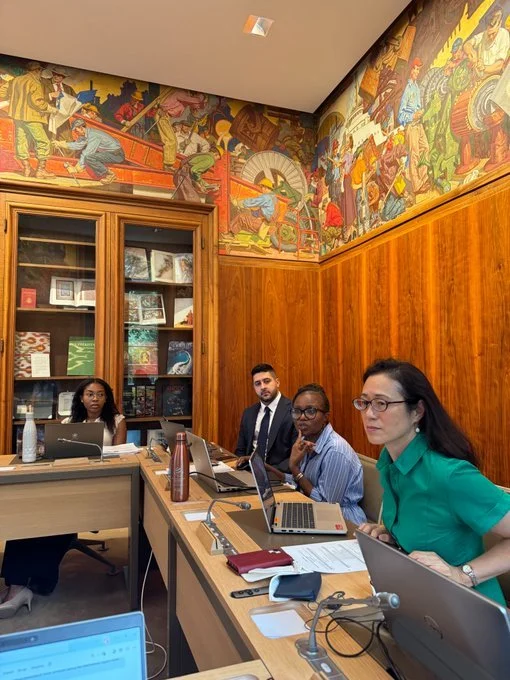
Source(s):
• https://x.com/Prolotario1/status/2077829424091660694
************
Courtesy of Dinar Guru: https://www.dinarguru.com/
Frank26 I want to see the new exchange rate right now. We always say, at the flip of a switch. It can be, but this is a process. It's not a waterfall. It's more like Heinz57 ketchup, but it is pouring and it is coming out.
Reset Intelligence You do not rebuild your whole financial system to keep a currency worthless. You do it to make the currency clear and globally recognized. But the door has a lock, and Iraq does not yet hold the key.
Yada Question: For Iraq to have investors...like they want…don’t they have to have a tradeable currency? yada: That is the goal ...to have a revalued dinar that fits in the flow of the rest of the banks around the world. And with security that it will not revert back to the former days. We are there...
Mnt Goat ...Dr Shabibi and Ali Al‑Alaq...told us Iraq needed STABILITY and SECURITY in Iraq in order to conduct the Project to Delete the Zeros...Eventually the newest director of the CBI, Dr. Nizar Nasser Hussein, will have to give us an update on the project to delete the zeros and where it stands. I am told by my CBI contact this is coming very soon to the citizens.
************
Iraqi PM Leaves White House with Historic $60 Billion in Deals
Edu Matrix: 7-18-2026
Iraqi PM Leaves White House with Historic $60 Billion in Deals - This video shares the financial accomplishments the Iraqi PM created during his visit to Washington D.C.
Weekly Economic Update | Iraq, Vietnam & Interest Rate News
Weekly Economic Update | Iraq, Vietnam & Interest Rate News
Jon Dowling & Chris Real World : 7-17-2026
The global financial and geopolitical landscapes are undergoing a profound realignment, with emerging markets and strategic energy corridors taking center stage.
At the heart of this transformation is Iraq, a nation poised for a historic return to the international economic arena. A comprehensive legislative and economic analysis reveals that a convergence of international trade negotiations, energy infrastructure developments, and forward-looking monetary policies are setting the stage for a new era of global connectivity.
Weekly Economic Update | Iraq, Vietnam & Interest Rate News
Jon Dowling & Chris Real World : 7-17-2026
The global financial and geopolitical landscapes are undergoing a profound realignment, with emerging markets and strategic energy corridors taking center stage.
At the heart of this transformation is Iraq, a nation poised for a historic return to the international economic arena. A comprehensive legislative and economic analysis reveals that a convergence of international trade negotiations, energy infrastructure developments, and forward-looking monetary policies are setting the stage for a new era of global connectivity.
A pivotal moment in Iraq’s economic modernization is currently unfolding in Washington, D.C. Prime Minister Al-Zaidi and a high-level cabinet delegation are engaged in critical negotiations with U.S. administration officials. At the forefront of these discussions is an anticipated $60 billion trade agreement designed to foster bilateral investment, rebuild critical infrastructure, and integrate Iraq into Western financial frameworks.
Central to these diplomatic efforts is the implementation of Iraq’s long-awaited Hydrocarbon Law (HCL). The activation of this oil and gas legislation is a crucial step for the country, as it establishes a unified legal framework for distributing natural resource revenues.
By clarifying resource management, the HCL enables Iraq to back its national currency with tangible, world-class assets—primarily oil and gold reserves. This structural reform not only enhances domestic monetary stability but also accelerates Iraq’s ascension to key global trade bodies, including the World Trade Organization (WTO).
To protect and maximize its resource wealth, Iraq is actively diversifying its energy export pathways. A key development in this effort is a memorandum of understanding (MOU) with Chevron to explore and develop Iraqi oil fields. This partnership is highly strategic, aiming to establish alternative oil transit routes that bypass volatile maritime chokepoints, such as the Strait of Hormuz.
By securing land-based pipelines and alternative shipping corridors, Iraq and its international partners are building supply chain resilience. This proactive approach serves as a stabilizer for global energy markets, ensuring that global supply remains steady regardless of regional geopolitical tensions.
Simultaneously, sustained U.S. investment in Iraq’s broader energy grid is modernizing the nation’s domestic utility infrastructure, paving the way for sustainable industrial growth.
Iraq’s economic trajectory aligns with broader positive trends across the global financial landscape.
In Southeast Asia, Vietnam’s recent elevation to upper-middle-income status serves as a powerful example of how focused infrastructure investment and financial liberalization can drive national prosperity outside traditional geopolitical constraints.
Furthermore, global markets are closely monitoring shifts in Western monetary policy. Analysts anticipate that the U.S. Federal Reserve may initiate interest rate cuts by September, a move designed to ease borrowing costs and maintain macroeconomic stability.
This potential easing cycle is expected to inject liquidity into international markets, benefiting developing economies. On the legislative front, ongoing efforts in Washington to pass digital asset clarity and comprehensive financial reform bills highlight a synchronized global push toward modernized, tech-driven regulatory frameworks.
As these complex economic events unfold, keeping the public informed remains vital. Amid growing interest in international monetary reforms, industry experts emphasize the importance of maintaining professional boundaries.
When engaging with commentators and analysts, community members are encouraged to respect privacy guidelines regarding highly specific financial inquiries. To ensure accuracy and avoid misinformation, observers should always rely on verified, official communication channels for updates on policy implementation and trade agreements.
The current macroeconomic landscape reflects a highly optimistic, interconnected future. From Iraq’s strategic trade negotiations and legislative updates to global monetary adjustments and energy security initiatives, the foundations for resilient growth are actively being laid.
Iraq Economic News and Points To Ponder Saturday Morning 7-18-26
US Clears Seven Iraqi Banks For Dollar Transactions
026-07-18 06:06 Shafaq News- Washington/ Baghdad Seven Iraqi banks have been cleared to resume correspondent banking relationships in foreign currencies, after meeting compliance and governance requirements, which Prime Minister Ali Al-Zaidi on Saturday hailed as “an important step” in Iraq’s banking reform program.
Al-Zaidi said the agreement between the Central Bank of Iraq and the US Treasury Department would “strengthen confidence” in Iraqi lenders, attract investment, and support economic growth.
US Clears Seven Iraqi Banks For Dollar Transactions
026-07-18 06:06 Shafaq News- Washington/ Baghdad Seven Iraqi banks have been cleared to resume correspondent banking relationships in foreign currencies, after meeting compliance and governance requirements, which Prime Minister Ali Al-Zaidi on Saturday hailed as “an important step” in Iraq’s banking reform program.
Al-Zaidi said the agreement between the Central Bank of Iraq and the US Treasury Department would “strengthen confidence” in Iraqi lenders, attract investment, and support economic growth.
Read more: Iraq-US investment deals depend on implementation
The step will renew US dollar transactions after US authorities had restricted Iraqi lenders for years over compliance concerns. According to the Eco Iraq economic observatory, 35 of Iraq’s 72 operating banks had lost access to US dollar transactions by August 2025. The affected institutions included Al-Janoob Islamic Bank, one of the country’s largest private lenders, previously chaired by Al-Zaidi before becoming prime minister.
Read more: Sovereignty strain: US sanctions trigger Iraq's liquidity nightmare
Dollar Edges Up In Baghdad And Erbil
2026-07-18 04:12 Shafaq News- Baghdad/ Erbil The US dollar opened Saturday’s trading higher in Iraq, hovering around 153,000 dinars per 100 dollars.
According to Shafaq News market survey, the dollar traded in Baghdad’s Al-Kifah and Al-Harithiya exchanges at 153,250 dinars per 100 dollars, up from the previous session’s 153,000 dinars.
In the Iraqi capital, exchange shops sold the dollar at 153,750 dinars and bought it at 152,750 dinars, while in Erbil, selling prices stood at 153,250 dinars and buying prices at 153,150 dinars.
https://www.shafaq.com/en/Economy/Dollar-edges-up-in-Baghdad-and-Erbil
Gold Steadies In Baghdad And Erbil Markets
2026-07-18 05:08 Shafaq News- Baghdad/ Erbil On Saturday, gold prices hovered around 860,000 IQD per mithqal in Baghdad and Erbil markets, according to a survey by Shafaq News Agency.
Gold prices on Baghdad's Al-Nahr Street recorded a selling price of 862,000 IQD per mithqal (equivalent to five grams) for 21-carat gold, including Gulf, Turkish, and European varieties, with a buying price of 858,000 IQD, unchanged from Thursday.
The selling price for 21-carat Iraqi gold stood at 832,000 IQD, while the buying price reached 828,000 IQD.
In jewelry stores, the selling price per mithqal of 21-carat Gulf gold ranged between 860,000 and 870,000 IQD, while Iraqi gold sold for between 830,000 and 840,000 IQD.
In Erbil, 22-carat gold was sold at 915,000 IQD per mithqal, 21-carat gold at 874,000 IQD, and 18-carat gold at 749,000 IQD.
https://www.shafaq.com/en/Economy/Gold-steadies-in-Baghdad-and-Erbil-markets
Basrah Crudes Jump 10%+ For The Week
2026-07-18 02:44 Shafaq News- Basrah Iraq’s Basrah crude prices rose more than 12% over the past week, outperforming several major global oil benchmarks.
Basrah Heavy crude fell by $1.94 in its latest trading session to $54.89 per barrel, a daily decline of 3.41%, but recorded weekly gains of $6.62, or 12.06%. Basrah Medium crude also dropped by $1.94 to settle at $57.19 per barrel, down 2.78% on the day, while posting weekly gains of $7.42, or 12.84%.
Brent crude futures settled at $87.68 per barrel, gaining $3.45, or 4.10%. US West Texas Intermediate (WTI) closed at $82.10 per barrel, up $3.99, or 3.15%, compared with the previous week. https://www.shafaq.com/en/Economy/Basrah-crudes-jump-10-for-the-week
Iraq Approves Starlink For Satellite Internet Services
2026-07-17 18:59 Shafaq News- Washington Iraq has officially granted Starlink a license to provide satellite internet services, as Baghdad seeks to expand connectivity options and improve access to high-speed internet, the Communications and Media Commission (CMC) reported on Friday.
The agreement was signed at the US Chamber of Commerce in Washington during a ceremony attended by Iraqi Prime Minister Ali al-Zaidi and CMC Executive Chairman Baligh Abu Kalal.
According to the CMC, Starlink's entry into Iraq is expected to give consumers and businesses more choices for internet access, particularly in remote areas where infrastructure remains limited. The service could also support investment and advance the country's broader digital transformation efforts.
Operated by SpaceX, Starlink delivers internet service through a network of low Earth orbit satellites, extending connectivity to areas where traditional broadband infrastructure is limited or unavailable.
Earlier today, Shafaq News learned that Iraq will sign 48 agreements and memoranda of understanding (MoUs) with the US government, international companies, and global institutions, with energy, infrastructure, and technology projects accounting for the largest share of the package.
Al-Zaidi praised the expanding economic ties with the United States, describing the recently signed arrangements as a sign of growing confidence between Baghdad and Washington.
Read more: Al-Zaidi's Washington visit links US oil investment to September disarmament deadline
https://www.shafaq.com/en/Economy/Iraq-approves-Starlink-for-satellite-internet-services
Full List: Firms, Details Of PM Al-Zaidi’s US Deals
2026-07-17 16:53 Shafaq News- Washington Iraq will sign 48 agreements and memoranda of understanding (MoUs) with the US government, international companies and global institutions, with energy, infrastructure and technology projects accounting for the largest share of the package, Shafaq News learned on Friday.
According to an official list, major global energy companies account for a significant portion of the planned arrangements, including Chevron, Shell, BP, ConocoPhillips, Halliburton, Excelerate Energy, HKN Energy and GE Vernova, alongside Iraq’s KAR Group.
The package also features technology and telecommunications partnerships with companies such as Starlink and Cisco, financial cooperation with JPMorgan, and healthcare initiatives involving Abbott and Thermo Fisher Scientific.
Other planned projects cover education, institutional accreditation, real estate development, food industries and investment ventures involving US and international companies.
The list includes an agreement between the Iraqi and Syrian governments, a memorandum of understanding with the American University of Iraq-Baghdad and PepsiCo, as well as cooperation frameworks with firms specializing in engineering, infrastructure and energy.
It also outlines a partnership between the US-Iraq Business Council (USIBC) and the Federation of Iraqi Chambers of Commerce.
Earlier today, Iraq’s Prime Minister Ali al-Zaidi praised expanding economic ties with the United States, describing the recently signed arrangements as a sign of growing confidence between Baghdad and Washington.
Al-Zaidi, who began his first official foreign visit since taking office on July 13, has held talks with US President Donald Trump and senior American officials on security cooperation, investment, energy and economic partnerships. The discussions also covered the future of the US military presence following the conclusion of the Global Coalition’s mission, as well as Iraq’s commitment to placing all weapons under state control by the end of September.
Read more: Iraq-US investment deals depend on implementation
https://www.shafaq.com/en/Economy/Full-list-Firms-details-of-PM-Al-Zaidi-s-US-deals
Seeds of Wisdom RV and Economics Updates Saturday Morning 7-18-26
Good Morning Dinar Recaps,
Federal Reserve Accelerates Stablecoin Rules as Digital Dollar Framework Takes Shape
Federal regulators are moving quickly to finalize the next phase of America's digital finance framework, reinforcing the growing role of regulated stablecoins in the future global financial system.
Good Morning Dinar Recaps,
Federal Reserve Accelerates Stablecoin Rules as Digital Dollar Framework Takes Shape
Federal regulators are moving quickly to finalize the next phase of America's digital finance framework, reinforcing the growing role of regulated stablecoins in the future global financial system.
Overview
• The Federal Reserve is working to release proposed stablecoin regulations, meeting the deadline established under the GENIUS Act.
• The rules are expected to strengthen the legal framework for payment stablecoins, supporting faster digital payments while protecting consumers and financial stability.
• The move signals continued modernization of the U.S. financial system as governments worldwide compete to shape the future of digital money.
Key Developments
1. Federal Reserve Nears Stablecoin Rule Release
Federal Reserve officials confirmed they are working to publish proposed regulations governing payment stablecoins. The rules are expected to establish standards for reserves, issuer oversight, consumer protections, and operational requirements before becoming final.
2. Digital Dollar Infrastructure Continues Expanding
Rather than creating a central bank digital currency, policymakers are focusing on regulated private-sector stablecoins backed by U.S. dollars and high-quality reserve assets. Supporters believe this approach preserves dollar leadership while encouraging financial innovation.
3. Cross-Border Payments Could Become Faster
Stablecoins continue gaining attention because they can settle international transactions almost instantly while reducing costs compared to traditional correspondent banking systems. Regulators hope clear rules will encourage broader institutional adoption without increasing systemic risk.
Why It Matters
The United States is moving beyond debating digital assets toward building the regulatory foundation for next-generation financial infrastructure. Stablecoins are increasingly viewed as an important component of modern payment systems that could improve efficiency while reinforcing the U.S. dollar's role in global commerce.
Why It Matters to Foreign Currency Holders
For foreign currency holders following the Global Financial Reset narrative, this development is another indication that financial modernization continues alongside existing monetary systems. While stablecoin regulation does not indicate an imminent currency revaluation, it does demonstrate that governments are building new payment rails that could eventually support faster international settlement, greater financial transparency, and expanded digital asset integration.
Implications for the Global Reset
Pillar 2: Trade
Modernized payment infrastructure could significantly improve cross-border settlement, reducing transaction costs and increasing efficiency in international commerce.
Pillar 4: Technology
The development of a comprehensive stablecoin framework reflects the continued digitization of global finance, positioning regulated digital dollars as an increasingly important component of future payment systems.
As governments modernize financial infrastructure, digital payments are becoming an increasingly important part of the evolving global monetary landscape. While today's actions focus on regulation rather than replacing existing currencies, they illustrate how financial innovation continues to reshape international commerce and cross-border settlement.
This is not simply about cryptocurrency—it reflects the broader transformation of the global financial system as digital payments, regulated stablecoins, and modern settlement networks increasingly shape the future of world finance.
Seeds of Wisdom Team
Newshounds News™ Exclusive
Sources
Reuters — Federal Reserve racing to release stablecoin rules under GENIUS Act
Reuters — IMF looks forward to engaging with Fed on communications and forward guidance review
~~~~~~~~~~
🌱 A Message to Our Currency Holders🌱
If you’ve been holding foreign currency for many years, you were not foolish.
You were not wrong to believe the global financial system would change.
What failed was not your patience — it was the information you were given.
For years, dates, rumors, and personalities replaced facts, structure, and proof. “This week” predictions created cycles of hope and disappointment that were never based on how currencies actually change.
That is not your failure.
Our mission here is different: • No dates • No rates • No hype • No gurus
Instead, we focus on:
• Verifiable developments • Institutional evidence
• Global financial structure • Where countries actually sit in the process
Currency value changes only come after sovereignty, trade, banking, settlement systems, and fiscal coordination are in place. History and institutions confirm this sequence.
You will see silence. You will see denials. That is not delay — that is discipline.
Protect your identity. Organize your documents. Verify everything.
Never hand your discernment to anyone who cannot show proof.
You deserve truth — not timelines.
Seeds of Wisdom Team
Newshounds News
~~~~~~~~~~
Seeds of Wisdom Team RV Currency Facts Youtube and Rumble
Newshound's News Telegram Room Link
RV Facts with Proof Links Link
RV Updates Proof links - Facts Link
Start Here room with Most Asked Questions Link
Follow the Gold/Silver Rate COMEX
Follow Fast Facts
Seeds of Wisdom Team™ Website
Thank you Dinar Recaps
Iraq Economic News and Points To Ponder Late Friday Evening 7-17-26
U.S. Energy Secretary: We Are Working with Iraq to Build a Future Based on Investment and Prosperity
Iraqi News Ahency (INA) Friday, July 17, 2026 / Washington - INA – U.S. Energy Secretary Chris Wright said on Friday that Iraq has significant opportunities to achieve development and strengthen its strategic partnership with the United States.
Speaking at a business conference hosted by the U.S. Chamber of Commerce and attended by an Iraqi News Agency correspondent, Wright said the Iraqi representatives participating in the event "represent the driving force behind investment and partnerships with Iraq, namely the Iraqi government and companies."
U.S. Energy Secretary: We Are Working with Iraq to Build a Future Based on Investment and Prosperity
Iraqi News Ahency (INA) Friday, July 17, 2026 / Washington - INA – U.S. Energy Secretary Chris Wright said on Friday that Iraq has significant opportunities to achieve development and strengthen its strategic partnership with the United States.
Speaking at a business conference hosted by the U.S. Chamber of Commerce and attended by an Iraqi News Agency correspondent, Wright said the Iraqi representatives participating in the event "represent the driving force behind investment and partnerships with Iraq, namely the Iraqi government and companies."
"There is tremendous potential for progress in Iraq, including increasing oil production, advancing freedom and prosperity, and providing abundant energy for the Iraqi people," he added.
He said the private sector is the key driver of that progress through capital investment, technology transfer, and bringing skilled talent to Iraq to accelerate development and deepen the strategic partnership with the United States.
Wright said Prime Minister Ali Al-Zaidi had recognized Iraq's need for a partnership with the United States and for creating a business environment that would bring peace and prosperity to the Iraqi people.
"I am delighted to stand here today and witness the signing of agreements and partnerships, along with commitments to major investments in Iraq," he said.
Wright described the day as "a turning point" in the relationship between Iraq and the United States, saying it marked an important moment in ties between "one of the world's oldest, proudest, and most influential nations in shaping the world as we know it today—Iraq—and the United States of America."
He added, "I extend my sincere welcome to Iraqi Prime Minister Ali Al-Zaidi, who chose the United States for his first official foreign visit as prime minister. He recognized that Iraq's most important relationship in the coming period will be with the United States."
Wright also expressed his appreciation to Prime Minister Al-Zaidi, praising "his leadership and determination to transform Iraq and achieve stability, peace, and prosperity."
World Bank President To Al-Zidi: We Are Ready To Support Iraq In Preparing A Program Budget
Money and Business Economy News — Baghdad The President of the World Bank Group/WBG, Ajay Banga, affirmed the readiness to support Iraq in preparing its program budget.
The Prime Minister’s office stated in a statement received by (Al-Rabia) that “Prime Minister Ali Faleh Al-Zaidi met in Washington on Wednesday evening, Baghdad time, with the President of the World Bank Group/WBG, Ajay Banga, and his accompanying delegation, which included the President of the International Finance Corporation/IFC, Mr. Mukhtar Diop, and a number of senior World Bank officials.”
During the meeting, Al-Zaydi stressed that “Iraq is witnessing a high level of stability today, which will positively affect the economic and investment situation,” indicating that “the Iraqi economy will achieve clear growth in light of the policies and reforms that the government has begun to implement.”
He pointed out that "the government is paying special attention to reforming the banking sector and preparing a program budget, in order to ensure that resources are directed efficiently towards achieving development and drawing a new economic identity for Iraq, based on diversification, reform and sustainability," stressing "working to increase oil production to meet the requirements of development, in parallel with developing non-oil sectors and enhancing their contribution to the national economy."
He explained that "the government is proceeding with the establishment of the Development Fund, which will finance investment projects in all governorates, and expand the scope of financing available to qualified Iraqi banks, in addition to supporting and empowering the Iraqi private sector to be a key partner in the development process."
For his part, World Bank President Ajay Banga expressed his admiration for "what Iraq has achieved recently in consolidating stability and peace," stressing that "Iraq has good potential and resources capable of bringing about a broad economic transformation, if they are properly invested."
Banga expressed the World Bank's "readiness to provide technical and advisory support to Iraq in the areas of program budgeting and banking sector restructuring."
He also called for "studying the formation of a large Iraqi banking holding company by merging a number of government banks, which would contribute to enhancing the efficiency of the financial sector and supporting the path of economic reform."
https://www.economy-news.net/content.php?id=71442
Prime Minister Receives Representatives Of Jpmorgan In Washington
Iraqi News Ahency (INA) Friday, July 17, 2026 Baghdad - INA - 7/17/2026 Prime Minister Ali Faleh Al-Zaidi received representatives of JPMorgan in Washington.
The Media Office of the Prime Minister said in a statement, received by the Iraqi news agency-INA that “Prime Minister Ali Faleh Al-Zaidi Received representatives of JPMorgan in Washington and agreed on the opening of a Bank Branch in Iraq to Finance Projects Implemented by U.S. Companies.”
Prime Minister Receives CEO of U.S. Excelerate Energy in Washington
Iraqi News Agency (INA) Friday, July 17, 2026 Baghdad - INA - 7/17/2026 Prime Minister Ali Faleh Al-Zaidi received the Chief Executive Officer of Excelerate Energy in Washington.
The Prime Minister's Media Office said in a statement received by the Iraqi News Agency (INA) that “Prime Minister Ali Faleh Al-Zaidi received today, Friday, in Washington, D.C., the Chief Executive Officer of Excelerate Energy. During the meeting, the two sides agreed to launch the implementation of the floating gas terminal project in Khor Al-Zubair.
Prime Minister Receives Starlink CEO in Washington
Iraqi News Agency (INA) Friday, July 17, 2026 Baghdad - INA - The Prime Minister Ali Falih Al-Zaidi met on Friday with the Chief Executive Officer of Starlink in Washington, D.C.
The Prime Minister's Media Office said in a statement, received by the Iraqi news agency –INA that “Prime Minister Ali Faleh Al-Zaidi received today, Friday, at his residence in Washington, D.C., the Chief Executive Officer of Starlink, whose company is preparing to launch operations in Iraq following its licensing by the Communications and Media Commission (CMC)”.
https://ina.iq/en/politics/50504-prime-minister-receives-starlink-ceo-in-washington.html
Prime Minister Meets with CEOs of US Companies HKN, GE Vernova, and Vantive in Washington
Iraqi News Agency (INA) Friday, July 17, 2026 Baghdad - INA - Prime Minister Ali Faleh al-Zaidi met on Friday with the CEOs of US companies HKN, GE Vernova, and Vantive in Washington, D.C., on the sidelines of the US Chamber of Commerce conference.
The Prime Minister's Media Office stated in a statement received by the Iraqi News Agency (INA) that "Prime Minister Ali Faleh al-Zaidi met separately with the CEOs of the US companies HKN, GE Vernova, Vantive, Google, and Commerce PLC, on the sidelines of the US Chamber of Commerce conference in Washington."
US Envoy: Iraq Can Anchor Regional Security, Trade Corridor
2026-07-17 / 10:24 Shafaq News- Washington US Presidential Envoy to Iraq Tom Barrack said on Friday that Iraq is leading a new regional security and strategic framework by linking the Gulf, the Levant, Turkiye, and Egypt through economic and infrastructure cooperation.
Speaking at the US-Iraq Business Summit in Washington, Barrack noted that diplomacy, intelligence, and military strategies often follow the private sector, labeling business leaders as the "best diplomats" in advancing energy, electricity, and regional connectivity projects.
"This project will shift dependence away from maritime shipping through the Strait of Hormuz toward overland routes and integrated logistics networks, reducing the strategic importance of the strait within two years.”
He also highlighted the importance of the "Middle Corridor," which stretches from Turkiye and Azerbaijan through Central Asia, saying it could transport vast quantities of natural gas to Europe. He described regional trade integration as "the real alternative" to military conflict.
Barrack criticized previous foreign policies toward the region, saying intervention and efforts to change governments had failed and that the region needs strong leaders with clarity and transparency to achieve prosperity.
He expressed confidence in Iraqi Prime Minister Ali Al-Zaidi's leadership and urged American and international businesses to support investment in Iraq, stressing, “such backing could help transform two decades of instability into a lasting security and economic partnership.”
Read more: Iraq-US investment deals depend on implementation
https://shafaq.com/en/Iraq/US-Envoy-Iraq-can-anchor-regional-security-trade-corridor
The Economy is on the Brink of Collapse
The Economy is on the Brink of Collapse
WTFinance: 7-16-2026
While the stock market may hit new highs and GDP figures appear positive, the reality inside the average household often tells a different story.
To navigate this paradox, expert Eric Basmajian recently shared his “four economy framework” on the WTFinance YouTube channel, providing a roadmap for understanding how the modern economy truly functions beyond the surface-level headlines.
The Economy is on the Brink of Collapse
WTFinance: 7-16-2026
While the stock market may hit new highs and GDP figures appear positive, the reality inside the average household often tells a different story.
To navigate this paradox, expert Eric Basmajian recently shared his “four economy framework” on the WTFinance YouTube channel, providing a roadmap for understanding how the modern economy truly functions beyond the surface-level headlines.
Basmajian’s framework categorizes economic indicators into four specific layers: leading, cyclical, aggregate, and lagging variables. By observing how these layers interact over the duration of a business cycle, we gain a clearer picture of reality.
Currently, headline metrics like unemployment figures and GDP growth suggest a robust economy. However, these are often “lagging” indicators. When we pivot our focus to “leading” indicators—such as the housing market—we see significant signs of weakness that suggest the broader business cycle is under mounting pressure.
One of the most structural shifts in the current landscape is the influence of government fiscal policy. Massive budget deficits, primarily driven by entitlement spending, are indirectly propping up corporate profit margins.
When the government injects this capital into the system, it fuels household consumption, which in turn flows back to large corporations. Combined with increased market concentration and monopolistic power, companies are maintaining historic profit margins. These inflated margins act as a cushion, allowing large firms to retain staff and avoid the widespread layoffs that typically characterize the beginning of a recession.
The labor market has become increasingly bifurcated, resulting in what many call a “K-shaped” economic outcome. While the top earners remain resilient with solid balance sheets, lower-income households are increasingly reliant on borrowing to sustain their standard of living.
Despite the Federal Reserve’s tightening monetary policy, the labor market remains “frozen.” We are seeing historically low hiring rates and subdued wage growth, yet the lack of mass layoffs keeps the unemployment rate artificially low. This stagnation creates an environment where people aren’t necessarily prospering, but they aren’t losing their jobs in large numbers either.
The modern economy has shown remarkable resilience in the face of global uncertainty, including geopolitical tensions and shifting trade tariffs. Basmajian notes that while these shocks impact short-term market sentiment, they rarely derail the business cycle unless they severely compress corporate profit margins.
Looking ahead, the Federal Reserve faces the delicate task of steering inflation toward their target without triggering a full-scale recession. The expectation is that we will remain in a range-bound interest rate environment, with little movement in terms of aggressive hikes or cuts in the near term.
The most important takeaway from this analysis is that the stock market is not the economy. Relying on stock prices as a proxy for financial health is a dangerous game that ignores the sequential dynamics of the business cycle.
By paying closer attention to the interplay between monetary policy, corporate margins, and fiscal support, we can better understand the forces shaping our financial future.
RESET Incoming: Gold, Debt, & the Breaking Point
RESET Incoming: Gold, Debt, & the Breaking Point
Taylor Kenny: 7-16-2026
Join Taylor LIVE for a direct conversation and Q&A on interests, the coming Reset, and why physical gold and silver remain critical wealth preservation tools.
In a recent detailed live discussion, Taylor Kenney of ITM Trading provided a comprehensive look at the current state of the markets, focusing on the widening gap between paper assets and physical reality. As investors grapple with fluctuating prices and headline-driven volatility, Kenney offers a strategic perspective on why the fundamental demand for precious metals is reaching a fever pitch, even when the “paper” price suggests otherwise.
RESET Incoming: Gold, Debt, & the Breaking Point
Taylor Kenny: 7-16-2026
Join Taylor LIVE for a direct conversation and Q&A on interests, the coming Reset, and why physical gold and silver remain critical wealth preservation tools.
In a recent detailed live discussion, Taylor Kenney of ITM Trading provided a comprehensive look at the current state of the markets, focusing on the widening gap between paper assets and physical reality. As investors grapple with fluctuating prices and headline-driven volatility, Kenney offers a strategic perspective on why the fundamental demand for precious metals is reaching a fever pitch, even when the “paper” price suggests otherwise.
One of the most striking points addressed by Kenney is the current disconnect between the spot price of gold and silver—often dictated by paper contracts—and the actual demand for physical bullion.
While Western paper markets may show temporary price dips, the appetite for physical ownership in the East, particularly in China, remains exceptionally high. China is not only aggressively accumulating gold but is also implementing regulatory reforms to streamline the transition toward physical ownership.
This shift suggests that savvy global players are looking past short-term market noise and focusing on the long-term security that only physical assets can provide.
The discussion also delved into the unsustainable trajectory of U.S. national debt and the escalating cost of interest payments.
Kenney warns that these financial pressures are creating a perfect storm for persistent inflation. As the debt-to-GDP ratio continues to climb, the risk to the U.S. dollar’s status as the primary global reserve currency becomes more pronounced.
For many analysts, it is no longer a question of if the system will face a correction, but when. This environment of fiscal instability is precisely what drives central banks around the world to pivot back to gold, signaling a strategic repositioning ahead of a potential new monetary era.
Understanding the “monetary reset” is essential for long-term financial planning. Kenney clarifies that this is rarely a single, overnight event. Instead, it is a complex, multi-stage process that often begins with persistent inflation, transitions into hyperinflation, and culminates in an official reset of the currency system.
By identifying these stages, individuals can better prepare for the inevitable shift in purchasing power. Central banks are already leading the way, diversifying their reserves away from fiat currencies and into “tier one” assets like gold to ensure they have a seat at the table when the new system emerges.
Rather than viewing gold and silver as speculative investments, the conversation emphasizes their role as essential insurance against currency devaluation. In an era where digital currencies and centralized financial controls are on the rise, physical precious metals offer a level of privacy and tangibility that digital assets cannot match.
Kenney addresses common concerns regarding price volatility and historical fears such as confiscation, explaining why physical ownership remains a cornerstone of wealth preservation. By holding assets outside of the traditional banking system, individuals can protect their labor and legacy from the erosive effects of a devaluing dollar.
The live session concluded with an interactive Q&A, where Kenney tackled the most pressing questions from the audience, ranging from the timing of the reset to the impact of Central Bank Digital Currencies (CBDCs). The overarching message is one of empowerment through education. While the global financial system faces significant hurdles, those who understand the historical patterns of debt and currency can take proactive steps to safeguard their future.
For those looking to deepen their understanding of these economic shifts and see the full data behind these trends, watching the complete video from ITM Trading on YouTube is highly recommended. By staying informed, you can navigate the coming changes with confidence and clarity.
Seeds of Wisdom RV and Economics Updates Friday Afternoon 7-17-26
Good Afternoon Dinar Recaps,
Hormuz Shipping Slumps as U.S.-Iran Conflict Deepens Despite Ongoing Peace Efforts
Commercial shipping through the Strait of Hormuz has fallen to its lowest level since May as renewed military tensions between the United States and Iran disrupt one of the world's most important energy corridors. Although diplomatic contacts continue, negotiations remain fragile and no final peace agreement has been reached.
Good Afternoon Dinar Recaps,
Hormuz Shipping Slumps as U.S.-Iran Conflict Deepens Despite Ongoing Peace Efforts
Commercial shipping through the Strait of Hormuz has fallen to its lowest level since May as renewed military tensions between the United States and Iran disrupt one of the world's most important energy corridors. Although diplomatic contacts continue, negotiations remain fragile and no final peace agreement has been reached.
Overview
Commercial vessel traffic through the Strait of Hormuz dropped sharply, increasing concerns over global energy supplies and inflation.
The United States continues its naval blockade while Iran has threatened additional maritime disruption, keeping global markets on edge.
Peace talks remain alive, but negotiators have not finalized a Memorandum of Understanding (MOU), and significant differences remain over sanctions, security, and Iran's nuclear program.
Key Developments
1. Shipping Through Hormuz Falls to Multi-Month Low
Commercial traffic through the Strait of Hormuz declined to its lowest level since May, with only a handful of vessels transiting one of the world's most important maritime chokepoints. Shipping companies have delayed voyages, altered routes, and reassessed operational risks as military tensions intensified.
2. Energy Markets Face Renewed Pressure
The Strait of Hormuz normally handles approximately one-fifth of global seaborne oil and liquefied natural gas exports. Reduced tanker traffic, higher insurance costs, and continued security concerns have reinforced fears of tighter energy supplies, contributing to elevated oil prices and increased volatility across commodity markets.
3. Diplomacy Continues, but No Final Agreement Has Been Reached
While back-channel negotiations between Washington and Tehran continue, there is no finalized Memorandum of Understanding currently in force. Discussions remain focused on maritime security, sanctions relief, and Iran's nuclear program, but both sides continue to disagree on key issues. Diplomatic channels remain open, yet military activity on both sides underscores the fragile nature of the negotiations.
Why It Matters
The sharp decline in Hormuz shipping demonstrates how quickly geopolitical conflict can disrupt the global economy. Even without a complete closure of the waterway, reduced shipping capacity increases transportation costs, places upward pressure on energy prices, and creates additional uncertainty for businesses and financial markets worldwide.
Why It Matters to Foreign Currency Holders
Energy disruptions often influence inflation, interest rates, currency values, and central bank decisions. Sustained instability in the Gulf could strengthen demand for alternative payment systems, encourage greater diversification of reserve assets, and accelerate long-term efforts to modernize international settlement systems outside traditional financial channels.
Implications for the Global Reset
Pillar 2: Trade
Disruptions in the Strait of Hormuz threaten one of the world's most important trade corridors, increasing transportation costs and slowing global commerce.
Pillar 3: Assets
Higher energy prices and geopolitical uncertainty continue to influence oil markets, commodities, currencies, and safe-haven assets, reinforcing volatility across global financial markets.
Pillar 5: Energy
Continued instability surrounding Hormuz places global oil and LNG supplies at risk, highlighting the strategic importance of energy security in the evolving world economy.
The situation remains highly fluid. While diplomatic efforts continue, the absence of a final agreement means global markets remain vulnerable to further military escalation and additional disruptions to international trade and energy supplies.
This is not simply about oil—it reflects the broader transformation of the global financial system as energy security, trade flows, and geopolitical power increasingly shape the future of the world economy.
Seeds of Wisdom Team
Newshounds News™ Exclusive
Sources
Reuters — Shipping, Energy, and Gulf Conflict Coverage (July 17, 2026)
Modern Diplomacy — Hormuz Shipping Slumps as U.S. and Iran Intensify Gulf Conflict
~~~~~~~~~~
Seeds of Wisdom Team RV Currency Facts Youtube and Rumble
Newshound's News Telegram Room Link
RV Facts with Proof Links Link
RV Updates Proof links - Facts Link
Start Here room with Most Asked Questions Link
Follow the Gold/Silver Rate COMEX
Follow Fast Facts
Seeds of Wisdom Team™ Website
Thank you Dinar Recaps
The Fed Just Secretly Changed Their 1944 Bretton Woods Rules. And The Dollar System Is Cracking
The Fed Just Secretly Changed Their 1944 Bretton Woods Rules. And The Dollar System Is Cracking
Unfolded Finance: 7-17-2026
On July 22nd, 1944, Keynes walked out of Bretton Woods having lost the argument he was right about. The dollar replaced gold as the global anchor. Every other currency fixed to the dollar.
The IMF managed adjustments. The system was orderly, stable, and built on three specific commitments: dollar-gold convertibility, fixed exchange rates, and capital controls.
All three are gone.
The Fed Just Secretly Changed Their 1944 Bretton Woods Rules. And The Dollar System Is Cracking
Unfolded Finance: 7-17-2026
On July 22nd, 1944, Keynes walked out of Bretton Woods having lost the argument he was right about. The dollar replaced gold as the global anchor. Every other currency fixed to the dollar.
The IMF managed adjustments. The system was orderly, stable, and built on three specific commitments: dollar-gold convertibility, fixed exchange rates, and capital controls.
All three are gone.
Convertibility ended with Nixon's 1971 Sunday evening address. Fixed rates collapsed by 1973. Capital controls were dismantled through the 1980s and 1990s.
What replaced them was an informal arrangement — the dollar standard — resting on one unwritten assumption: that dollar reserve holdings were sovereign property, safe from the political decisions of the country issuing the currency.
In 2022, the United States froze $300 billion in Russian central bank reserves. Not seized. Frozen. The action was presented as a targeted sanctions measure. It was a rule change. The rule it changed was the one Bretton Woods never needed to write down because it was considered self-evident: that reserve assets cannot be made inaccessible by the issuing country for political reasons.
Central banks bought gold at record levels in 2022, 2023, 2024, and 2025 — five consecutive years. Not because gold pays yield. Because gold cannot be frozen.
The dollar system is not ending. The rules sustaining it are changing. And the cracking is visible in the data.
What You'll Learn:
▸ What the three specific Bretton Woods commitments actually were — and why each one served as a discipline mechanism, not just a policy preference
▸ Why Keynes's bancor proposal was rejected — and why his warning about anchoring to a single nation's currency took exactly seventy-eight years to demonstrate
▸ How the three Bretton Woods pillars were removed — convertibility in 1971, fixed rates by 1973, capital controls through the 1980s
▸ What the informal Bretton Woods II arrangement actually rested on — and which unwritten assumption the 2022 reserve freeze demonstrated as conditional
▸ Why the 2022 Russian reserve freeze was a rule change rather than a sanctions measure — and why the distinction matters for every central bank's reserve calculation
▸ Why five consecutive years of record central bank gold purchases represent a rational response to demonstrated evidence rather than speculative behavior
▸ Why this dollar stress episode is structurally different from 1971, 1980, and 1985 — and what makes the 2022 demonstration irreversible
The Timeline:
July 1944 — Bretton Woods Conference; dollar anchored to gold at $35; three-pillar architecture established
1960s — Vietnam spending and Great Society programs create dollar oversupply; gold drain accelerates
August 15, 1971 — Nixon closes gold window; convertibility pillar removed 1971-1973 — Smithsonian Agreement fails; floating exchange rates adopted; fixed rate pillar removed
1980s-1990s — Financial liberalization dismantles capital controls; third pillar removed
1974 — Petrodollar system established; informal Bretton Woods II begins 2007-2022 — Fed balance sheet grows from $900B to $8.9T; institutional discipline replaces gold discipline
February 2022 — Russia invades Ukraine; Western allies freeze $300B in Russian central bank reserves 2022-2025 — Central banks buy gold at record levels five consecutive years 2024 — Dollar reserve share approximately 58%; mBridge operational; CIPS in 100+ countries
November 2024 — Moody's strips last US Triple A rating; dollar fiscal gap formally measured Keynes warned in 1944 that a system anchored to one nation's currency would eventually import that nation's political decisions into every other economy.
It took seventy-eight years. But it has been demonstrated.
News, Rumors and Opinions Friday 7-17-2026
KTFA:
Clare: Iraqi Prime Minister Media Office
Prime Minister Ali Faleh Al-Zaidi Meets with President of the World Bank Group (WBG) in Washington
Prime Minister Ali Faleh Al-Zaidi met in Washington yesterday evening, Wednesday, Baghdad time, with President of the World Bank Group (WBG) Ajay Banga and the accompanying delegation, which included IFC Managing Director Makhtar Diop and a number of senior World Bank officials.
KTFA:
Clare: Iraqi Prime Minister Media Office
Prime Minister Ali Faleh Al-Zaidi Meets with President of the World Bank Group (WBG) in Washington
Prime Minister Ali Faleh Al-Zaidi met in Washington yesterday evening, Wednesday, Baghdad time, with President of the World Bank Group (WBG) Ajay Banga and the accompanying delegation, which included IFC Managing Director Makhtar Diop and a number of senior World Bank officials.
During the meeting, Prime Minister Al-Zaidi affirmed that Iraq is experiencing a high level of stability, which will have a positive impact on the country’s economic and investment environment. He noted that the Iraqi economy is expected to achieve clear growth in light of the policies and reforms the government has begun implementing.
The Prime Minister stated that the government attaches particular importance to reforming the banking sector and adopting program-based budgeting to ensure the efficient allocation of resources toward achieving development. He also stressed the government’s commitment to shaping a new economic identity for Iraq based on diversification, reform, and sustainability, while increasing oil production to meet development requirements in parallel with developing non-oil sectors and enhancing their contribution to the national economy.
Prime Minister Al-Zaidi explained that the government is moving forward with the establishment of the Development Fund, which will finance investment projects across all governorates and expand the financing available to qualified Iraqi banks, while supporting and empowering Iraq’s private sector to serve as a key partner in the country’s development process.
For his part, World Bank Group President Ajay Banga expressed his admiration for the progress Iraq has made in recent years in consolidating stability and peace. He affirmed that Iraq possesses strong resources and capabilities that can drive broad economic transformation if properly utilized.
Mr. Banga also expressed the World Bank’s readiness to provide Iraq with technical and advisory support in the areas of program-based budgeting and banking sector restructuring. He further proposed studying the establishment of a major Iraqi bank holding company through the merger of several state-owned banks, in a manner that would enhance the efficiency of the financial sector and support the country’s economic reform process.
Media Office of the Prime Minister
July 16, 2026
************
Clare: Iraqi Prime Minister Media Office
Prime Minister Ali Faleh Al-Zaidi Meets with Representatives of Leading Global Energy Companies in Houston
Prime Minister Ali Faleh Al-Zaidi met in Houston with representatives of leading global energy companies to discuss prospects for expanding cooperation and investment in the energy sector, as part of his official visit to the United States.
The meetings included representatives of Halliburton, Shell, Honeywell, Weatherford, and Baker Hughes, during which the participants discussed opportunities for cooperation in developing Iraq’s oil and natural gas sectors and benefiting from the advanced expertise and technologies these companies offer.
Prime Minister Al-Zaidi emphasized the importance of building long-term strategic partnerships with leading global energy companies, stressing that the Iraqi government is moving forward with creating an attractive investment environment and is prepared to provide all necessary facilities to ensure the success of companies’ operations and the implementation of their projects in Iraq.
The Prime Minister noted that the government attaches great importance to developing natural gas investment projects, increasing production, and strengthening industries associated with the energy sector, in a manner that supports the national economy.
For their part, the company representatives expressed their interest in expanding their operations in Iraq and their readiness to contribute to the implementation of major energy projects, particularly in the oil and natural gas sectors. They also affirmed their confidence in Iraq’s significant potential and the investment opportunities it offers.
Media Office of the Prime Minister
July 17, 2026
************
Courtesy of Dinar Guru: https://www.dinarguru.com/
Militia Man What's happening in Washington right now is not a routine diplomatic trip. The fact that the meetings are scheduled across a full 7 days already signals seriousness. Most high-level visits of this type are much shorter. A 7-day window gives both sides time to go deep into complex files instead of rushing through the surface level discussions...They even programmed a special lunch that wasn't on the plan..
Stephen I have a hard time understanding how people don't see Iraq as a very viable country but also their currency. Do you think they're going to do all these economical things moving forward [On Trump/Zaidi meeting] with a currency that's worth 1310 per US dollar? One tenth of a penny? I have a hard time believing that...Everything happening is positive. I have nothing negative today. This is all good, good stuff. If you are a dinar investor you should be very positive.
Frank26 Since the 10th of July the value of the Iraqi dinar [market rate] has been going up. It may be moving like an inchworm, a little bit at a time, but it's doing the predictable. It is doing what it was set up to do, scheduled to do, positioned to do. The numbers are encouraging. They should be decreasing to the point where it will reach 1 to 1 so that it can play fair with the American dollar...You're going to enjoy watching it grow..
**************
Gold, Silver Await Fed’s Historic Moment…
Arcadia Economics: 7-17-2026
Everything was lining up for Trump to get his way with lower interest rates, until the Iran war sent inflation soaring and made everything a lot more complicated.
That's left the gold and silver prices in a holding pattern as the Fed approaches an historic moment with no easy choices.
But to find out where that leaves us, and what to expect in the second half of 2026, click to watch this precious metals week's update now!
Seeds of Wisdom RV and Economics Updates Friday Morning 7-17-26
Good Morning Dinar Recaps,
Ondo Finance and SBI Bring Japan’s Financial Markets On-Chain with Yen-Backed Stablecoin
Ondo Finance has partnered with Japan's SBI Group to tokenize Japanese financial assets using a regulated yen-backed stablecoin, marking another significant step toward modernizing cross-border capital markets through blockchain technology.
Good Morning Dinar Recaps,
Ondo Finance and SBI Bring Japan’s Financial Markets On-Chain with Yen-Backed Stablecoin
Ondo Finance has partnered with Japan's SBI Group to tokenize Japanese financial assets using a regulated yen-backed stablecoin, marking another significant step toward modernizing cross-border capital markets through blockchain technology.
Overview
Ondo Finance and SBI Group announced a strategic partnership to tokenize Japanese financial assets.
SBI's regulated JPYSC stablecoin will be used for settlement and collateral, allowing transactions to occur on blockchain infrastructure.
The partnership reflects the growing global shift toward tokenized real-world assets (RWAs) and regulated digital finance.
Key Developments
1. Japanese Assets Move Toward Tokenization
Under the agreement, Ondo Global Markets will issue tokenized Japanese securities that will be distributed through SBI Group's financial ecosystem, which manages more than $250 billion in assets. Settlement will occur using JPYSC, SBI's yen-backed stablecoin operating under Japan's regulated digital asset framework.
2. Regulated Stablecoins Power Cross-Border Finance
Rather than relying on traditional banking rails, the partnership will use blockchain-based settlement through JPYSC. Tokenized securities can potentially become accessible to international investors more efficiently while remaining within Japan's regulatory structure.
3. Japan Expands Its Leadership in Digital Finance
Japan has become one of the world's most advanced jurisdictions for stablecoin regulation. By combining regulated digital money with tokenized securities, SBI and Ondo are helping build infrastructure that could reshape how financial assets are traded, settled, and held globally.
Why It Matters
This partnership demonstrates that tokenization is moving beyond pilot projects into mainstream financial markets. Large financial institutions are increasingly using regulated blockchain technology to improve settlement speed, reduce transaction costs, and expand investor access across borders.
Why It Matters to Foreign Currency Holders
For those following the evolution of the international monetary system, this development highlights how regulated stablecoins are beginning to support real financial assets rather than simply cryptocurrency trading. As more nations develop tokenized securities and digital settlement systems, cross-border finance may increasingly rely on blockchain infrastructure alongside traditional banking networks.
Implications for the Global Reset
Pillar 2: Trade
Tokenized assets and blockchain settlement have the potential to make cross-border investment and capital movement faster and more efficient, reducing friction in international financial markets.
Pillar 3: Assets
The continued growth of real-world asset tokenization represents a significant evolution in how stocks, bonds, and other financial instruments may be owned, traded, and settled in the future.
Pillar 4: Technology
The partnership combines regulated stablecoins, blockchain infrastructure, and tokenized securities, demonstrating how financial technology is becoming integrated into mainstream capital markets rather than remaining a niche innovation.
As more major financial institutions adopt regulated digital infrastructure, tokenization is evolving from an emerging technology into a practical component of modern capital markets.
This is not simply about cryptocurrency—it reflects the broader transformation of the global financial system as digital assets, regulated stablecoins, and tokenized markets increasingly reshape the future of global finance.
Seeds of Wisdom Team
Newshounds News™ Exclusive
Sources
~~~~~~~~~~
🌱 A Message to Our Currency Holders🌱
If you’ve been holding foreign currency for many years, you were not foolish.
You were not wrong to believe the global financial system would change.
What failed was not your patience — it was the information you were given.
For years, dates, rumors, and personalities replaced facts, structure, and proof. “This week” predictions created cycles of hope and disappointment that were never based on how currencies actually change.
That is not your failure.
Our mission here is different: • No dates • No rates • No hype • No gurus
Instead, we focus on:
• Verifiable developments • Institutional evidence
• Global financial structure • Where countries actually sit in the process
Currency value changes only come after sovereignty, trade, banking, settlement systems, and fiscal coordination are in place. History and institutions confirm this sequence.
You will see silence. You will see denials. That is not delay — that is discipline.
Protect your identity. Organize your documents. Verify everything.
Never hand your discernment to anyone who cannot show proof.
You deserve truth — not timelines.
Seeds of Wisdom Team
Newshounds News
~~~~~~~~~~
Seeds of Wisdom Team RV Currency Facts Youtube and Rumble
Newshound's News Telegram Room Link
RV Facts with Proof Links Link
RV Updates Proof links - Facts Link
Start Here room with Most Asked Questions Link
Follow the Gold/Silver Rate COMEX
Follow Fast Facts
Seeds of Wisdom Team™ Website
Thank you Dinar Recaps