
Thank you to all the subscribers to our Early Access program…we thank you for your continued support.
We are excited to offer this new service to keep you informed and up-to-date on the latest Dinar and currency news.
“Iraq News” Posted by Tishwash at TNT 4-9-2026
TNT:
Tishwash: Swiss Ambassador: We will follow up on the frozen Iraqi funds in preparation for their return.
The Federal Integrity Commission discussed on Wednesday with the Swiss Ambassador in Baghdad the strengthening of bilateral cooperation in the field of recovering frozen Iraqi funds and combating corruption, while stressing the importance of bilateral partnerships to overcome obstacles to recovering funds and prosecuting the accused.
The Commission’s media office stated in a statement received by Al-Furat News that “the head of the Federal Integrity Commission, Muhammad Ali Al-Lami, during his meeting with the Swiss Ambassador, Daniel Hon, at the Commission’s headquarters, stressed the importance of expanding bilateral partnerships and concluding memoranda of understanding that contribute to overcoming the challenges that hinder the recovery of smuggled funds and accused individuals, and enhance international cooperation in this field.”
TNT:
Tishwash: Swiss Ambassador: We will follow up on the frozen Iraqi funds in preparation for their return.
The Federal Integrity Commission discussed on Wednesday with the Swiss Ambassador in Baghdad the strengthening of bilateral cooperation in the field of recovering frozen Iraqi funds and combating corruption, while stressing the importance of bilateral partnerships to overcome obstacles to recovering funds and prosecuting the accused.
The Commission’s media office stated in a statement received by Al-Furat News that “the head of the Federal Integrity Commission, Muhammad Ali Al-Lami, during his meeting with the Swiss Ambassador, Daniel Hon, at the Commission’s headquarters, stressed the importance of expanding bilateral partnerships and concluding memoranda of understanding that contribute to overcoming the challenges that hinder the recovery of smuggled funds and accused individuals, and enhance international cooperation in this field.”
The statement added that "during the meeting, discussions were held on concluding a memorandum of understanding between the two sides, particularly in the areas of information exchange, tracking corruption crimes and reducing their spread, as well as developing technical cooperation and updating policies and strategies related to combating it, and addressing obstacles to recovering funds, especially those that were seized during the era of the previous regime."
Al-Lami pointed to the "file of Iraqi assets dating back to the time of the previous regime, explaining that their loss is due to several reasons, including the international sanctions imposed in 1990 and the Oil-for-Food Program, which requires effective international cooperation to recover them."
For his part, the Swiss ambassador expressed his pleasure at strengthening bilateral relations, especially in the field of preventing and combating corruption, stressing his endeavor to coordinate with the competent authorities in his country to study the file of frozen Iraqi funds, in preparation for taking the necessary measures to return them in a way that contributes to supporting reconstruction and development projects in Iraq. link
************
Tishwash: The House of Representatives votes on the members of the Finance Committee
The Iraqi Parliament voted today, Wednesday, on the members of the Finance Committee.
Republic of Iraq – Council of Representatives
First Legislative Term
**Agenda for Session No. (16) – May 2024**
* Recitation of verses from the Holy Quran.
**Department of Legislative Affairs**
**First:** Completion of the vote on the members of the Permanent Parliamentary Committees.
**Second:** First Reading of the Proposed Law on the Fifth Amendment to the Civil Aviation Law No. (198) of 1974 (Submitted by the Committee on Transport, Communications, and Governance) – (58 Articles).
**Third:** First Reading of the Proposed Law on Governorates Not Incorporated into a Region (Submitted by the Committee on Regions and Governorates Not Incorporated into a Region, Planning, Government Program, and Endowments) – (71 Articles).
**[Administrative Note]**
The session shall commence at 11:00 AM. link
************
Tishwash: Industry: 234 partnership agreements to support the private sector in Iraq
The Ministry of Industry and Minerals announced on Wednesday a plan to rehabilitate and operate stalled factories, confirming the existence of 234 partnership contracts to support the industrial sector in Iraq.
The ministry's spokesperson, Duha al-Jubouri, told the official news agency that "the ministry intends to take concrete steps to support national industry in the coming period, including operating the closed factories."
Al-Jubouri explained that "the public companies affiliated with the ministry number 31 companies, including 28 production and service companies, in addition to three public bodies, namely the Industrial Research and Development Authority, the Geological Survey Authority, and the Million Industrial Authority."
She continued: “The number of factories affiliated with the ministry is 312, of which 225 are operational, while 87 are out of operation,” stressing that “work is underway by the administrations of the out of operation factories, under the guidance and supervision of the Minister of Industry, to rehabilitate and operate the factories.”
She added that "the number of partnership contracts with the private sector is 144 contracts that are still being implemented, while 90 new contracts are being evaluated, bringing the total number of partnership contracts with the private sector to 234 contracts."
She noted that "the ministry has partnership contracts related to strategic industries such as sulfur and phosphate, which may take time to be completed," expecting that "citizens will see the real results of some of these projects during this year link
************
Tishwash: He moved to approve an emergency budget of $40 billion.
In light of the economic and financial challenges and the significant decline in oil revenues as a result of the war and regional conflicts, the Prime Minister’s financial advisor, Dr. Mazhar Muhammad Salih, announced that the government is adopting a series of measures to ensure the continuity of the work of state institutions and the provision of basic services in the event of a delay in approving the general budget.
In an interview with Al-Sabah, Saleh confirmed that one of the most prominent of these measures is the application of the temporary spending rule (1/12) of the previous year's budget, based on the amended Federal Financial Management Law No. (6 of 2019). He explained that this procedure allows for the coverage of essential expenditures such as salaries, wages, pensions, and social welfare allocations, which amount to approximately (8) trillion dinars monthly, while funding continues for basic operational costs. New investment projects are suspended or postponed, and only urgent projects are implemented.
Saleh indicated that the government is working on rearranging spending priorities, focusing on vital sectors, and making limited financial transfers between spending categories within the available legal frameworks. In some cases, it may resort to short-term domestic borrowing to cover the temporary deficit and ensure liquidity stability.
In Parliament, MP Ali Salman al-Moussawi revealed a plan to allocate approximately $40 billion as an emergency budget to expedite and complete projects. He explained to Al-Sabah newspaper that some parties within the coordination framework had requested a budget ranging between $30 and $40 billion to achieve this objective.
For his part, Professor of Financial Economics Dr. Ahmed Al-Hathal affirmed Iraq’s ability to secure operational expenses, but pointed out the need to take exceptional measures to cover investment expenses and strategic projects, in light of the sharp decline in oil revenues, disruption of global supplies and increased geopolitical risks.
Al-Hathal explained to Al-Sabah that the move towards an emergency budget aims to stimulate the economic cycle and prevent the cessation of vital projects related to energy, water, food and infrastructure, explaining that any delay in making the decision will lead to an expansion of the recession, an increase in unemployment and a rise in the bill for stalled projects, which will negatively affect citizens and the local market link
News, Rumors and Opinions Thursday 4-9-2026
Majeed KSA: Here Comes the VES RV
4-9-2026
Here comes VES RV
The U.S. is considering lifting sanctions on Venezuela’s central bank to allow oil revenues to flow more freely into the economy, aiming to boost oil production, stabilize the currency, and ease financial bottlenecks.
JimMVR:FYI.... The US is considering lifting sanctions on Venezuela's Central Bank to boost the economy. This measure would allow revenues from oil sales to circulate more freely through the Venezuelan financial system. https://bloomberglinea.com/latinoamerica/
Majeed KSA: Here Comes the VES RV
4-9-2026
Here comes VES RV
The U.S. is considering lifting sanctions on Venezuela’s central bank to allow oil revenues to flow more freely into the economy, aiming to boost oil production, stabilize the currency, and ease financial bottlenecks.
JimMVR: FYI.... The US is considering lifting sanctions on Venezuela's Central Bank to boost the economy. This measure would allow revenues from oil sales to circulate more freely through the Venezuelan financial system. https://bloomberglinea.com/latinoamerica/
WOOOOOOOOW
US government is literally working right now on lifting the sanctions on Venezuela Central bank
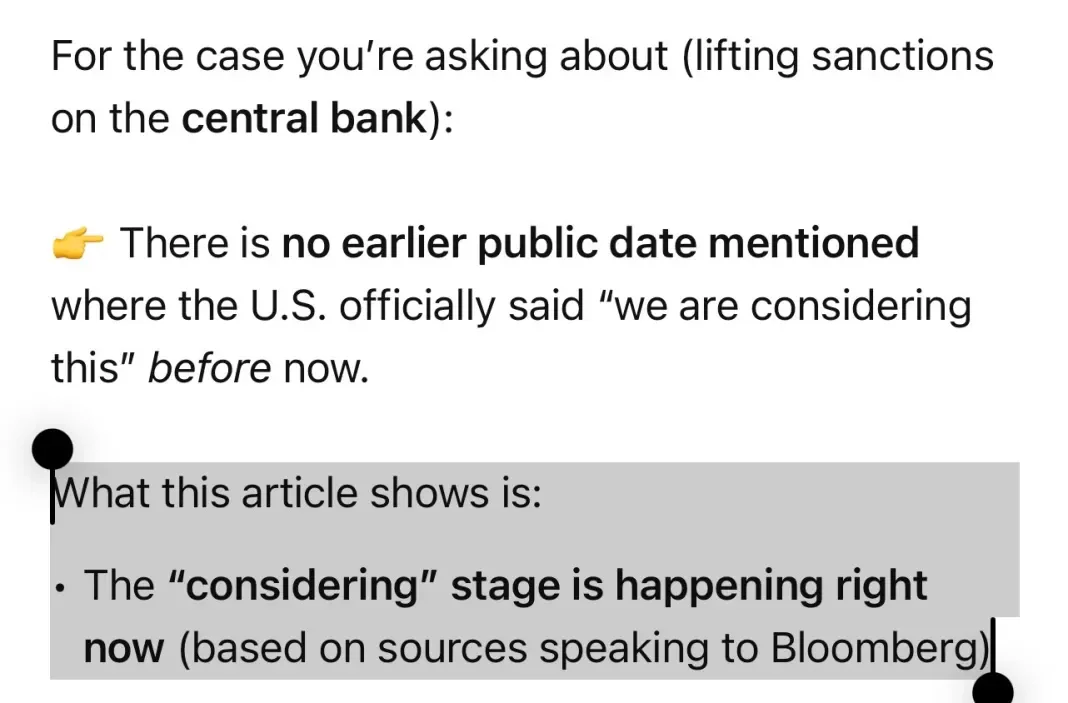
Let me add baklava to the article:
“The lifting of these sanctions would allow for the re-establishment of channels with international banks, reduce operational frictions, and broaden the participation of more banks—which would add greater depth to the foreign exchange market,” stated Alejandro Grisanti, Director of the Caracas-based consultancy Ecoanalítica.
Foreign exchange market = FOREX
LFGGGG
Source(s): • https://x.com/majeed66224499/status/2042052084183302408
https://dinarchronicles.com/2026/04/08/majeed-ksa-here-comes-the-ves-rv/
************
Courtesy of Dinar Guru: https://www.dinarguru.com/
Jeff They could do the Prime Minister the same day they do the President which is tentatively next Saturday April 11th.
Militia Man There's a full picture in this. The testing has happened and the optionality exists. The CBI does have that...When the CBI decides prudent conditions are met is still the open variable. The official stance right now is stability within the current framework...Adjustments can happen immediately. We have evidence of that. It's already in writing. It's in public. They've done it before, 'effective immediately' when they decide it's prudent to do so...
Frank26 [Iraq boots-on-the-ground report] FIREFLY: Speaker of Parliament is on the television saying the election process with the president will take place on April 11th. They say there will be no postponement of any kind. It looks like they're trying to reassure the United States...The television says anyone that does not show up for the vote on the 11th with have their names revealed on the television so some of the pressure is on them to show up...and cost them 1 million dinars if they are not there. FRANK: With the vote on the 11th, this is wonderful...Once you have your government set you have a very good chance of opening the budget and exposing a new rate for the HCL and for that whole budget of '26 which is impossible at 1300.
************
The 8-Day Currency Collapse That Ended An Empire (Is The US Dollar Next?)
Independent Financial Historian: 4-8-2026
In 1956, the United States used a devastating currency attack to force Britain out of Egypt, collapsing the British Pound's global dominance and ending an empire in just eight days.
But the true tragedy wasn't the geopolitical humiliation—it was the ensuing decades of inflation and strict exchange controls that trapped millions of ordinary British savers in a dying currency, evaporating their purchasing power.
Today, the US Dollar faces eerie parallels. With national debt soaring, interest payments surpassing defense spending, and nations like Saudi Arabia joining BRICS, the foundational petrodollar system is fracturing.
Are we witnessing the same slow, wealth-destroying decline that ravaged the British Pound?
Discover the hidden history of reserve currency collapse and what it means for your savings.
Seeds of Wisdom RV and Economics Updates Thursday Morning 4-9-26
Good Morning Dinar Recaps,
BRICS Commodity Dominance Reshapes Global Power Balance
Control of resources—not currencies—may define the next phase of global finance
Good Morning Dinar Recaps,
BRICS Commodity Dominance Reshapes Global Power Balance
Control of resources—not currencies—may define the next phase of global finance
Overview (Key Points)
BRICS nations control a significant share of critical global commodities
The bloc’s strength spans energy, food, metals, and natural resources
This dominance is fueling a potential global decoupling from Western systems
Resource control is emerging as a core pillar of financial and geopolitical power
Key Developments
1. BRICS Leads in Critical Minerals and Industrial Metals
Controls ~90% of global rare earth processing
Produces ~79% of global aluminum and 77% of palladium
These materials are essential for:
Electric vehicles
Defense systems
Renewable energy infrastructure
👉 This positions BRICS at the center of future industrial and military supply chains
2. Strong Position in Energy Resources
Holds ~45% of global oil reserves
Major producers include countries like Russia, Iran, and Saudi Arabia
👉 Energy dominance gives BRICS pricing influence and geopolitical leverage
3. Expanding Control Over Global Food Supply
Accounts for:
~42% of global food production
~40% of grain and meat supply
Controls ~30% of the world’s arable land
👉 Food security becomes a strategic advantage in times of crisis
4. Command Over Water and Natural Resources
Holds ~40% of global freshwater reserves
👉 Water is increasingly viewed as a future strategic asset, not just a utility
5. Significant Share of Precious Metals and Wealth Anchors
Produces ~50% of global gold output
👉 Gold remains a key hedge against currency instability and inflation
6. Industrial Production Powerhouse
Generates ~40% of global industrial output
👉 Strengthens BRICS’ ability to control supply chains and manufacturing
7. Population Advantage Fuels Workforce Growth
BRICS nations represent ~4.4 billion people (55% of global population)
In contrast, G7 nations account for less than 10%
👉 Provides a massive labor force and consumer base
Why It Matters
The global system has long been dominated by financial power (West) versus resource power (emerging markets).
That balance is shifting.
BRICS controls the “real assets”: energy, food, minerals, water
Western economies largely dominate financial systems and capital markets
If resource control tightens, global dependence may shift toward commodity-rich nations
Why It Matters to Foreign Currency Holders
Commodities often back or influence currency strength over time
Nations rich in resources may gain:
Stronger trade leverage
More stable long-term currency positioning
Investors should monitor:
Commodity flows and pricing power
Gold accumulation trends
Energy trade settlement currencies
This suggests a gradual move toward asset-backed influence rather than purely debt-based systems
Implications for the Global Reset
Pillar 1: Resource-Based Power Shift
Control of commodities may outweigh traditional financial dominance
BRICS nations are positioned to anchor value through real assets
Pillar 2: Supply Chain Realignment
Western nations may become increasingly dependent on BRICS-controlled resources
This could accelerate trade realignment and geopolitical shifts
The reset may not begin with currency—but with who controls the inputs of the global economy
Closing Insight
The West may control money systems, but BRICS controls what the world needs to function.
When resources dictate terms, power follows the supply.
Seeds of Wisdom Team
Newshounds News™ Exclusive
Sources
~~~~~~~~~~
A Message to Our Currency Holders
If you’ve been holding foreign currency for many years, you were not foolish.
You were not wrong to believe the global financial system would change.
What failed was not your patience — it was the information you were given.
For years, dates, rumors, and personalities replaced facts, structure, and proof. “This week” predictions created cycles of hope and disappointment that were never based on how currencies actually change.
That is not your failure.
Our mission here is different: • No dates • No rates • No hype • No gurus
Instead, we focus on:
• Verifiable developments • Institutional evidence
• Global financial structure • Where countries actually sit in the process
Currency value changes only come after sovereignty, trade, banking, settlement systems, and fiscal coordination are in place. History and institutions confirm this sequence.
You will see silence. You will see denials. That is not delay — that is discipline.
Protect your identity. Organize your documents. Verify everything.
Never hand your discernment to anyone who cannot show proof.
You deserve truth — not timelines.
Seeds of Wisdom Team
Newshounds News™
~~~~~~~~~~
Seeds of Wisdom Team RV Currency Facts Youtube and Rumble
Newshound's News Telegram Room Link
RV Facts with Proof Links Link
RV Updates Proof links - Facts Link
Follow the Gold/Silver Rate COMEX
Follow Fast Facts
Seeds of Wisdom Team™ Website
Thank you Dinar Recaps
Iraq Economic News And Points To Ponder Thursday Morning 4-9-26
Oil Gains 2% Following Doubts Over Hormuz Reopening
2026-04-09 Shafaq News Oil prices rose on Thursday as doubts over a fragile two-week Middle East ceasefire raised concerns that energy flows through the crucial Strait of Hormuz will remain restricted.
Brent crude futures were up $1.96, or 2.07%, at $96.71 a barrel at 0325 GMT, while U.S. West Texas Intermediate (WTI) crude rose $2.60, or 2.75%, to $97.01 a barrel.
Oil Gains 2% Following Doubts Over Hormuz Reopening
2026-04-09 Shafaq News Oil prices rose on Thursday as doubts over a fragile two-week Middle East ceasefire raised concerns that energy flows through the crucial Strait of Hormuz will remain restricted.
Brent crude futures were up $1.96, or 2.07%, at $96.71 a barrel at 0325 GMT, while U.S. West Texas Intermediate (WTI) crude rose $2.60, or 2.75%, to $97.01 a barrel.
Both benchmark prices fell below $100 per barrel in the previous trading session, with WTI recording its biggest decline since April 2020, on initial expectations for the ceasefire to result in a reopening of the strait.
However, analysts said market participants are hesitant to fully unwind pricing for geopolitical risk, and there is no clarity on what negotiations between the U.S. and Iran would mean for oil flows.
"The chances of a meaningful reopening (of the Strait of Hormuz) any time soon look dim," said Vandana Hari, founder of oil market analysis provider Vanda Insights, predicting continued volatility in oil prices.
"The futures market looks a bit broken," she said. Otherwise, "prices should have snapped right back to pre-ceasefire levels by now."
The vital waterway connects supply from Gulf producers such as Iraq, Saudi Arabia, Kuwait and Qatar to global markets, and typically carries about 20% of global oil and gas supply.
The viability of the ceasefire is in question with Israel continuing to attack Lebanon on Wednesday, causing Iran to suggest it would be "unreasonable" to proceed with talks to forge a permanent peace deal.
Shippers on Wednesday also said they needed more clarity on the terms of the ceasefire before resuming transit through the Strait of Hormuz. Iran has issued maps to guide ships around mines in the waterway and designated safe paths for passage in coordination with the country's Revolutionary Guards, Iranian media reported.
"Logistic disconnects, security fears, elevated insurance premiums and operational constraints mean that very little additional energy is likely to be supplied via the Strait of Hormuz in the next two weeks," analysts at Standard Chartered said in a note.
Regional oil facilities also remain under threat, with Iran striking sites in nearby countries after the ceasefire, including a pipeline in Saudi Arabia that has been used to bypass the blockaded Strait of Hormuz, according to an oil industry source.
Kuwait, Bahrain and the UAE also reported missile and drone attacks.
Meanwhile, Goldman Sachs kept its third- and fourth-quarter oil price forecasts unchanged at, respectively, $82 and $80 for Brent, and $77 and $75 for WTI.
The investment bank lowered its second-quarter forecasts for Brent to $90 and WTI to $87 "given the reduction in risk premium at the front of the curve", with oil flows through the Strait of Hormuz "already edging up". (Reuters)
https://www.shafaq.com/en/Economy/Oil-gains-2-following-doubts-over-Hormuz-reopening
Basrah Crude Drops Over 8% Despite Global Oil Rise
2026-04-09 Shafaq News– Basrah Basrah crude fell more than 8% on Thursday, diverging from rising global oil prices.
Basrah Heavy crude fell $10.96, or 8.88% to $112.44 per barrel, and Basrah Medium crude declined $10.96, or 8.73%, reaching $114.54 per barrel.
Brent crude futures were up $1.96, or 2.07%, at $96.71 a barrel. US West Texas Intermediate (WTI) crude rose $2.60, or 2.75%, to $97.01 a barrel. https://www.shafaq.com/en/Economy/Basrah-crude-drops-over-8-despite-global-oil-rise-2
Gold Prices Stabilize Before US Inflation Data Release
2026-04-09 Shafaq News Gold prices were largely steady on Thursday as investors remained cautious about the fragile U.S.-Iran ceasefire, with a key U.S. inflation report due later in the day also in focus for interest rate clues.
Spot gold inched 0.1% higher to $4,721.51 per ounce, as of 0523 GMT. U.S. gold futures for June delivery fell 0.7% to $4,744.90.
"It doesn't seem like gold is looking to do much at this moment. I think there's still a lot of speculation on what's going to happen after the ceasefire," said GoldSilver Central Managing Director Brian Lan.
Lan said he expected gold to consolidate between $4,607 and $4,860 in the near term.
On Wednesday, Israel pounded Lebanon with its heaviest strikes yet, killing hundreds of people and drawing a threat of retaliation from Iran.
Oil prices rose on Thursday on concerns that supply from the key Middle East producing region may not fully resume amid doubts that the two-week ceasefire will hold.
Spot gold has declined more than 10% since the war began on February 28, as higher energy prices fuelled inflation concerns and prompted markets to reassess interest rate expectations, reducing non-yielding bullion's appeal.
Minutes from the Federal Reserve's March 17 to 18 meeting showed that more policymakers felt rate hikes could be needed to counter inflation that continued to exceed the central bank's 2% target.
U.S. Personal Consumption Expenditures data for February is due at 1230 GMT, and March consumer price data on Friday could give further clues on the Fed's policy path.
"Beyond near-term liquidity needs, we expect gold to continue to rebuild its gains in the coming months amid heightened geopolitical risk," Standard Chartered said in a note on Wednesday.
Among other metals, spot silver fell 0.1% to $74.07 per ounce, platinum lost 0.4% to $2,020.60 and palladium edged up 0.3% to $1,559. (Reuters) https://www.shafaq.com/en/Economy/Gold-prices-stabilize-before-US-inflation-data-release
Gold Prices Fall In Baghdad And Erbil
2026-04-09 Shafaq News- Baghdad/ Erbil On Thursday, gold prices hovered around 1 million IQD per mithqal in Baghdad and Erbil markets, according to a survey by Shafaq News Agency.
Gold prices on Baghdad's Al-Nahr Street recorded a selling price of 1,014,000 IQD per mithqal (equivalent to five grams) for 21-carat gold, including Gulf, Turkish, and European varieties, with a buying price of 1,010,000 IQD. The same gold had sold for 1,036,000 IQD on Wednesday.
The selling price for 21-carat Iraqi gold stood at 984,000 IQD, while the buying price reached 980,000 IQD.
In jewelry stores, the selling price per mithqal of 21-carat Gulf gold ranged between 1,015,000 and 1,025,000 IQD, while Iraqi gold sold for between 980,000 and 990,000 IQD.
In Erbil, 22-carat gold was sold at 1,071,000 IQD per mithqal, 21-carat gold at 1,023,000 IQD, and 18-carat gold at 876,000 IQD. Gold prices fall in Baghdad and Erbil - Shafaq News
Seeds of Wisdom RV and Economics Updates Wednesday Evening 4-8-26
Good Evening Dinar Recaps,
War’s Economic Toll | IMF Warns of Long-Term Damage and Rising Global Instability
Conflict-driven inflation, debt, and food insecurity signal deeper systemic stress
Good Evening Dinar Recaps,
War’s Economic Toll | IMF Warns of Long-Term Damage and Rising Global Instability
Conflict-driven inflation, debt, and food insecurity signal deeper systemic stress
Overview
New warnings from the International Monetary Fund (IMF) and global institutions highlight the lasting economic damage caused by war, as rising energy costs, inflation, and supply disruptions ripple across the global economy.
Even with a temporary ceasefire, the broader conflict is already contributing to higher food prices, increased debt burdens, and long-term economic scarring, particularly in vulnerable nations.
Key Developments
1. War Driving Global Food and Energy Inflation
The IMF, World Bank, and UN agencies warn that conflict is pushing up oil, gas, and fertilizer prices, which in turn are driving global food inflation and insecurity.
2. Long-Term Economic Output Losses Expected
IMF research shows that countries involved in war typically suffer a 7% drop in economic output over five years, with effects lasting over a decade.
3. Rising Debt and Fiscal Pressure Across Nations
War-related spending is contributing to higher deficits, increased borrowing, and reduced social investment, worsening fiscal conditions globally.
4. Conflict Impact Spreads Beyond War Zones
Economic shocks are not limited to combat zones—trade partners and neighboring economies are also experiencing spillover effects, amplifying global instability.
Why It Matters
This is a clear signal that geopolitical conflict is not just a regional issue—it is a global economic disruptor.
Rising food and energy costs combined with debt pressures create a feedback loop of instability, particularly in emerging markets.
Why It Matters to Foreign Currency Holders
Inflation driven by food and energy reduces currency purchasing power
High debt levels increase risk of currency devaluation
Vulnerable economies may face capital flight and instability
Hard assets and commodities may gain relative importance
Implications for the Global Reset
Pillar 1: Debt & Inflation Crisis Expansion
War-driven inflation and borrowing accelerate pressure on the global debt-based monetary system, increasing the likelihood of restructuring.
Pillar 2: Resource-Based Financial Realignment
Food, energy, and fertilizer are emerging as critical economic levers, shifting power toward nations that control essential commodities.
Analysis
The IMF’s findings reinforce a critical reality: wars reshape economies long after the fighting stops.
While markets may react positively to short-term ceasefires, the underlying economic damage continues to build, particularly through inflation, debt accumulation, and supply disruptions.
This creates conditions where financial systems face prolonged stress, increasing the probability of structural change in how global finance operates.
This is not just conflict — it’s a long-term economic transformation already underway.
Seeds of Wisdom Team
Newshounds News™ Exclusive
Sources
~~~~~~~~~~
Seeds of Wisdom Team RV Currency Facts Youtube and Rumble
Newshound's News Telegram Room Link
RV Facts with Proof Links Link
RV Updates Proof links - Facts Link
Follow the Gold/Silver Rate COMEX
Follow Fast Facts
Seeds of Wisdom Team™ Website
Thank you Dinar Recaps
Iraq Economic News And Points To Ponder Wednesday Evening 4-8-26
Iraqi Banks Under US Scrutiny: Who Controls The Transfers And Who Pays The Price?
April 7, 2026 Last updated: April 7, 2026
The Iraqi banking system has found itself under increasing regulatory pressure since late 2022, related to dollar transfers and import financing, as part of a broader tightening of international compliance and anti-money laundering regulations.
Bankers and economists say this tightening, practically linked to access to the US financial system through correspondent banks, has reshaped the remittance market in Iraq, reduced the operating margins of several private banks, and increased the cost of trade, with the effects quickly being felt by the market and consumers.
Iraqi Banks Under US Scrutiny: Who Controls The Transfers And Who Pays The Price?
April 7, 2026 Last updated: April 7, 2026
The Iraqi banking system has found itself under increasing regulatory pressure since late 2022, related to dollar transfers and import financing, as part of a broader tightening of international compliance and anti-money laundering regulations.
Bankers and economists say this tightening, practically linked to access to the US financial system through correspondent banks, has reshaped the remittance market in Iraq, reduced the operating margins of several private banks, and increased the cost of trade, with the effects quickly being felt by the market and consumers.
According to banking estimates, more than 70 banks operate in Iraq, both public and private, in addition to branches of foreign banks. However, the real activity is concentrated in a limited number of institutions.
Public banks hold the largest share of deposits and handle most official transactions and government salaries, while many private banks rely more on financing trade and remittances than on lending and investment, making them more sensitive to any restrictions related to the dollar or scrutiny of commercial documents.
Bankers describe the “transfers” mechanism as the heart of the crisis. A bank submits a request to transfer funds against import documents, and the transaction is then executed through foreign correspondents according to strict auditing procedures.
However, industry sources say that in previous years, loopholes were widely exploited through inflated invoices, fictitious import transactions, or inaccurate data, raising the risk rating and leading to escalating external pressures that impacted banks and the market.
Banking officials add that the restrictions are not being applied equally to everyone. Banks with stronger compliance systems and more stable correspondent relationships have been better able to process transfers, while a number of banks have suffered from restrictions, slowdowns, or rejections of transactions, leading to a concentration of some trade demand in specific channels.
According to observers, this concentration answers the question, “Who controls the transfers?” Control effectively shifts to banks that can meet auditing standards and to intermediaries who know how to manage official channels at a higher cost, or resort to informal channels when procedures become complicated.
As for “who pays the price?” the market answers this question quickly, according to economists, through three channels. The first is the increased cost of imports due to slower remittances, higher commissions, and increased documentation requirements, which is reflected in the prices of goods in a country heavily reliant on imports.
The second is the expansion of the informal market whenever a gap appears between the official and market exchange rates, thus putting pressure on purchasing power and increasing inflation.
The third is the decline in confidence in banks, as a large portion of the money supply remains outside the banking system, limiting banks' ability to lend and finance the real economy.
Bankers warn that the problem is no longer simply a matter of dollar liquidity, but rather a fundamental business model for a banking sector that relies more on remittances than on financing production.
The lack of effective lending and the limited scope of banking services are pushing banks to seek profit through dollar transactions and trade finance, which increases risks and makes the sector vulnerable to any external tightening.
Meanwhile, state-owned banks, despite their control over deposits, remain less agile in modernizing technology and developing services, creating a gap between their size and their role.
Experts believe that the true test of reform begins with measurable measures, including stricter auditing of import invoices and preventing inflation and forgery, developing compliance systems within banks, and restructuring weak banks through mergers or liquidations according to clear criteria. They also emphasize the need to enhance transparency in trade finance and reduce reliance on cash.
Furthermore, they stress that reducing the cost of transfers and protecting the market requires minimizing opportunities for manipulation, not merely managing the exchange rate.
Ultimately, the oversight of remittances has become a factor reshaping the banking landscape in Iraq: few institutions are able to operate within the required standards, others are declining or besieged by restrictions, and the market bears the brunt of this in prices and the cost of living.
While bankers speak of the necessity for swift internal reform to restore confidence and reduce risks, the open question remains: can Iraq transform the "dollar audit" into an opportunity to rebuild a banking sector that finances the economy, or will remittances remain an arena controlled by limited channels, with the markets and citizens paying the price?https://mustaqila.com/مصارف-العراق/
A Government Advisor Predicts Per Capita Income Growth Of $1,320 Per Month Over The Next Four Years
Baghdad – WAA – Amna Al-Salami The Prime Minister’s financial advisor, Mazhar Muhammad Salih, confirmed on Tuesday that regional competition requires a stable investment environment and major strategic projects, while he indicated that growth expectations until 2030 amount to 3.6% and per capita share is about $15,850 annually, while he clarified that the level of monthly per capita income will be $1,320 per month.
Saleh told the Iraqi News Agency (INA): “The latest IMF report reveals promising growth for Iraq amid ongoing challenges, and this development deserves great attention, as Iraq has achieved a distinguished position among the region’s economies, ranking fifth in the Arab world with a GDP of nearly $739 billion according to purchasing power parity.”
He explained that "this classification is not just a number, but an indicator of the recovery of the economy and the development of its own material and human engines, and its organizational capabilities that flourish over time, in addition to the state's ability to support development and improve the quality of life of citizens with high flexibility."
He continued: "As for growth indicators and prospects up to 2030, forecasts indicate real growth of about 3.6%, with low and stable inflation, and per capita output of about $15,850 annually."
He added, "These data reveal clear future opportunities, most notably: diversifying the economy away from oil and a single rentier economy, promoting local and foreign investment, developing infrastructure, and supporting modern technology and digital education, as these steps are essential for building a strong and sustainable economy."
He noted that “the ability to compete regionally remains an important criterion for assessing progress and building growth opportunities, as Iraq has the potential to enter the regional competition arena, but it needs a stable investment environment and constant protection for investors, the development of ports and roads and linking the economy to the region, including important regional strategic projects such as (the Development Road Project), while adhering to the project’s phased objectives and coordinating with the neighbor and the world at all times, and focusing on education, digital education, innovation and entrepreneurship without interruption, as well as ensuring the correlation between long-term political and financial stability, which are crucial factors for attracting investment and achieving sustainable development.”
He pointed out that "the current growth in development indicators reflects the strength of the Iraqi economy, but it requires transforming this level of capabilities into qualitative strength and sustainable momentum in the modernization and technological progress movement."
He concluded by saying: “The Iraqi economy must become an influential regional engine, as long as the state invests resources wisely and focuses on production and knowledge, to reach a stage where economic peace and sustainable development are fundamental pillars for the country.”
The International Monetary Fund announced on Monday that Iraq will be the fifth largest Arab economy in 2026, and predicted that the Iraqi economy will continue to grow by 2030.
The fund said in its report: “The data showed that Iraq ranked fifth as the largest Arab economy for 2026, in terms of GDP based on purchasing power parity (PPP), achieving a value of $739.13 billion, thus ranking 44th globally.”
According to the report, the ranking of the five major economic powers in the Arab world was as follows: Saudi Arabia topped the Arab world (16th globally), followed by Egypt in second place (18th globally), then the United Arab Emirates in third place, Algeria in fourth place, and Iraq in fifth place.
The report stated that "globally, three superpowers maintained their top rankings; China came in first with $43.5 trillion, followed by the United States in second place with $31.8 trillion, and then India in third place with $19.1 trillion."
According to detailed official indicators for Iraq, nominal GDP at current prices reached $273.91 billion, with a real growth rate of 3.6%.
The annual per capita GDP (PPP) reached $15,850, coinciding with the population reaching 46.64 million.
Regarding financial and monetary stability, the report noted that "the annual inflation rate remained stable at 2.5%, while net public lending/borrowing recorded a rate of -7.1%, and the current account deficit reached 1.1%."
The fund concluded its data with projections indicating that "the Iraqi economy will continue to grow by 2030."
Rob Cunningham: Our Money World is Transitioning
Rob Cunningham: Our Money World is Transitioning
4-8-2026
Rob Cunningham | KUWL.show
Our money world is transitioning
From: opaque ledgers + elastic units
To: transparent ledgers + more constrained / auditable units
Rob Cunningham: Our Money World is Transitioning
4-8-2026
Rob Cunningham | KUWL.show
Our money world is transitioning
From: opaque ledgers + elastic units
To: transparent ledgers + more constrained / auditable units
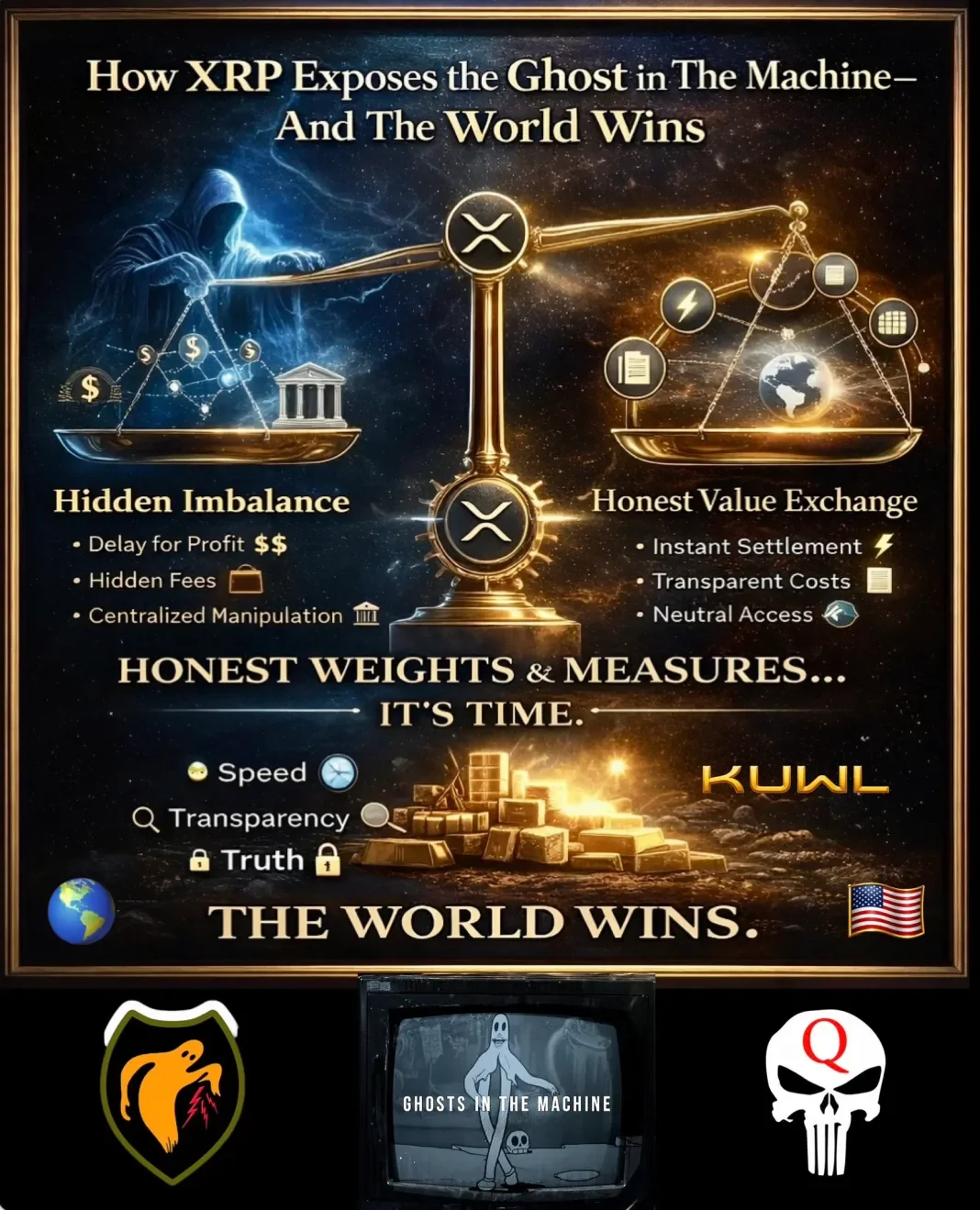
This includes:
• DLT systems
• tokenization
• auditable reserves
• faster settlement (less time distortion)
If:
Any issued unit is denominated in a manipulated, debased, near worthless fiat unit, then even if the accounting system (ledger) is improved, it’s a moot point.
Why?
1) a dishonest ledger corrupts everything
2) a dishonest unit distorts everything
3) Fixing only one leaves the entire system dishonest
Full truth alignment requires:
• truth in measurement (ledger)
-and-
• truth in the thing being measured (sound money)
A Bitcoin ecosystem sold as a perfect accounting system for abominable units of dishonest fiat money, then valued (priced) in the very dishonest measure it was designed to measure, can never yield anything other than a stockpile of dishonest fiat units.
When NGO fiat money ends – even one with a fancy name like “World Reserve Currency” – and is replaced by sound money currencies issued by sovereign nations held accountable by We the People the world over for:
1- truth in measurement (ledger)
2- truth in the things being measured (assets)
Freedom is restored.
Debt slavery ends.
ALL things incapable of aligning with, and adding real value in support of, mandatory elements of a real “honest weights and honest values” monetary system, will have little to no utility.
A KUWL Summary
We cannot achieve absolute integrity by fixing the recording system alone, if the value units themselves are variable and opaquely alterable by cartels.
The biblical standard of “honest weights and measures” is deeper than tools – it’s about integrity of both the:
• instruments (ledgers), and
• units being exchanged (RWAs)
“You shall have just balances, just weights…” – Leviticus 19:36
This implies:
• no hidden manipulation
• no silent debasement
• no asymmetry of knowledge
So if:
• the ledger is transparent (good)
• but the money/asset is inflated or arbitrarily expanded (problem)
Then we are left with:
Honest recording of dishonest units.
“What if” Trump’s masterful, poetic and karmic resolution to ending the @cityoflondon’s fiat debt cartel’s 39 trillion lies, is to cancel out their false debt with their falsely inflated fiat units?
@Bitcoin to end the Fed cartel?
XRPL + (XRP+RWA) = Honesty
Source(s):
• https://x.com/KuwlShow/status/2041482548535079094
https://dinarchronicles.com/2026/04/08/rob-cunningham-our-money-world-is-transitioning/
What Happens If Oil Is No Longer Priced in Dollars?
What Happens If Oil Is No Longer Priced in Dollars?
Miles Franklin Media: 4-7-2026
Michelle Makori, President & Editor-in-Chief, Miles Franklin Media, and Andy Schectman, Founder & CEO of Miles Franklin Precious Metals, break down a major shift that could challenge the global financial system.
For decades, the petrodollar has been the foundation of global trade – oil priced in U.S. dollars, with revenues recycled back into U.S. assets. But that system may now be under pressure.
What Happens If Oil Is No Longer Priced in Dollars?
Miles Franklin Media: 4-7-2026
Michelle Makori, President & Editor-in-Chief, Miles Franklin Media, and Andy Schectman, Founder & CEO of Miles Franklin Precious Metals, break down a major shift that could challenge the global financial system.
For decades, the petrodollar has been the foundation of global trade – oil priced in U.S. dollars, with revenues recycled back into U.S. assets. But that system may now be under pressure.
Reports suggest Iran is allowing oil shipments through the Strait of Hormuz only if payments are made in Chinese yuan. At the same time, China is building alternative payment systems like mBridge, while expanding infrastructure that allows yuan-based oil trade to be converted directly into physical gold.
Deutsche Bank is now warning that this conflict could test the dollar’s role in global trade and potentially accelerate the shift toward what some are calling the “petroyuan.” So what happens if oil is no longer priced in dollars?
In this ‘Quick Cut’ clip:
Is the petrodollar system starting to break?
Iran, yuan payments, and the Strait of Hormuz
China’s push for alternative trade systems (mBridge)
Oil-for-yuan… convertible into gold?
Why this could reshape global trade and reserves
What it means for the U.S. dollar and gold
Seeds of Wisdom RV and Economics Updates Wednesday Afternoon 4-8-26
Good Afternoon Dinar Recaps,
Ceasefire Shockwave | Oil Collapse and Market Surge Signal Fragile Stability
Global markets rally hard, but underlying risks remain unresolved
Good Afternoon Dinar Recaps,
Ceasefire Shockwave | Oil Collapse and Market Surge Signal Fragile Stability
Global markets rally hard, but underlying risks remain unresolved
Overview
A sudden U.S.–Iran ceasefire announcement triggered a dramatic reversal across global markets, with oil plunging, stocks surging, and bond yields falling. The move provided short-term relief from escalating war fears, particularly around the Strait of Hormuz—a critical artery for global energy supply.
However, despite the optimism, analysts warn the situation remains highly unstable, with continued regional conflict and unresolved tensions threatening to reverse gains quickly.
Key Developments
1. Oil Prices Collapse in Historic Move
Oil prices plunged over 15% in a single day, falling below $100 per barrel—one of the sharpest drops since 2020. The decline reflects rapid unwinding of war-risk premiums built into energy markets.
2. Global Stock Markets Surge on Relief Rally
Equity markets worldwide surged, with major indexes in Asia and Europe jumping 5–7%, as investors responded to reduced geopolitical risk and easing inflation expectations.
3. Bond Yields Fall as Rate Pressure Eases
Government bond yields declined sharply as markets began pricing in a lower likelihood of aggressive rate hikes, driven by falling oil prices and reduced inflation fears.
4. Ceasefire Remains Fragile Amid Ongoing Conflict
Despite the agreement, continued attacks in the region and disputes over ceasefire terms highlight how fragile the situation remains. Markets are increasingly sensitive to headline-driven volatility.
Why It Matters
This event underscores how quickly global financial conditions can shift when geopolitical pressure eases.
However, the sharp reaction also reveals a deeper issue: markets are heavily dependent on stability in energy supply routes, making them vulnerable to sudden shocks.
Why It Matters to Foreign Currency Holders
Falling oil prices may temporarily ease global inflation pressures
Dollar weakness during the rally suggests shifting capital flows
Volatility remains elevated, increasing currency risk exposure
Commodity-linked currencies may continue to swing with energy prices
Implications for the Global Reset
Pillar 1: Volatility-Driven Monetary Instability
Sudden shifts in inflation expectations and rate outlooks highlight a system increasingly driven by external shocks rather than fundamentals.
Pillar 2: Energy Dependency Exposed
The global economy’s reliance on key chokepoints like Hormuz reinforces the growing importance of resource control in financial power structures.
Analysis
The ceasefire has delivered immediate relief, but not resolution.
Markets are reacting to hope, not certainty, and the structural issues—energy disruption, geopolitical rivalry, and inflation risk—remain firmly in place.
If tensions reignite, the current rally could reverse rapidly, reinforcing a broader trend of instability-driven market cycles.
This is not stability — it’s a temporary release of pressure in a highly fragile system.
Seeds of Wisdom Team
Newshounds News™ Exclusive
Sources
“Oil Prices Plunge, Stocks Surge After Ceasefire” — The Guardian
“Global Markets Jump as Oil Falls on Ceasefire” — Associated Press
~~~~~~~~~~
Seeds of Wisdom Team RV Currency Facts Youtube and Rumble
Newshound's News Telegram Room Link
RV Facts with Proof Links Link
RV Updates Proof links - Facts Link
Follow the Gold/Silver Rate COMEX
Follow Fast Facts
Seeds of Wisdom Team™ Website
Thank you Dinar Recaps
“Iraq News” posted by Tishwash at TNT” 4-8-2026
TNT:
Tishwash: Parliamentarian: The session to elect the President of the Republic will proceed as scheduled, and absence will cost one million dinars.
MP Nour Al-Bajari, from the "Al-Hasam" parliamentary bloc, confirmed on Tuesday that the Speaker of Parliament informed members of Parliament during Monday's session that next Saturday's session, dedicated to electing the President of the Republic, will proceed as scheduled and will be held on time.
Al-Bajari told Shafaq News Agency that "the Speaker of Parliament informed the MPs that Saturday's session will proceed as scheduled and will be held to elect the President of the Republic."
TNT:
Tishwash: Parliamentarian: The session to elect the President of the Republic will proceed as scheduled, and absence will cost one million dinars.
MP Nour Al-Bajari, from the "Al-Hasam" parliamentary bloc, confirmed on Tuesday that the Speaker of Parliament informed members of Parliament during Monday's session that next Saturday's session, dedicated to electing the President of the Republic, will proceed as scheduled and will be held on time.
Al-Bajari told Shafaq News Agency that "the Speaker of Parliament informed the MPs that Saturday's session will proceed as scheduled and will be held to elect the President of the Republic."
He added that "the Speaker of Parliament informed members of Parliament that MPs who are absent from the session to elect the President of the Republic will be officially marked absent and one million dinars will be deducted from their salaries."
He pointed out that "there is confirmation from the Speaker of Parliament and the heads of the political blocs that the session to elect the President of the Republic will be held on its scheduled date."
The Speaker of Parliament announced that April 11th has been set as the date for holding a session to elect the President of the Republic, following an extensive meeting with the heads of parliamentary blocs to discuss a number of issues related to the work of the Council.
The presidency stated that the meeting discussed "the issue of electing the president of the republic and the importance of proceeding with the completion of this constitutional entitlement and ending the state of political deadlock," before deciding to set Saturday, April 11, as the date for holding the election session. link
************
Tishwash: Britain is withdrawing its forces and canceling the deployment of military personnel in Iraq for fear they could become targets for Iran.
The British newspaper i revealed that British military personnel have been evacuated from their duties in Iraq, against the backdrop of escalating tensions between the United States and Iran.
The newspaper quoted a military source as saying that the British Ministry of Defence had withdrawn a number of its personnel from Iraq and had also cancelled the deployment of forces that were scheduled to participate in military exercises as part of operations against ISIS.
The source explained, according to the newspaper, that the decision came as a result of "the high level of risk," whether in terms of the safety of individuals or the strategic risks associated with the presence of British forces within the American military system, which may make them vulnerable to targeting.
According to the report, British forces in Iraq had previously shot down Iranian drones during recent confrontations, with one strike coming within 400 meters of their positions last month.
The report noted that NATO had taken a similar step last month, withdrawing its advisory mission from Iraq and moving hundreds of its personnel to bases in Europe, following attacks targeting allied forces in the north of the country.
British forces are deployed in strategic locations in the Middle East, including a naval base in Bahrain with about 300 personnel, in addition to the participation of about 200 soldiers in supporting Iraqi and Kurdish forces through training and advising. link
*************
Tishwash: A Malaysian ship carrying one million barrels of Iraqi oil crosses the Strait of Hormuz
The Malaysian Foreign Ministry in Kuala Lumpur said on Tuesday that a Malaysian ship had safely crossed the Strait of Hormuz and was now continuing on its way to its final destination.
Iran effectively closed this vital sea lane, through which a fifth of the world’s oil and liquefied natural gas flows pass, in response to the US and Israeli air strikes that began in late February.
The Malaysian Foreign Ministry confirmed in a statement that one of the seven Malaysian-owned commercial vessels stranded in the Strait of Hormuz due to the Iran war has been granted safe passage.
The ministry did not mention the name of the ship, its final destination, or whether it was carrying a cargo.
The ministry said, "This positive outcome follows high-level diplomatic efforts," including a phone call between Malaysian Prime Minister Anwar Ibrahim and Iranian President Masoud Pezeshkian late last month.
The Iranian embassy in Kuala Lumpur stated in a social media post on Monday that the first Malaysian ship had crossed the Strait of Hormuz.
Data from the London Stock Exchange Group and Kpler showed that the oil tanker "Ocean Thunder," chartered by Petco, a unit of Malaysian state energy company Petronas, crossed the strait near the Iranian coast loaded with Iraqi crude.
Kpler data showed that the tanker was loaded with about 1 million barrels of Basra Heavy crude on March 2, and is expected to unload its cargo in Pengerang, Malaysia in mid-April link
************
Tishwash: Iraq has fallen out of the economic equation... Huge reserves with no trace, and the dinar faces ongoing challenges - Urgent
Economic expert Duraid Al-Anzi confirmed on Wednesday (April 8, 2026) that Iraq’s gold reserves do not play a direct role in improving the performance of the local economy, noting that they are effectively isolated within the management of the Central Bank and are used primarily to enhance its international standing.
Al-Anzi explained in a statement to “Baghdad Today” that Iraq possesses one of the most prominent gold reserves in the Arab world, and occupies advanced positions compared to a number of countries, but this has not been reflected in its credit rating, which is still within the (B) category, reflecting a clear gap between the size of the reserve and the overall economic performance.
He explained that owning gold gives the Central Bank of Iraq financial strength, and may indirectly support the dinar within the local market, but it has not succeeded in strengthening the position of the Iraqi currency globally, as the dinar is still among the weakest currencies, and the effect of the reserve is limited to achieving limited internal stability.
He pointed out that the relationship between the government and the central bank is governed by a strict legal framework that prevents the use of reserves, whether gold or cash, to finance the deficit or support the budget, except in exceptional cases that require special legislation, such as severe crises related to the cessation of oil revenues.
He added that the dollar reserve, which exceeds $100 billion and is deposited with international financial institutions, is subject to strict restrictions and controls, and cannot be used freely to address internal crises, which reduces the government's ability to rely on it as a direct solution.
He stressed that addressing the financial crises in Iraq cannot rely on cash or gold reserves, but requires activating internal revenues such as taxes, customs and fees, in addition to combating corruption and reducing financial waste, noting that there are internal files that can contribute to solving the crisis within a short period if they are managed seriously.
Al-Anzi cited the experiences of countries such as Lebanon, Turkey and Iran, which have large gold reserves, but at the same time suffer from severe monetary crises, which confirms that gold does not represent a direct solution to economic crises.
He added that the impact of Iraq’s gold reserves remains symbolic and indirect, and cannot be relied upon as a tool to address financial or monetary crises, considering that employing it in this way is not in line with sound economic principles.
The economies of countries, including Iraq, rely on a mix of financial and monetary tools to achieve stability. Gold reserves are one element of financial strength, but they are often used as currency cover or to boost international confidence, rather than as a direct tool for addressing crises.
Given the Iraqi economy's heavy reliance on oil revenues, challenges remain in diversifying income sources and strengthening non-oil sectors, meaning any decline in oil prices or revenues will directly impact financial stability. link
News, Rumors and a Opinions Wednesday 4-8-2026
Freedom Fighter: Currency War means Global Revaluation
4-8-2026
CURRENCY WAR = Global Revaluation
Iraq Dinar | Chinese Yuan | Vietnamese Dong | Venezuelan Bolívar
This is the shift most people still don’t understand.
The petrodollar system = demand for the U.S. dollar.
Freedom Fighter: Currency War means Global Revaluation
4-8-2026
CURRENCY WAR = Global Revaluation
Iraq Dinar | Chinese Yuan | Vietnamese Dong | Venezuelan Bolívar
This is the shift most people still don’t understand.
The petrodollar system = demand for the U.S. dollar.
Disrupt the Strait of Hormuz + weaponize trade through tariffs… and you start breaking that demand.
At the same time:
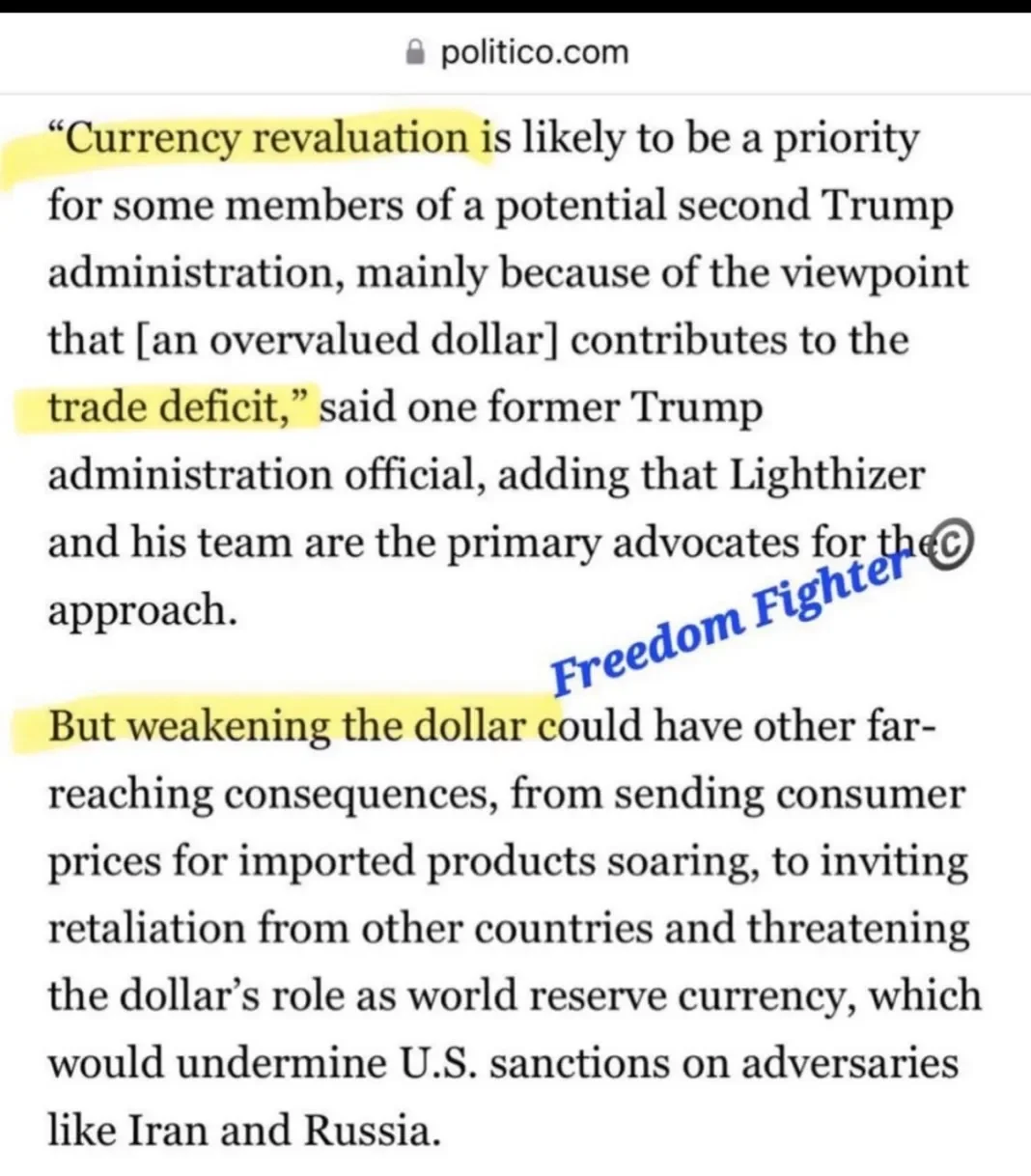
→ Policy discussions around currency revaluation
→ Acknowledgment that an overvalued dollar drives trade deficits
You cannot weaken the dollar AND keep the same global monetary structure intact.
Currencies don’t move in isolation.
They move when the system itself is forced to adjust.
We’re not watching random events—We’re watching pressure being applied from multiple angles at once.
This is how monetary shifts begin.
Receipts:
CryptoRover: REPORT: Bloomberg acknowledges the US war on Iran is backfiring. The Strait of Hormuz closure is undermining the petrodollar system that underpins American imperial power.
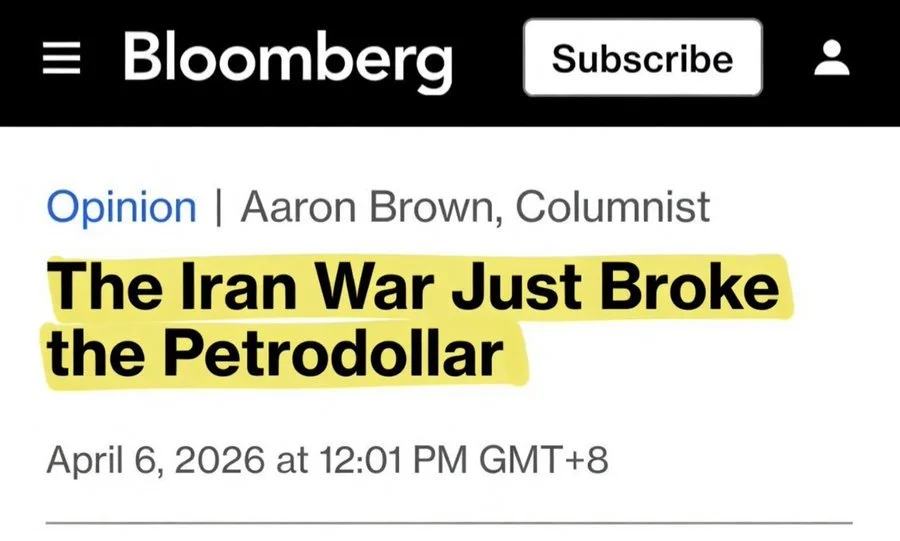
ALERT:
If this is even being modeled… you’re already late to the conversation.
Energy routes. Currency pressure. Regional exposure.
Most people are watching headlines — the real shift is happening underneath them.
Watch what happens to Iraq.
South Asia Index: Countries most affected by nuclear radiation if Trump decides to nuke Iran:
Iran Iraq Saudi Arabia Pakistan India Turkey UAE Oman Kuwait Qatar Bahrain Azerbaijan Afghanistan Armenia
While White House has denied the possibility of nukes against Iran, the region remains alert due to nature of threats to Iran by Trump.
Source(s):
• https://x.com/FreedomFight12/status/2041486085637693732
• https://x.com/FreedomFight12/status/2041675100005585375
https://dinarchronicles.com/2026/04/08/freedom-fighter-currency-war-means-global-revaluation/
************
Courtesy of Dinar Guru: https://www.dinarguru.com/
Militia Man They've been working on this for three plus years. What they've done is set the stage. They are supporting the fact that whenever they do a real effective exchange rate adjustment they can do it 'effectively immediately'. Those are some of the words from Alaq. They did it in 1460 to 1310...A real effective exchange rate can be managed when it's fully prudent to do so because of all the things they've done...They have a system in place to do so...
Steve Right now there is a gap of roughly 20% between the actual exchange rate of the Iraqi dinar and what the people are paying for it on the street. The official exchange rate according to the CBI is about 1310 dinars to $1. On the secondary market the dinar is trading about 1545 dinars to the US dollar...The last time that happened...the central bank was forced to intervenes and change the rate. I'm not saying this signals a revaluation tomorrow or this month or anytime soon. But what this is telling us is Iraq is being forced to make some monetary changes in the near future.
Reset Intelligence The ASYCUDA customs deal is the detail nobody will cover. An entire nation's trade infrastructure unified with its most independent region - four days before the political event that has been blocked for five months...ASYCUDA electronic customs. Unified tariffs. Joint border management. Baghdad and Erbil signed it Sunday. Rudaw confirmed. Kurdistan24 confirmed...That timing is not coincidental.
**********
300-to-1 COMEX Leverage Scam Is COLLPASING — The Silver Does NOT Exist! - Bill Holter
Financial Wisdom: 4-7-2026
Seeds of Wisdom RV and Economics Updates Wednesday Morning 4-8-26
Good Morning Dinar Recaps,
Ceasefire Sparks Market Rally | Trump’s Iran Pause Sends Oil Down, Stocks Up
Temporary peace lifts markets but deeper risks remain beneath the surface
Good Morning Dinar Recaps,
Ceasefire Sparks Market Rally | Trump’s Iran Pause Sends Oil Down, Stocks Up
Temporary peace lifts markets but deeper risks remain beneath the surface
Overview
A two-week ceasefire between the U.S. and Iran has triggered an immediate global market rebound, easing fears of a prolonged energy disruption in the Strait of Hormuz.
Following the announcement, oil prices dropped, bond markets strengthened, and equities surged, reflecting investor optimism that Gulf energy flows may resume. However, analysts caution that the ceasefire is fragile and temporary, with long-term risks still unresolved.
Key Developments
1. Markets Rally as War Fears Ease
The ceasefire led to a sharp reversal in market sentiment, with oil prices falling, stocks rising, and bonds gaining as investors priced in reduced geopolitical risk. The move signals how sensitive global markets are to energy supply disruptions.
2. Oil Market Remains Structurally Tight
Despite the drop in prices, analysts warn that oil supply will not normalize quickly. Damage to infrastructure and lack of confidence in lasting peace could keep markets tight, even if shipping resumes.
3. Ceasefire Credibility Gains Support
Pakistan’s involvement as an intermediary has added diplomatic weight to the agreement, increasing cautious optimism that the ceasefire could extend beyond the initial two-week window.
4. Inflation Risks Still Linger
Even with easing oil prices, experts suggest energy costs are unlikely to return to pre-conflict levels, meaning inflationary pressures may persist globally, especially in energy-dependent economies.
Why It Matters
This event highlights how quickly geopolitical developments can shift financial markets, particularly when tied to critical energy chokepoints like the Strait of Hormuz.
While markets are celebrating short-term relief, the situation underscores a deeper reality: global stability remains highly dependent on fragile geopolitical balances.
Why It Matters to Foreign Currency Holders
Falling oil prices may provide temporary relief to inflation pressures
Continued uncertainty supports safe-haven demand and volatility
Energy-linked currencies may remain unstable in the near term
Long-term pricing above pre-war levels could weaken purchasing power globally
Implications for the Global Reset
Pillar 1: Market Sensitivity & Monetary Pressure
Rapid market swings tied to geopolitical events reveal a system that is increasingly reactive and fragile, putting pressure on central bank stability efforts.
Pillar 2: Energy as a Financial Lever
Control over oil flows continues to act as a powerful influence on global finance, reinforcing the shift toward resource-driven economic dominance.
Analysis
The ceasefire offers a short-term release valve for global markets, but it does not resolve the underlying tensions driving instability.
Investors are reacting with measured optimism, recognizing that while conflict may pause, the structural risks to energy supply and inflation remain intact.
If the ceasefire evolves into a lasting agreement, markets could stabilize further. However, if tensions return, volatility may intensify quickly, reinforcing the current trend of uncertainty-driven financial behavior.
This is not just a ceasefire — it’s a temporary pause in a much larger global shift.
Seeds of Wisdom Team
Newshounds News™ Exclusive
Sources
“Trump’s Two-Week Iran Ceasefire: How Investors Are Responding” — Modern Diplomacy
“Global Markets React to Iran Ceasefire and Oil Movements” — Reuters
~~~~~~~~~~
A Message to Our Currency Holders
If you’ve been holding foreign currency for many years, you were not foolish.
You were not wrong to believe the global financial system would change.
What failed was not your patience — it was the information you were given.
For years, dates, rumors, and personalities replaced facts, structure, and proof. “This week” predictions created cycles of hope and disappointment that were never based on how currencies actually change.
That is not your failure.
Our mission here is different: • No dates • No rates • No hype • No gurus
Instead, we focus on:
• Verifiable developments • Institutional evidence
• Global financial structure • Where countries actually sit in the process
Currency value changes only come after sovereignty, trade, banking, settlement systems, and fiscal coordination are in place. History and institutions confirm this sequence.
You will see silence. You will see denials. That is not delay — that is discipline.
Protect your identity. Organize your documents. Verify everything.
Never hand your discernment to anyone who cannot show proof.
You deserve truth — not timelines.
Seeds of Wisdom Team
Newshounds News™
~~~~~~~~~~
Seeds of Wisdom Team RV Currency Facts Youtube and Rumble
Newshound's News Telegram Room Link
RV Facts with Proof Links Link
RV Updates Proof links - Facts Link
Follow the Gold/Silver Rate COMEX
Follow Fast Facts
Seeds of Wisdom Team™ Website
Thank you Dinar Recaps
Iraq Economic News And Points To Ponder Wednesday Morning 4-8-26
The Minister of Finance chairs a technical meeting to implement the ASYCUDA system in Kurdistan.
Money and Business Economy News – Baghdad Finance Minister Taif Sami chaired an expanded meeting on Wednesday to discuss the draft agreement for implementing the ASYCUDA customs automation system in the Kurdistan Region, in implementation of the directives of the Ministerial Council for Economy in its session held on April 6, 2026.
The meeting was attended by the Director General of the Federal Customs Authority, the Director General of the Regional Customs and his assistant, the advisor to the Regional Minister of Interior, the head of the Information Technology Department there, the Director of the Legal Department at the Federal Customs Authority, in addition to a team of experts from the UNCTAD International Organization.
The Minister of Finance chairs a technical meeting to implement the ASYCUDA system in Kurdistan.
Money and Business Economy News – Baghdad Finance Minister Taif Sami chaired an expanded meeting on Wednesday to discuss the draft agreement for implementing the ASYCUDA customs automation system in the Kurdistan Region, in implementation of the directives of the Ministerial Council for Economy in its session held on April 6, 2026.
The meeting was attended by the Director General of the Federal Customs Authority, the Director General of the Regional Customs and his assistant, the advisor to the Regional Minister of Interior, the head of the Information Technology Department there, the Director of the Legal Department at the Federal Customs Authority, in addition to a team of experts from the UNCTAD International Organization.
During the meeting, the Minister of Finance emphasized the need to adhere to the laws within the ASYCUDA system and to identify any legal conflicts between the two parties in order to harmonize them and obtain the necessary official approvals. It was also agreed to form a regional ASYCUDA team as part of the unified national team, with an emphasis on ensuring that all system requirements are met by the relevant companies in the region and that the powers and responsibilities of each party are clearly defined to guarantee smooth operation.
In order to enhance the technical aspects, Minister Sami directed that a Kurdish language interface be provided within the system and adopted for use in forms during implementation, alongside Arabic and English, to ensure ease of use. The agreement also included launching a comprehensive training program in which the national team will train personnel operating the system in the region, thereby improving technical efficiency and standardizing customs administration procedures across all border crossings.https://www.economy-news.net/content.php?id=67658
Short-Term Treasury Bills: Immediate Liquidity At A Deferred Cost
Dr. Haitham Hamid Mutlaq Al-Mansour Economy News – Baghdad In Iraq's economy, which relies heavily on oil revenues for its GDP, and given the repercussions of the war shock, domestic debt instruments have become essential to ensure the continuity of public spending. Among these instruments, remittance discounting has emerged as a key financing mechanism in Iraq, used to provide rapid liquidity, but it also reveals deeper imbalances in the structure of the financial and monetary system.
Data from the Central Bank of Iraq and reports from the Iraqi Ministry of Finance indicate a continued reliance on short-term treasury bill auctions, with maturities ranging from 7 to 90 days and annual returns between 4% and 7%.
According to estimates based on International Monetary Fund reports for 2025–2026, Iraq's domestic debt is approaching 90 trillion dinars, of which treasury bills constitute between 25 and 40 trillion dinars—nearly a third of the total debt.
This substantial amount reflects the transformation of bill discounting from a temporary tool to a permanent operational financing method, particularly given monthly spending needs ranging from 4 to 6 trillion dinars to cover salaries and current expenditures. Instead of serving as a liquidity management tool, it has become an integral part of the regular budget financing cycle.
However, the real cost is evident in the banking sector. According to World Bank indicators, credit extended to the private sector in Iraq remains below 10% of GDP, a low percentage compared to other developing economies.
This is partly due to government debt accounting for between 50% and 65% of some banks' assets, creating a "credit crowding out" phenomenon and limiting financing for productive activities.
IMF analyses also indicate that directing up to 15% of bank liquidity towards government debt instruments, including treasury bills, weakens the efficiency of financial intermediation and restricts economic growth. In this context, banks tend to invest in low-risk instruments like bills rather than financing private sector projects.
On the monetary front, discounting remittances is not a direct issuance of money, but the intervention of the Central Bank of Iraq through rediscounting these instruments or supporting banks can lead to an indirect expansion in the money supply, ranging between 3% and 6% annually according to analytical estimates based on liquidity trends, which may create latent inflationary pressures.
Most concerning is the growing link between sovereign and banking risks. The more banks hold government debt, the more vulnerable they become to any deterioration in the financial situation.
IMF scenarios indicate that a drop in oil prices below $70 per barrel could force the government to expand its reliance on domestic financing, including discounting remittances, by more than 20%, thus deepening liquidity pressures and increasing the fragility of the financial system.
In conclusion, the discounting of remittances provides a clear example of the fiscal paradox in Iraq: a tool that provides short-term stability but does not lead to genuine structural reforms in the economy.
The sustainability of public finances cannot depend solely on short-term financing; it requires broader reforms that include diversifying revenue streams, strengthening the role of the private sector, and redirecting bank liquidity toward productive investment.
Given these challenges, the following question arises: Will remittance discounting remain a tool for managing liquidity in Iraq, or are there other alternative channels? Certainly, there are other debt instruments besides remittance discounting, but in reality, most of them entail one of three difficult paths:
First: Effectively reducing spending: This includes freezing hiring, cutting operating expenses, and reprioritizing within the budget. However, it does not significantly affect salaries, so its impact will be limited if the crisis continues.
Second: Managing the demand for dollars instead of creating new money: This means reducing imports, tightening controls on transfers, and limiting the operation of the currency auction window. This eases pressure on reserves but raises domestic prices.
Third: Relatively non-inflationary domestic financing, such as issuing real government bonds, absorbs liquidity from the market instead of creating new money. Its success in Iraq is limited due to the weakness of the financial market.
Without any of these tools, deducting remittances will become almost inevitable to finance salaries, because there is no quick alternative source of dinars in light of the halt in oil exports.
Therefore, the remittance discounting tool can postpone the crisis, but it will not lead to its cancellation, because the fundamental problem is the loss of rentier value as a source of the dollar itself in the first place, and it is possible that this tool will turn into an early indicator of a deeper financial crisis if an alternative to it is not possible or if the scarcity of oil revenues continues.https://www.economy-news.net/content.php?id=67653
US-Israeli War On Iran: What Is Happening On Day 40?
EXPLAINER News US-Israel war on Iran - The US and Iran agree to a two-week truce on Tuesday, just an hour before Trump’s deadline to escalate the conflict expired.
Iran says it has accepted a two-week ceasefire, with talks set to begin on Friday in Pakistan’s capital, Islamabad, after United States President Donald Trump agreed to suspend attacks on the condition that Tehran fully reopens the Strait of Hormuz.
Iran’s Minister of Foreign Affairs Abbas Araghchi said safe passage through the strategic waterway will be ensured for two weeks through coordination with the country’s armed forces.
Trump’s move followed a request from Pakistan’s Prime Minister Shehbaz Sharif, who urged Washington to extend its deadline for a deal and called on Iran to reopen the strait.
In Iran:
US, Iran, Israel agree to last-minute ceasefire: The US, Iran and Israel agreed to a two-week truce on Tuesday, just an hour before Trump’s deadline to escalate the conflict expired. Tehran agreed to temporarily reopen the Strait of Hormuz, while the White House confirmed Israel’s participation. The breakthrough followed talks with Pakistan’s leadership, which had pushed for a ceasefire.
Hormuz terms under ceasefire: Under the agreement, safe passage will be coordinated, with Iran and Oman allowed to charge transit fees on passing ships. Tehran plans to use the revenue for post-war reconstruction.
Ten-point peace plan: Talks are set to begin on Friday in Islamabad, mediated by Pakistan’s prime minister. Tehran’s proposal includes lifting sanctions, creating a war-loss fund, a potential US troop withdrawal from the Gulf, and recognition of Iran’s right to enrich uranium in exchange for a pledge not to build nuclear weapons. It is unclear whether the US has agreed to any of these proposals.
Tehran synagogue struck: The Israeli military accepted that an overnight strike – which it said was targeting a senior Iranian commander – caused “collateral damage” to a synagogue in Tehran, expressing regret over the incident.
Tehran leaders project strength: Al Jazeera’s Mohamed Vall reported from Tehran a “feeling of pride among the leaders”, who are telling the public that “this war is ending on Iran’s terms”.
War diplomacy:
Trump says China helped bring Iran to talks: Donald Trump told AFP he believed China played a role in pushing Iran to negotiate the two-week ceasefire. “I hear yes,” he said when asked whether Beijing was involved in bringing its ally Tehran to the table.
NATO chief to meet Trump in Washington: Mark Rutte is set to meet Trump on Wednesday, with discussions expected to focus on the Iran situation as well as Russia’s ongoing war in Ukraine, according to a NATO official.
Regional reactions: The ceasefire has triggered street celebrations in Tehran and Baghdad, with Iranian leaders declaring the conflict is ending “on Iran’s terms”. However, some citizens remain sceptical, warning the US and Israel may be using the pause to “buy time” and regroup.
Israel backs truce with limits: The office of Prime Minister Benjamin Netanyahu confirmed support for the US decision to suspend strikes on Iran, but stressed the ceasefire does not extend to Lebanon.
A fragile exit, and a narrow diplomatic window: Analyst Trita Parsi described the ceasefire as a strategic retreat by Trump, arguing the conflict had “become an absolute disaster” and forced the White House to seek a way out. “Trump needed an exit, and he took it,” he said, warning the next two weeks will be decisive, either opening a path to genuine diplomacy or allowing tensions to flare again.
Parsi noted there is “potential” for meaningful talks, but cautioned “we’re not quite there yet,” underscoring the fragility of the moment. Even if negotiations fail, he added, a return to full-scale war is unlikely in the same form. Iran still retains key leverage, particularly its ability to disrupt the Strait of Hormuz, giving it the capacity to exert sustained pressure on both Washington and the global economy.
In the Gulf
Gulf countries sound alarms: Gulf countries including Kuwait, Bahrain, Qatar, Saudi Arabia and the United Arab Emirates issued near-simultaneous alerts and activated air defences in the lead-up to the announcement of a ceasefire.
Bahrain says fire contained after attack: No injuries were reported at an unnamed facility following the incident, authorities said.
Saudi Arabia role acknowledged: The country was briefly mentioned and thanked by Australian leaders for its role as a mediator who helped facilitate the current ceasefire agreement.
Qatar: Before the ceasefire was reached, Qatar said the war was approaching a stage where it could no longer be contained. A Foreign Ministry spokesman urged urgent de-escalation, saying, “This is why we have been urging all parties to find a resolution… before it’s too late.”
In the US
US frames ceasefire as leverage for diplomacy: White House Press Secretary Karoline Leavitt said the military campaign was a success that achieved its goals, rejecting the idea of a retreat. She described the ceasefire as a calculated move, arguing it “created maximum leverage” for Trump to pursue tough negotiations, opening the door to a diplomatic solution and long-term peace.
US journalist released in Iraq: Secretary of State Marco Rubio confirmed the release of American journalist Shelly Kittleson, who had been kidnapped in Iraq days earlier. Her freedom came after the armed group Kataib Hezbollah said it would release her on the condition she leave the country immediately.
Scrutiny over ‘perfectly timed’ bets: An online prediction platform, Polymarket, is facing questions over possible insider trading after an anonymous user reportedly made $400,000 by accurately betting on the start of US military action and the timing of the ceasefire — raising concerns about leaks tied to geopolitical decisions.
In Israel
Israel backs ceasefire, but not in Lebanon: Israel said on Wednesday it supported the two-week ceasefire with Iran but maintained the deal “does not include Lebanon”, where it has been fighting Iran-backed group Hezbollah.
Reluctance over ceasefire: Al Jazeera’s Rob McBride reported that Prime Minister Netanyahu is “widely suspected of having derailed the last round of talks” brokered by Oman and remains “very wary of the word ‘ceasefire’.”
Five people injured in Israel: Israel’s emergency services said five people in northern Israel were injured following missiles from Iran and rockets from Lebanon.
Israel warns Lebanon ships: The Israeli military urged all vessels in the maritime zone off the coast of southern Lebanon to immediately head north of the city of Tyre, warning that it would operate in the area.
In Iraq and Lebanon
Strikes continue in Lebanon: Israeli operations have persisted. An air raid reportedly struck an ambulance in Qlaileh, near Tyre, while shelling was also reported in Baraachit in southern Lebanon. Lebanese health officials say medics and rescue crews are being repeatedly targeted.
Hezbollah signals defiance: The Lebanese group Hezbollah has not directly commented on the ceasefire, but shared a past statement by the late Iranian supreme leader, Ayatollah Ali Khamenei, alongside imagery of torn US and Israeli flags, warning: “We will make the enemy kneel.”
Iran-aligned groups pause operations in Iraq: The Islamic Resistance in Iraq said it will observe the truce, suspending military operations in Iraq and across the region for two weeks.
Deadly strikes in Iraq before ceasefire took hold: The truce followed a final surge in violence, with Iraqi officials reporting that strikes late on Tuesday killed at least seven people, including two children.
Global economy
Oil drops below $100: Crude prices fell on Wednesday after Trump announced a two-week ceasefire with Iran, easing fears of supply disruptions.
Caution despite ceasefire relief: Alex Holmes of the Economist Intelligence Unit said the ceasefire remains uncertain, with markets in “wait-and-see mode” as a “big gap” remains in negotiations. While oil prices fell after the announcement, he noted they are still significantly higher than in late February.
https://www.aljazeera.com/news/2026/4/8/iran-war-what-is-happening-on-day-40-of-us-israeli-attacks