
Thank you to all the subscribers to our Early Access program…we thank you for your continued support.
We are excited to offer this new service to keep you informed and up-to-date on the latest Dinar and currency news.
Echo X: This is Big, Connect the Dots
Echo X: This is Big, Connect the Dots
1-21-2026
Echo 𝕏 @echodatruth
After speaking at the World Economic Forum, Donald Trump said he looks forward to signing the Market Structure Bill to unlock financial freedom for Americans, or China will dominate this market.
Then the White House Crypto Czar David Sacks confirms it:
“Once market structure legislation passes, banks will get fully into crypto…
Echo X: This is Big, Connect the Dots
1-21-2026
Echo 𝕏 @echodatruth
After speaking at the World Economic Forum, Donald Trump said he looks forward to signing the Market Structure Bill to unlock financial freedom for Americans, or China will dominate this market.
Then the White House Crypto Czar David Sacks confirms it:
“Once market structure legislation passes, banks will get fully into crypto…
They’ll be deep in the stablecoin business to offer yield and stay competitive.”
Here’s what most people are missing
This is NOT Banks vs Crypto.
It’s Centralized Middlemen vs Decentralized Access.
What the bill actually unlocks:
Community banks & credit unions onboarding digital assets
Regulated on-ramps into DeFi
Stablecoin yield earned on-chain, not parked on centralized exchanges
Capital in motion, not idle custodial yield
Credit unions don’t have shareholders.
They’re owned by the people.
That means:
Higher yields
Lower fees
Direct access to DeFi
No need to trust a centralized exchange acting like a bank
Meanwhile, some centralized exchanges are pretending to fight banks…
while quietly partnering with big banks and recreating the same old system.
If you’re earning 3–4% on a centralized exchange,
wait until community banks + DeFi rails go live.
This is mainstream integration, but done the right way.
The rails are being laid.
The gatekeepers are losing control.
Know What You Hold!
Trump at Davos: https://twitter.com/i/status/2013994123951251626
US Debt Clock: usdebtclock.org
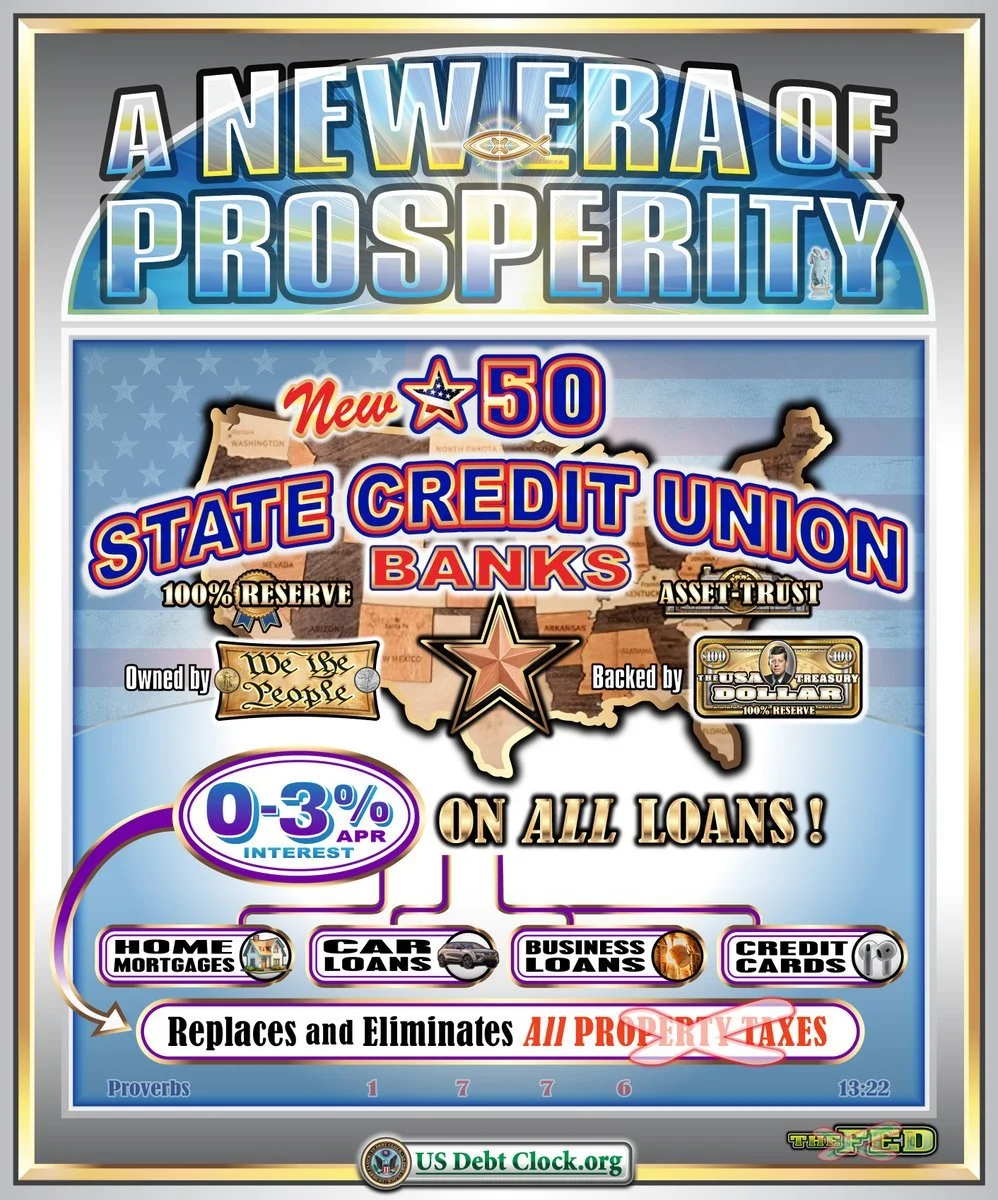
News, Rumors and Opinions Thursday 1-22-2026
Paul Gold Eagle: We are Witnessing a Monetary Reset
1-22-2026
This is a monetary reset not market speculation.
Trust has been broken and people see that Fiat Currency is the biggest Ponzi scheme of all.
Fiat Currency is backed by “The Full Faith and Credit”
The US alone is racking up a Trillion in debt approximately every 100 days.
It’s roughly 3 Billion a day to service the debt.
Paul Gold Eagle: We are Witnessing a Monetary Reset
1-22-2026
This is a monetary reset not market speculation.
Trust has been broken and people see that Fiat Currency is the biggest Ponzi scheme of all.
Fiat Currency is backed by “The Full Faith and Credit”
The US alone is racking up a Trillion in debt approximately every 100 days.
It’s roughly 3 Billion a day to service the debt.
Fractional Reserve Banking
This is where Banks create money out of debt.
Since March 2020 Banks don’t even need to hold the 10% reserve anymore.
The system is backed by NOTHING
FIAT CURRENCY IS A PONZI SCHEME
Andy Schectman: https://twitter.com/i/status/2014215160819601799
https://dinarchronicles.com/2026/01/22/paul-gold-eagle-we-are-witnessing-a-monetary-reset/
*************
Courtesy of Dinar Guru: https://www.dinarguru.com/
Walkingstick Article: "The Board of Directors of the Center for Banking Studies discusses activating international partnerships to support banking reform in Iraq" Quote: "These efforts are in line with... addressing the challenges of compliance with FATF, Basel and IFRS requirements, thereby...improving the readiness of Iraqi banks to integrate into the international financial system." This is coming from the ones at the CBI that make all the decisions on the monetary reform, on the new exchange rate. This is the board of directors that tell Alaq what to do and what to say. These are the straight directors from the board of directors directing Alaq to say these words. These are the one in negotiations with the Untied States of America...
Frank26 [Update from an Iraqi] MR. D: My wife is Iraqi and she said, 'Did you see the picture [of Trump, Savaya and the old dinar note]?'...She said the picture has a cultural significance...We saw there were 3 military coins in front of Donald Trump. The army, the navy and the US marine Corps coins. Those were the 3 we recognized. Behind that was the dinar with Saddam Hussein on it. The significance of that was it was a 5 dinar, "Swiss note". She said that in itself was culturally significant because what they're telling the people is the president is in support of the Iraqi people and he was sending a message to the politicians that they needed to get their currency straight, start supporting their people, that they were going to receive one of two things... [Post 1 of 2...stay tuned]
Frank26 "...the easy way which is the revaluation, the country was going to be put in peace, the people were going to become very prosperous. Or the hard way, which is we have the Army coin, which is black and gold, the Naval coin, which is white and blue and the Marine Corps coin which is red and gold. That was in front of the president...This is all over the Aribic media. They've got the message as to what Donald Trump is saying...You can take the carrot, revaluate your currency...Culturally the messaging is good. Donald Trump is the ultimate communicator. When he does these things he's sending a message very clearly. According to what my wife said, within the Arabic Middle East, the message has gotten out. He wants the Iranians out. He wants the Iraqi people set free to have their financial stability..." FRANK: I want to thank you and your wife. You guys were very instrumental in helping us... [Post 2 of 2]
************
Silver's Move Hasn't Even Started | Gregory Mannarino
Liberty and Finance: 1-21-2026
Gregory Manarino argues that silver remains profoundly undervalued because its pricing sits atop an overleveraged debt market that functions like a pressure cooker with the lid clamped down by policy intervention.
He explains how suppressed interest rates, paper derivatives, and central bank balance sheet expansion distort price discovery, using the contrast between physical metal ownership and paper contracts as a plain language example of systemic fragility.
From there, he frames the US financial system as infrastructure built on perpetual debt expansion, where the Fed Treasury complex acts as both buyer and lender of last resort, crowding out genuine market signals.
Manarino extends this analysis to emerging mechanisms such as tokenization and stablecoins, describing them as new plumbing layered onto an already unstable foundation rather than true reform.
The economic consequence, he warns, points toward currency debasement, further wealth concentration, and a sharp repricing of real assets like silver once the debt market finally asserts gravity over illusion.
INTERVIEW TIMELINE:
0:00 Intro
1:30 Silver market update
12:00 Debt situation
27:27 The path forward
Seeds of Wisdom RV and Economics Updates Thursday Morning 1-22-26
Good Mornning Dinar Recaps,
Trump Cancels EU Tariffs After Greenland Framework Deal
De-escalation at Davos eases markets — but EU caution and trade politics remain in play
Good Morning Dinar Recaps,
Trump Cancels EU Tariffs After Greenland Framework Deal
De-escalation at Davos eases markets — but EU caution and trade politics remain in play
Overview
President Donald Trump announced at the World Economic Forum (WEF) in Davos that he will cancel planned tariffs on European Union and NATO countries that had been set to take effect in February. The reversal followed Trump’s statement that he and NATO Secretary General Mark Rutte have reached a “framework of a future deal” on Greenland and the broader Arctic region. The announcement was viewed by markets as a de-escalation of trade and geopolitical risk, triggering rallies in stocks and easing transatlantic tensions — at least temporarily.
Key Developments
1. Tariff Threats Withdrawn After Framework Talks
Trump confirmed that the tariffs — originally intended to pressure Denmark and other European allies over their opposition to U.S. influence in Greenland — will not be imposed on February 1 as previously threatened. He framed this as the result of productive discussions with NATO leadership on Arctic cooperation.
2. Markets React Positively
Financial markets responded sharply to the tariff cancellation. Major U.S. equity indices rose, and safe-haven pressures eased, as investors interpreted the move as a reduction in short-term geopolitical and trade risk.
3. EU Response: Caution and Concern
European leaders and institutions had previously strongly condemned Trump’s tariff threats, with European Commission officials calling the original plan a “mistake” and warning that any coercive trade measures would harm transatlantic relations. Even after the tariff cancellation, the EU emphasized that sovereignty and respect for international trade norms must be upheld, and work on ratifying broader trade agreements may remain paused or subject to review due to the episode.
Why It Matters
This reversal marks a significant softening of one of the most acute trade flashpoints between the U.S. and Europe in years. While it temporarily defuses the threat of a tariff battle that could have spilled into a broader trade conflict, the underlying strategic tensions around Arctic security and alliance cohesion remain unresolved. The incident underscores how geopolitical bargaining can ripple through trade policy, influence markets, and affect policy coordination among major economic powers.
Why It Matters to Foreign Currency Holders
For foreign currency holders monitoring reset and realignment signals:
Tariff threats and reversals affect risk sentiment, often driving shifts into safe-haven currencies and assets.
Ongoing U.S.–EU diplomatic friction, even when de-escalated, can fuel demand for reserve diversification.
The Arctic’s strategic importance and evolving cooperation frameworks could influence long-term commodity flows and capital allocation, which in turn affect currency valuations.
Periods of elevated geopolitical risk tend to coincide with currency volatility and repositioning in global portfolios.
Implications for the Global Reset
Pillar 1: Geoeconomic Policy Intertwined with Security
Trade tools like tariffs are increasingly used within broader security negotiations — a shift that blurs lines between economic policy and strategic competition.
Pillar 2: Transatlantic Trust and Monetary Stability
While the tariff threat has been withdrawn, European caution signals that institutional trust has been tested, potentially weakening cooperative frameworks that support stable currency relationships and economic integration.
This is not merely tariff news — it is a signal of how geopolitical leverage shapes global economic architectures.
This is not a permanent peace — it’s a tactical retreat that leaves underlying strategic tensions unaddressed.
Seeds of Wisdom Team
Newshounds News™ Exclusive
Sources
Reuters – Instant market reaction as Trump withdraws tariff threat after Greenland framework deal
Mint – EU considers suspending trade deal amid tariff controversy
~~~~~~~~~~
Putin Signals Russia Could Contribute $1 Billion to Trump’s “Board of Peace”
Russia considers using frozen assets to back U.S.-led peace initiative — a geopolitical pivot with economic ripples
Overview
Russian President **Vladimir Putin said Moscow could provide $1 billion — from Russian assets currently frozen abroad — to support U.S. President Donald Trump’s newly proposed “Board of Peace” initiative. The board was recently unveiled at the World Economic Forum in Davos as part of a broader plan to manage peace, reconstruction, and coordination in Gaza following a ceasefire. Putin’s comments came during a meeting of Russia’s Security Council, as officials weigh the cost, mechanics, and strategic implications of joining the initiative.
Key Developments
1. Putin Offers $1 Billion From Frozen Russian Assets
President Putin stated that Russia could supply $1 billion toward the Board of Peace — a payment reportedly tied to securing a permanent membership seat on the body. He suggested the funds could come from Russian assets currently frozen in the United States, pending further review by the foreign ministry.
2. Security Council Instructed to Study Proposal
Putin said he had directed Russia’s foreign ministry to review the proposal in detail and consult strategic partners before making a formal commitment. The assessment will consider how participation aligns with Russian foreign policy priorities and international positioning.
3. Board of Peace Context and Funding Mechanism
The Board of Peace is a U.S.-promoted international body aimed at coordinating peace, funding, and reconstruction efforts — originally focused on Gaza. Permanent membership reportedly entails a $1 billion contribution, though invited states can participate initially without payment. Several nations have already been contacted, and the board’s mandate could extend beyond the Middle East.
Why It Matters
Putin’s offer — tentative as it may be — signals a rare moment of potential cooperation between the U.S. and Russia on a high-profile international governance project, despite deep tensions over Ukraine and wider geopolitical rivalry. If realized, the move could shift diplomatic perceptions and introduce new financial dynamics into peacebuilding efforts that historically have been led by multilateral institutions like the United Nations.
Putin’s emphasis on using frozen assets adds layers of complexity, as it intersects with sanctions regimes, sovereign claims on foreign-held funds, and broader strategic leverage between major powers.
Why It Matters to Foreign Currency Holders
For currency holders watching reset and realignment signals:
A high-profile international initiative with state financial contributions can influence investor risk sentiment, especially if linked to asset mobilization from frozen reserves.
Use of frozen foreign assets in geopolitical diplomacy may shift perceptions of sovereign credit, reserve stability, and external balance sheet risks.
Cooperative signaling between geopolitical rivals — even tentative — can reduce systemic risk premia and affect currency valuations tied to safe-haven status.
Periods of diplomatic innovation often translate into capital flow shifts and repricing across fixed income and FX markets.
Implications for the Global Reset
Pillar 1: New Models of “Global Governance Funding”
Putin’s statement underscores that future international governance bodies may not rely solely on traditional multilateral banks or IMF structures. Instead, bilateral or ad-hoc finance mechanisms — funded by targeted sovereign contributions — could arise.
Pillar 2: Geopolitical Assets as Economic Instruments
Frozen assets, once tools of economic pressure, are now being repurposed as diplomatic levers. This reflects a broader trend in which financial instruments and reserves are central to geopolitical negotiation, not just monetary policy.
This is not just peace rhetoric — it’s finance meeting geopolitics at the intersection of systemic risk and structural realignment.
This isn’t a signed commitment — it’s a strategic recalibration signal from Moscow, priced in billions.
Seeds of Wisdom Team
Newshounds News™ Exclusive
Sources
~~~~~~~~~~
France Calls to ‘Build Bridges’ With BRICS Amid G7 Imbalance
Macron pushes multilateral cooperation at Davos as global alliances shift under geopolitical and economic strain
Overview
At the World Economic Forum (WEF) 2026 in Davos, Switzerland, French President **Emmanuel Macron called for Europe and the G7 to expand cooperation beyond traditional allies and “build bridges” with emerging economies, notably the BRICS alliance — signaling a strategic pivot in global diplomatic priorities. Macron emphasized that tackling global economic imbalances and rising geopolitical fragmentation requires stronger engagement with developing countries and multilateral frameworks.
Key Developments
1. Macron Advocates Greater Cooperation With BRICS and the G20
In his address to global leaders, Macron urged that G7 priorities include stronger ties with BRICS countries (Brazil, Russia, India, China, South Africa, and others) and the G20. He argued that “the fragmentation of this world would not make sense” and that major powers must collaborate rather than compete in isolation.
2. G7 to Address Global Imbalances Through Multilateral Frameworks
France, which holds the G7 presidency in 2026, plans to focus the group’s agenda on devising a cooperative framework to tackle economic, security, and development imbalances. Macron framed this as essential for restoring efficient convergence among major economies.
3. Strategic Context: Tensions With the U.S. Influence
Macron’s call comes amid broader transatlantic tensions, including U.S. tariff threats and disputes over Arctic strategy — a backdrop that has made discussions about multilateral cooperation and emerging-market engagement particularly salient.
4. Historical Outreach to BRICS Continues
Although France’s previous attempt to attend the 2023 BRICS summit in Kazan was blocked by Russia and China, Macron has continued to praise the bloc’s approach to global finance and cooperation, signaling a warming diplomatic rhetoric even without formal membership.
Why It Matters
Macron’s remarks mark a notable shift in traditional Western economic diplomacy. Rather than positioning BRICS as a rival or peripheral group, he proposes integrating dialogue with the bloc into the G7’s agenda as part of a broader multilateral strategy. This reflects recognition that emerging economies — representing significant portions of global GDP and population — cannot be ignored in constructing functional global governance frameworks.
In a world of rising geopolitical competition, such bridge-building discussions could reshape how major economic powers interact on trade, investment, development, and security.
Why It Matters to Foreign Currency Holders
For holders monitoring currency revaluation or systemic reset signals:
Expanded cooperation with BRICS may reduce reliance on traditional Western-centric financial systems, influencing reserve currency dynamics.
Greater engagement between G7 and BRICS economies could support multipolar currency arrangements and bilateral settlement mechanisms.
“Bridge-building” rhetoric can signal de-risking from a single-centered monetary order, possibly influencing diversification into alternative assets and currencies.
Periods of geopolitical realignment often precede capital reallocation and currency repricing in markets.
Implications for the Global Reset
Pillar 1: Multipolar Engagement Strategy
Macron’s emphasis on cooperation with BRICS underscores the reality that global economic leadership is no longer confined to Western blocs alone. Strategic integration — rather than competitive exclusion — may define the next phase of global economic order.
Pillar 2: Alliance Structures Redefined
Traditional groupings like the G7 are being reframed to include engagement with non-Western power centers. This shift suggests an evolving global governance architecture where cooperation across ideological and economic divides becomes necessary to manage systemic pressures.
This is not mere diplomacy — it’s restructuring geopolitical engagement in an increasingly complex world.
This is not just a speech — it’s a strategic signal that global cooperation must adapt to multipolar realities.
Seeds of Wisdom Team
Newshounds News™ Exclusive
Sources
~~~~~~~~~~
Seeds of Wisdom Team RV Currency Facts Youtube and Rumble
Newshound's News Telegram Room Link
RV Facts with Proof Links Link
RV Updates Proof links - Facts Link
Follow the Gold/Silver Rate COMEX
Follow Fast Facts
Seeds of Wisdom Team™ Website
Thank you Dinar Recaps
“Tidbits From TNT” Thursday Morning 1-22-2026
TNT:
Tishwash: US Central Command: 7,000 ISIS detainees will be transferred from Syria to Iraq
The US Central Command announced on Wednesday that approximately 7,000 ISIS detainees will be transferred from Syria to Iraq as part of joint security measures.
The US Central Command said in a statement: "We have begun a mission to transfer ISIS terrorist detainees from Syria to Iraq and place them in secure detention centers."
She added, "We expect that the number of ISIS terrorist detainees who will be transferred from Syria to Iraq will reach around 7,000."
TNT:
Tishwash: US Central Command: 7,000 ISIS detainees will be transferred from Syria to Iraq
The US Central Command announced on Wednesday that approximately 7,000 ISIS detainees will be transferred from Syria to Iraq as part of joint security measures.
The US Central Command said in a statement: "We have begun a mission to transfer ISIS terrorist detainees from Syria to Iraq and place them in secure detention centers."
She added, "We expect that the number of ISIS terrorist detainees who will be transferred from Syria to Iraq will reach around 7,000."
"We are coordinating with partners in the region and the Iraqi government, and we appreciate their role in ensuring the defeat of the ISIS terrorist organization," she affirmed. link
************
Tishwash: Government advisor: We are still in the middle of tax reform.
Advisor to the Prime Minister, Abdul Hussein Al-Anbaki, confirmed that good steps have been taken in the tax reform process, noting that the procedures are “halfway through.”
Al-Anbaki said in a press statement : “Talking about the existence of a fixed strategy for economic reform is inaccurate, as Iraq has witnessed the preparation of more than 16 strategies and roadmaps for economic reform since 2009.”
He explained that “the work continued until the last government, which was the government of Mohammed Shia Al-Sudani, where the focus was on some aspects of economic reform, including tax reform, which included the Supreme Committee, and we were able to put in place a number of good steps, but we are still in the middle of the road and need to complete them.”
The path to tax reform
Al-Anbaki expressed his fear that “the new governments will follow the approach of previous governments by leaving projects incomplete and starting anew, as if there were no previous scientific or intellectual output or visions for economic reform.”
He pointed out that “all visions are available, but the problem lies in the institutional structure, in addition to the absence of economic specializations, as people from other specializations are handling the file, which leads to repeated mistakes.”
He added that “economic reform has been delayed for too long due to temporary appeasement and populist policies, under governments that operate within short time periods without long-term thinking,” explaining that “Iraq, since 2003 until now, has not achieved long-term requirements, which necessitates working in two directions; short and long term; because neglecting the long term leads to the fragility of the state and exposes it to crises and global changes.”
Economic policy is being run in reverse.
He stated that “Iraq has not been able, during the past 23 years, to create a financial lever to protect the economy from crises, as economic policy is managed in reverse, where spending expands with the expansion of the economy and contracts with its contraction, contrary to economic theories that assume that the state should intervene with expansion during periods of contraction and with contractionary policy during inflation.”
He pointed out that “as an expert in the Organisation for Economic Co-operation and Development (OECD) for more than 15 years, Iraq has provided important outputs for economic reform, including a roadmap for restructuring state-owned enterprises in 2015, which was highly praised in Paris, but it has not been implemented.”
He stressed, “the importance of reactivating the relationship with international organizations to find out where the world has reached in economic reform, especially in the field of the digital economy, in which Iraq is still lagging behind.”
He explained that “the International Tax and Investment Organization (ITIC) has emphasized the role of tax reforms in attracting foreign direct investment, as the lower the cost of compliance, the greater the opportunities to attract investors.”
He stressed that “this requires a great effort and a comprehensive improvement of the business environment, not just tax reform.” link
***************
Tishwash: Conflicting interpretation of an Iranian message regarding Maliki: Will Savaya attend the "framework" session on Saturday?
The Shiite alliance enters the final stretch of the battle
Over the past few days, the Coordination Framework has received conflicting messages from Tehran and Washington regarding the name of the next prime ministerial candidate.
Political assessments indicate that the matter may be resolved early next week, either in favor of Nouri al-Maliki, leader of the State of Law Coalition, or by proposing a compromise candidate acceptable to the conflicting parties.
As of the time of this report, two key factions within the Shiite alliance still oppose Maliki's candidacy for the premiership.
The CoordinationFramework has reached a political impasse due to Maliki's insistence on running, while his opponents have exhausted all means of pressure and maneuvering without achieving a decisive breakthrough.
Political sources suggest that a meeting of the Coordination Framework scheduled for next Saturday will be pivotal for two main reasons:
First, the arrival of an Iranian message that has been interpreted in contradictory ways by both the pro- and anti-Maliki camps.
Second, the meeting coincides with the visit of US President Donald Trump's envoy to Iraq, Mark Savaya, who is expected to deliver a significant political message.
While a political source close to a pro-Maliki faction, who requested anonymity, stated that "the Iranian message endorsed Maliki's selection," another source from a camp described as "neutral" offered a different interpretation, suggesting that "Tehran is preoccupied with its internal and regional affairs and has not intervened as it has in the past, limiting itself to general, indirect signals."
This view is reinforced by statements from Husam al-Hassani, a leader in the Hikma Movement, who confirmed in a television interview that "the Iranian message did not support a specific name but rather advocated for the principle of consensus," explaining that its essence was: "Put your trust in God regarding what you have agreed upon."
Maliki's movements and Washington's messages : Over the past 48 hours, Maliki intensified his meetings with leaders of the opposition camp, meeting separately with Ammar al-Hakim, leader of the Hikma Movement, and Qais al-Khazali, leader of Asa'ib Ahl al-Haq, in an attempt to bridge the differences regarding the next prime minister, without any clear indications of a resolution.
Meanwhile, the American position remains shrouded in ambiguity. A neutral political source says that “Safia will be in Baghdad on Saturday, carrying a message that may not be in Maliki’s favor,” thus opening the door to the option of a “compromise candidate.”
The US envoy recently escalated his rhetoric, stating that “reforming Iraq begins with confronting corruption decisively,” considering “militias to be the symptom, while corruption is the disease.” In a post on the X platform, he described the corruption network in Iraq as “complex and deliberately built over more than two decades,” emphasizing that dismantling it is a prerequisite for restoring stability and sovereignty.
According to circulating information, the US envoy is expected to move towards activating a package of decisions that Al-Mada newspaper exclusively published last year, which includes closing most Iraqi banks and keeping only a limited number, no more than “four to six banks,” as part of a strict US campaign to combat money laundering and dry up Iran’s sources of funding.
Mark Savia had held a series of meetings with officials in Washington during the past week, which received direct praise from US President Donald Trump, reinforcing the impression that the envoy is operating with a broad mandate and unprecedented powers.
Within Iraq, perceptions of Safia's stance toward the Shiite alliance vary. Some see him as an adversary seeking to undermine its influence, while others consider him a potential partner in reshaping the political landscape according to new equations.
What does the opposition want?
Domestically, Hakim and Khazali remain steadfast in their rejection of Maliki's nomination, as confirmed by Badr Organization leader Mukhtar al-Moussawi.
Al-Moussawi, a member of parliament, told Al-Mada yesterday, "These are still the current positions regarding Maliki, and perhaps they changed Tuesday evening after the latest meeting held by the opposition forces, but I cannot confirm that yet."
Al-Moussawi, whose bloc has not yet announced a definitive position on the crisis, believes that "the problem is not Maliki himself, but rather his inability so far to convince the opposition of its share of the government."
The "Coordination Framework" failed last week to hold two meetings that were supposed to finalize the candidate's name.
Al-Mada observed a clear divergence of opinions within the "Coordination Framework" regarding Nouri al-Maliki's nomination. Some parties believe he is "unsuitable" for the position at this stage, while others consider his selection a potentially "provocative message" given the repercussions of the Syrian crisis.
The opposition camp believes that the number of seats held by the State of Law coalition does not qualify al-Maliki for the premiership, unless the circulating reports about Prime Minister Mohammed al-Sudani relinquishing his political "points" in his favor prove true.
However, Hussam al-Hassani, a leader in the Hikma Movement, denied these assessments, asserting that the "Reconstruction and Development" bloc, headed by al-Sudani, was asked if it was prepared to concede its entitlement to the State of Law coalition in exchange for the prime ministership.
His response was decisive: "No, we have our political entitlement."
Al-Sudani had surprised the "Coordination Framework" by announcing his willingness to relinquish the position to al-Maliki, followed by reports of an alliance between the two sides, although the latter has not yet officially confirmed it. However, the opposition camp continues to promote the narrative that al-Sudani is engaging in political maneuvering, placing al-Maliki at the forefront of the crisis to pave the way for his return to the premiership.
The Shiite alliance has thus far failed to secure a clear stance from the Najaf religious establishment, which has repeatedly refused to intervene in this matter.
This is compounded by the silence of Muqtada al-Sadr, leader of the Sadrist Movement, regarding the unfolding crisis. With the prospects of removing al-Maliki through consensus dwindling, his opponents are promoting what they call a "policy of entrapment ," meaning pushing him to the forefront at the height of the crisis to hold him politically responsible.
In this context, Sunni forces have begun launching indirect attacks against him, a notable development after weeks of his name circulating as a potential candidate.
Over the past two days, Mohammed al-Halbousi has continued to level veiled criticisms, reminiscent of al-Maliki's era in power.
In a notable post yesterday, he said, “Those who do not learn from history cannot build the future,” recalling the events of the “Arab Spring” and what accompanied it in Iraq in terms of “crisis management, sectarian incitement, and the arrest of innocent people.” He considered that those policies were used at the time to cover up the escape of senior terrorists from Abu Ghraib prison, which took place during the second Maliki government, in “an incident described as the strangest, which passed without any accountability or condemnation of those responsible for it.”
He added that the fugitives later managed to occupy and destroy entire provinces before they were reclaimed "through immense sacrifices and the displacement of millions," referring to the tragedy of the Bzeibiz Bridge.
Al-Halbousi added that the scenario is being repeated today amidst regional and international turmoil, through the so-called SDF and its smuggling of ISIS leaders from its prisons, warning of the danger of repeating the same mistakes.
He called on "the wise men of Iraq" to recognize the magnitude of the challenges and adopt a unified national stance that prevents "a return to the past, whatever the reasons," while emphasizing the need to preserve the security, political, and social stability achieved after the defeat of ISIS.
Last Monday, Al-Halbousi had called for the appointment of a figure with broad national acceptance "away from a return to painful, lean days," a statement widely interpreted as referring to Nouri al-Maliki.
Similarly, Sunni leader Ahmed Abdullah Abdul Jabouri (Abu Mazen) stressed that "Iraq cannot afford to turn back the clock," calling for the formation of a national unity government built on trust and partnership, in a post on social media.
Researcher and academic Ziad al-Arar believes that the Sunni position on Nouri al-Maliki assuming the premiership is "diverse and not unified," as it is divided between a genuine rejection of al-Maliki's return to office and other stances that can be described as "political maneuvering," linked to specific demands and conditions, or based on positions al-Maliki has recently taken, particularly his rejection of a specific Sunni figure assuming the speakership of parliament.
Al-Arar, speaking to Al-Mada, points out that the political voices within the Sunni community opposing al-Maliki's return appear to be more numerous and influential than those supporting him. Furthermore, the Kurdish position has not yet crystallized clearly.
However, he emphasizes that the final decision should remain with the "Shia framework," as it is the body authorized to choose the prime ministerial candidate. He recalls that the framework previously allowed Sunni forces the freedom to choose Mohammed al-Halbousi as Speaker of Parliament.
He adds that Mohammed al-Sudani's move to withdraw or nominate al-Maliki for the next prime minister came, in his view, within the framework of striving to preserve the unity of the "coordination framework" and break the political deadlock. At the same time, he stresses that al-Sudani remains a viable candidate, and that the final outcome will depend on internal political developments, as well as the impact of regional events in shaping the final picture of the Iraqi political landscape. link
************
Mot: Let Me Tell YOU So!!!!

Mot: . SurPrise!!!!!!

Seeds of Wisdom RV and Economics Updates Wednesday Evening 1-21-26
Good Evening Dinar Recaps,
Davos 2026: Geopolitics Overshadows Global Economy as Trump’s Greenland Push Tests Alliances
World Economic Forum becomes focal point for transatlantic tensions, alliance friction, and economic realignment pressures
Good Evening Dinar Recaps,
Davos 2026: Geopolitics Overshadows Global Economy as Trump’s Greenland Push Tests Alliances
World Economic Forum becomes focal point for transatlantic tensions, alliance friction, and economic realignment pressures
Overview
The 2026 Annual Meeting of the World Economic Forum in Davos has shifted from routine economic discussion to a geopolitical pressure point, as U.S. President Donald Trump used the platform to renew his controversial bid to assert U.S. interests over Greenland and challenge European partners. His address — combining economic nationalism, strategic ambition, and tariff threats — has provoked strong pushback from European leaders, raised market sensitivities, and underscored weakening cohesion among traditional allies. This moment, at one of the year’s highest-profile international gatherings, signals deepening strains in global cooperation.
Key Developments
1. Trump Reiterates Greenland Goal Without Military Force
President Trump delivered a high-profile speech at Davos on January 21, 2026, emphasizing the U.S. desire to acquire Greenland and strategically framing it as critical to national and continental defense. He explicitly ruled out the use of military force while intensifying diplomatic and economic pressure.
2. Transatlantic Tensions Escalate Publicly
Trump used his speech to criticize European allies and frame NATO relationships as transactional. His rhetoric contributed to a diplomatic rupture, with European leaders warning that Greenland’s sovereignty is non-negotiable and planning united responses.
3. Tariff Threats Linked to Strategic Aims
During and around the forum, the U.S. reiterated threats of escalating tariffs on Denmark and other European NATO members if negotiations over Greenland did not progress — a move seen by critics as coercive and likely to disrupt trade ties.
4. European Pushback and Arctic Security Responses
In response, European Commission President Ursula von der Leyen outlined plans for a comprehensive package to support Arctic security, emphasizing cooperation and asserting Greenland and Danish sovereignty.
5. Broader Leader Participation Amplifies Stakes
With nearly 65 heads of state and government attending, including key European, Asian, and Middle Eastern leaders, Davos has become an unusually political forum, blending economic discussion with alliance and security concerns.
Why It Matters
Davos is traditionally a venue for consensus on economic growth, sustainability, and innovation. But this year, geopolitics — specifically territorial strategy and alliance friction — has dominated the conversation. That shift reflects a broader reality: economic policymaking is increasingly inseparable from strategic and security priorities. The entanglement of trade, alliance cohesion, and territorial competition signals deeper structural stresses in the global order.
This dynamic complicates coordinated responses to shared challenges like inflation, debt, and climate change, and reinforces geoeconomic fragmentation over unified global governance.
Why It Matters to Foreign Currency Holders
For foreign currency holders focused on reset or revaluation signals:
Alliance friction and tariff threats elevate the risk of diversified reserve strategies and regional payment systems.
Political instability among major economies increases demand for safe-haven currencies and assets beyond traditional anchors.
Shifts in geopolitical economic governance may accelerate exploration of non-dollar settlement mechanisms among emerging economies.
Moments of tectonic geopolitical stress often precede periods of currency repricing and market restructuring.
Implications for the Global Reset
Pillar 1: Geoeconomic Realignment
Davos 2026 exemplifies how global economic forums are now arenas for strategic competition, not just cooperation. Trade policy, security imperatives, and alliance negotiations are central concurrently.
Pillar 2: Structural Monetary Pressures
As political risk and alliance fragmentation rise, traditional monetary frameworks may be reevaluated. This environment nourishes demand for alternative financial architectures and reinforces multipolar economic trends.
The reset isn’t a sudden event — it’s the accumulation of strategic divergence across policy domains.
This is not globalization at consensus — it’s globalization under strain, with strategic rivalry rewriting the rules at Davos itself.
Seeds of Wisdom Team
Newshounds News™ Exclusive
Sources
Reuters/AP captured in KPBS: Trump says he won’t use force to acquire Greenland in Davos speech
Reuters/Economic Times – Trump at Davos 2026: from economic nationalism to territorial pressure
Reuters – EU Commission working on Arctic security support package
World Economic Forum – Over 60 heads of state gathering at Davos 2026
~~~~~~~~~~
Trump Announces NATO ‘Framework’ Deal on Greenland at Davos
A sharp reversal from tariff threats eases markets but raises deeper questions about alliance cohesion and strategic realignment
Overview
At the World Economic Forum in Davos, Switzerland, U.S. President Donald Trump announced that he and NATO Secretary General Mark Rutte have “formed the framework of a future deal” regarding Greenland and the broader Arctic Region. The announcement came after intense diplomatic engagement and followed days of tariff threats that had rattled markets and strained transatlantic relations. Trump also said he would drop planned European tariffs and ruled out the use of military force to acquire the strategically vital island.
Key Developments
1. Framework Deal on Greenland and the Arctic
Trump posted on social media that following productive talks with NATO leadership, a framework for a prospective agreement on Greenland and Arctic security has been established. Specifics and timelines were not disclosed, but the announcement reversed earlier aggressive rhetoric.
2. Tariff Threats Withdrawn
In a major policy shift, Trump said he will not impose the 10% tariffs on eight European NATO allies that had been scheduled to start on February 1. These tariffs were tied to Trump’s push for greater U.S. influence over Greenland. The reversal helped calm financial markets after sharp sell-offs tied to earlier escalation.
3. Military Force Rule-Out
In his Davos remarks, the president explicitly ruled out using military force to seize control of Greenland, a significant departure from months of speculation. He framed the approach as diplomatic and strategic rather than coercive.
4. Market and Diplomatic Reactions
Global markets responded positively to the announcement, with major U.S. stock indices rebounding after recent volatility tied to geopolitical risk. European leaders, however, remain cautious, emphasizing the sovereignty of Denmark and Greenland and the need for genuine consultation with Arctic partners.
Why It Matters
This development marks a major de-escalation in one of the most significant transatlantic crises in years. A potential Greenland agreement — even in “framework” form — removes an immediate threat to trade relations and NATO cohesion. Yet, the absence of details and the unconventional nature of the deal raise questions about sovereign decision-making, alliance trust, and how strategic resources are negotiated in a multipolar world.
In global reset terms, the episode underscores how geopolitical leverage, economic statecraft, and alliance structures are increasingly intertwined, influencing economic integration and currency confidence.
Why It Matters to Foreign Currency Holders
For holders focused on currency reset signals:
Tariff threats and geopolitical risk can significantly shift capital flows into safe havens and alternative assets.
A diplomatic reversal indicates that political risk premiums may be temporary, affecting currency valuations tied to perceived stability.
The Arctic’s strategic importance — and uncertainty over governance — could eventually influence energy and resource-backed currency considerations down the road.
Periods of heightened alliance tension often coincide with currency volatility and repricing opportunities.
Implications for the Global Reset
Pillar 1: Structural Alliance Recalibration
The United States and NATO confronting a territorial and strategic flashpoint highlights fracture lines in long‐standing alliance frameworks, accelerating discussions on multipolar security and economic cooperation.
Pillar 2: Risk and Policy Interdependence
Geopolitical risk now feeds directly into economic policy, market confidence, and currency positioning. Central banks and sovereign authorities may increasingly price politico-strategic indicators into monetary decisions.
This isn’t just diplomacy — it’s a reconfiguration of how economic and security policy intersect on the world stage.
This is not a finalized treaty — it’s a strategic pivot that could influence alliances, markets, and monetary expectations as the world order evolves.
Seeds of Wisdom Team
Newshounds News™ Exclusive
Sources
~~~~~~~~~~
Seeds of Wisdom Team RV Currency Facts Youtube and Rumble
Newshound's News Telegram Room Link
RV Facts with Proof Links Link
RV Updates Proof links - Facts Link
Follow the Gold/Silver Rate COMEX
Follow Fast Facts
Seeds of Wisdom Team™ Website
Thank you Dinar Recaps
Iraq Economic News and Points To Ponder Wednesday Evening 1-21-26
Iraq Can Fund Salaries, But Oil Sets The Limits
2026-01-21 Shafaq News Iraq is not expected to face immediate difficulties in paying public-sector salaries or pensions in early 2026, according to government advisers and economists. However, continued payments remain closely linked to oil prices staying within a limited range, leaving public finances vulnerable to external market shifts.
Iraq Can Fund Salaries, But Oil Sets The Limits
2026-01-21 Shafaq News Iraq is not expected to face immediate difficulties in paying public-sector salaries or pensions in early 2026, according to government advisers and economists. However, continued payments remain closely linked to oil prices staying within a limited range, leaving public finances vulnerable to external market shifts.
Oil revenues account for more than 90% of Iraq’s state income, making fiscal stability highly sensitive to fluctuations in global crude prices. Monthly operational spending —primarily salaries, pensions, and social welfare— absorbs the bulk of government expenditures, reducing flexibility in the event of a downturn.
The Prime Minister’s financial adviser, Mudhhir Mohammed Saleh, said that Iraq’s fixed monthly obligations amount to approximately 8 trillion Iraqi dinars (around $6.1 billion), excluding subsidies, debt servicing, and outstanding contractual payments.
In comments to Shafaq News, he noted that oil revenues can cover these commitments provided the annual average oil price remains above $60 per barrel, assuming exports of about 3.4 million barrels per day.
*Economists caution that this benchmark reflects structural fragility rather than financial resilience.* Ahmed Abd Rabbo, an economic analyst, said salary payments may remain secure in the short term but warned that the underlying imbalance persists.
He pointed to the steady expansion of the public wage and pension bill over the past decade, alongside limited growth in non-oil revenues. “The issue is not an immediate inability to pay,” he said, “but prolonged exposure to oil-market volatility without sufficient reform.”
Official data highlight the scale of the challenge. The Eco Iraq Observatory reported that Iraq’s fiscal deficit reached 24.68 trillion dinars (about $18.8B) by October 2025. Current expenditures accounted for roughly 75% of total spending, while non-oil revenues totaled less than 10 trillion dinars, compared with oil revenues of nearly 93 trillion dinars during the same period.
Central Bank figures further show that salaries and service-related spending reached about 96 trillion dinars, representing close to 90% of overall expenditure, leaving limited room to absorb revenue shocks or expand investment.
Nawar al-Saadi, a professor of international economics, said the main concern is the absence of a stabilizing mechanism. “Oil revenues are sufficient to fund current spending,” he told Shafaq News, “but they are not being channeled into economic diversification or a functioning stabilization fund. Any sudden price decline or unplanned obligation immediately turns salaries into a sensitive financial and political issue.”
Another economist, Mustafa al-Faraj, estimated that salary payments remain manageable if oil prices stay above $55 per barrel, warning that sustained prices below that level would impose significant constraints unless spending is adjusted.
He argued that reforms should focus on expenditure discipline, including reviewing high-level salaries, addressing duplicate salary payments, and reassessing legacy compensation schemes, alongside efforts to activate non-oil sectors such as tourism.
The government of Prime Minister Mohammed Shia al-Sudani, whose term has recently ended, introduced limited deficit-control measures, including the sale of unused government vehicles and equipment, a 50% reduction in fuel allocations, and a freeze on recognizing additional academic degrees for salary and promotion purposes from January 2026.
Economists say that while these measures may save about $2 billion annually, and ease pressure in the short term, they remain modest relative to the overall deficit. Without broader structural reforms targeting spending rigidity and revenue diversification, Iraq’s ability to sustain salary payments will continue to depend largely on favorable oil market conditions.https://www.shafaq.com/en/Report/Iraq-can-fund-salaries-but-oil-sets-the-limits
Iraq Imports Exceed $17B In Q3 2025
2026-01-21 Shafaq News– Baghdad Iraq’s imports reached $17.929 billion in the third quarter of 2025, up from $17.534 billion in the second quarter, Trading Economics said on Wednesday.
According to the data, machinery and transport equipment accounted for 38% of imports, followed by manufactured goods at 27%, mineral fuels at 10%, and chemicals and related products at 7%.
Syria ranked as Iraq’s largest import partner, accounting for 18%, followed by China with 14% and the United States with 6%. Other key partners included South Korea, Jordan, Germany, and India.
Iraq’s average imports between 1988 and 2025 stood at $13.478 billion. Figures peaked at a record $50.155 billion in the fourth quarter of 2012, while the lowest level was recorded at $2.681 billion in the fourth quarter of 1994. Iraq’s Central Bank announced last month that imports from January to September 2025 totaled $63.093 billion. https://www.shafaq.com/en/Economy/Iraq-imports-exceed-17B-in-Q3-2025
Iraq Climbs To Fourth Among Turkiye’s House Buyers In December 2025
Economy & Business 2026-01-21 Shafaq News– Ankara Iraqis purchased 133 houses in Turkiye in December 2025, ranking fourth among foreign buyers of real estate, the Turkish Statistical Institute (TURKSTAT) said on Wednesday.
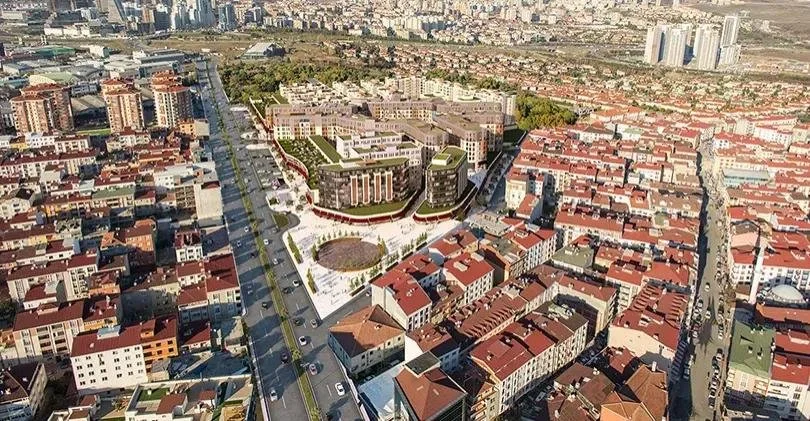
Total home sales across Turkiye rose by 19.8 percent in December compared with the same month last year, reaching 254,777 units.
Sales to foreign nationals increased by 5.1 percent year-on-year to 2,541 homes, accounting for 1.0 percent of total property sales during the month. Russians topped the list of foreign buyers with 504 homes, followed by Iranians with 232 and Ukrainians with 193. Azerbaijan ranked fifth with 113 homes, followed by Germany with 105, Kazakhstan 92, Saudi Arabia with 74, Afghanistan and China recorded 71 houses.
Last month, data showed that Iraqis bought 104 houses and took fifth place in November 2025. Iraqis had led foreign property purchases in Turkiye for several years, starting in 2015, but slipped to second place behind Iran at the beginning of 2021. Their ranking dropped further to third in April 2022 following a surge in Russian purchases. https://www.shafaq.com/en/Economy/Iraq-climbs-to-fourth-among-Turkiye-s-house-buyers-in-December-2025
USD/IQD Exchange Rates Climb In Baghdad, Dip In Erbil
Economy & Business Iraq 2026-01-21 Shafaq News– Baghdad/ Erbil The US dollar exchange rates closed higher in Baghdad but lower in Erbil on Wednesday, widening the gap between the two markets by 250 Iraqi dinars by the end of trading.
According to a Shafaq News market survey, the dollar rose in Baghdad’s Al-Kifah and Al-Harithiya central exchanges to 148,200 dinars per 100 dollars, up from 148,000 dinars earlier in the day.
Local exchange shops in the capital sold the dollar at 148,750 dinars per 100 dollars, while buying prices stood at 147,750 dinars. In Erbil, the selling price fell to 147,950 dinars per 100 dollars and the buying price to 147,850 dinars. https://www.shafaq.com/en/Economy/USD-IQD-exchange-rates-climb-in-Baghdad-dip-in-Erbil-1
Trump Treasury & Fed Will Run it Hot in 2026 – Craig Hemke
Trump Treasury & Fed Will Run it Hot in 2026 – Craig Hemke
By Greg Hunter’s USAWatchdog.com
Financial writer, market analyst and precious metals expert Craig Hemke predicted at the beginning of 2024 that the US would add a whopping $2 trillion in debt. It did.
At the beginning of 2025, Hemke predicted the US dollar would take a big hit. It did, and record high gold and silver prices score Hemke another bullseye.
Trump Treasury & Fed Will Run it Hot in 2026 – Craig Hemke
By Greg Hunter’s USAWatchdog.com
Financial writer, market analyst and precious metals expert Craig Hemke predicted at the beginning of 2024 that the US would add a whopping $2 trillion in debt. It did.
At the beginning of 2025, Hemke predicted the US dollar would take a big hit. It did, and record high gold and silver prices score Hemke another bullseye.
At the beginning of 2026, Hemke is predicting the Trump Treasury and Fed are going to put the pedal to the metal in running the economy. Hemke explains, “Japan had yield curve control for years. They have taken it off, and interest rates have skyrocketed. This is where we are heading in the US.
In May, Trump is going to appoint a ‘yes man’ to the Fed. He’s going to replace (Jay) Powell, who will work with Scott Bessent (Treasury Secretary) and do his bidding and meld operations together.
Why would they need to do that? Because they are going to run it hot.
Remember, it was austerity a year ago. DOGE was going to cut $2 trillion in spending. They were going to balance the budget and all that kind of stuff. They quickly figured out that dog was not going to hunt.
Now, it’s all about growing our way out of this. Scott Bessent was on TV this weekend saying we are going to grow fast enough that the interest expense, which is around 6% of GDP, is going back down to 3% of GDP.
They think they can grow GDP that fast. They are going to grow GDP that fast by Trump’s ‘yes man’ cutting the short end, and if interest rates on the long end start going higher because of the inflation that it’s going to cause, they are going to come back in with yield curve control here in the US.
They have done this before after World War II, and they are going to do it again as soon as this year. That is the most bullish thing that can happen for gold and silver. This is also why gold and silver have been rallying so strongly in the last 24 months.”
Hemke predicts gold will hit at least $6,000 per ounce, and silver will easily hit $130 per ounce in 2026. The industrial demand for silver is not going to let up anytime soon.
Also, central bank demand is going to continue. Hemke contends, “Two weeks after the start of the Ukraine war, the US kicked Russia out of the SWIFT system and froze its foreign currency reserves. That sparked, at the same time, global central bank gold demand that has run record buying for four years in a row.
It started in 2022. Countries looked around and said, ‘Wow, if we get sideways with the US, they will do the same thing to us.’ So, they started selling their Treasuries and dollar reserves and started buying gold.
There were record amounts in 2022, 2023, 2024 and another big year in 2025 for physical gold buying by central banks.
We just got news today that the Polish central bank is buying another 150 metric tons of gold. They are building their gold holding to 700 metric tons. So, this global central bank demand is underpinning gold.”
In closing, Hemke says, “The Fed is saying they are going to cap interest rates. The Fed is going to be a buyer of 10-year Treasury notes at let’s say 4%. . .. With locking in rates while inflation is up there, you will have negative real interest rates.
The most bullish factor for gold prices are negative real interest rates. That’s the path, and that’s where the US is headed. It will be yield curve control.”
There is much more in the 39-minute interview.
Join Greg Hunter of USAWatchdog as he goes One-on-One with Craig Hemke of the popular website TFMetalsReport.com for 1.20.26.
https://usawatchdog.com/trump-treasury-fed-will-run-it-hot-in-2026-craig-hemke/
Rob Cunningham: Fiat Money Extracts Future Labor through Debt
Rob Cunningham: Fiat Money Extracts Future Labor through Debt
1-21-2026
Rob Cunningham | KUWL.show @KuwlShow
Fiat money extracts future labor through debt.
Fiat law governs present behavior through presumption.
When both lack transparency,
the people are ruled not by consent – but by confusion.
Rob Cunningham: Fiat Money Extracts Future Labor through Debt
1-21-2026
Rob Cunningham | KUWL.show @KuwlShow
Fiat money extracts future labor through debt.
Fiat law governs present behavior through presumption.
When both lack transparency,
the people are ruled not by consent – but by confusion.
Control does not require tyranny
when ignorance can be engineered at scale.
Truth requires light.
Justice requires limits.
Freedom requires consent.
Any system that fears transparency
has already confessed its intent.
“The truth will set you free.”
– not narratives, not authority, not volume – truth.
Trustlessness ends “trust me” chains.

Seeds of Wisdom RV and Economics Updates Wednesday Afternoon 1-21-26
Good Afternoon Dinar Recaps,
How Metals and Bonds Interact in a Currency Reset
Credibility anchors first, liquidity instruments second — not triggers, not shortcuts
Good Afternoon Dinar Recaps,
How Metals and Bonds Interact in a Currency Reset
Credibility anchors first, liquidity instruments second — not triggers, not shortcuts
Overview
In every historical monetary reset, metals and bonds play defined but separate roles. Neither triggers a reset, releases funds, nor dictates timing. Instead, they function as support mechanisms once sovereign authorities decide to restructure or realign the monetary system.
Metals anchor trust.
Bonds provide liquidity and settlement.
Understanding the distinction is essential for currency holders navigating reset narratives.
Key Developments
1. Metals Serve as Trust Anchors, Not Payment Tools
Gold — and occasionally silver — has historically been used to signal credibility and restraint when fiat systems lose confidence. Metals stabilize perception and valuation frameworks, but they do not circulate cash or fund economies.
2. Bonds Act as the Liquidity Engine
Bonds are instruments of movement and settlement. During resets, sovereign debt is often restructured, repriced, extended, or netted, allowing liquidity to flow while liabilities are realigned within the system.
3. Reset Mechanics Are Sequential, Not Instant
Resets do not occur through sudden asset “activation.” Instead:
Metals justify value
Bonds move value
This sequence allows systems to transition without collapsing payment rails or credit structures.
4. Sovereign Authority Controls the Process
All resets are executed through central banks, treasuries, and regulatory systems. Public speculation does not initiate, accelerate, or bypass these mechanisms.
Why It Matters
Confusion around metals and bonds fuels unrealistic expectations. Gold is often mistaken for a payout mechanism, while bonds are incorrectly assumed to trigger resets. In reality, credibility and liquidity must be established separately to prevent systemic failure.
Resets are not events — they are managed transitions.
Why It Matters to Foreign Currency Holders
For foreign currency holders waiting on revaluation or systemic realignment:
Metals may support new valuation confidence, but they do not deliver funds
Bonds may be adjusted to realign debt and liquidity, not enrich holders
Timing and execution are determined entirely by sovereign policy, not asset possession
Understanding this prevents false expectations and misinterpretation of market signals.
Implications for the Global Reset
Pillar 1: Credibility Must Precede Liquidity
No system can move money without trust. Metals help establish credibility, especially during transitions away from overleveraged fiat systems.
Pillar 2: Liquidity Is Engineered, Not Released
Bonds enable restructuring, settlement, and continuity. They are tools of control, not windfalls.
Together, metals and bonds support a reset — but neither causes it.
Gold doesn’t pay people. Bonds don’t create trust. A reset requires both — executed through sovereign systems, not public speculation.
Seeds of Wisdom Team
Newshounds News™ Exclusive
Reality Check
No metal “releases” funds
No bond holder sets timing
No reset bypasses central banking systems
Sources
~~~~~~~~~~
Argentina’s President Milei Declares International Left-Wing “Officially Dead”
Right-wing libertarian leader doubles down on ideological overhaul — signaling deeper geopolitical shifts
Overview
Argentina’s President Javier Milei, a vocal right-wing libertarian and self-described anarcho-capitalist, has issued a bold statement declaring the “international left-wing officially dead.” The proclamation, circulating on social media platforms shortly after Milei’s address to global audiences, reflects his ongoing campaign to redefine political identities and challenge established ideological alignments — both domestically and internationally.
Milei’s rhetoric signals a further shift in Argentina’s political discourse and aligns with broader movements questioning traditional political categories amid rising populism, national sovereignty debates, and economic realignment pressures.
Key Developments
1. Milei’s Public Declaration Against the Left
A statement attributed to Argentina’s president proclaimed the “international left-wing officially dead,” underscoring his rejection of leftist political frameworks and signaling a broader ideological defeat from his viewpoint. The announcement gained traction online, reflecting Milei’s use of social media and direct communication channels to shape political debate.
2. Ideological Positioning in Global Context
Milei’s political positions have been widely characterized as right-wing populist and libertarian, emphasizing limited government, free markets, and staunch opposition to socialist and collectivist ideologies. These themes are central to his governance and international rhetoric, reinforcing his status as a polarizing figure in both Latin American and global politics.
3. Broader Political Polarization in Argentina
Milei’s ascent has disrupted Argentina’s long-standing political consensus, especially against leftist currents such as Peronism and traditional socialist movements. His statements reflect deeper social and political polarization at home and the potential for ideological export amid shifting global alliances.
Why It Matters
Although declarative in nature, Milei’s statement captures a larger trend of ideological realignment in global politics. As populist and nationalist leaders gain prominence in various regions, traditional left-right distinctions are being reinterpreted or rejected outright. This shift affects international cooperation frameworks, trade negotiations, geopolitical alliances, and even economic governance models.
For global reset narratives, this kind of rhetoric highlights the erosion of consensus around established political economies and the rise of alternatives that challenge multilateral norms.
Why It Matters to Foreign Currency Holders
For foreign currency holders tracking systemic resets and monetary realignment:
Political ideology shifts can influence capital allocation and currency confidence — especially if governments adopt radical economic policies.
A decline in left-wing discourse may accompany favoring of deregulation, privatization, and free-market currencies, potentially affecting reserve asset preferences.
International ideological shifts often coincide with realignments in trade blocs, reserve currency strategy, and speculative flows.
Understanding ideological undercurrents helps interpret currency risk premia and structural repositioning across geopolitical blocs.
Implications for the Global Reset
Pillar 1: Ideological Fragmentation
The declaration reflects broader fragmentation of traditional political frameworks. Instead of stable left-right binaries shaping global governance, fluid ideological coalitions based on nationalism, economic sovereignty, and strategic autonomy are emerging.
Pillar 2: Political Risk in Economic Policy
A president publicly dismissing a major global ideology signals widening political risk — an important driver of market volatility, reserve diversification, and structural economic policy shifts that feed into reset scenarios.
This is less a proclamation of an end and more an indicator of how contested ideological ground shapes economic and geopolitical evolution.
This is not just rhetoric — it’s a signal of shifting political strata that could reshape alliances, policies, and global economic dynamics.
Seeds of Wisdom Team
Newshounds News™ Exclusive
Sources
~~~~~~~~~~
Seeds of Wisdom Team RV Currency Facts Youtube and Rumble
Newshound's News Telegram Room Link
RV Facts with Proof Links Link
RV Updates Proof links - Facts Link
Follow the Gold/Silver Rate COMEX
Follow Fast Facts
Seeds of Wisdom Team™ Website
Thank you Dinar Recaps
Major Currencies are Headed for a Reckoning
Major Currencies are Headed for a Reckoning
WTFinance: 1-21-2026
The global financial landscape is undergoing a significant transformation, driven by a complex interplay of fiscal dominance, geopolitical volatility, monetary policy, and demographic shifts.
In a recent episode of the WTFinance podcast, host Anthony Fatseas sat down with macro strategist Lyn Alden to explore these changes and their far-reaching implications.
As we navigate the uncertain terrain of 2025 and beyond, Lyn’s expert analysis provides valuable insights into the forces shaping our economic future.
Major Currencies are Headed for a Reckoning
WTFinance: 1-21-2026
The global financial landscape is undergoing a significant transformation, driven by a complex interplay of fiscal dominance, geopolitical volatility, monetary policy, and demographic shifts.
In a recent episode of the WTFinance podcast, host Anthony Fatseas sat down with macro strategist Lyn Alden to explore these changes and their far-reaching implications.
As we navigate the uncertain terrain of 2025 and beyond, Lyn’s expert analysis provides valuable insights into the forces shaping our economic future.
Lyn explains that the market environment has transitioned from a liquidity-driven, relatively predictable phase in 2023-2024 to a more volatile, headline-driven phase in 2025 and beyond.
This shift is not simply the natural end of a bull market but a reflection of broader systemic tensions, including fiscal dominance, where government debt and deficits heavily influence central bank policies.
As a result, markets are becoming increasingly sensitive to political and geopolitical uncertainties, making it essential for investors and individuals to be prepared for a more unpredictable future.
The conversation between Anthony and Lyn delves into the intricate relationship between the U.S. Federal Reserve and political pressures, particularly under the Trump Administration.
The ongoing debates about Fed independence and the potential implications of leadership changes have significant implications for monetary policy.
While the Fed may begin to increase its balance sheet again, the approach is expected to be gradual and cautious, aiming to maintain financial system stability without triggering a bond market crisis. This delicate balancing act will be crucial in navigating the challenges ahead.
The persistent fiscal deficits and monetary expansion have significant socio-economic consequences, including rising inequality between older and younger generations and the emergence of a “K-shaped” economy.
Lyn emphasizes the challenges posed by demographic shifts, particularly aging populations, and the role of technological advancements like AI, which while boosting productivity, also disrupt labor markets and potentially exacerbate wage pressures. As the global economy continues to evolve, understanding these dynamics will be essential for developing effective strategies to mitigate their impact.
Geopolitical risks, such as the strategic importance of Greenland and the transition from a unipolar to a multipolar world, are framed within the broader theme of fiscal dominance and systemic instability.
Lyn warns that this era of fiscal dominance tends to breed populism, social unrest, and conflict, often culminating in currency and debt crises that force significant economic restructuring. As the global landscape becomes increasingly complex, it is crucial to be aware of these risks and their potential consequences.
Despite the bleak outlook, Lyn recommends practical strategies for individuals, emphasizing diversification, preparedness for unlikely but impactful events, and maintaining personal and community resilience. By focusing on productive efforts, financial prudence, and supporting social cohesion, individuals can navigate the ongoing uncertainty and build a more secure future.
The evolving global financial landscape presents significant challenges, but also opportunities for growth and adaptation.
By understanding the complex interplay of fiscal dominance, geopolitical volatility, monetary policy, and demographic shifts, we can develop effective strategies to navigate the uncertain terrain ahead. As Lyn Alden’s insights make clear, being prepared, diversified, and resilient will be essential for weathering the storms ahead.
For further insights and information, be sure to watch the full video from WTFinance.
Seeds of Wisdom RV and Economics Updates Wednesday Morning 1-21-26
Good Morning Dinar Recaps,
ECB Signals Need for Deep Economic Review Amid Rising Global Uncertainty
Lagarde and ECB leaders warn Europe must adapt to a shifting international order as tariff risks and geopolitical strain mount
Good Morning Dinar Recaps,
ECB Signals Need for Deep Economic Review Amid Rising Global Uncertainty
Lagarde and ECB leaders warn Europe must adapt to a shifting international order as tariff risks and geopolitical strain mount
Overview
European Central Bank officials, including President Christine Lagarde and policymakers such as François Villeroy de Galhau, are pushing for a fundamental rethink of the euro-area economic model in response to rising U.S. tariff threats, geopolitical pressure, and persistent uncertainty. While inflation in the euro zone has remained near target, policymakers emphasize the need for resilience, unity, and strategic autonomy in the face of external economic shocks.
Key Developments
1. Lagarde Calls for “Deep Review” to Navigate New Economic Order
ECB President Christine Lagarde told French radio that the European economy must undertake a comprehensive review to adapt to a changing world order, especially given policy volatility and U.S. tariff risks. She noted that while direct inflationary pressure from tariffs may be limited, the uncertainty they generate poses a real economic threat.
2. Villeroy Urges Europe to Respond Decisively to External Threats
ECB governor François Villeroy de Galhau emphasized the importance of European unity, self-reliance, and defense of internal economic rights in the face of potential additional U.S. tariffs. He highlighted strengths in areas such as AI and clean energy, calling policymakers to mobilize around a major European project that supports long-term competitiveness.
3. Tariffs Likely Have Muted Effect on Inflation, But Growth Risks Remain
French central bank chief Villeroy noted that while new U.S. tariffs are expected to have a limited impact on eurozone inflation, they will weigh negatively on growth for all involved — including the U.S. and European economies.
Why It Matters
ECB leadership is clearly shifting focus beyond routine inflation targeting. Their remarks reflect growing concern that external political and trade pressures are reshaping economic fundamentals, not just cyclical growth. Traditional monetary policy tools are less potent when underlying geopolitical volatility dominates market expectations.
This marks a potential pivot point: policy frameworks may need to incorporate geopolitical risk directly, not just as a secondary consideration.
Why It Matters to Foreign Currency Holders
For holders tracking currency revaluation or reset signals:
Calls for deep economic review can undermine confidence in status-quo monetary strategy.
Geopolitical shocks can push capital toward alternative reserve assets and settlement systems.
Regional unity initiatives and strategic autonomy narratives can support diversified currency alignments beyond traditional anchors.
Periods of systemic reassessment often precede monetary recalibration and realignment in foreign exchange markets.
Implications for the Global Reset
Pillar 1: Multipolar Economic Strategy
ECB leaders are effectively signaling that Europe cannot rely on the U.S. or existing global frameworks alone — a core tenet of the shift toward a multipolar economic structure.
Pillar 2: Monetary Strategy Under Pressure
While inflation remains near target, the emphasis on resilience and structural review suggests that central banking doctrine itself may evolve to factor in political risk, defensive industrial policy, and strategic autonomy.
This isn’t incremental adjustment — it’s structural re-orientation.
This is not just ECB caution — it’s Europe repositioning itself for a new economic stratification.
Seeds of Wisdom Team
Newshounds News™ Exclusive
Sources
Reuters — ECB’s Lagarde says European economy needs ‘deep review’ to face new world order
Reuters — Time for Europe to wake up amid US threats, ECB’s Villeroy says
Reuters — Fresh tariffs to have muted inflation impact in Europe, ECB’s Villeroy says
~~~~~~~~~~
IMF Sees Steady Global Growth Through 2027 Despite Trade Uncertainty
Updated IMF outlook shows resilience but highlights risks that could reshape global economic dynamics
Overview
The International Monetary Fund has released its latest forecast projecting global economic growth holding at around 3.3% in 2026 and easing only slightly in 2027, even as geopolitical tensions and tariff risks linger. Supported by strong investment in technology — particularly artificial intelligence — the forecast signals cautious optimism. However, the IMF also warns that growth remains vulnerable to trade disruptions, geopolitical conflict, and concentrated sector risk, conditions that have deeper implications for the evolving global economic order.
Key Developments
1. Upgraded Growth Forecast
The IMF lifted its 2026 global growth projection to 3.3%, an upward revision compared with its previous outlook. Growth for 2027 is also expected to remain strong at 3.2%, indicating a sustained global expansion trajectory in the near term.
2. AI Investment Seen as Major Growth Engine
Strong investment in artificial intelligence and technology sectors has become a central driver of economic momentum in major economies such as the United States and parts of Asia. While this supports headline growth, it also highlights concentration risk in a narrow set of sectors.
3. Trade Tensions and Tariff Risks Remain Downside Threats
Despite easing of some trade friction, the IMF flagged that tariff uncertainty and geopolitical disruptions continue to pose significant downside risks. Any new escalation in trade barriers — particularly between major economic blocs — could materially impact growth forecasts and global supply chains.
4. Regional Divergence and Uneven Momentum
Growth prospects are uneven across regions, with some emerging markets showing strong prospects while others face slower recoveries due to structural constraints, debt burdens, or weaker fiscal space. This divergence could reshape capital flows and investment priorities.
Why It Matters
The IMF’s steady growth forecast suggests that global resilience is not broken, but its undercurrents reveal deeper systemic stresses. Heavy reliance on AI-led investment, persistent trade policy uncertainty, and geopolitical fragmentation point to a world where traditional levers of growth may be insufficient if shocks intensify.
This dual picture — surface resilience with hidden vulnerabilities — is critical to understanding how and why the global reset may unfold unevenly rather than as a single market event.
Why It Matters to Foreign Currency Holders
For holders watching currency revaluation or reset mechanisms:
AI-driven growth reinforces dollar and reserve asset dominance in the near term, but also increases systemic vulnerability that could trigger sudden reallocation if markets correct.
Trade fragmentation may encourage regional settlement systems or alternative reserve strategies, especially among emerging markets seeking insulation from tariff volatility.
Divergent regional growth could lead to currency divergence, strengthening currencies tied to technological leadership and weakening those dependent on traditional industries.
Periods of narrow growth concentration and geopolitical friction have historically preceded structural monetary and policy realignment.
Implications for the Global Reset
Pillar 1: Multipolar Momentum
The IMF’s outlook suggests that while global growth continues, leadership dynamics are shifting. Economic power increasingly consolidates where tech and investment momentum exist, accelerating a multi-centered global order.
Pillar 2: Monetary Fragility and Risk Syndromes
Concentration in a few sectors (e.g., AI) exposes macroeconomic systems to vulnerabilities that can catalyze abrupt responses, including monetary policy shifts, currency repositioning, or capital controls — key elements in reset scenarios.
The forecast is not a crisis warning — but it does signal that structural realignments are brewing under the surface of headline growth figures.
This is not complacency — it’s cautious growth amidst systemic stress.
Seeds of Wisdom Team
Newshounds News™ Exclusive
Sources
IMF lifts 2026 global growth forecast but flags AI, trade risks — New Indian Express
IMF raises global growth forecast to 3.3% in 2026 as AI investment offsets trade policies — LiveMint
~~~~~~~~~~
🌱 A Message to Our Currency Holders🌱
If you’ve been holding foreign currency for many years, you were not foolish.
You were not wrong to believe the global financial system would change.
What failed was not your patience — it was the information you were given.
For years, dates, rumors, and personalities replaced facts, structure, and proof. “This week” predictions created cycles of hope and disappointment that were never based on how currencies actually change.
That is not your failure.
Our mission here is different: • No dates • No rates • No hype • No gurus
Instead, we focus on:
• Verifiable developments • Institutional evidence
• Global financial structure • Where countries actually sit in the process
Currency value changes only come after sovereignty, trade, banking, settlement systems, and fiscal coordination are in place. History and institutions confirm this sequence.
You will see silence. You will see denials. That is not delay — that is discipline.
Protect your identity. Organize your documents. Verify everything.
Never hand your discernment to anyone who cannot show proof.
You deserve truth — not timelines.
Seeds of Wisdom Team
Newshounds News
~~~~~~~~~~
Seeds of Wisdom Team RV Currency Facts Youtube and Rumble
Newshound's News Telegram Room Link
RV Facts with Proof Links Link
RV Updates Proof links - Facts Link
Follow the Gold/Silver Rate COMEX
Follow Fast Facts
Seeds of Wisdom Team™ Website
Thank you Dinar Recaps
Iraq Economic News and Points To Ponder Wednesday Morning 1-21-26
Finance Minister: We Seek To Reduce The Oil Dominance Over The General Budget
Money and Business Economy News – Baghdad Finance Minister Taif Sami confirmed on Wednesday the effort to reduce the oil sector's dominance over the general budget.
The ministry stated in a statement received by “Al-Eqtisad News” that “Minister of Finance Taif Sami Mohammed received today a high-level delegation from the World Bank for the Middle East and North Africa region, where the two sides reviewed prospects for joint international cooperation to support the reform program currently being pursued by the Iraqi government and to expand the map of major development projects in the country.”
Finance Minister: We Seek To Reduce The Oil Dominance Over The General Budget
Money and Business Economy News – Baghdad Finance Minister Taif Sami confirmed on Wednesday the effort to reduce the oil sector's dominance over the general budget.
The ministry stated in a statement received by “Al-Eqtisad News” that “Minister of Finance Taif Sami Mohammed received today a high-level delegation from the World Bank for the Middle East and North Africa region, where the two sides reviewed prospects for joint international cooperation to support the reform program currently being pursued by the Iraqi government and to expand the map of major development projects in the country.”
During the meeting, the Minister of Finance affirmed that "the Ministry is committed to creating an attractive environment for foreign and local investments by simplifying financial and banking procedures and providing all necessary facilities to stimulate the movement of money and business, thereby ensuring sustainable development that positively impacts the level of services provided to citizens," stressing that partnership with international institutions represents a fundamental pillar in the strategy to advance the national economic reality.
According to the statement, "The meeting witnessed a discussion of the executive steps to activate the role of the private sector as a pivotal partner in the economic development process by providing technical and financial support for vital projects that contribute to creating job opportunities and modernizing infrastructure."
Sami explained that "empowering the private sector and giving it a leading role in the economic cycle is a strategic goal that we seek to achieve in cooperation with the World Bank to ensure the resilience of the Iraqi economy and its ability to face global challenges," noting that the ministry attaches paramount importance to stimulating the productive and industrial sectors to reduce total dependence on imports and localize international expertise in Iraqi institutions.
The discussions also focused on mechanisms to maximize non-oil revenues through the automation of tax and customs systems and the strengthening of public treasury resources to ensure long-term financial stability. Sami indicated that "the Iraqi government is determined to carry out deep structural reforms aimed at diversifying sources of national income and reducing the dominance of oil over the general budget by activating electronic collection and controlling border crossings." https://economy-news.net/content.php?id=64813
SOMO: A Plan To Maximize The Value Of Iraqi Oil By Diversifying Markets
Energy Economy News – Baghdad The State Oil Marketing Company (SOMO) announced on Wednesday a plan to maximize the value of Iraqi oil by diversifying markets, while indicating that it has adopted a flexible and well-thought-out system for export movement in line with the global market.
The company’s general manager, Ali Nizar Al-Shatri, told the Iraqi News Agency, as reported by “Al-Eqtisad News”: “The Oil Marketing Company relies on an integrated system of accurate data that includes export levels, shipping flows, and supply and demand trends in the main markets, which allows for flexible and well-thought-out planning of export movements in line with global market conditions in coordination with the Organization of (OPEC).”
He added that "the company coordinates through regular official and technical channels with member countries, including data exchange, participation in technical meetings and specialized committees, and continuous communication about market developments and emerging challenges," stressing that "coordination ensures a collective commitment to agreed policies and enhances trust among producing countries, which positively impacts the balance of supply and demand and the stability of the global oil market."
He explained that "the role of the oil marketing company is not limited to the commercial aspect only, but extends to contributing to achieving market stability and protecting Iraq's interests within an international system that relies on cooperation and coordination to achieve common goals that serve both producers and consumers."
He added that “the Oil Marketing Company prepares daily, weekly and monthly reports that monitor the market situation in terms of supply and demand and geopolitical developments, and in light of these studies, decisions are made that contribute to the success of the marketing process, taking into account the organization’s goals of achieving stability in the global market,” noting that “the Oil Marketing Company faces a fundamental challenge, which is to achieve a delicate balance between the requirements of the national economy in terms of oil revenues, and the collective responsibility of Iraq as an active member of the (OPEC+) alliance to maintain the stability of the global market.”
He explained that "the Iraqi economy relies heavily on oil revenues to finance the general budget, support basic services, and implement development projects, which imposes continuous pressure to maximize returns," adding that "any ill-considered increase in oil supply could lead to downward pressure on prices, which would negatively affect total revenues even if exported quantities increased."
He added that "the company faces challenges related to fluctuations in global demand, geopolitical conditions, and changes in energy policies of consuming countries, in addition to the need to maintain Iraq's reliability as a committed partner within the alliance," noting that "commitment to quotas and voluntary reductions is not seen as a burden, but rather as a strategic tool and investment to ensure market stability in the medium and long term, achieving more sustainable returns compared to short-term gains, thus serving the interests of Iraq and producing and consuming countries alike."
Al-Shukri stressed that “the Oil Marketing Company is working in coordination with the Ministry of Oil and the relevant authorities to maximize the value of Iraqi oil by diversifying markets, improving marketing conditions, and raising the efficiency of operations, in order to ensure the best possible revenue within the agreed ceilings, and in a way that serves the interest of Iraq and the stability of the global oil market at the same time. https://economy-news.net/content.php?id=64818
Iraq's Imports Exceeded $17 Billion In The Third Quarter Of 2025
Money and Business Economy News – Baghdad Iraq's imports of goods in the third quarter of 2025 amounted to more than $17 billion, according to Trading Economics.
The website said in a statistic seen by “Al-Eqtisad News” that Iraq’s imports in the third quarter of last year amounted to $17.929 billion, up from $17.534 billion in the second quarter of the same year.
He added that Iraq’s average imports between 1988 and 2025 amounted to $13.478 billion, recording its highest level ever at $50.155 billion in the last quarter of 2012, and its lowest level at $2.681 billion in the last quarter of 1994.
The statistics indicated that Iraq’s most important imports are: machinery and transport equipment, which constitute 38% of total imports; manufactured products, which constitute 27%; mineral fuels, which constitute 10%; and chemicals and related products, which constitute 7%.
The main import partners are: Syria (18% of total imports), China (14%), and the United States (6%). Other partners include South Korea, Jordan, Germany, and India, according to the website. https://economy-news.net/content.php?id=64816
Gold Prices Jump To Over One Million Dinars In Iraq
Stock Exchange Economy News – Baghdad Gold prices, both foreign and Iraqi, rose on Wednesday, with 21-karat gold recording more than one million dinars for the first time in the local markets of the capital, Baghdad.
Gold prices in the wholesale markets of Al-Nahr Street in Baghdad this morning recorded a selling price of 1.020 million dinars per mithqal of 21-karat gold from the Gulf, Turkey and Europe, and a buying price of 1.016 million dinars, while yesterday, Tuesday, they recorded 982 thousand dinars.
The selling price of one mithqal of 21-karat Iraqi gold reached 990,000 dinars, and the buying price was 986,000 dinars.
Regarding gold prices in jewelry stores, the selling price of a mithqal of 21-karat Gulf gold ranges between 1.025 million dinars and 1.030 million dinars, while the selling price of a mithqal of Iraqi gold ranges between 995 thousand and 1.000 million dinars. https://economy-news.net/content.php?id=64814
The Dollar Is Rising In Baghdad Today.
Economy News – Baghdad The exchange rate of the US dollar rose this morning, Wednesday, in the markets of the capital, Baghdad.
The dollar exchange rate rose in the Al-Kifah and Al-Harithiya exchanges in Baghdad, recording 148,000 Iraqi dinars for every 100 dollars, after it had recorded 147,650 dinars for 100 dollars on Tuesday.
Selling prices in exchange shops in the local markets of Baghdad have increased, with the selling price reaching 148,500 dinars for 100 dollars, while the buying price reached 147,500 dinars for 100 dollars. https://economy-news.net/content.php?id=64810
Gold Prices Surge In Baghdad And Erbil
2026-01-21 Shafaq News- Baghdad/ Erbil Gold prices in Baghdad's Al-Nahr Street surged nearly 4% on Wednesday, with 21-carat gold —including Gulf, Turkish, and European varieties— hitting 1.020 million IQD per gram, while the buying price stood at 1.016 million IQD.
In jewelry stores, the selling price per mithqal of 21-carat Gulf gold ranged between 1.025 million IQD and 1.030 million IQD, while Iraqi gold sold for between 995,000 and 1 million IQD.
In Erbil, 22-carat gold was sold at 1.070 million IQD per mithqal, 21-carat gold at 1.025 million IQD, and 18-carat gold at 878,000 IQD. https://www.shafaq.com/en/Economy/Gold-prices-surge-in-Baghdad-and-Erbil-1
Iraq Achieves Total Control Over Syrian Frontier
2026-01-19 Shafaq News– Baghdad Iraq has fully secured its border with Syria, the country’s Armed Forces said on Monday, framing the move as a measure to protect national security and prevent illegal groups from exploiting border vulnerabilities.
Speaking to Shafaq News, Sabah Al-Numan, spokesperson for the Iraqi Armed Forces, indicated that the concrete wall along the 600-kilometer Iraq-Syria frontier is now about 80% complete. The border has also been reinforced with additional personnel, advanced technical and logistical equipment, and fixed defense lines maintained by both the Iraqi Army and Popular Mobilization Forces (PMF).
''Iraq’s borders with all neighboring states are experiencing the same high level of stability,'' he noted.
Earlier today, PMF confirmed the deployment of its 25th Brigade along the border as part of a broader security plan, intended to support Iraqi forces and strengthen intelligence and field operations.
Muqtada Al-Sadr, leader of Iraq’s Patriotic Shiite Movement (PSM), had previously cautioned against handling the situation in Syria “naively,” urging authorities to secure the borders and reinforce deployments promptly.
The warning comes amid rising tensions in northeastern Syria, where clashes between the Syrian army and the Kurdish-led Syrian Democratic Forces (SDF) left dozens dead or injured and forced thousands of Kurdish families to flee. Meanwhile, Syria’s transitional President Ahmad Al-Sharaa signed a new agreement with the SDF, ending the clashes and paving the way for the group’s integration into state institutions. https://www.shafaq.com/en/Security/Iraq-achieves-total-control-over-Syrian-frontier
“Tidbits From TNT” Wednesday Morning 1-21-2026
TNT:
Tishwash: Iraq attracts investments exceeding $100 billion in 3 years
The National Investment Commission announced on Tuesday that it had achieved investment accomplishments exceeding $100 billion in Iraq during the past three years, noting that it had dealt with more than 850 investment requests for various projects during the past year .
The spokesperson for the authority, Hanan Jassim, said in a statement to the official agency, which was followed by the “Al-Sa’a” network, that “the volume of investments achieved during the past three years amounted to more than 102 billion US dollars, in an indication of rising investor confidence, which paves the way for achieving higher figures during 2026. ”
TNT:
Tishwash: Iraq attracts investments exceeding $100 billion in 3 years
The National Investment Commission announced on Tuesday that it had achieved investment accomplishments exceeding $100 billion in Iraq during the past three years, noting that it had dealt with more than 850 investment requests for various projects during the past year .
The spokesperson for the authority, Hanan Jassim, said in a statement to the official agency, which was followed by the “Al-Sa’a” network, that “the volume of investments achieved during the past three years amounted to more than 102 billion US dollars, in an indication of rising investor confidence, which paves the way for achieving higher figures during 2026. ”
She noted that “during 2025, the Authority dealt with more than 850 investment applications for various projects in the energy, housing, health, education, transportation, and services sectors, which were audited and studied in accordance with the provisions of the applicable investment law and in coordination with the relevant sectoral authorities to obtain the necessary approvals .”
She explained that "the Authority issued and amended about 40 investment licenses for strategic projects that included power generation stations, smart electricity billing projects in Baghdad and a number of governorates, residential complexes, commercial centers, airports, and service projects, in addition to participating in about 30 joint technical and legal committees to address obstacles and expedite the completion of transactions link
************
Tishwashs: Iraq discusses with the World Bank ways to enhance transparency and combat corruption
The head of the Integrity Commission, Mohammed Al-Lami, discussed with a delegation from the World Bank mission in Iraq on Tuesday ways to enhance transparency standards in contracts and projects funded by the World Bank, stressing Iraq’s openness and its joining all international and regional initiatives aimed at confronting and reducing corruption.
The delegation expressed the mission’s desire to conclude a memorandum of understanding with the commission in a way that contributes to strengthening the integrity system and good governance.
The Integrity Commission stated in a statement received by Network 964 that “the head of the Federal Integrity Commission, Dr. (Mohammed Ali Al-Lami), met with a delegation from the World Bank mission in Iraq to discuss ways to enhance joint cooperation in the areas of integrity, transparency and combating corruption, especially in contracts and national projects funded by the Bank.”
The statement added that “Dr. Al-Lami affirmed, during his meeting with Mr. Alan Bacaris, Director of the Integrity Unit at the World Bank, and Mr. Emmanuel Salinas, Special Representative of the World Bank Mission in Iraq and their accompanying delegation, that Iraq welcomes all international and regional initiatives aimed at confronting corruption and reducing its avenues and has taken the initiative to join them,” praising “the areas of cooperation with the World Bank Mission, especially in the field of promoting transparency and preventing and combating corruption.”
For his part, Alan Bacaris, Director of the Integrity Unit at the World Bank, and his accompanying delegation, expressed “his mission’s desire to conclude a memorandum of understanding with the Commission,” praising “the Commission’s steps in the programs implemented by the Iraqi Academy for Combating Corruption, and the benefit to international bodies from the Academy’s experience, commending the endeavor to automate and digitize anti-corruption procedures.”
At the conclusion of the meeting, the head of the commission stressed “the importance of preparing the final draft of the memorandum of understanding and concluding it between the two parties, noting the technical support provided by international organizations, including the World Bank mission and the UNDP
Which contributes to strengthening the integrity and good governance system and supports national efforts aimed at preventing and combating corruption in accordance with best international practices,” pointing out that “one of the commission’s main objectives is to prevent corruption before it occurs and to support investors and protect them from extortion.” link
************
Tishwash: US Envoy to Iraq Calls Corruption the “Disease” Undermining Stability
Mark Savaya says dismantling corruption networks is essential to restoring Iraqi sovereignty and weakening militias.
Mark Savaya, the United States president’s special envoy to Iraq, said on Wednesday that corruption lies at the core of Iraq’s instability and must be confronted decisively if the country is to be stabilized and militias dismantled.
In a statement posted on his official X account, Savaya argued that while militias are often treated as the central problem, they are in fact a byproduct of a deeper and more entrenched system of corruption.
“Militias are a symptom. Corruption is the disease,” he said, stressing that meaningful reform must begin with targeting illicit financial networks.
Savaya said he has detailed knowledge of how corrupt money is channeled through complex structures that extend beyond senior officials.
According to him, illicit funds frequently move through layers of lower-level actors, including family members, friends, guards, drivers, and intermediaries, a system designed to provide insulation and plausible deniability while remaining fully functional.
He described the corruption apparatus as a highly sophisticated and deliberately constructed network that has been active for more than two decades. Savaya said the system has repeatedly bypassed regulations, compliance mechanisms, and international auditing frameworks, allowing it to operate with relative impunity.
According to the US envoy, these corruption networks have played a critical role in financially empowering, protecting, and sustaining Iranian-backed militia groups in Iraq.
He warned that without dismantling these financial lifelines, efforts to restore Iraqi sovereignty and weaken armed groups would remain ineffective.
Savaya emphasized that any serious attempt to stabilize Iraq must focus on shutting down major sources of corrupt funding, including fake payrolls, fraudulent loans, and fictitious assets.
“Without that,” he said, “every other effort will fail.”
His comments come amid ongoing debates within Iraq and among international partners over governance reform, state authority, and the long-term challenge posed by militias and entrenched corruption.
The Twitter post
https://x.com/Mark_Savaya/status/2013841906837364863?s=20
If Iraq is to be fixed, corruption must be confronted first and decisively. Militias are a symptom. Corruption is the disease.
I know in detail how illicit money is channeled. It does not flow only through senior principals. More importantly, it moves through layers of lower level actors such as family members, friends, guards, drivers, and intermediaries.
This structure creates insulation and deniability while keeping the system fully operational. This is a highly complex and deliberately constructed network that has been active for more than two decades. It has successfully bypassed regulations, compliance frameworks, and international auditing mechanisms.
Through this system, Iranian backed militia groups have been financially empowered, protected, and sustained. Any serious effort to stabilize Iraq, restore sovereignty, and dismantle militias must begin with dismantling the corruption networks that finance and protect them.
The sources of massive corrupt money such as fake payrolls, fake loans, and fictitious assets must stop. Without that, every other effort will fail. link
************
Mot: Apparently -- This Really Might Beeeeee the Week!!!!

Mot: Heres One fir Ya!!! ... hmmmmmmm