
Thank you to all the subscribers to our Early Access program…we thank you for your continued support.
We are excited to offer this new service to keep you informed and up-to-date on the latest Dinar and currency news.
Trump’s Plan to Bring Back the Gold Standard (The Hidden 2027 Reset)
Trump’s Plan to Bring Back the Gold Standard (The Hidden 2027 Reset)
Histofund: 11-27-2025
The media says “the dollar is strong” and “gold is outdated,” but behind closed doors, the U.S. government, BRICS nations, and central banks worldwide are preparing for the most radical monetary shift in 100 years — a return to gold-backed money.
And Donald Trump has already said the quiet part out loud: “We will restore sound money. The dollar will be backed by something real again.”
Trump’s Plan to Bring Back the Gold Standard (The Hidden 2027 Reset)
Histofund: 11-27-2025
The media says “the dollar is strong” and “gold is outdated,” but behind closed doors, the U.S. government, BRICS nations, and central banks worldwide are preparing for the most radical monetary shift in 100 years — a return to gold-backed money.
And Donald Trump has already said the quiet part out loud: “We will restore sound money. The dollar will be backed by something real again.”
This video exposes the hidden (possible) 2027 reset — a historic revaluation of gold that could create millions for those who prepare, and wipe out 90% of the wealth for those who don’t.
We use historical patterns, national security documents, monetary math, and Trump’s own advisors to show why a gold standard comeback is no longer a conspiracy — it’s a countdown.
WHY TRUMP NEEDS THE GOLD STANDARD:
• $36 trillion federal debt — unpayable without a reset
• $1.2 trillion yearly interest — bigger than defense spending
• Dollar reserves falling as countries abandon USD
• BRICS preparing gold-backed competitor currency
• National security justification: destroy China’s monetary strategy
THE 3 PILLARS ARE COLLAPSING:
1️⃣ RESERVE STATUS: USD share down from 71% → 58% in 20 years
2️⃣ PETRODOLLAR: Saudi Arabia accepting yuan for oil
3️⃣ MILITARY ENFORCEMENT: Too expensive with rising debt
CENTRAL BANKS KNOW — THEY’RE BUYING:
✔ 3,100+ tons of gold accumulated in 3 years
✔ Fastest buying since 1970s — right before Nixon ended gold backing
✔ China + Russia secretly increasing reserves THE TIMELINE POINTS TO 2027:
• 1971 → 2027 = 56 years (historical reset cycle)
• Trump’s second-term midpoint — maximum political power
• BRICS currency launch expected 2025-26 → U.S. must move first
• Debt crisis peaks around 2027 → emergency action inevitable
THE RESET PLAYBOOK (Same as 1933 & 1971):
1️⃣ Declare national economic emergency
2️⃣ Restrict citizen gold ownership (5 oz/person limit likely)
3️⃣ Confiscate excess gold at low payout price
4️⃣ Revalue gold to $10K-$20K/oz overnight (10X wealth transfer)
5️⃣ Gold-backed “new dollar” introduced — Bretton Woods 2.0 WINNERS vs LOSERS:
🏆 WIN: Gold holders, miners, foreign gold vaults, hard asset owners
💀 LOSE: Dollar holders, bond holders, pension funds, foreign creditors
THE WEALTH TRANSFER:
• $2 million → $20 million if positioned correctly
• $1 million savings → $100K purchasing power if unprepared
• Middle class → evaporates as savings turn to dust KEY SOURCES & HISTORICAL PROOF:
• Executive Order 6102 (1933 gold confiscation)
• Gold Reserve Act revaluation from $20.67 → $35 (69% jump)
• Nixon Shock ending gold redemption in 1971
• Federal Reserve, IMF, WGC central bank gold data
• BRICS expansion + gold-backed settlement proposals This is the largest monetary transformation since 1971.
If Trump executes this strategy — whether by choice or by crisis — the global financial system flips.
And once the reset is announced, it will already be too late. Your wealth depends on whether you act before 2027.
Seeds of Wisdom RV and Economics Updates Friday Morning 11-28-25
Good Morning Dinar Recaps,
CME Outage Jolts Global Markets as November Ends on a Fragile Upswing
Global equities steady, but a rare futures-market shutdown exposes deep structural risks.
Good Morning Dinar Recaps,
CME Outage Jolts Global Markets as November Ends on a Fragile Upswing
Global equities steady, but a rare futures-market shutdown exposes deep structural risks.
Overview
Global stocks ended November on firmer footing, supported by expectations of a potential Federal Reserve rate cut.
A massive CME Group outage froze trading in major futures — including equities, FX, commodities, and Treasuries — revealing vulnerabilities in core market infrastructure.
Investors pivoted into safe-haven positioning, with volatility elevated as traders reassessed risk across sectors.
Key Developments
CME Group halted trading after a cooling-system failure at its Illinois data center, affecting futures tied to the S&P 500, crude oil, gold, the dollar, and U.S. Treasuries.
Asian equities rose modestly, ending a difficult month in recovery mode, as global risk appetite improved on softer U.S. inflation readings and rising expectations for policy easing.
Derivatives, hedging flows, and overnight price discovery were disrupted, prompting fund managers to revise exposure strategies ahead of December positioning.
Why It Matters
The CME shutdown struck at the core of global price-setting mechanisms. Futures are the backbone of institutional hedging, and a halt across asset classes disrupts liquidity, risk management, and capital flows. Combined with shifting expectations around U.S. monetary policy, this event underscores the fragility of market infrastructure during a period already marked by geopolitical and financial uncertainty.
Implications for the Global Reset
Pillar: Market Stability & Systemic Resilience
The outage highlights structural weaknesses inside global trading architecture. As markets move toward multipolar finance, reliance on a small number of U.S.-centric exchanges exposes nations to operational risks they cannot control.
Pillar: Transition to Alternative Mechanisms
As volatility rises, sovereigns and institutions may accelerate diversification of hedging tools and settlement venues, opening the door to regional or BRICS-aligned platforms designed to reduce dependency on Western infrastructure.
This is not just politics — it’s global finance restructuring before our eyes.
Seeds of Wisdom Team
Newshounds News™ Exclusive
Sources
Reuters – “Global Shares End Tough November on Firmer Ground Helped by Fed Cut Bets”
Reuters – “CME Trading Halted Due to Cooling Issue at Data Centers”
Reuters – “U.S. Stock Futures Frozen by CME Data Center Outage”
~~~~~~~~~~
Metals Steady as Oil Faces Fourth Monthly Decline Amid Global Market Disruptions
Commodities tighten as investors balance safe-haven positioning with supply-driven oil pressure.
Overview
Gold held firm as traders sought safety during a rare outage on CME Group’s futures exchange.
Oil remains under pressure, with Brent stabilizing but WTI facing technical disruption and oversupply concerns.
Commodity markets brace for volatility, as geopolitical risk and infrastructure fragility reshape demand expectations.
Key Developments
Gold saw renewed support as the CME outage froze futures trading, disrupting normal price discovery and hedging behavior.
Brent crude held steady despite weakened demand forecasts, while WTI crude was directly affected by halted trading, adding uncertainty to month-end positioning.
Oversupply concerns — combined with energy-sector uncertainty tied to Russia–Ukraine negotiations and OPEC deliberations — weighed heavily on crude’s fourth straight monthly decline.
Why It Matters
The metals and commodities complex is moving into December with heightened instability. Gold’s resilience underscores global investor anxiety, while oil’s persistent weakness signals structural demand concerns. With commodity markets directly tied to geopolitical risk and macro liquidity conditions, these shifts highlight how fragile global supply-and-pricing systems have become.
Implications for the Global Reset
Pillar: Strategic Resource Revaluation
As energy volatility persists, nations looking to insure against shocks may accelerate diversification into gold and critical metals, reinforcing the long-term trend toward non-dollar stores of value.
Pillar: Energy Market Realignment
Continued pressure on crude oil prices — in tandem with supply uncertainties — strengthens the incentive for countries to reconfigure trade routes, storage strategies, and currency-based settlement frameworks within emerging blocs.
This is not just politics — it’s global finance restructuring before our eyes.
Seeds of Wisdom Team
Newshounds News™ Exclusive
Sources
Reuters – “Brent Little Changed as Investors Zoom in on Russia-Ukraine Talks, OPEC”
Reuters – “CME Trading Halted Due to Cooling Issue at Data Centers”
Investing.com – “Asian Shares End Tough November on Firmer Ground Helped by Fed Cut Bets”
~~~~~~~~~~
Seeds of Wisdom Team RV Currency Facts Youtube and Rumble
Newshound's News Telegram Room Link
RV Facts with Proof Links Link
RV Updates Proof links - Facts Link
Follow the Gold/Silver Rate COMEX
Follow Fast Facts
Seeds of Wisdom Team™ Website
Thank you Dinar Recaps
“Tidbits From TNT” Friday Morning 11-28-2025
TNT:
Tishwash: Trump's envoy receives presidential directives regarding the Iraq file
US President Donald Trump's envoy to Iraq, Mark Savaya, announced that he had received presidential directives regarding the Iraq file, during the Thanksgiving celebration.
"I was honored to receive the directives for the Iraq mission from the Commander-in-Chief," Savaya said in a post on the X platform on Friday, November 28, 2025.
He added, "It was a pleasure meeting you, Mr. President, and it was truly an exceptional way to celebrate Thanksgiving."
TNT:
Tishwash: Trump's envoy receives presidential directives regarding the Iraq file
US President Donald Trump's envoy to Iraq, Mark Savaya, announced that he had received presidential directives regarding the Iraq file, during the Thanksgiving celebration.
"I was honored to receive the directives for the Iraq mission from the Commander-in-Chief," Savaya said in a post on the X platform on Friday, November 28, 2025.
He added, "It was a pleasure meeting you, Mr. President, and it was truly an exceptional way to celebrate Thanksgiving."
Mark Savaya, President Donald Trump’s envoy to Iraq, vowed to pursue and hold accountable the armed groups that targeted the Kor Mor gas field, describing them as tools of “hostile foreign agendas,” in the first firm response from the Trump administration to the attack.
In a post on the “X” platform (formerly Twitter), Savaya commented on last night’s attack, saying: “Armed groups operating illegally and driven by hostile foreign agendas carried out the attack on the Kormor field,” demanding that the Iraqi government “identify the perpetrators and bring them to justice immediately.”
A message that is "unequivocal"
President Trump's envoy issued a stern warning to the armed factions, saying: "Let me be clear and unequivocal: there is no place for such armed groups in a fully sovereign Iraq," adding a direct American pledge: "The United States will fully support these efforts... Every illegal armed group and those who support it will be pursued, confronted, and held accountable."
Strong support for Kurdistan
Savaya stressed the firm American position towards the region, affirming that "Washington supports a strong Kurdistan within a unified and stable Iraq."
The US official urged Baghdad and Erbil to "deepen security cooperation and work closely to protect vital economic and energy infrastructure."
Trump's envoy concluded his post by renewing the commitment to help Iraq build its national forces, saying: "Together, we will continue to protect Iraq's resources, defend its sovereignty, and ensure the security and well-being of all its citizens." link
**************
Tishwash: The Governor of the Central Bank of Iraq participates in the Arab Banking Conference 2025
The Union of Arab Banks organized He noted that Iraq is moving steadily towards building a strong and modern banking sector, capable of leading financial and economic transformation by enhancing monetary and financial stability and strengthening the banking sector's capabilities to be more supportive of sustainable development.
This will be achieved by relying on the best management and governance standards, and by transitioning towards digitalization and financial and technological innovation. He stressed the importance of consolidating financial inclusion and ensuring the integration of the financial system with the formal economic cycle.
His Excellency explained that the Central Bank continues to work on implementing a multi-year strategic vision aimed at supporting local and foreign investment and enabling the banking sector to play its vital role in developing the national economy. In closing, His Excellency expressed his gratitude to the Union of Arab Banks and the organizing bodies, stressing the Central Bank of Iraq’s commitment to strengthening cooperation with Arab brothers and developing a more stable, growing and innovative financial environment.
Central Bank of Iraq,
Media Office,
November 27, 2025 link
***************
Tishwash: Central Bank Governor: Digital currency will solve 90% of the problems in the Iraqi financial system
The Governor of the Central Bank of Iraq, Ali Al-Alaq, affirmed on Thursday that lasting solutions must be built in a way that closes the gaps in the financial system. He explained that the tools available today, especially modern technology, offer effective solutions and address many of these gaps.
Al-Alaq said during the "Investing in Reconstruction... The Role of Banks" conference in Beirut that "the main problem between the Iraqi treasury and society is the use of the dollar in cash within Iraq, which is a normal social matter in Iraqi society. He added: "We have worked on this issue and presented other alternatives that reduce dependence on cash, and we have developed the financial system so that cash dollars are restricted to travelers only."
He explained that the "traveler's dollar" system prevents any attempts at circumvention, emphasizing that the US Federal Reserve indicated Iraq ranks first in controlling the use of cash dollars within the country. He noted that these measures have reduced the use of foreign currency by 80% and shifted the majority of domestic financial transactions to the Iraqi dinar.
Al-Alaq concluded his remarks by noting that work is underway to develop the digital currency, which is expected to solve about 90% of the financial problems in Iraq, stressing that this step represents one of the radical solutions for the financial system in the country. link
***************
Tishwash: Rumors and panic: What’s really behind Iraq’s financial scare?
Economic confusion spread across Iraq in recent days as claims of “missing funds,” “salary delays,” and “cut livelihoods” circulated widely on social media and some media outlets.
The speculation focused on allegations that nearly $2B had disappeared from the Social Protection Fund of the Ministry of Labor and Social Affairs, coinciding with a brief delay in salary payments for employees in several state institutions.
Fake News
Financial adviser to the caretaker prime minister, Mudher Mohammed Saleh, dismissed the claims as unfounded, describing them as part of a “heated political season” in which negative rumors about Iraq proliferate.
Saleh told Shafaq News that Iraq maintains a strong financial capacity supported by solid oil revenues and non-oil income. He added that salaries, pensions, and social protection programs remain at the top of government priorities, noting that occasional delays can occur for simple technical reasons.
“The current wave of fear-driven narratives has created unnecessary public anxiety,” he said, stressing that Iraq is neither under siege nor at war, and that financial and monetary policies remain focused on ensuring stable living conditions, from food support programs to salaries and infrastructure.
Saleh concluded that talk of salary cuts, a devalued dinar, or economic collapse amounts to “lies built on lies.”
USD Prices Stable
Earlier, the dollar spiked in Iraq’s parallel market as traders reacted to the government’s upcoming 1 December pre-payment customs rule. Most traders halted dollar sales shortly, putting immediate pressure on the parallel rate and causing noticeable volatility across several provinces.
Alaa Al-Fahad, a member of the media office at the Central Bank of Iraq, affirmed that the bank has no intention of changing the official exchange rate of 1,320 dinars per US dollar.
Current monetary policy, he explained, aims to protect this rate, strengthen public confidence in the banking sector, and support Iraq’s international commitments, noting that exchange-rate stability has pushed inflation into negative monthly levels, helping stabilize prices.
Al-Fahad added that fluctuations in the parallel market stem largely from speculation driven by news and rumors, “while the Central Bank continues to finance foreign trade at the official rate and to meet all legitimate dollar requests.”
Financial Risks
Economic expert Nawar Al-Saadi warned that public fears regarding vanished funds or disrupted incomes should not be dismissed as merely another corruption narrative, arguing that such concerns reflect deeper vulnerabilities in the national economy.
Al-Saadi told our agency that Iraq faces structural financial pressures, a diminishing capacity to absorb shocks, as well as administrative and fiscal burdens that undermine public accounts while eroding citizens’ trust in the state.
He said that declining transparency and weak governance increase the cost of public services, raise unemployment, and heighten the risk of protests. Al-Saadi called for urgent steps, including public disclosure of disputed financial files, independent investigations, expanded social protection for low-income families, and reforms to customs and tax systems to boost non-oil revenues.
Over the medium term, he urged restructuring of wages and public spending and directing investment toward productive sectors to reduce reliance on oil and curb waste.
Economic Governance
In a separate assessment, economic expert Karim Al-Halo said meaningful reform cannot be achieved without comprehensive governance of the financial system.
He confirmed to Shafaq News that public and societal funds must be kept within banks and financial institutions to prevent liquidity crises, arguing that “without this step, no serious reform can take hold.”
Al-Halo said Iraq remains behind in this area “either by design, as a result of administrative shortcomings, or due to corruption,” leaving the economy exposed to shocks and vulnerable to any rumor or crisis. linj
*************
Tishwash: ole ""Earl"" getting ready for Christmas!!!

Mot: how bout a ""Motisum"" on Dealing with a Telemarketer~~

Seeds of Wisdom RV and Economics Updates Thursday Evening 11-27-25
Happy Thanksgiving Dinar Recaps,
U.S. and Taiwan Advance Trade Talks to Strengthen America’s Semiconductor Workforce
Washington seeks Taiwanese investment, training, and industrial cooperation to close the high-tech skills gap.
Happy Thanksgiving Dinar Recaps,
U.S. and Taiwan Advance Trade Talks to Strengthen America’s Semiconductor Workforce
Washington seeks Taiwanese investment, training, and industrial cooperation to close the high-tech skills gap.
Overview
The Trump administration is negotiating a trade deal with Taiwan aimed at boosting U.S. semiconductor manufacturing capacity and workforce skills.
Taiwanese firms — including major players such as TSMC — may commit capital, staff, and technical training for U.S. workers.
Discussions also include possible tariff reductions on certain Taiwanese exports, though semiconductors already enter the U.S. duty-free.
The proposed partnership would expand U.S.-based operations for Taiwanese advanced-industry giants while preserving their most advanced technologies in Taiwan.
The deal aligns with the administration’s broader effort to secure supply chains across AI, electronics, and national security sectors.
Key Developments
Workforce development at the center: U.S. and Taiwanese negotiators are discussing training hubs, on-site skill-transfer programs, and long-term technical exchange.
Capital investment opportunities: TSMC, Foxconn, and GlobalWafers could expand or accelerate their U.S. facility plans under new trade incentives.
Strategic competition backdrop: The move positions Washington to compete with South Korea and Japan, both of which have launched massive semiconductor-investment partnerships.
Geopolitical angle: Beijing is expected to scrutinize the negotiations as deeper Taiwan-U.S. industrial ties raise sensitivities around Taiwan’s political status.
Tariff considerations: While chip imports are already exempt, tariff adjustments on related high-tech components could shape cross-Pacific supply chains.
Why It Matters
Semiconductors are central to national security, AI leadership, and advanced manufacturing. By importing Taiwanese expertise — the most sophisticated in the world — the U.S. aims to rebuild domestic industrial capacity while reducing strategic dependence on foreign chipmaking. A successful agreement would shift global talent flows, stimulate U.S. high-tech job creation, and alter competitive dynamics among major semiconductor-producing nations.
Implications for the Global Reset
Pillar — Industrial Sovereignty & Supply Chain Security: A U.S.-Taiwan training and investment deal bolsters America’s manufacturing resilience and positions it for a larger role in the global semiconductor realignment.
Pillar — Geopolitical Technology Competition: Strengthened Taiwan-U.S. ties may escalate U.S.–China tensions, influencing trade flows, diplomatic calculations, and the global balance of semiconductor capabilities.
What’s Next
Negotiations remain fluid as officials exchange draft commitments on training, capital investment, and technology-protection boundaries. Any final agreement must reconcile U.S. ambitions for domestic expansion with Taiwan’s priority to safeguard its most advanced chip designs and fabrication processes. Further updates are expected as both sides refine their strategic and economic terms.
This is not just politics — it’s global finance restructuring before our eyes.
Seeds of Wisdom Team
Newshounds News™ Exclusive
Sources
Modern Diplomacy – “Trump Administration in Talks with Taiwan to Boost U.S. Semiconductor Workforce”
Reuters – “Trump team wants Taiwan to train US chip plant workers, sources say
~~~~~~~~~~
Sanctions on BRICS Could Spark U.S. Economic Turbulence
New energy-sector pressure and trade-flow disruptions show how targeting BRICS may backfire on the West’s own economies.
Overview
Recent U.S. sanctions on BRICS-aligned nations have disrupted traditional oil trade flows, forcing countries like India, China, and Brazil to seek alternative suppliers or renegotiate deals.
Executives at Rosneft warn that sanctions on BRICS will aggravate global supply-chain stress, increase energy-market volatility, and potentially drag down Western economies — including the U.S.
The shift signals a broader realignment of global energy and trade networks, weakening dollar-centric structures and boosting the strategic value of commodity and resource-rich nations.
Key Developments
The sanctions were designed to curb oil procurement by BRICS members, but in practice have prompted these nations to diversify supply away from Western-controlled sources.
Rosneft publicly stated that the aggressive sanctions regime will likely accelerate economic problems in Western countries, as energy prices, inflation, and supply-chain risk rise.
As BRICS nations reposition trade flows, traditional financial dominance and trade mechanisms — long anchored in the West — face growing strain.
Why It Matters
Sanctions aimed at weakening rival powers may undermine the economic stability of those applying them. By targeting a bloc that controls a significant share of global oil output, Western-led sanctions risk creating blowback in energy costs, inflation, and trade disruption — ultimately harming the U.S. and allied economies.
This dynamic exemplifies a core principle of the emerging global reset: when power is distributed more broadly, attempts to impose unilateral dominance can destabilize the imposed structure itself.
Implications for the Global Reset
Pillar: Institutional Realignment & Power Redistribution
As BRICS nations reroute energy and trade flows, dominance of Western-led financial and trade institutions may erode — ushering in alternative systems centered on resource-rich and multipolar alliances.
Pillar: Strategic Commodities as Leverage
Oil, energy, and natural resources become central levers in global economics and politics. Control and access to these commodities may shift — favoring nations aligned with BRICS and away from traditional Western-dominated supply chains.
This is not just politics — it’s global finance restructuring before our eyes.
Seeds of Wisdom Team
Newshounds News™ Exclusive
Sources
Watcher Guru – “Sanctions on BRICS Will Lead to Turbulence in the US Economy”
Reuters – “Global oil supply concerns rise as Russia sanctions deepen”
Financial Times – “Energy markets reel as sanctions on major producers spread”
~~~~~~~~~~
Seeds of Wisdom Team RV Currency Facts Youtube and Rumble
Newshound's News Telegram Room Link
RV Facts with Proof Links Link
RV Updates Proof links - Facts Link
Follow the Gold/Silver Rate COMEX
Follow Fast Facts
Seeds of Wisdom Team™ Website
Thank you Dinar Recaps
Francis Hunt: First Innings for Gold, Hyper Stagflation & Why Platinum Will Outperform Silver
Francis Hunt: First Innings for Gold, Hyper Stagflation & Why Platinum Will Outperform Silver
Palisades Gold Radio: 11-27-2025
Stijn Schmitz welcomes Francis Hunt to the show. Francis Hunt is the Renegade Trader, Analyst, & Founder of The Market Sniper.
In this wide-ranging discussion, Hunt presents a comprehensive view of the current economic landscape, focusing on precious metals, debt, and potential financial system transformations.
Francis Hunt: First Innings for Gold, Hyper Stagflation & Why Platinum Will Outperform Silver
Palisades Gold Radio: 11-27-2025
Stijn Schmitz welcomes Francis Hunt to the show. Francis Hunt is the Renegade Trader, Analyst, & Founder of The Market Sniper.
In this wide-ranging discussion, Hunt presents a comprehensive view of the current economic landscape, focusing on precious metals, debt, and potential financial system transformations.
Hunt argues that the world is experiencing a significant economic paradigm shift characterized by debt debasement and financial repression.
He believes we are in the early stages of a precious metals bull market, with gold, silver, and particularly platinum presenting substantial investment opportunities.
He emphasizes the scarcity of these metals, especially platinum, which he sees as dramatically undervalued compared to its rarity.
Timestamps:
00:00:00 - Introduction
00:00:50 - Precious Metals Bull Thesis
00:01:50 - Bull Market Top Criteria
00:03:45 - AI Contagion and Debasement
00:07:48 - Debt-Fiat Debasement Era
00:11:45 - Stablecoins and Bailouts
00:12:55 - Gold vs Bitcoin Liquidity
00:15:35 - US Gold Revaluation Skepticism
00:18:42 - BRICS Gold-Backed Currency
00:24:52 - Crisis Opportunity Strategies
00:27:17 - Silver Scarcity and Ratio
00:39:09 - Platinum Monetary Potential
00:45:26 - Hyperstagflation and Super-Cycle
00:55:48 - Market Sniper Wrap Up
The Debt Spiral Is Here… Now A New System Must Emerge | Luke Gromen
The Debt Spiral Is Here… Now A New System Must Emerge | Luke Gromen
Market Disruptors: 11-27-2025
In this conversation, we unpack how fiscal dominance, collapsing Treasury demand, and the end of the post-WWII dollar order are forcing the U.S. toward a new regime built on financial repression, inflation, and neutral settlement assets like gold and Bitcoin.
Luke explains why the old system can’t survive its own math, what the next monetary era will look like, and how investors can position for the global reset already underway.
The Debt Spiral Is Here… Now A New System Must Emerge | Luke Gromen
Market Disruptors: 11-27-2025
In this conversation, we unpack how fiscal dominance, collapsing Treasury demand, and the end of the post-WWII dollar order are forcing the U.S. toward a new regime built on financial repression, inflation, and neutral settlement assets like gold and Bitcoin.
Luke explains why the old system can’t survive its own math, what the next monetary era will look like, and how investors can position for the global reset already underway.
This is the blueprint for understanding the new system that must emerge—and what it means for wealth, power, and the future of the U.S. economy.
0:00 — The U.S. enters a precarious fiscal equilibrium
4:12 — Foreign buyers aren’t coming back to Treasuries
8:45 — Why AI accelerates the debt crisis
12:28 — Fiscal dominance becomes the new reality
17:50 — Treasury market stress reaches a breaking point
22:34 — The entitlement system hits its mathematical limits
27:06 — Inflation becomes policy, not an accident
32:40 — Gold and Bitcoin shift from trade to trend
37:58 — Why repression will define the next decade
43:21 — What the new monetary system must look like
Seeds of Wisdom RV and Economics Updates Thursday Afternoon 11-27-25
Happy Thanksgiving Dinar Recaps,
Army Suspends Election Process, Declares Rule in Guinea-Bissau
Military faction declares control one day before contested election results were to be announced.
Happy Thanksgiving Dinar Recaps,
Army Suspends Election Process, Declares Rule in Guinea-Bissau
Military faction declares control one day before contested election results were to be announced.
Overview
A group of army officers in Guinea-Bissau says it has seized control of the country, forming a “High Military Command for the Restoration of Order.”
Gunfire was heard near key government buildings in the capital before subsiding after roughly an hour.
The announcement comes one day before the national electoral commission was expected to release results from a disputed presidential race.
Both incumbent President Umaro Sissoco Embaló and opposition candidate Fernando Dias had already claimed victory.
The military command says it will run the nation “until further notice,” suspending civilian authority during the crisis.
Key Developments
Timing suggests election-related trigger: The power seizure occurred on the eve of the official results announcement, raising questions about military alignment in the political dispute.
Short-lived but intense unrest: Gunfire around government sites appears to have been aimed at securing strategic locations before the officers issued their public declaration.
Election process disrupted: The electoral commission is now unable to proceed, placing the entire democratic transition in limbo.
Potential border closures and institutional paralysis: Reports indicate officers intend to halt normal government functions while the situation stabilizes.
Military justification: The officers claim they are acting to “restore order,” though no clear evidence of widespread unrest has been provided.
Why It Matters
The sudden military takeover threatens to reverse years of fragile democratic progress in Guinea-Bissau, a nation with a long history of coups and political volatility. The disruption of election results raises the risk of factional violence, undermines investor confidence, and heightens concerns across West Africa — a region already grappling with multiple coups, insurgencies, and governance crises.
Implications for the Global Reset
Pillar — Political Stability & Governance Risk: Another West African coup intensifies the region’s instability, shaping global risk assessments and potentially affecting foreign investment, aid conditionality, and multilateral engagement.
Pillar — Regional Security Dynamics: A power vacuum or disputed control could ripple across ECOWAS states, influencing regional security commitments and international responses to governance breakdowns.
What’s Next
More clarity is expected as the military outlines its transitional roadmap and regional actors respond. ECOWAS and the African Union are likely to pressure the officers to restore constitutional order, while internal factions may mobilize depending on how the political camps react. The suspension of the electoral process could provoke further unrest if supporters of either candidate push back against military control.
This is not just politics — it’s global finance restructuring before our eyes.
Seeds of Wisdom Team
Newshounds News™ Exclusive
Sources
Modern Diplomacy – “Coup Underway in Guinea-Bissau, Army Officers Claim”
Al Jazeera – “Guinea-Bissau army officers say they have seized power; president deposed”
~~~~~~~~~~
Tether’s Gold Pivot — Digital Money Meets Old-World Bullion
As fiat instability and regulatory pressure mount, Tether anchors its stablecoin empire in physical gold — reshaping how stablecoin reserves are structured.
Overview
Tether has amassed roughly 116 tonnes of gold, placing it among the largest non-sovereign holders worldwide.
The company has shifted from relying on Treasuries and fiat reserves toward hard-asset backing, using gold to hedge against devaluation and regulatory uncertainty.
Analysts say Tether’s aggressive bullion purchases are tightening physical supply, contributing to price support in global metals markets.
Key Developments
26 tonnes added in Q3 alone, marking one of the fastest gold-accumulation paces among global financial entities.
Gold now forms a strategic portion of Tether’s reserve structure, designed to improve resilience against dollar volatility.
The firm continues expanding its digital-gold instruments, blending physical bullion with blockchain-based assets.
Tether’s demand has become large enough that analysts now track it as a market-moving buyer, impacting global metals flows.
Why It Matters
Tether’s pivot toward physical gold signals a deeper shift in how digital-asset institutions manage stability and trust. By hedging its reserves with a politically neutral, historically stable commodity, Tether is positioning USDT as a hybrid instrument — one tied to both global liquidity and tangible stores of value. This structure may become increasingly relevant as fiat currencies face rising inflation and geopolitical fragmentation.
Implications for the Global Reset
Pillar: Reserve Diversification & Decentralized Collateral
Tether’s move could inspire other financial institutions — including sovereign entities — to explore reserve strategies that reduce dependence on debt-based fiat systems.
Pillar: Real-Asset Anchoring in Digital Finance
The fusion of physical gold with blockchain-based tokens accelerates the transition toward asset-backed digital liquidity, a key feature of emerging multipolar financial architecture.
This is not just politics — it’s global finance restructuring before our eyes.
Seeds of Wisdom Team
Newshounds News™ Exclusive
Sources
CoinDesk – “Tether’s Gold Hoard Surges to 116 Tons, Rivals Small Central Banks”
Kitco News – “Tether’s gold purchases could support prices for years — Jefferies”
~~~~~~~~~~
Seeds of Wisdom Team RV Currency Facts Youtube and Rumble
Newshound's News Telegram Room Link
RV Facts with Proof Links Link
RV Updates Proof links - Facts Link
Follow the Gold/Silver Rate COMEX
Follow Fast Facts
Seeds of Wisdom Team™ Website
Thank you Dinar Recaps
News, Rumors and Opinions Thursday 11-27-2025
KTFA:
Frank26: "ALL TRAINING IS DONE".......F26
The (Accounting and Budget Auditing Mechanism) course concluded at the Banking Studies Center
November 25, 2025
The Banking Studies Center concluded today a specialized training course entitled “Accounting and Budget Auditing Mechanism,” which lasted for three days (November 23–25), with the participation of a number of specialists in the banking and financial sector.
The course focused on the use of modern tools and techniques in auditing accounts and ensuring the accuracy of financial data, including auditing budgets, as well as preparing and analyzing budgets and submitting financial reports in accordance with international accounting standards.
KTFA:
Frank26: "ALL TRAINING IS DONE".......F26
The (Accounting and Budget Auditing Mechanism) course concluded at the Banking Studies Center
November 25, 2025
The Banking Studies Center concluded today a specialized training course entitled “Accounting and Budget Auditing Mechanism,” which lasted for three days (November 23–25), with the participation of a number of specialists in the banking and financial sector.
The course focused on the use of modern tools and techniques in auditing accounts and ensuring the accuracy of financial data, including auditing budgets, as well as preparing and analyzing budgets and submitting financial reports in accordance with international accounting standards.
During the course, participants also acquired skills in financial auditing and thorough examination of financial records, ensuring their compliance with legal and regulatory standards, and enhancing transparency and credibility in the financial reports of institutions.
The Banking Studies Center confirmed that the course represents part of its ongoing efforts to develop the professional competencies of financial and accounting staff, and to equip them with practical knowledge to meet the challenges of the financial and banking sector with high efficiency.
************
The Center for Banking Studies launches an advanced course on banking compliance and international sanctions.
November 25, 2025
The Center for Banking Studies launched a specialized training course entitled “Banking Compliance and International Sanctions and Sanctions Lists,” held from November 25 to 27, 2025.
The course aimed to enhance the knowledge of financial and banking professionals in Iraq regarding the latest international compliance standards. It focused on understanding the general framework of banking compliance and its role in financial and institutional stability, as well as identifying the types of international sanctions and key sanctions lists, and understanding the legal and regulatory foundations for complying with international sanctions.
The course also aims to clarify the relationship between financial compliance, anti-corruption and counter-terrorism financing, and to enable participants to apply these standards in the banking environment to ensure transparency and credibility in financial operations.
The Banking Studies Center affirms that this course comes within the framework of its ongoing efforts to develop professional competencies in the financial and banking sector, and to equip participants with the practical knowledge and tools necessary to keep pace with global developments in the field of compliance and financial governance. LINK
************
Courtesy of Dinar Guru: https://www.dinarguru.com/
Frank26 I want you to understand the WTO, IMF and BIS along with the US Treasury and the CBI are working hard on the monetary reform. They're not working on lifting the zeros. That's a simple thing. That's just a push of a button. Boom. They're working hard on everything else that brings it to us...The borders of Iraq are part of the monetary reform process. The borders of Iraq are being secured...The borders of Iraq are the place where the 1 to 1 rate is going to leave and go to the international theater. It's going to join a basket.
Frank26 [Iraq boots-on-the-ground report] FIREFLY:Sudani came out today and told us what December 1st is. This is absolute. This was straight from him. Starting December 1, 2025 Iraq is rolling out a new mechanism for foreign currency transactions. Banks here in Iraq won't be able to process any foreign transactions unless custom duties are calculated and paid upfront...No one is going steal from us anymore . FRANK: Bingo! That's what the WTO and IMF are demanding.
Jeff The elections are the turning point to Iraq going international. It's these elections that bring in and introduce the rate change. When they form the government and complete the elections, they will also be implementing the banking reforms. But I want you to understand a critical piece of the puzzle. Before they can bring forward the banking reforms, they have to revalue the currency because part of the banking reforms have to do with foreign currency practices, rules and policies. The rate has to change for those foreign currency measures.
************
Japan’s Debt Bomb Explodes! $1.2T Global Exit Begins as Currency War Goes Nuclear
Daniela Cambone: 11-26-2025
The currency war that's been simmering for years has just gone hot, and the epicenter is Japan. “Japan's bond yield just smashed through 1.7%, the highest since '08, effectively torching the yen carry trade that has financed the entire world's debt binge for three decades,” warns Daniela Cambone.
The silent money printer is dead, and the result is a frantic, global rush for the exits.
In today's interview, Clem Chambers, founder of ANewFN.com, breaks down the fallout. He reveals how the explosion of this "nuclear" carry trade means trillions that were parked in U.S. Treasuries, tech stocks, and European debt are now being unwound, creating a violent liquidity squeeze across all markets.
“Tidbits From TNT” Thursday 11-27-2025
TNT:
Tishwash: A government advisor reveals the truth about the financial situation in Iraq...no cause for concern.
The financial advisor to the Prime Minister, Mazhar Muhammad Salih, confirmed that what is being circulated about Iraq going through a severe financia crisis and being unable to pay salaries is part of a “heated political season in which negative rumors against Iraq abound,” stressing that most of what is being raised is not based on facts.
Saleh adds in a press statement that Iraq has high financial capabilities, including good oil revenues and non-oil revenues, and that the government places salaries, wages, pensions and social welfare at the top of its priorities, explaining that any delay in payment is technical and simple and happens occasionally.
TNT:
Tishwash: A government advisor reveals the truth about the financial situation in Iraq...no cause for concern.
The financial advisor to the Prime Minister, Mazhar Muhammad Salih, confirmed that what is being circulated about Iraq going through a severe financia crisis and being unable to pay salaries is part of a “heated political season in which negative rumors against Iraq abound,” stressing that most of what is being raised is not based on facts.
Saleh adds in a press statement that Iraq has high financial capabilities, including good oil revenues and non-oil revenues, and that the government places salaries, wages, pensions and social welfare at the top of its priorities, explaining that any delay in payment is technical and simple and happens occasionally.
He points out that the current wave of fear-mongering has put citizens in a state of unjustified anxiety, stressing that “Iraq is not a besieged country and is not at war, and the financial and monetary policies are working to ensure a decent life, from the food basket to salaries and infrastructure, and everything that is being raised about cutting salaries or reducing the value of the dinar or an economic collapse is nothing but lies upon lies,” as he put it. link
************
Tishwash: The Iraqi dinar: stable and consistent
Amidst the analyses and speculations circulating that raise questions about the fate of the national currency, official facts and data confirm that talk of any change in the exchange rate of the Iraqi dinar is nothing more than speculation that is not based on any sound economic foundation.
Through a careful reading of the economic reality and the official statements of the Central Bank of Iraq, it becomes clear that the stability of the exchange rate is the fixed strategic option that is being defended with effective monetary tools and a huge balance of foreign reserves.
The Central Bank of Iraq places the stability of the exchange rate at the heart of its priorities, in accordance with the law that governs its work and aims to ensure price stability. The bank’s statements were clear and decisive in denying any intention or the existence of any serious study to reduce the value of the dinar, as such a decision has no economic justification in the current circumstances.
The facts on the ground speak for themselves clearly: huge foreign reserves exceeding $95 billion form a protective shield that ensures hard currency liquidity and covers all external strengthening needs of the national economy.
The Central Bank’s firm policies have also proven effective in maintaining the stability of the official and parallel exchange rates, as they have succeeded in narrowing the gap between them significantly, supported by the flow of oil revenues, which constitute a stable source of hard currency. This stability in the exchange rate has been a key pillar behind achieving low inflation rates, the lowest in the region, which has contributed to protecting the purchasing power of citizens and maintaining stable living conditions.
The Central Bank remains vigilant against all rumors and ill-considered analyses aimed at undermining confidence in the national currency and creating market instability. It possesses all the necessary regulatory and financial tools to counter such attempts and maintain the stability of the dinar. Exchange rate stability is not merely a number on a screen; it is the cornerstone of the stability of the entire national economy and a guarantee of sustainable development and investor confidence.
In conclusion, the future of the Iraqi dinar is shaped by a strong economic reality and a wise monetary policy that refuses to be swayed by any pressures or rumors, stressing that stability is the most prominent theme in the coming period. link
************
Tishwash: The 2026 budget is on the planning table... a discussion of the general framework and plans for subsequent years.
The 2026 budget and plans for subsequent years were the focus of a meeting at the Ministry of Planning, where the general framework and proposed projects to be included were discussed.
The ministry stated in a statement , which was reviewed by (Shafaqna Iraq), that “a meeting was held today, Wednesday, to discuss the preparation of the budget for 2026 and the next three years (2026-2027-2028), chaired by the Undersecretary of the Ministry for Technical Affairs, Maher Hammad Johan, and attended by a number of directors general, heads of departments and representatives of relevant departments in the ministry.”
She added that “the meeting’s discussions focused on the general framework of the 2026 budget and plans for subsequent years.”
“Discussions were also held regarding ongoing and new loans and projects proposed for inclusion in the budget, as well as examining the terms of the Chinese framework agreement and the development projects it includes.”
The statement continued, “The meeting also addressed the preparation of appropriate scenarios for the 2026 budget, in preparation for submitting them to decision-makers for approval according to developmental and economic priorities.” link
************
Mot: .. May Your Stuffing!!!

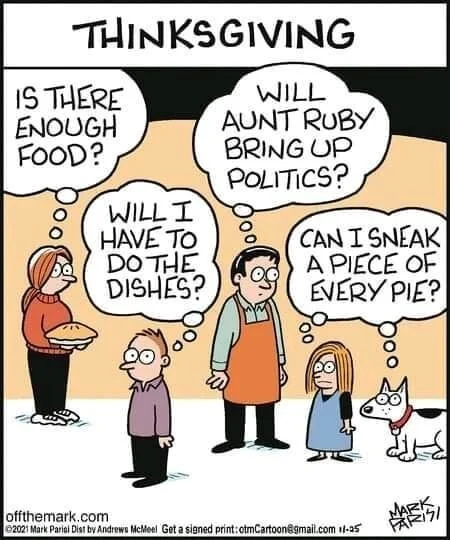
Mot: Thinksgiving!!!! - HUH!!?? Say What???
Mot: Getting Ready Fur the Turkey

Seeds of Wisdom RV and Economics Updates Thursday Morning 11-27-25
Happy Thanksgiving Dinar Recaps,
Global Markets Lift as Rate-Cut Bets Rise, While Metals and Payments Sectors Flash New Signals
Risk assets rally on shifting Fed expectations as gold strengthens, payment networks expand, and currency volatility builds.
Happy Thanksgiving Dinar Recaps,
Global Markets Lift as Rate-Cut Bets Rise, While Metals and Payments Sectors Flash New Signals
Risk assets rally on shifting Fed expectations as gold strengthens, payment networks expand, and currency volatility builds.
Overview
Global markets rallied over the past 24 hours as investors priced in a potential U.S. Federal Reserve rate cut, boosting equities across the U.S., Europe, and Asia.
Gold climbed to near two-week highs as softer U.S. economic data fueled safe-haven demand and increased expectations of Fed easing.
The payments sector saw fresh consolidation moves as fintech firms accelerated cross-border settlement partnerships.
Currency markets shifted as the U.S. dollar weakened on rate-cut expectations, lifting Asian and emerging-market currencies.
Industrial metals remained mixed, with oversupply concerns weighing on lead and other battery-related metals.
Key Developments
Equity markets extended multi-session gains in the U.S. and Asia as investors pivoted toward risk assets on renewed optimism for monetary easing.
Gold strengthened amid tepid U.S. data, remaining buoyed by safe-haven flows and expectations of a softer dollar environment.
Cross-border payments expanded as MOIN deepened its partnership with Nium, signaling continued growth in global remittances and digital settlement infrastructure.
Cryptocurrency adoption accelerated, with new reports showing rising use of Bitcoin and stablecoins as financial lifelines in emerging economies.
Base metals diverged, with crude oil and copper rising while aluminum and lead remained pressured by oversupply.
Why It Matters
The evolving macro landscape—driven by softening U.S. economic indicators—suggests markets are transitioning into a rate-cut environment. This shift is driving demand for risk assets and safe-haven metals simultaneously, while FX volatility and global payments expansion point to a broader realignment in global capital flows. The combination of stronger gold, rising equities, and shifting currency dynamics reflects an early-stage repositioning in anticipation of looser monetary policy.
Implications for the Global Reset
Pillar — Monetary Shift & Market Repricing: The growing likelihood of a Fed rate cut is reshaping global asset valuations, strengthening both risk-on and safe-haven segments.
Pillar — Digital and Cross-Border Payments Expansion: Fintech partnerships are accelerating, reinforcing a move toward faster, decentralized, and globally connected financial rails.
What’s Next
Markets will closely watch upcoming U.S. economic releases and Fed communications for confirmation of a December pivot. Metals investors will monitor supply-chain data for clarity on base-metal oversupply trends, while FX markets may see further volatility if the dollar continues to soften. Payment-sector partnerships are likely to expand as global remittance volumes rise and demand for digital settlement intensifies.
This is not just politics — it’s global finance restructuring before our eyes.
Seeds of Wisdom Team
Newshounds News™ Exclusive
Sources
Reuters – “Stocks gain on Fed easing hopes, yen locked in intervention zone”
Upstox – “Commodity Market Updates, November 27: Crude oil, Copper rise; Aluminium futures decline”
Investopedia – “Dow Jones Today: Indexes Extend Gains as Rate-Cut Bets Rise”
~~~~~~~~~~
Israel Launches Major New Operation in Northern West Bank
Israeli forces mount a large-scale counter-terrorism raid centred on Tubas as northern West Bank deployments expand.
Overview
Israeli security forces launched a large-scale, multi-agency operation in the northern West Bank focused on Tubas.
Residents were ordered from homes; forces reportedly used helicopter fire, occupied rooftops and made arrests.
Israeli authorities confirmed an early-morning operation involving the army, police and intelligence services but provided few public details.
The raid appears to be an extension of a months-long campaign that began in Jenin and has spread across multiple northern West Bank cities.
Human rights groups have increased scrutiny this month, renewing allegations of forced expulsions that Israel denies.
Key Developments
Encirclement and house-to-house activity in Tubas: Local officials report neighbourhoods sealed off, mass displacements and prolonged deployments.
Expanded operational footprint: The Tubas raid fits a pattern since January of deeper, more sustained deployments in northern West Bank population centres.
Civilian impact: Orders barring residents from returning to their homes and reports of infrastructure damage have increased displacement and humanitarian stress.
International scrutiny: Human Rights Watch and others have raised rights and accountability concerns; diplomatic reactions are likely to grow amid allegations of serious abuses.
Security rationale declared by Israel: Officials frame the operation as necessary to dismantle armed groups and prevent attacks amid rising militancy across the West Bank.
Why It Matters
The intensifying campaign in the northern West Bank amplifies volatility after the Gaza ceasefire. Sustained military pressure risks deepening displacement, further eroding the Palestinian Authority’s limited governance capacity, and provoking greater international scrutiny and diplomatic friction.
Greater instability in the West Bank also raises the probability of retaliatory violence and heightened settler-Palestinian clashes that would complicate regional security and humanitarian responses.
Implications for the Global Reset
Pillar — Regional Stability & Political Risk: Continued operations and displacement increase geopolitical risk in a strategically sensitive region, affecting investor risk assessments and regional supply-chain confidence in sectors tied to Middle East stability.
Pillar — Humanitarian & Legal Accountability: Escalating rights allegations may prompt broader international legal and diplomatic pressure, influencing bilateral aid decisions, multilateral engagement, and the calculus of states balancing security cooperation with rights concerns.
What’s Next
Israeli forces are expected to maintain an elevated presence in Tubas for several days, with more operational details to be released by military authorities. The campaign may further expand across northern West Bank towns unless diplomatic pressure or political shifts alter Israel’s operational tempo. Key risks to monitor in the coming days include increased displacement figures, new rights investigations, and spikes in settler-related violence.
This is not just politics — it’s global finance restructuring before our eyes.
Seeds of Wisdom Team
Newshounds News™ Exclusive
Sources
~~~~~~~~~~
Seeds of Wisdom Team RV Currency Facts Youtube and Rumble
Newshound's News Telegram Room Link
RV Facts with Proof Links Link
RV Updates Proof links - Facts Link
Follow the Gold/Silver Rate COMEX
Follow Fast Facts
Seeds of Wisdom Team™ Website
Thank you Dinar Recaps
Seeds of Wisdom RV and Economics Updates Wednesday Evening 11-26-25
Good Evening Dinar Recaps,
Washington’s New Crypto Power Play: CFTC Launches CEO Council to Shape Digital Asset Rules
Regulator moves to fill leadership vacuum as U.S. market structure hangs in the balance
Overview
The Commodity Futures Trading Commission (CFTC) has opened nominations for a new CEO Innovation Council designed to guide U.S. policy on crypto assets, prediction markets, and emerging financial technologies.
Acting Chair Caroline Pham said the council will help the agency respond to its expanding role in overseeing digital asset markets.
The move comes during an unprecedented leadership gap at the CFTC, with only one sitting commissioner and a pending confirmation vote for incoming nominee Michael Selig.
Good Evening Dinar Recaps,
Washington’s New Crypto Power Play: CFTC Launches CEO Council to Shape Digital Asset Rules
Regulator moves to fill leadership vacuum as U.S. market structure hangs in the balance
Overview
The Commodity Futures Trading Commission (CFTC) has opened nominations for a new CEO Innovation Council designed to guide U.S. policy on crypto assets, prediction markets, and emerging financial technologies.
Acting Chair Caroline Pham said the council will help the agency respond to its expanding role in overseeing digital asset markets.
The move comes during an unprecedented leadership gap at the CFTC, with only one sitting commissioner and a pending confirmation vote for incoming nominee Michael Selig.
Key Developments
The CFTC will accept CEO nominations until Dec. 8, with the new council expected to advise on digital asset frameworks, market oversight, and the agency’s broadened mandate.
Pham emphasized the need for “expert industry leaders” as the agency prepares to regulate crypto markets, building on earlier initiatives such as the “Crypto Sprint” and digital asset policy forums.
Nominee Michael Selig signaled strong support for more active federal oversight, calling it “vitally important” to establish a clear enforcement presence in spot digital asset commodity markets.
The next chairmanship carries major implications: future CFTC leadership will influence stablecoin treatment, derivatives market innovation, and U.S. competitiveness in financial technology.
Why It Matters
The U.S. regulatory environment is undergoing a rapid recalibration as digital assets, tokenized markets, and prediction platforms move into the financial mainstream.
By building a CEO-led policy council, the CFTC is positioning itself to shape the next phase of crypto oversight—especially as Congress advances market structure legislation and the agency seeks to expand its jurisdiction.
This transitional moment reflects a broader shift toward integrated regulation of traditional and digital markets, with major consequences for innovation, compliance, and institutional adoption.
Implications for the Global Reset
Pillar: Regulatory Modernization
The CEO Innovation Council signals a move toward more structured, institutional oversight of digital assets—bringing the U.S. closer to a formalized regulatory architecture that blends old and new financial systems.
Pillar: Market Legitimization & Institutional Access
Clearer rules from the CFTC could accelerate institutional participation in crypto markets, affecting global liquidity flows and shaping how digital commodities integrate into cross-border finance.
This is not just politics — it’s global finance restructuring before our eyes.
Seeds of Wisdom Team
Newshounds News™ Exclusive
Sources
Cointelegraph – “Acting CFTC chair seeks CEOs for ‘innovation council,’ citing crypto”
Reuters – “CFTC nominee signals tougher crypto oversight in Senate testimony”
~~~~~~~~~~
US Absence at G20 Stirs New Tensions: BRICS Official Warns of “Dangerous Precedent”
Washington’s boycott raises questions about multilateral stability ahead of the 2026 summit
Overview
A BRICS Business Council member sharply criticized the United States for boycotting the G20 Summit in Johannesburg.
The remarks framed the US decision as harmful to global institutions and contrary to the norms of multilateral cooperation.
The episode highlights widening fractures between Western-led governance structures and emerging-market coalitions such as BRICS.
Key Developments
The BRICS Council member stated that powerful nations should not “hijack” multilateral institutions for political reasons, calling the US boycott a “bad precedent.”
He noted that BRICS does not boycott its own members and urged G20 nations — including the US — to uphold similar principles of participation and respect.
With the 2026 G20 Summit scheduled to be hosted in the US, he warned that a reciprocal boycott from other nations would be “embarrassing” for Washington.
He cautioned that continued unilateral behavior by the US could generate friction across global institutions at a time when cooperation is already strained.
Why It Matters
The dispute exposes deeper tensions about who shapes global governance in a multipolar world. Emerging blocs like BRICS are seeking stronger voices, arguing that established powers — particularly the US — must respect collective processes or risk undermining the legitimacy of institutions like the G20.
As global finance and diplomatic alliances realign, incidents like this accelerate a long-term shift toward new centers of influence outside the traditional Western system.
Implications for the Global Reset
Pillar: Institutional Realignment
Pressure is building for reforms that reduce reliance on US leadership within multinational institutions, opening the door for new governance models aligned with BRICS priorities.
Pillar: Power Redistribution
If the US continues to sit out key forums, emerging economies may consolidate greater control over global economic coordination — reshaping the frameworks of trade, development finance, and geopolitical cooperation.
This is not just politics — it’s global finance restructuring before our eyes.
Seeds of Wisdom Team
Newshounds News™ Exclusive
Sources
Watcher.Guru – “’US Must Behave’ Says BRICS Council Member For Skipping G20 Summit”
Reuters – “G20 envoys agree draft leaders’ declaration without US input”
~~~~~~~~~~
Seeds of Wisdom Team RV Currency Facts Youtube and Rumble
Newshound's News Telegram Room Link
RV Facts with Proof Links Link
RV Updates Proof links - Facts Link
Follow the Gold/Silver Rate COMEX
Follow Fast Facts
Seeds of Wisdom Team™ Website
Thank you Dinar Recaps
589Bull: Trump Just Dropped the Real Reset Plan
589Bull: Trump Just Dropped the Real Reset Plan:
11-25-2025
Trump just laid out the blueprint for the next financial era right in plain English.
He’s not talking about imports.
He’s talking about replacing the IRS, detonating the debt-based system, and funding America with pure external revenue.
589Bull: Trump Just Dropped the Real Reset Plan:
11-25-2025
Trump just laid out the blueprint for the next financial era right in plain English.
He’s not talking about imports.
He’s talking about replacing the IRS, detonating the debt-based system, and funding America with pure external revenue.
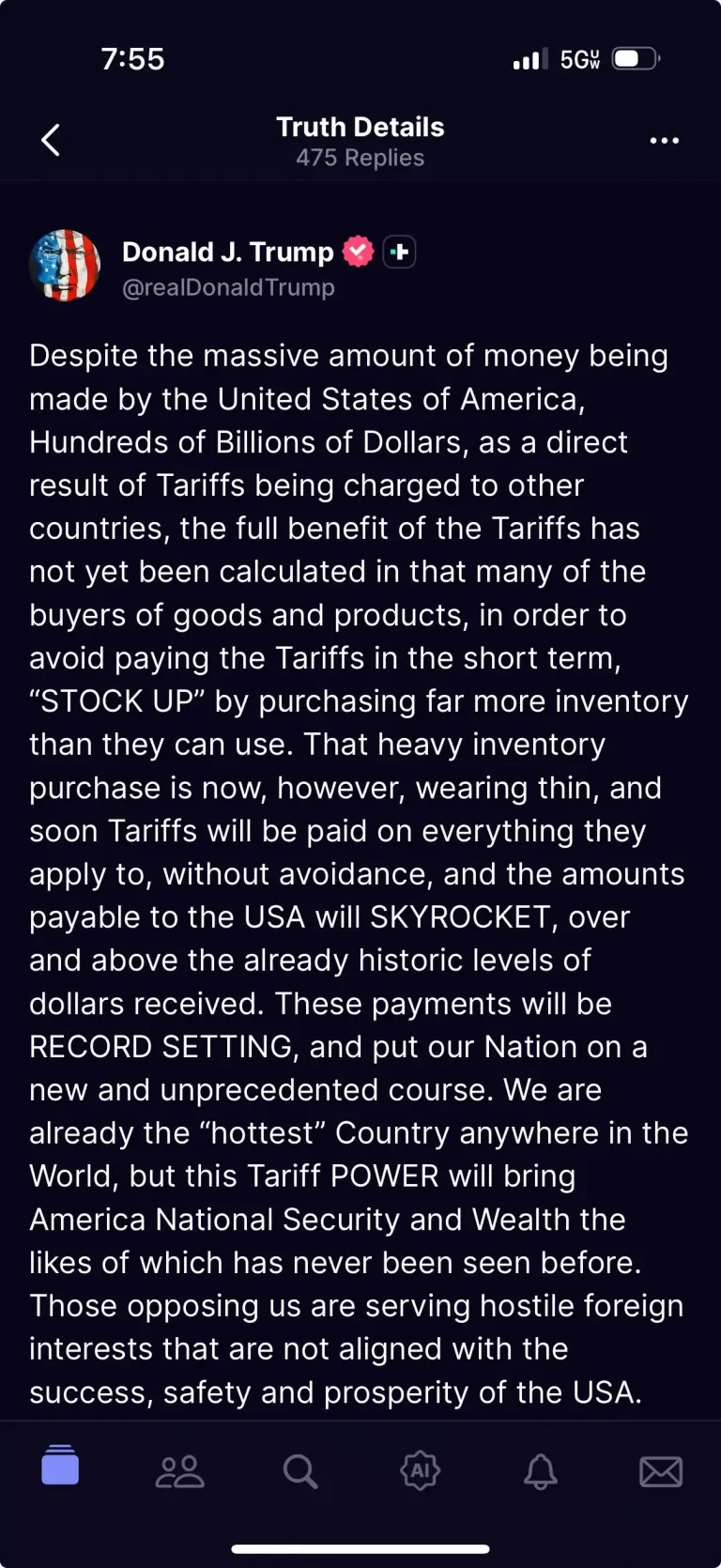
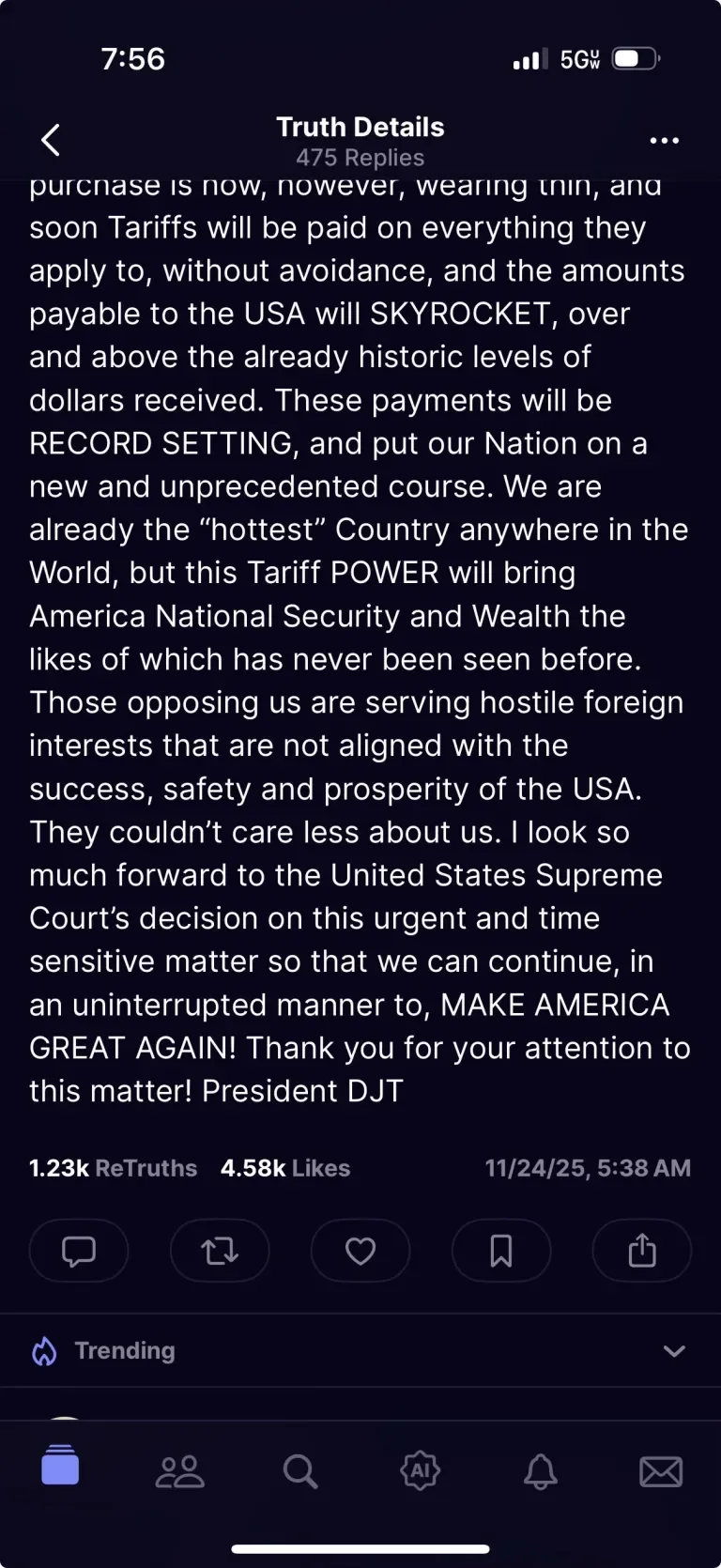
Read what he actually said:
– Importers burned through the “stock up” dodge
– Now they’re trapped — everything they buy gets hit
– Tariff revenue is about to explode vertically
– America becomes a trade-powered superstate
– And anyone opposing it is “serving hostile foreign interests”
If SCOTUS blocks this, they’re siding with the global parasites not the American people.
This is the keystone to the entire monetary reset:
• RLUSD as the digital dollar
• XRP/XDC settling global flow
• ISO 20022 rails snapping together
• Ripple + BNY Mellon wiring the system
• BRICS commodity shift accelerating
• Iraq’s IQD prepping for international use
• Tariffs funding the transition away from income tax
He’s daring SCOTUS to kill the revenue engine powering America’s comeback.
Refunds? Please. That would nuke the entire global architecture being built right now. SCOTUS isn’t suicidal.
This is the moment the old system dies and the new one comes online.
You’re watching the reset happen in real time.
Iraq’s IQD Revaluation may Finally Happen
Iraq’s IQD Revaluation may Finally Happen
Edu Matrix: 11-25-2025
For years, the prospect of the Iraqi Dinar (IQD) revaluation has captivated investors and financial observers worldwide. Speculation has been rampant, but rarely have we seen such concrete, fact-based analysis pointing towards a truly imminent shift.
In a recent, highly informative video from Edu Matrix, Sandy Ingram dives deep into the current landscape, offering compelling reasons why the long-awaited revaluation of the IQD may finally be on the horizon.
Iraq’s IQD Revaluation may Finally Happen
Edu Matrix: 11-25-2025
For years, the prospect of the Iraqi Dinar (IQD) revaluation has captivated investors and financial observers worldwide. Speculation has been rampant, but rarely have we seen such concrete, fact-based analysis pointing towards a truly imminent shift.
In a recent, highly informative video from Edu Matrix, Sandy Ingram dives deep into the current landscape, offering compelling reasons why the long-awaited revaluation of the IQD may finally be on the horizon.
Before we delve into the exciting economic developments, Sandy shares a crucial piece of advice from her own experience. Having stored IQD banknotes in a safe deposit box herself, she issues a cautionary tale about the inherent risks. For those holding physical currency, her message is clear: explore safer, more secure alternatives for storage. This practical tip underscores the importance of protecting your assets as the market potentially gears up for significant movement.
The core of Sandy’s argument, and indeed the primary catalyst for the potential IQD revaluation, revolves around one monumental initiative: Iraq’s Development Road Project (DRP). This isn’t just another infrastructure project; it’s envisioned as an economic revolution for Iraq.
The DRP is a massive undertaking designed to transform Iraq into a vital transit hub, connecting Asia and Europe. By establishing a modern network of roads, railways, and ports, Iraq aims to diversify its economy significantly, moving beyond its heavy reliance on oil revenues.
Beyond the direct economic impact, the DRP is also acting as a powerful incentive for Iraq to modernize its entire banking system. A stable, transparent, and efficient financial infrastructure is paramount for attracting and retaining international investment. This drive for modernization, coupled with improved financial confidence, empowers the Central Bank of Iraq (CBI) to effectively manage and adjust the currency’s value in a way that supports long-term economic stability.
Sandy Ingram underscores that these developments are not based on rumors or speculative hearsay. Her analysis is rooted in verified facts, news reports, and the tangible progress of the Development Road Project. This distinction is crucial, as it suggests that the long-awaited dinar revaluation may indeed be imminent, driven by sustainable economic growth and a strategic pivot away from oil dependence.
The implications are profound: long-term economic stability for Iraq, a more diversified national income, and a potentially significant shift in the value of its national currency.
For a deeper dive into these transformative developments and further insights, make sure to watch the full Edu Matrix video. It’s an essential resource for anyone tracking the future of the Iraqi Dinar.
https://dinarchronicles.com/2025/11/25/edu-matrix-iraqs-iqd-revaluation-may-finally-happen/