Rob Cunningham: Humanity’s Relationship with Money
10-3-2026
A Story About Money, Wizards, Bridges & the Curious Human Habit of Worshiping Our Measuring Cups
Starring Judy Garland & Judy Shelton (a 3 part tale worth sharing!)
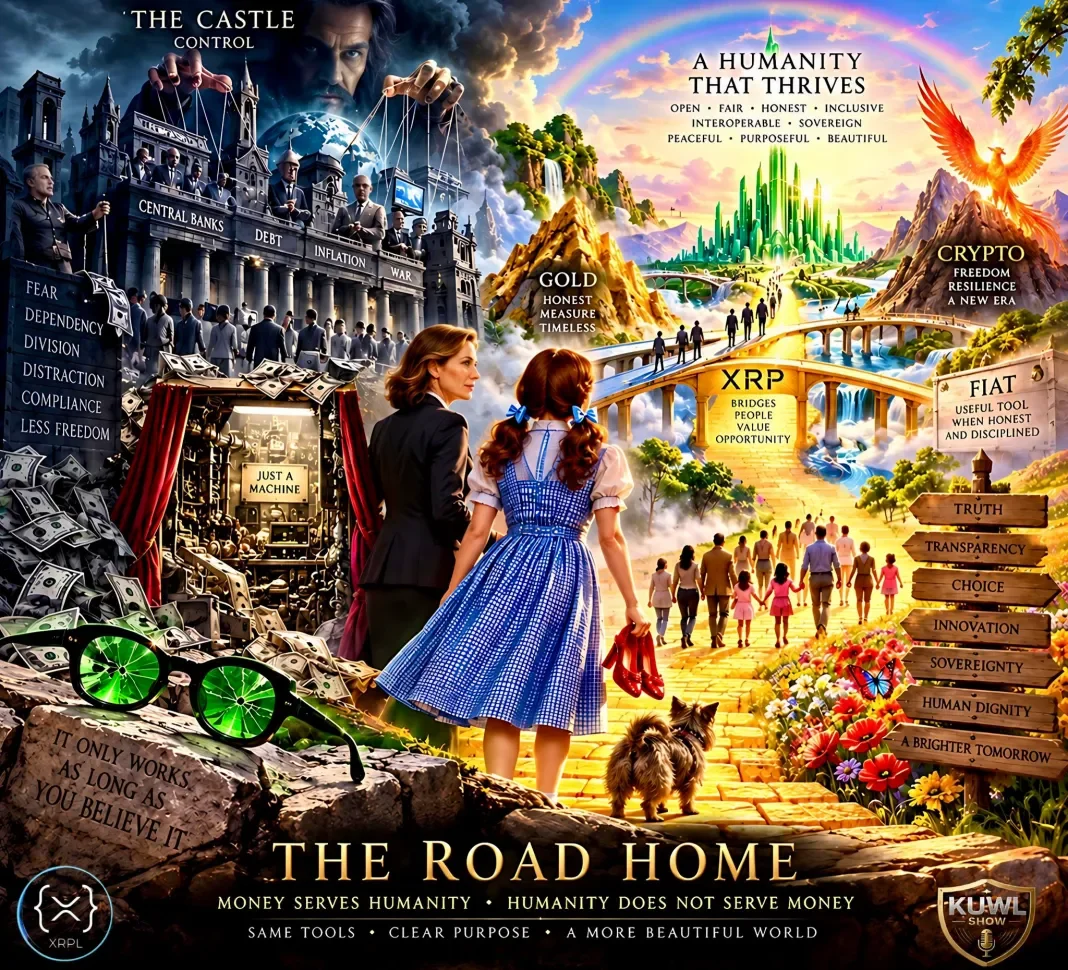
Dorothy woke up one morning and discovered she had been born inside a castle
Not literally, of course
That would have been easier
This castle had no moat, drawbridge or dragons
It had banks
It had screens
It had interest rates, credit scores, bond markets, monetary committees, settlement windows and enough financial vocabulary to make perfectly intelligent people conclude that asking simple questions was probably above their pay grade
Everyone in the Kingdom used something called money
Nobody seemed entirely certain what it was
They just knew they needed more of it.
People traded their time for it
Stored their labor in it
Measured their houses with it
Fought over it
Married because of it
Divorced because of it
Went to war over it
Worried about it while awake
Dreamed about it while asleep
And occasionally spent $8 on coffee while complaining about inflation
Dorothy thought this was peculiar
“Is money valuable?” she asked
“Oh yes,” replied the Kingdom
“Why?”
“Because everyone accepts it.”
“Why does everyone accept it?”
“Because it’s valuable.”
Dorothy stared
Toto stared
Toto understood immediately
Dogs have a natural advantage in monetary economics because they are unimpressed by PowerPoint presentations
So Dorothy started walking
She soon found a magnificent Yellow Brick Road
“Gold!” cried the people
Here was something humanity had trusted for thousands of years: scarce, difficult to manufacture and stubbornly resistant to political speeches
Gold did not promise anything
Gold simply sat there being gold
Dorothy respected that
But carrying civilization’s entire payment system around in wheelbarrows seemed inconvenient
So she kept walking
Eventually she reached the Emerald City
It was spectacular
Everything was green
The buildings were green
The money was green
Even everyone’s understanding of value appeared green
There was only one peculiar rule:
You had to wear the glasses
“Why?”
“So everything remains green.”
“What happens if I take them off?”
There was an uncomfortable silence
Somewhere, an economist dropped his monocle
Inside the great palace lived the Wizard
His voice thundered through the chamber
Markets trembled
Interest rates moved
Television commentators began sentences with, “The Wizard signaled today…”
Dorothy listened carefully
Then Toto did what Toto does
He pulled back the curtain
Behind it stood a man operating machinery
No supernatural power
No monetary deity
No omniscience
Just human beings
Making human decisions
With human knowledge
Human incentives
Human limitations
And, occasionally, very impressive curtains
Dorothy smiled
The discovery did not mean institutions were unnecessary
It meant institutions were not gods
Money was not magic
Bankers were not wizards
Markets were not temples
And humans were never created to spend their lives serving their own accounting system
That was when Dorothy finally understood the oldest monetary truth of all:
Money is a measure
A ruler measures inches
A clock measures time
A scale measures weight
Money measures and communicates economic value
Imagine waking tomorrow to discover that twelve inches had become nine because the National Bureau of Rulers needed to stimulate construction
Or that your bathroom scale had decided everyone should weigh 17% less to improve consumer confidence
We would laugh
Yet humanity has repeatedly tolerated monetary measuring sticks whose purchasing power changes over time and then wondered why ordinary people struggle to make long-term economic calculations
An honest civilization requires honest measures
Not because gold is sacred
Not because paper is evil
Not because blockchain is magical …
… Because measurement itself must be trustworthy
Then Dorothy noticed something sparkling on her feet
Her red slippers
[ FYI: In Baum’s original “Oz” story they were silver. Hollywood made them ruby red. ]
Either way, everyone had spent the entire adventure directing Dorothy toward powerful authorities while the means of getting home had been with her all along
That gave Dorothy another idea
Perhaps the next monetary revolution would not merely be about discovering a better thing called money
Perhaps it would also be about building better rails for moving value
Gold could remain gold
Dollars could remain dollars
Nations could remain sovereign
People could remain free to choose what they valued
But underneath them could exist neutral technologies allowing value to move quickly across borders, currencies and networks
Crypto arrived like a Phoenix with an outrageous announcement:
Value can exist digitally without requiring a central issuer
The old castle laughed
Then Crypto refused to die
Blockchain followed with another uncomfortable question:
What if strangers could agree upon a ledger without appointing one supreme bookkeeper?
Then came networks, protocols and bridge assets – including XRPL, ILP and XRP – exploring another possibility:
What if different forms of value could communicate and settle across different systems without requiring every participant to use the same money?
Dorothy’s eyes widened.
“Wait.”
“Yes?” asked Toto
“What if the future isn’t about finding another Wizard?”
Toto wagged his tail
“What if it’s about making Wizards unnecessary for transactions that don’t require them?”
Toto wagged harder
He was having an excellent day
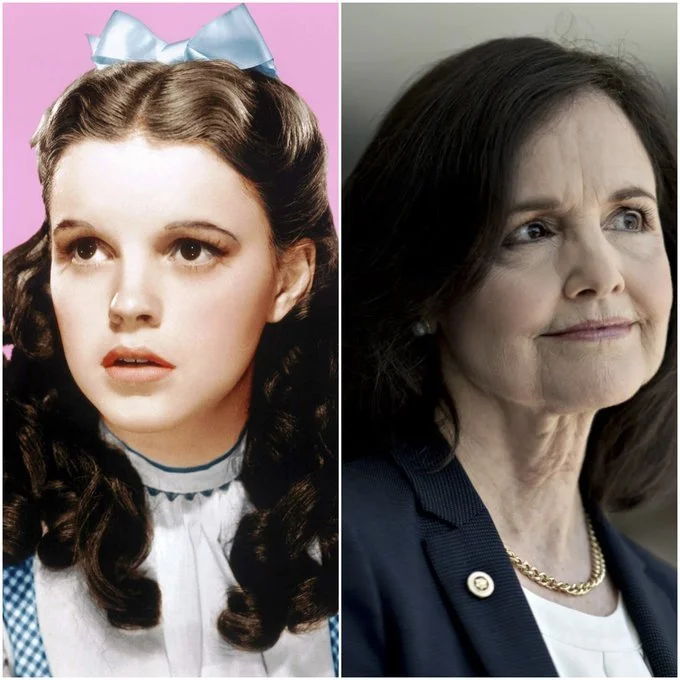
Then another Judy appeared on the road
Judy Shelton
Not Dorothy. Not Garland. An economist entering a long-running argument about monetary rules, central banking, gold, currency stability and how much discretion monetary authorities should possess
Dorothy handed her the green glasses
Shelton examined them
“Interesting.”
“You have to wear them inside the Emerald City.”
“Why?”
“Exactly.”
And there it was
The forbidden monetary question
Not:
Which ruler should control money?
But:
What rules should govern the ruler?
Not:
Which institution should humanity trust absolutely?
But:
How do we construct systems that do not require absolute trust?
Not:
What should everyone be forced to use?
But:
How can billions of sovereign people voluntarily exchange value honestly?
Suddenly the Castle looked different
The King looked different
The Yellow Brick Road looked different
Gold looked different
Crypto looked different
XRP looked different
Even the U.S. Dollar looked different
They were no longer competing religions
They were just tools
And tools are judged by whether they serve their users
A hammer that demands worship is a terrible hammer
A ruler that changes its inches is a terrible ruler
A bridge that decides who deserves to cross is no longer merely a bridge
And money that gradually transforms humanity into servants of money has reversed the natural order
People create value
Money records it
People expend time
Money stores claims upon the fruits of time
People trade
Money facilitates exchange
People create civilizations
Money serves civilization
Never the reverse
Dorothy looked back toward Emerald City
Nobody needed to burn it down
Nobody needed another throne
Nobody needed to replace one Wizard with a more fashionable Wizard wearing blockchain robes and laser eyes
Humanity simply needed to remember what the castle had caused it to forget:
The throne was never the source of human value
We were
The farmer growing food
The mother raising children …
The engineer building bridges
The mechanic repairing engines
The artist creating beauty
The entrepreneur risking everything on an idea
The worker trading irreplaceable hours of life for compensation
Money did not create any of them
They created the value money attempts to measure
And therefore an honest monetary system should perform one remarkably humble job:
Tell the truth about value, preserve that truth as faithfully as possible, and allow human beings to exchange it freely.
No magic required
No compulsory green glasses
No monetary priesthood
No Phoenix deserves worship either
Not gold
Not Bitcoin
Not XRP
Not dollars
Not algorithms
Not central banks
Not decentralized networks
The moment humanity worships the tool, we begin constructing another castle
The purpose is something larger
A world where human beings can create, exchange, save, build, give, risk, fail, recover and prosper without confusing their bank balance with their human worth
Where money becomes quieter because life becomes louder
Where technology reduces friction instead of manufacturing dependency
Where prosperity expands human possibility rather than purchasing human obedience
Where honest weights and measures permit strangers to cooperate peacefully across oceans, languages, cultures and borders
Dorothy finally understood what “home” meant
Home wasn’t Kansas
Not entirely
Home was the place where a sovereign human being could stand upright and say:
My life is not money
My worth is not money
My purpose is not money
Money is a tool through which human beings measure and exchange portions of the value they create
And therefore –
money serves humanity
Humanity does not serve money
Dorothy clicked her heels.
Nothing happened
She tried again
Still nothing
Toto looked embarrassed
Then Dorothy laughed
Of course
There was never going to be a magical shortcut
There was only a road
No simple highway
A road between ignorance and understanding, dependence and responsibility, illusion and truth
And nobody – not a banker, politician, billionaire, technologist, Wizard or storyteller – could walk another person’s portion of it for them
The path belonged to each traveler
Dorothy reached down and removed the green glasses
The Emerald City did not disappear
Something far more important happened
She could finally see it with clarity
Then she reached out her hand
Not to command anyone to follow
Not to demand belief
Not to crown another King
Simply to invite whoever was curious enough to walk beside her
Toto headed down the road first
Naturally
He had already learned the central lesson eighty years earlier:
Whenever somebody claims the machine is magic, check behind the curtain
And whenever someone claims humanity exists to serve the machine –
dig deeper.
Enter curious
Question everything
Test every measure
Worship no tool
Serve one another
Leave sovereign
Because perhaps the greatest monetary breakthrough humanity will ever make isn’t discovering “perfect money”
It is remembering what money was supposed to be for, right?
Impossible to serve two masters – or so its’ been said
– the end –
Grateful to @MCSolarWind for your “Judy + Judy” post that “triggered” my inspiration for this thread! And to @GLigh7 as well!
MC Solar Wind: Judy Garland didn’t just play Dorothy — she embodied the everyperson. Innocent, sincere, unarmed except for moral clarity. In L. Frank Baum’s classic story (and even more so in the 1939 film), Dorothy is the citizen navigating a system she didn’t design, ruled by forces she doesn’t understand, told that answers exist somewhere “over the rainbow.”
She’s not powerful. She’s truthful. The long-standing interpretation (taught in econ and history circles, even if quietly) is that The Wizard of Oz is a parable about money (perhaps hidden in plain sight): - Yellow Brick Road → gold standard - Emerald City → fiat illusion (green glasses = forced perception) - The Wizard → centralized authority projecting power - Toto pulling the curtain → transparency collapses the myth - Ruby slippers (silver shoes in the book) → real monetary power already possessed by the people
But the system only works as long as people believe in it. Sound familiar? Now enter Judy Shelton (@judyshel) → the modern Dorothy, walking into the Emerald City. Shelton has been a vocal critic of the modern Federal Reserve system, especially discretionary monetary policy, perpetual debasement, and the priesthood-like opacity of central banking. Her openness to rules-based money, commodity backing, or at least discipline in issuance puts her immediately at odds with the “Wizard class.”
If she becomes Fed Chair, symbolically it would be akin to Dorothy being invited into the Emerald City boardroom. Not necessarily to destroy it but to ask the forbidden question: “Why does this work the way it does?” Could XRP represent the Ruby Slippers? In this framing: - Gold = the old anchor (heavy, physical, sovereign) - Fiat = the illusion (green, flexible, belief-based) - XRP = the mechanism (neutral, fast, bridge-based, not issued by a state) The ruby slippers weren’t about gold or emeralds, they were about movement. Settlement. The ability to go home without asking permission from the Wizard.
If Shelton represents a return to monetary truth-telling, then XRP (or rails like it) represent post-Wizard plumbing: a system where value moves because it can, not because a man behind a curtain says so.
Two Judys, separated by more than eighty years. One carried the story so people could feel the illusion. The other challenges it so people might finally understand it. If the lesson of The Wizard of Oz was never about going back to gold, but about recognizing how easily authority is mistaken for magic, then the real question isn’t whether the curtain can be pulled back — it already has been.
The question is what kind of monetary future we build once we accept that stability doesn’t require spectacle, that value doesn’t need a Wizard, and that the tools for movement and settlement may matter more than the myths that once justified control.