Gold and the Great American Monetary Resets: From 1792 to Today
Gold and the Great American Monetary Resets: From 1792 to Today
by Nick Giambruno
Gold has been at the heart of the US monetary system since the nation’s founding, evolving from a direct anchor for the dollar to a strategic reserve asset.
Though it no longer backs the dollar, gold remains a cornerstone of central bank reserves, a discreet but powerful force in global finance.
Throughout American history, monetary resets have been a recurring theme—and more often than not, they have revolved around gold because gold is money.
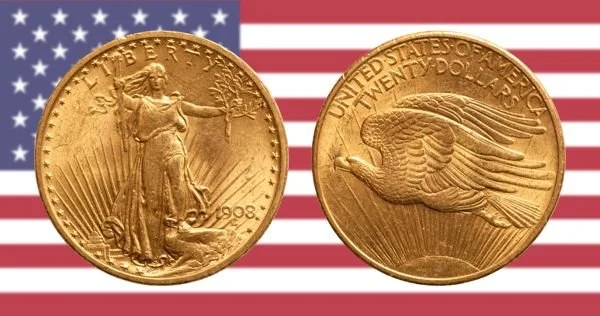
Understanding this history isn’t just about the past—it’s about the future. And if history is any guide, another reset may be coming sooner than most expect.
1775: Continentals and the American Revolution
Before the Revolution, gold and silver coins were the backbone of trade in the American colonies.
When war broke out, the Continental Congress lacked the authority to levy taxes, forcing them to seek an alternative way to finance the war.
In 1775, Congress began issuing “Continental Currency”—the first fiat paper money in US history. These notes, known as “Continentals,” were supposed to be redeemable in gold and silver after the war, but that promise lacked credibility.
Continentals quickly became worthless amid hyperinflation. The phrase “Not worth a Continental” became synonymous with worthlessness.
By 1781, Continentals had lost over 99% of their value, and the US government effectively abandoned them, leaving holders with massive losses.
This disaster deepened distrust in fiat money and cemented the belief among the Founders that gold and silver must be the foundation of any stable monetary system.
1792: The Coinage Act and the Birth of the US Monetary System
After the disastrous failure of Continental Currency, the Coinage Act of 1792 created the first official US monetary system, ensuring stability by tying the dollar to both gold and silver.
Gold was set at $19.39 per ounce, while silver was also legal tender.
The Founders aimed to prevent another Continental-style collapse by anchoring the currency to hard money.
The First Bank of the United States (1791–1811)
The First Bank of the United States, the nation’s first central bank, was established under the leadership of Alexander Hamilton to stabilize the economy, issue a national currency backed by gold and silver, and manage federal deposits.
However, it quickly became a political flashpoint, facing fierce opposition from Thomas Jefferson and states’ rights advocates, who feared it concentrated too much financial power in the hands of the federal government.
When the bank’s 20-year charter expired in 1811, Congress refused to renew it.
The Second Bank of the United States (1816–1836)
In the wake of the financial chaos following the War of 1812, the US established another central bank, the Second Bank of the United States, in 1816.
Like its predecessor, it was designed to regulate credit, stabilize the currency, and hold federal deposits.
However, it quickly became a political lightning rod, particularly under President Andrew Jackson, who saw it as a corrupt institution that served elite interests at the expense of ordinary Americans.
Jackson vetoed its recharter in 1832, waged a successful campaign against it, and ultimately dismantled the bank in 1836.
Read entire article here: https://internationalman.com/articles/gold-and-the-great-american-monetary-resets-from-1792-to-today/