Battle of the Coral Sea May 4-8, 1942
Battle of the Coral Sea May 4-8, 1942
Jenny Ashcraft May 4, 2026
In May 1942, the Coral Sea north of Australia became the stage for a new type of warfare. For the first time in history, two navies clashed in a major fleet action where the participating ships never saw or fired upon each other. Instead, the battle was fought entirely in the clouds with all offensive action carried out by carrier-based aircraft.
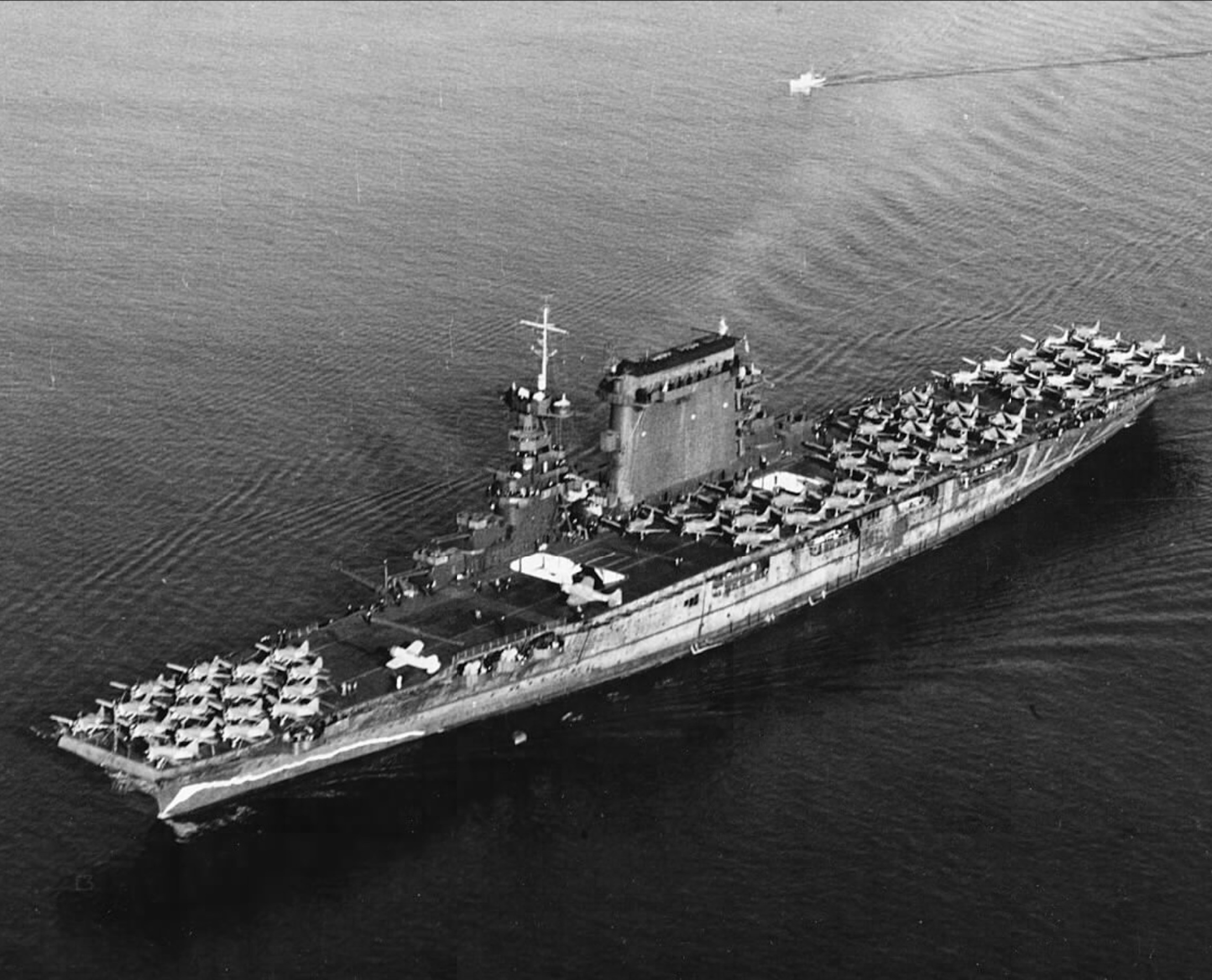
Following Japan’s attack on Pearl Harbor in December 1941, the Imperial Japanese Navy’s advance in the Pacific seemed unstoppable. They achieved sweeping victories across the Pacific, seizing territory until they controlled most of the western Pacific basin. The offensive threatened Australia and Allied supply lines. To defend their position in the South Pacific, the Japanese set their sights on Port Moresby, New Guinea, and Tulagi, in the Solomon Islands.
American codebreakers, however, intercepted their plans, and the Navy sent two carrier task forces, centered on the USS Lexington and the USS Yorktown. They were joined by a combined Australian/American cruiser force.
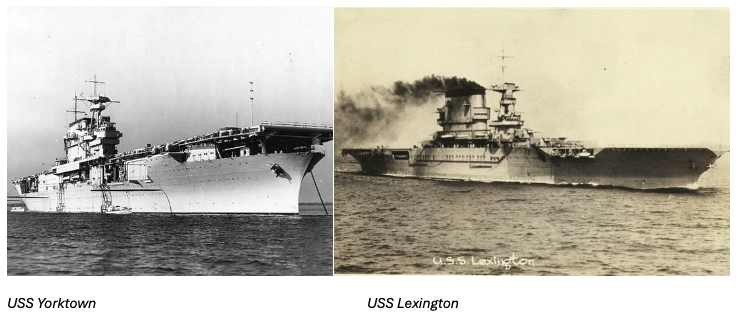
On May 3 – 4, Japan successfully invaded Tulagi, but a surprise attack by the Yorktown inflicted damage to several Japanese warships. Over the next two days, both fleets searched for each other in the vast expanse of the Coral Sea.
The battle began in earnest on May 7 when American pilots spotted and sank the Japanese carrier Shoho. The Japanese spotted and attacked the USS Sims and the USS Neosho. The following day, May 8, American planes swarmed the Shokaku, leaving it severely damaged.
Japanese dive bombers and torpedo planes eventually zeroed in on the American fleet, launching a devastating aerial assault. While the USS Yorktown sustained a direct hit, her crew kept her operational. The USS Lexington fared far worse. Though she initially survived the strikes, a series of catastrophic internal explosions rocked the ship. Some 2,700 sailors and Marines evacuated the ship before she was scuttled. By the end of the engagement, the human cost was stark: the Allies suffered 543 casualties, while Japanese losses were nearly double, totaling 1,074.
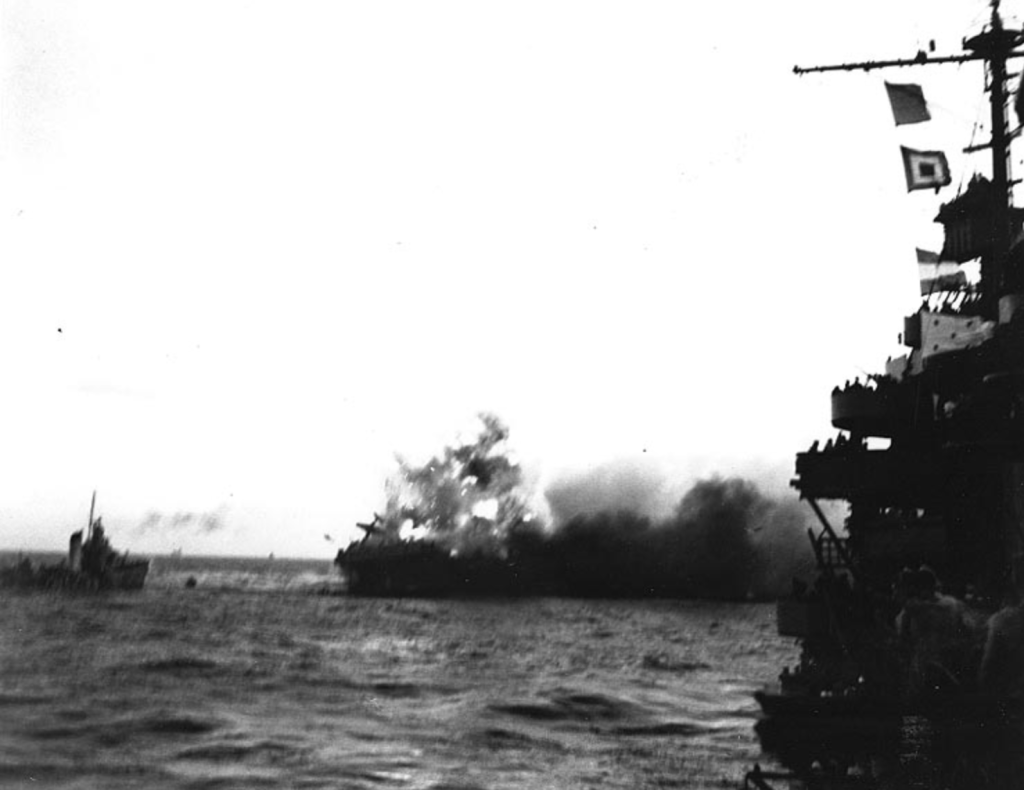
An explosion on board USS Lexington blows an aircraft over her side, May 8, 1942.
In 2018, a research team located the Lexington roughly two miles below the surface of the Coral Sea.
Ultimately, the Battle of the Coral Sea served as a strategic turning point. By checking the Japanese advance, it began the shift from an Allied defensive to an offensive posture. The battle also impacted the upcoming Battle of Midway, because Japan was forced to leave two of its carriers out of the fight.
If you would like to learn more about the Battle of the Coral Sea, search Fold3 today.
To Continue and Read More: May 4-8, 1942: Battle of the Coral Sea - Fold3 HQ