IMF: Iraq Among The Economies Most Affected By Regional Turmoil In 2026
Money and Business Economy News – Baghdad A report issued by the International Monetary Fund showed that Iraq will be among the economies most affected by regional turmoil during 2026, with clear repercussions on inflation rates, external accounts and public finances.
According to the report, which was reviewed by “Al-Eqtisad News”, Iraq is among a limited group of countries facing double pressures as a result of the disruption of trade and the rise in transportation costs, in addition to the effects of armed confrontations on trade exchange routes, especially those related to the Strait of Hormuz, which led to a noticeable decline in current account and financial balance indicators compared to previous expectations.
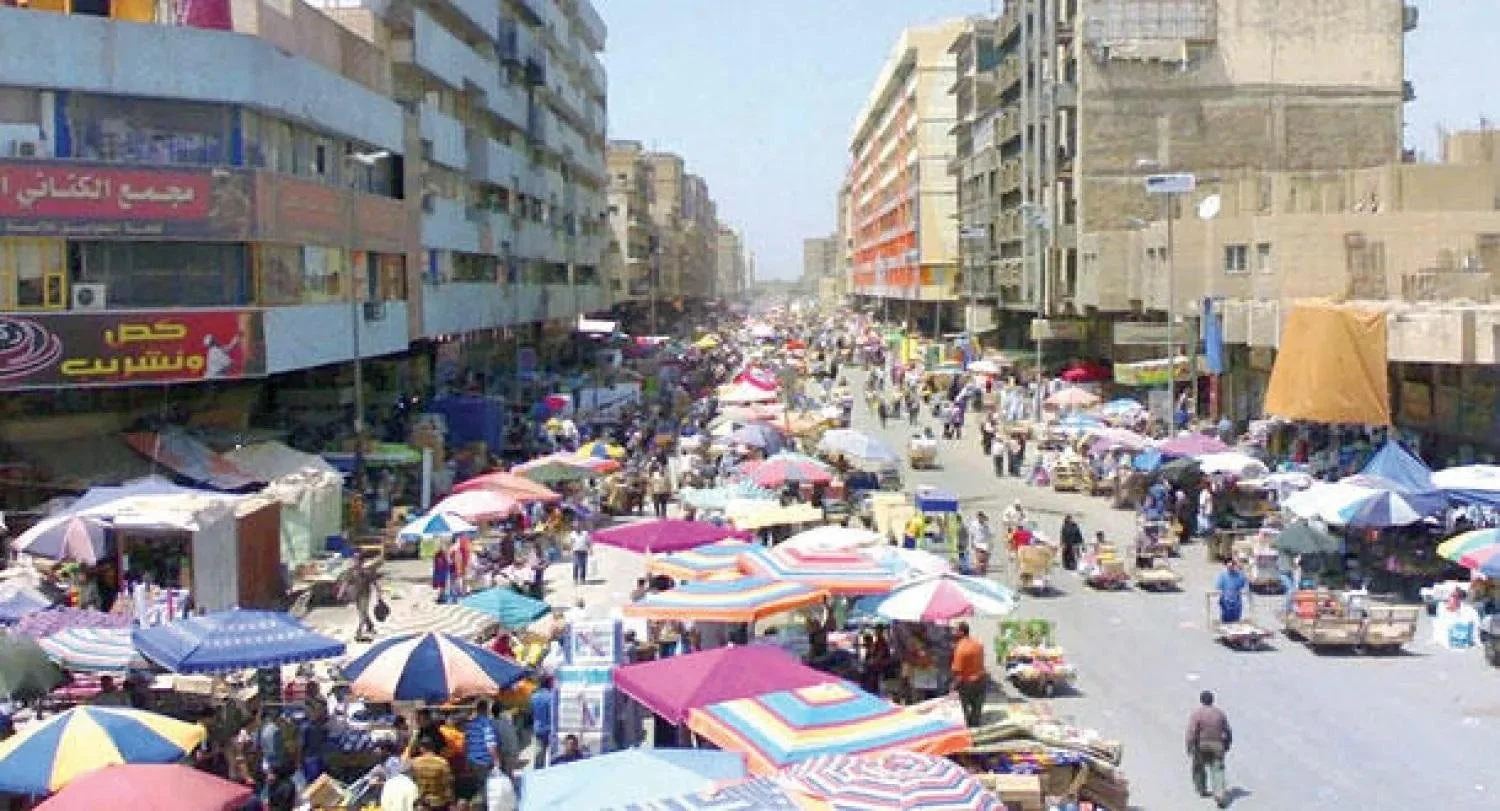
The IMF noted that Iraq and Iran experienced the greatest negative pressures on their external and fiscal accounts among the affected countries in the region, as trade losses and declining economic activity outweighed any potential gains from higher oil prices, leading to downward revisions in fiscal performance for 2026.
On the inflation side, the report explained that Iraq witnessed an increase in expectations within the Gulf Cooperation Council (GCC) countries, driven by increased import costs and higher commodity prices, with increases in the region ranging from moderate levels in Iraq and some GCC countries to higher levels in Iran.
According to the IMF, these developments reflect the sensitivity of the Iraqi economy to regional turmoil, particularly with regard to supply chains and foreign trade costs, in addition to the country's reliance on vital transport routes that pass through geopolitical hotspots.
The report also predicted that pressure on Iraq’s economic indicators would continue in the coming period, unless there is a breakthrough in the regional trade environment and an improvement in the conditions of economic and financial stability. https://www.economy-news.net/content.php?id=69817
The Minister Of Finance Discusses With The Italian Ambassador To Iraq Strengthening Economic And Financial Cooperation.
Money and Business Economy News – Baghdad Finance Minister Faleh Sari met with the Italian Ambassador to Iraq, Nicolo Fontana, on Wednesday to discuss strengthening economic and financial cooperation between the two countries.
The Ministry of Finance stated in a press release, received by "Al-Eqtisad News," that "Finance Minister Faleh Sari received the Italian Ambassador to Iraq, Nicolo Fontana, and his accompanying delegation on Wednesday to discuss ways to enhance joint cooperation and exchange expertise between the Iraqi Ministry of Finance and Italian financial institutions."
According to the statement, Sari emphasized "the importance of elevating the level of Iraqi-Italian cooperation and activating bilateral agreements in priority areas, particularly agriculture and health, in order to broaden the horizons of economic partnership and enhance opportunities for joint development."
For his part, the Italian Ambassador affirmed "his country's interest in expanding areas of cooperation with the Iraqi government in a way that serves mutual interests and strengthens economic and investment relations between the two countries."
https://www.economy-news.net/content.php?id=69819
The Minister Of Finance Approves The Inclusion And Regularization Of Daily Wage And Contract Employees Within The 2026 Budget.
Money and Business Economy News – Baghdad Finance Minister Faleh al-Sari approved on Wednesday the inclusion and regularization of daily wage and contract employees within the 2026 budget.
The head of the Finance Committee, MP Aziz Sharif Al-Mayahi, said in a statement received by “Al-Eqtisad News”, that “the Minister of Finance has agreed to include daily wage employees in ministries and service departments in the governorates, who have served for more than four years, in the 2026 budget and to place them on the permanent staff.”
https://www.economy-news.net/content.php?id=69818
Oil Prices Rose As Renewed Fighting Broke Out In The Middle East And Negotiations Stalled
Energy Oil prices rose during trading on Wednesday, June 3, as new fighting broke out in the Middle East, with Iran launching missiles at Kuwait and Bahrain, while diplomatic talks between Iran and the United States made little progress.
The US military said Iran launched ballistic missiles toward Kuwait and Bahrain, but they failed to hit their targets, adding that its forces launched raids on Iran’s Qeshm Island in response to the attack attempts.
Brent crude futures rose $1.81, or 1.89%, to settle at $97.81 a barrel.
Meanwhile, U.S. crude futures rose $2.26, or 2.41%, to settle at $96.02 a barrel.
Both indices reached their highest level in a week at the close of the previous session.
Iranian media reported yesterday that Tehran has not been in contact with Washington for several days, even though Trump said negotiations are ongoing.
ANZ Bank's chief commodities strategist, Daniel Hynes, said in a note quoted by Reuters that any efforts to reopen the Strait of Hormuz face challenges, with Iran having planted mines in large parts of this vital waterway.
Heinz added: "There has been a slight increase in the number of ships attempting to cross, but the total number is still far below pre-conflict levels." US inventory data from the Energy Information Administration is scheduled to be released later today.
https://www.economy-news.net/content.php?id=69839
Trump Launches Biggest Move To Rebuild Tariff Wall
Arabic and international US President Donald Trump has launched the biggest move to rebuild the tariff wall since the Supreme Court struck down his previous tariffs months ago, with his administration proposing new tariffs of at least 10% on imports from 60 trading partners, based on an investigation into how these countries deal with goods produced using forced labor, according to Bloomberg.
Bloomberg explained that the proposed tariffs would be 10% on imports from Canada, Mexico, the European Union, Taiwan, the United Kingdom and other countries, while products from major economies, including China, India, Japan, South Korea, Brazil and Switzerland, would be subject to a 12.5% tariff.
Bloomberg reported that the tariffs will not take effect immediately, as they will be subject to a review and public comment period that could lead to modifications before final adoption. The US administration has set July 6 as the deadline for receiving written comments, with public hearings scheduled to begin the following day.
Forced labor is any work or service that a person is compelled to perform under threat of punishment.
New investigations
Bloomberg noted that the Office of the U.S. Trade Representative concluded that the 60 countries under investigation "do not effectively enforce a ban on imports resulting from forced labor," explaining that countries that impose restrictions on these imports or have pledged to do so will be subject to the lowest tariffs, while the highest tariffs will be applied to countries that "have failed to impose and effectively enforce these restrictions."
"We will no longer tolerate this disparity," U.S. Trade Representative Jamieson Greer said in a statement carried by Bloomberg, adding that the current situation "forces American workers to compete globally in an uneven playing field."
Bloomberg reported that the investigation was based on Section 301 of the U.S. Trade Act of 1974, the same legal route the U.S. administration is using to prepare another package of potential tariffs related to excess manufacturing capacity among its trading partners.
International reactions
China rejected the US accusations and criticized the new move, while a Japanese official confirmed that Tokyo is in close contact with Washington on the matter. The European Union described the proposed tariffs as "unjustified," while simultaneously reaffirming its commitment to the terms of the trade agreement with the United States, according to Bloomberg.
The agency quoted Deborah Elms, head of trade policy at the Henrich Foundation, as saying that trading partners "will be upset by this decision," adding, "You have opened (in a letter to the United States) the door to a large wave of tariff and non-tariff adjustments."
The move comes at a sensitive time for the global economy, with the ongoing US-Israeli war on Iran and rising energy prices, which has fueled inflation fears and increased pressure on the purchasing power of American voters ahead of the US midterm congressional elections scheduled for November.
Exceptions and broader messages
Bloomberg explained that the US administration proposed exempting a number of goods from the new tariffs, including beef, tomatoes, bananas, coffee, and orange juice, in addition to some types of fuel, chemicals, and metals that are already subject to other tariffs.
The Office of the U.S. Trade Representative also pointed to 34 commodities that it said are linked to supply chains involving inputs produced with forced labor, including cotton used in clothing manufacturing, rare metals used in solar energy production, palm oil, and some fish products.
Bloomberg noted that the new tariffs will test the willingness of the United States’ largest economic partners to continue the policy of restraint they have followed so far, as most countries have preferred to negotiate with Washington rather than respond with direct retaliatory measures to the series of trade tariffs imposed by the Trump administration.
The new initiative coincided with the White House's efforts to find a more solid legal basis for the tariffs after the Supreme Court's decision last February to cancel the tariffs imposed under the economic emergency powers, while analysts predict that the new tariffs will be implemented in conjunction with the expiration of other temporary tariffs in late July, according to Bloomberg. https://www.economy-news.net/content.php?id=69838
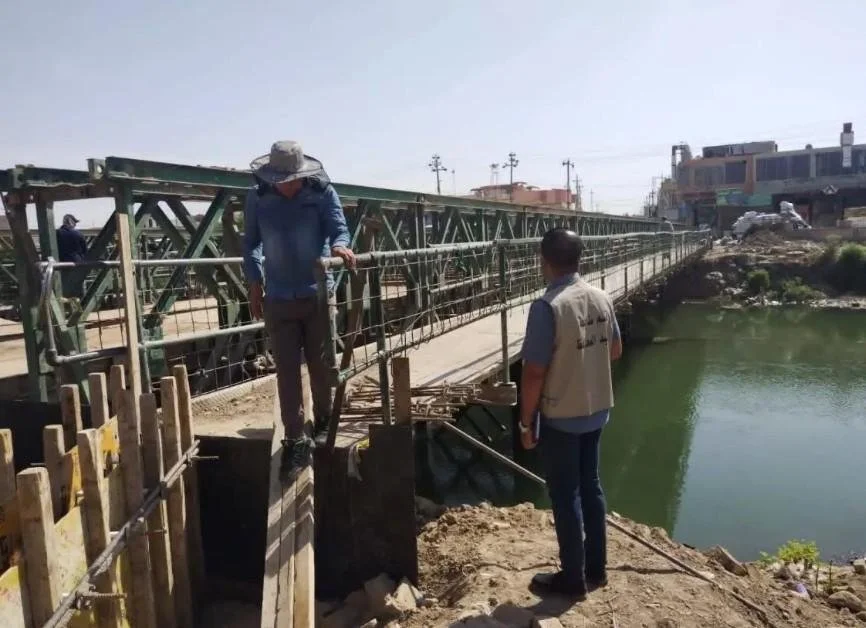
The New Al-Shamiya Bridge Project Has Reached Half Completion And Is Nearing Advanced Stages.
Localities The Diwaniyah Governorate Office announced on Wednesday that the completion rate of the new concrete bridge project in Al-Shamiya district has reached 45%, as part of regional development projects aimed at developing infrastructure and improving transportation.
The director of the follow-up department at the governorate’s office, Halim Abbas Al-Baraki, said in a press statement that the project is being implemented as an alternative to the old iron bridge, with a length of 60 meters and a width of 15 meters, at a total cost of 2 billion, 257 million and 794 thousand Iraqi dinars.
He added that the ongoing work includes pouring reinforced concrete for the bridge, carrying out earthworks for its shoulders, as well as reinforcing the footpaths for pedestrian crossings, noting that the project's implementation period has been set at 300 days and is being carried out by Al-Rami International Contracting Company.
Al-Baraki stressed that the implementing company was instructed to expedite the completion of welding work for the pillars and crossbeams according to the approved technical specifications, to ensure the project is completed with the required quality and within the specified deadlines. https://www.economy-news.net/content.php?id=69835