
Thank you to all the subscribers to our Early Access program…we thank you for your continued support.
We are excited to offer this new service to keep you informed and up-to-date on the latest Dinar and currency news.
MilitiaMan and Crew: IQD News Update-CBI-Gold-Oil -UN-Expect a Formal Announcement
MilitiaMan and Crew: IQD News Update-CBI-Gold-Oil -UN-Expect a Formal Announcement
9-23-2025
The Crew: Samson, PompeyPeter, Petra, Daytrader, Sunkissed, GIGI and Militia Man
Follow MM on X == https://x.com/Slashn
Be sure to listen to full video for all the news……..
MilitiaMan and Crew: IQD News Update-CBI-Gold-Oil -UN-Expect a Formal Announcement
9-23-2025
The Crew: Samson, PompeyPeter, Petra, Daytrader, Sunkissed, GIGI and Militia Man
Follow MM on X == https://x.com/Slashn
Be sure to listen to full video for all the news……..
Iraq Economic News and Points To Ponder Tuesday Morning 9-23-25
Legal Expert: The Central Bank Is Following A Wise Policy In Diversifying Its Investments.
Time: 2025/09/22 Reading: 855 times Legal expert: The Central Bank is following a wise policy in diversifying its investments.
{Economic: Al Furat News} Legal expert Salah Nouri confirmed on Monday that the Central Bank of Iraq is adopting a wise policy to diversify its investments, balancing investments in gold and US bonds to bolster its financial reserves.
Legal Expert: The Central Bank Is Following A Wise Policy In Diversifying Its Investments.
Time: 2025/09/22 Reading: 855 times Legal expert: The Central Bank is following a wise policy in diversifying its investments.
{Economic: Al Furat News} Legal expert Salah Nouri confirmed on Monday that the Central Bank of Iraq is adopting a wise policy to diversify its investments, balancing investments in gold and US bonds to bolster its financial reserves.
Nouri told Al Furat News Agency, "Central banks around the world,including the Central Bank of Iraq, are pursuing a diversification strategy to avoid risks and achieve the best returns in the long term."
He added, "Investing in US bonds is a key option for achieving stable, periodic returns, but it is affected by the decisions of the US Federal Reserve, as investment in them tends to decline when interest rates are lowered.
" The legal expert continued, "Central banks compensate for this shortfall by turning to gold, which is considered a safe haven during times of economic crisis."
He explained that "gold does not provide fixed annual returns like bonds. Rather, its profits depend on the difference between the buying and selling prices, making it a strategic investment for preserving asset value."
https://alforatnews.iq/news/خبير-قانوني-البنك-المركزي-يتبع-سياسة-حكيمة-في-تنويع-استثماراته
The Path To Development}...A Step Towards Creating Job Opportunities And Encouraging Investment
Baghdad: The Pillar Of The Emirate
The Development Road project, whose Quadripartite Council summit was recently held in Baghdad, highlights a major strategic attempt to restore Iraq's standing in global trade.
Experts see the Grand Faw Port as the starting point for the "Development Road," which will connect the East and West of the world via Iraq and Turkey.
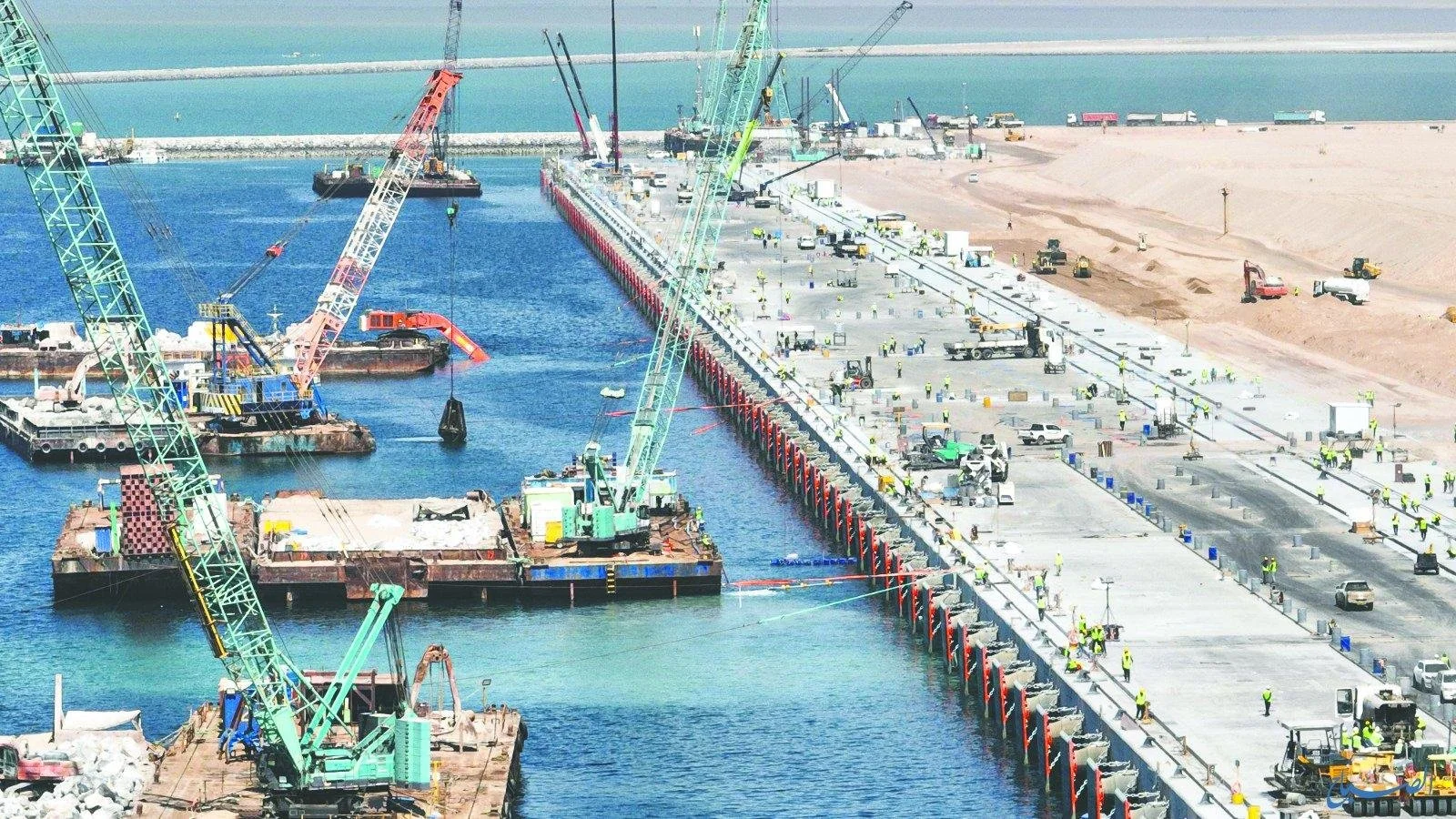
The government is counting on the two major projects, the development road and the Faw Port, to transcend its traditional maritime geography and reposition Iraq economically within the region surrounding Iraq and the world, and to take its rightful place among the world's most important economies.
Minister of Transport Razzaq Muhaibis Al-Saadawi recently chaired the Quadripartite Summit to discuss steps to initiate the "development path," in preparation for holding a ministerial meeting before the end of the current year, with the attendance of the transport ministers of the member states (Turkey, Qatar, and the UAE), along with Iraq.
Developmental Impacts
The Prime Minister's Financial Advisor, Dr. Mazhar Mohammed Salih, believes that "the port, if completed, will be one of the largest infrastructure projects in Iraq's modern economic history, and the most ambitious in terms of its developmental and geopolitical impact."
He explained that it is more than just a seaport, and represents an attempt to reshape Iraq's geographical position at the heart of global trade, via what is known as the dry corridor linking Asia to Europe via Iraq and Turkey, reducing time and costs compared to traditional sea routes.
Commercial Sidewalks
Saleh added, in an interview with Al-Sabah, that the vision behind the project seeks to transform Iraq from a rentier state dependent on oil exports into a pivotal logistics state that plays an active role in the movement of goods, services and energy, linking the economies of the north and the south.
He pointed out that if the Faw Port project is completed in all its components, including the deep commercial docks, industrial and commercial zones, as well as the railway link to the north towards Turkey and Europe,
in addition to the parallel land and service transport networks, it will be able to accelerate the diversification of GDP sources in Iraq, create tens of thousands of direct job opportunities, encourage local and foreign investments, and stimulate the establishment of parallel industrial, service, logistics and digital sectors.
Initiative State
The government advisor pointed out that the port will contribute to reducing Iraq's sole dependence on oil and will propel it towards a more balanced, diversified and productive economy. He emphasized that it is a strategic project, embodying at its core the foundation of the transition from a rentier economy to a multi-resource economy, and from a state awaiting revenues to a proactive state that creates opportunities. This is in line with the government's program, which is based on the mindset of a sustainable developmental and economic state and the economic reform system that embraces it.
Saleh stressed that the major maritime project, if completed, along with the development road project, will make Faw Port Iraq's gateway to a more diversified, productive, and stable economic future, and that it will be a lever for Iraq's drive toward a more diversified, productive, and stable economic future.
Qualitative Transformation
The speaker also explained that the development road strategy, which is integrated with the infrastructure of the Grand Faw Port, represents a qualitative shift in modern Iraqi economic thinking.
The country is no longer dependent on oil revenues as its sole resource, but has begun to see the signs of transforming it into a strategic corridor state based on regional integration, advanced infrastructure, and cross-border services. He explained that the development road is a railway project extending from the Grand Faw Port on the Arabian Gulf, passing through thirteen Iraqi governorates, all the way to the Turkish border, where it connects to the European railway network.
Economic Geography
He explained that the project constitutes the backbone of what we might call Iraq's new strategic economy, based on transforming the country from a geographical corridor into an international logistical and trade hub. What we can conclude from the Faw Port Strategy and the Development Road is the summary of Iraq's economic progress, in a world witnessing sharp shifts in economic geography and recurring crises in supply chains.
The Development Road Project in particular stands out as one of the most promising projects for repositioning Iraq as a global logistical hub linking the continents of Asia and Europe.
Features Of A Strong State
He stated that the project represents a qualitative shift in Iraqi economic thinking, not a retreat towards development and prosperity.
It is no longer based on oil revenues as a sole, highly volatile resource. Rather, it has begun to reveal the features of a strong state, transforming into a strategic corridor based on regional integration, advanced infrastructure, and cross-border services. In the rapidly evolving economic world of the 21st century, Iraq stands tall, building a future for its generations.
Diversifying The Economy
For his part, researcher and academic Dr. Abdul Karim Al-Issawi said: “Iraq seeks to diversify its economy, which relies on oil exports for no less than 95 percent, by activating the service-oriented production sectors, including the transportation sector, foremost among which is the completion of the Grand Faw Port project, which is the foundation of the development path that will link the countries of West Asia with the European continent via Turkey.
This will be achieved by building roads and railways suitable for the expected transport of goods and energy sources, including crude oil, thus ensuring global supply chains for reverse transport between Europe and Asia.”
Job Opportunities
Al-Issawi explained to Al-Sabah that the desired development road will work to create a group of backward and forward links in the areas located on both sides of the road in the Iraqi governorates, foremost of which is creating job opportunities for workers and most notably strengthening economic and financial relations between Iraq and the countries that deal with this road.
He indicated that on the international level, the development road will work to create other outlets for international trade in addition to the Suez Canal and the global trade route India-United Arab Emirates-Mediterranean.
Business Partner
He added that competition will be based on lower costs and shorter distances and times to connect global markets. He noted that Turkey, a major trading partner for Asian and European countries in both exports and imports, views the development road project with great importance and is working to ensure its success by all means possible.
For his part, economic expert Dr. Adnan Bahiya described the Grand Faw Port as a future pillar of the Iraqi economy. It is a new pillar for Iraqi global maritime trade, and the project's completion will open up new horizons for 99 docks capable of accommodating large vessels.
The Future Of The Country
In an interview with Al-Sabah, Bahiya pointed out that the Grand Faw Project and the development road represent the country's future in increasing and diversifying its financial revenues. The development road will contain development centers in each governorate it passes through.
These centers will consist of exhibitions, factories, export markets, and local industries, which are available in that governorate, as well as importing its own needs from abroad or from other governorates, and manufacturing a wide range of equipment and food crops, which increases the development prospects in each governorate.
He explained that the development road consists of a highway outside the governorates it passes through and railways going and coming, which facilitates commercial land transport and expands it to a new modern horizon.
Both the Faw project and the development road will provide for the construction of the commercial airport planned to be built in the Faw area, electricity generation and water desalination plants, a refinery for the production of petroleum derivatives, a residential city, and a new industrial city. These projects will actually transform Basra into the level of the economic capital of Iraq.
International Cooperation
For his part, international expert Nazir Al-Saadi emphasized that Iraq's internationally important geographic location has not been fully exploited.
The development road, supported by the Faw Port, serves to position Iraq as a gateway to genuine international cooperation.
Al-Saadi stated that the implementation of the development road project undoubtedly represents a qualitative shift in the reality of the Iraqi and global economy, as it works to transform Iraq into a hive of organized activity across all sectors without exception, a goal sought by specialized international companies.
Business Trip
He said: "This project will work to revive all sectors without exception, in cooperation with the international effort that will be directed towards Iraq and the beginning of a new business journey centered on Iraqi territory. Here, we must work to organize the business environment in a way that attracts international companies and achieves the highest levels of economic feasibility for the country." https://alsabaah.iq/120863-.html
For current and reliable Iraqi news please visit: https://www.bondladyscorner.com
Seeds of Wisdom RV and Economics Updates Tuesday Morning 9-23-25
Good Morning Dinar Recaps,
mBridge and the Future of Finance: From BRICS Experiment to Global Dialogue
The Global South tests a new financial backbone — but will it build cooperation or confrontation?
From Pilot to Power Shift
Launched by China, Hong Kong, Thailand, UAE, and later Saudi Arabia, mBridge has evolved from an experiment into a geopolitical tool.
With validator nodes, live transactions, and integration potential with India’s UPI, Indonesia’s QRIS, and Brazil’s Pix, it promises scale unlike earlier CBDC pilots (Dunbar, Jura).
The question: Will BIS step back, leaving governance in BRICS hands, or will it become a truly global framework?
Good Morning Dinar Recaps,
mBridge and the Future of Finance: From BRICS Experiment to Global Dialogue
The Global South tests a new financial backbone — but will it build cooperation or confrontation?
From Pilot to Power Shift
Launched by China, Hong Kong, Thailand, UAE, and later Saudi Arabia, mBridge has evolved from an experiment into a geopolitical tool.
With validator nodes, live transactions, and integration potential with India’s UPI, Indonesia’s QRIS, and Brazil’s Pix, it promises scale unlike earlier CBDC pilots (Dunbar, Jura).
The question: Will BIS step back, leaving governance in BRICS hands, or will it become a truly global framework?
Geopolitical Weight of BRICS + Gulf
BRICS economies bring sheer market size and demand for alternatives to dollar-based trade.
Saudi Arabia’s entry links the project to energy trade — a direct challenge to petrodollar dominance.
Interoperability gives mBridge an edge, turning regional payment systems into a global settlement layer.
Private Players and Global Stakes
Visa and Mastercard’s possible inclusion adds scale, fraud prevention, and consumer reach.
But it also raises sovereignty and trust questions: Will Global South nations accept U.S. corporations shaping their CBDC future?
If successful, mBridge could bypass SWIFT, reduce reliance on the dollar, and give BRICS-aligned nations financial autonomy in trade.
Financial Inclusion and Digital Trade
CBDCs via mBridge could bank the unbanked (1.6 billion people), lower remittance costs, and streamline migrant worker payments.
Use cases go beyond trade: NFTs, in-game economies, digital art, carbon credits — all need efficient cross-border settlement.
By embedding these flows in a federated CBDC, mBridge could become the backbone of the digital economy.
A Bridge or a Fault Line?
Brookings and Chatham House stress cooperative governance. If adopted, mBridge could create shared global standards.
But if BRICS uses it as a financial weapon, it may harden blocs and accelerate confrontation.
Either way, mBridge is no longer just about efficiency — it’s about who writes the rules of money in the digital era.
Why This Matters
mBridge crystallizes the larger struggle you’ve been tracking: finance, trade, and tech are converging into a new architecture.
For the Global South, it’s about inclusion and sovereignty.
For the U.S. and allies, it’s about retaining dominance through the dollar and SWIFT.
The choice is stark: cooperation or polarization.
This is not just politics — it’s global finance restructuring before our eyes.
@ Newshounds News™
Source: Modern Diplomacy
~~~~~~~~~
Russia, NATO, and the End of Arms Control: A Geopolitical Turning Point
Putin signals willingness to extend New START, but escalating NATO tensions suggest the end of the post-Cold War security framework.
Russia Floats New START Extension
President Vladimir Putin proposed a one-year extension of the New START Treaty—currently set to expire in February 2026—if Washington reciprocates. This would temporarily preserve the only arms-control agreement still in force, capping each side’s nuclear warheads at 1,550.
Putin’s offer comes with a warning: without mutual restraint, the last guardrail on nuclear stability collapses. He framed it as both a diplomatic gesture and a test of U.S. seriousness.
A Tactical Pause, Not Peace
While Moscow signaled it will voluntarily adhere to New START limits for one year after 2026, Putin emphasized that Western hostility has already dismantled most of the arms-control architecture. Russia, he insisted, is prepared to counter threats with “military-technical measures” if diplomacy fails.
This is less about cooperation and more about buying time. With Ukraine unresolved and NATO encroachment perceived as rising, Russia is positioning the treaty as leverage—while accelerating its weapons modernization.
NATO Airspace Clashes Intensify
The diplomatic track coincides with escalating military tension:
Estonia and Poland accused Russia of multiple airspace violations.
NATO jets intercepted Russian fighters, prompting Article 4 consultations.
Poland even shot down Russian drones, raising the risk of direct conflict.
Trump warned of “big trouble” if the violations continue, while his ambassador to the UN, Mike Waltz, vowed the U.S. would “defend every inch of NATO territory.”
Geopolitical Stakes at the UN
These clashes played out as world leaders convened at the United Nations. Ukrainian President Volodymyr Zelensky called for “powerful pressure” on Russia, while Trump prepared a major speech framing his foreign policy as the “renewal of American strength.”
The timing underscores the dual track: Moscow dangles limited arms-control cooperation even as it probes NATO’s defenses, while Washington sharpens rhetoric and lines up allies for potential escalation.
Why This Matters
The unraveling of arms control, the hardening of NATO’s stance, and Russia’s dual strategy of diplomacy plus deterrence show that we’ve entered a new era of strategic instability. Unlike the Cold War, this instability overlaps with global de-dollarization, sanctions warfare, and competing digital currency systems. Military stability and monetary stability are both eroding simultaneously.
This is not just politics — it’s global finance restructuring before our eyes.
@ Newshounds News™ Exclusive
Source: Modern Diplomacy, Modern Diplomacy, Newsweek, Newsweek
~~~~~~~~~
Seeds of Wisdom Team RV Currency Facts Youtube and Rumble
Newshound's News Telegram Room Link
Follow the Gold/Silver Rate COMEX
Follow Fast Facts
Seeds of Wisdom Team™ Website
Thank you Dinar Recaps
“Tidbits From TNT” Tuesday Morning 9-23-2025
TNT:
Tishwash: Rafidain Bank finances 85 new projects under the Entrepreneurship Initiative, worth one billion dinars.
Rafidain Bank announced today, Sunday, the launch of the seventeenth batch of the Leadership and Excellence Initiative to support small and medium-sized enterprises, with a total amount of one billion Iraqi dinars and 85 registrations.
The bank's media office said in a statement that "this payment comes as a continuation of the efforts aimed at financing entrepreneurs and youth within the Central Bank of Iraq's initiative," stressing that "the number of financed entries reached 2,272 entries and the total value of the amounts granted so far amounted to 29,941,000,000 billion Iraqi dinars, which reflects the bank's commitment to supporting pioneering projects that contribute to building the national economy.
TNT:
Tishwash: Rafidain Bank finances 85 new projects under the Entrepreneurship Initiative, worth one billion dinars.
Rafidain Bank announced today, Sunday, the launch of the seventeenth batch of the Leadership and Excellence Initiative to support small and medium-sized enterprises, with a total amount of one billion Iraqi dinars and 85 registrations.
The bank's media office said in a statement that "this payment comes as a continuation of the efforts aimed at financing entrepreneurs and youth within the Central Bank of Iraq's initiative," stressing that "the number of financed entries reached 2,272 entries and the total value of the amounts granted so far amounted to 29,941,000,000 billion Iraqi dinars, which reflects the bank's commitment to supporting pioneering projects that contribute to building the national economy."link
************
Tishwash: North Oil: We may resume exporting Kurdistan Region oil via Türkiye within the next few hours.
The North Oil Company expects the resumption of oil exports from the Kurdistan Region via Turkey within the next 48 hours.
The Director of the North Oil Company, Amer Khalil, said that the oil companies requested guarantees to obtain their rights and dues, and the government agreed to this and will provide them with the necessary guarantees.
For his part, a source in the production department of the North Oil Company confirmed that it will receive the Kurdistan Region's oil in Zakho and export it to the Turkish port of Ceyhan, and that its representative participated in today's meeting that witnessed the reaching of an agreement between the Ministry of Oil, the Ministry of Natural Resources in the Kurdistan Region, and the oil companies operating in the region.
Oil sources expected the resumption of oil exports after the approval of the Iraqi Council of Ministers tomorrow. link
***************
Tishwash: Signing of a tripartite agreement on Kurdistan's oil exports
A meeting between Kurdistan Regional Government officials and a delegation from the North Oil Company and oil-producing companies in the region concluded this evening, resulting in the signing of a tripartite agreement between the three parties.
A source in the North Oil Company, who requested anonymity, told the "Al-Jabal" platform on Monday, September 22, 2025, that "a tripartite agreement was signed in Erbil a short while ago between the Ministry of Natural Resources in Kurdistan, the Federal Ministry of Oil, and the oil companies regarding the resumption of oil exports from Kurdistan's fields."
According to information obtained by Al-Jabal's correspondent in Baghdad, "Prime Minister Mohammed Shia al-Sudani has warned members of the delegation representing Baghdad to remain discreet about the details and content of the agreement and not to disclose them to the media until he announces them himself."
According to the agreement, "oil exports from Kurdistan will resume."
Kurdistan Regional Government spokesman Peshwa Hawrami told the Jabal platform this morning that "the Kurdistan Regional Government, the federal government, and oil production companies have reached an agreement on the oil file, and a tripartite agreement will be signed between the three parties in this regard today."
A delegation from the Kirkuk North Oil Company, headed by the company's general manager and representing the federal Ministry of Oil, arrived in Erbil to conclude an agreement with the Kurdistan Regional Government's Ministry of Natural Resources.
For months, disagreements between Baghdad and Erbil over the price of oil production and exports from the region's fields, as well as non-oil revenues in Kurdistan, have hampered Baghdad's ability to pay salaries to employees, retirees, and subsidy recipients in the Kurdistan Region.
However, officials' confirmation that an agreement was reached on resuming oil exports and that the State Council had decided on non-oil revenues yesterday, as well as the conclusion of the agreement today, pushes the Council of Ministers toward making a decisive decision on employee salaries during its regular session scheduled for tomorrow, Tuesday.
Hawrami said, "After the signing of the tripartite agreement, there will be no obstacles to sending salaries to Kurdistan Region employees, and Baghdad must send them as soon as possible." link
************
Mot: .. Ur Kidding -- Right!!!!????

Mot: Ya Knows - I Now Thinks ""Bear Spray"" is a Good thing to Have

Iraq Economic News and Points To Ponder Monday Evening 9-22-25
Banking Reform Between The Strictness Of The Standard And The Realism Of Implementation
Economic 09/22/2025 Dr. Mustafa Akram Hantoush The Central Bank of Iraq and the local banking system are going through a critical phase that does not tolerate gray solutions.
After the Central Bank contracted Oliver Wyman last year to conduct a comprehensive study, the initial report was submitted a few weeks ago, followed by the final report, which included a package of mechanisms to address structural imbalances and regulate dollar transactions.
Banking Reform Between The Strictness Of The Standard And The Realism Of Implementation
Economic 09/22/2025 Dr. Mustafa Akram Hantoush The Central Bank of Iraq and the local banking system are going through a critical phase that does not tolerate gray solutions.
After the Central Bank contracted Oliver Wyman last year to conduct a comprehensive study, the initial report was submitted a few weeks ago, followed by the final report, which included a package of mechanisms to address structural imbalances and regulate dollar transactions.
In practice, we are faced with a reform document that establishes a qualitative shift in governance, compliance, and capital. At the same time, it challenges banks—especially those that are struggling or facing sanctions—to test their ability to quickly adapt to a complex operating environment.
Among the most prominent recommendations are raising the capital of all banks to 400 billion dinars, with $2.4 billion to be repaid over four years, and setting clear conditions for mergers or liquidations, in addition to restructuring ownership so that relatives' stakes do not exceed 10 percent.
These conditions, while logical from the perspective of increasing capital strength, strengthening governance, and reducing conflicts of interest, represent a clear challenge to a group of banks facing regulatory restrictions, sanctions, or fragile capital and liquidity.
Therefore, I expect—based on a technical reading of the market and banks' capabilities—that the Central Bank will move to extend the implementation horizon to three years, instead of the previous deadline of the end of this year, while maintaining strict targets and interim accountability.
The essence of reform here is not in announcing the numbers, but in converting them into a realistic timeline that helps banks achieve compliance without disrupting the financial system.
A capital increase of this magnitude, in a market where financing capabilities remain limited and governance is uneven among banks, requires sufficient time to complete well-thought-out merger deals or orderly divestments.
It also requires building internal capabilities in risk management, combating money laundering, complying with dollar transfer restrictions, and rehabilitating digital and regulatory infrastructure.
On the other hand, there is a dual reform path that distinguishes between banks that choose to operate locally under close supervision by the central bank, with improved standards suited to the domestic market, and other banks that wish to integrate into the international financial system, fully adhering to global standards and international technical partnerships such as Oliver Wyman.
The importance of this approach lies in its recognition of the varying starting points among banks and the structural flexibility it provides to the system, reducing the cost of adaptation, without compromising the ultimate goal: a safer, more transparent sector that is more connected to the global market.
Between rigor and flexibility, we need implementation governance that is no less important than the content of the document itself.
This means forming joint technical committees between the central bank and the banks to oversee the procedural details of each component:
How should capital be raised? In what timeline?
What are the minimum standards for board governance and relative ownership?
How should dollar channels be managed and trust restored with correspondent banks?
What are the interim progress thresholds that will be rewarded with gradual liberalization?
Having a roadmap with clear timelines transforms the document from a statement of intent into a measurable and accountable performance contract.
As for mergers and liquidations, what is required is not a race to extinguish brand names, but rather market engineering that preserves depositors' rights and reduces moral hazards.
A successful merger requires matching assets and liabilities, cleaning up loan portfolios, re-pricing risks, and managing the transition of systems and personnel without disrupting customer services.
An orderly liquidation requires a clear toolbox: a bridge bank when necessary, transparent compensation mechanisms, and a timetable that ensures the resolution does not turn into a confidence shock. In the background is the dollar issue, the greatest test of confidence.
Regulating transactions is not measured solely by the number of restrictions, but rather by banks' ability to demonstrate actual compliance through Know Your Customer (KYC) systems, tracking transactions, and compliance with sanctions.
Success here is directly reflected in reducing remittance costs and restoring correspondent channels, which supports trade, reduces pressure on the parallel market, and improves the pricing of sovereign risks. Realism does not mean complacency.
A delicate balance is required: a carefully considered timeline that allows banks to reposition, coupled with stringent interim checkpoints and regulatory rewards tied to actual performance rather than promises. https://alsabaah.iq/120864-.html
Iraq Is Considering Establishing A Commercial Zone To Market And Export Agricultural Products.
Economy | 09/22/2025 Mawazine News – Baghdad The Ministerial Council for the Economy announced today, Monday, that it will discuss the Ministry of Commerce's proposal to establish a commercial zone dedicated to agricultural products and agricultural supplies.
A statement issued by the Council, received by Mawazine News, stated that “Minister of Planning, Mohammed Tamim, chaired the 30th session of the Ministerial Economic Council, which was held at the Council building, in the presence of the Ministers of Finance, Trade, Agriculture, Industry, Labor and Social Affairs, the Secretary-General of the Council of Ministers, the Governor of the Central Bank of Iraq, the Undersecretary of the Ministry of Oil, the Deputy Chairman of the National Investment Commission, and the Prime Minister’s advisors for economic and legal affairs.”
According to the statement, the Council hosted during its session, “the Minister of Water Resources, to discuss the reality of the water sector in the country, the water plan for the winter agricultural season 2025-2026, in addition to discussing the Ministry’s proposals related to maximizing non-oil revenues, and ways to support the state’s general budget by increasing the Ministry’s revenues.”
The Council also discussed the Ministry of Trade’s proposal to establish a commercial zone for agricultural products and agricultural supplies, which would be a center for marketing these products and exporting the surplus, with the aim of supporting the agricultural sector and farmers.
It decided to support this step, given its role in encouraging farmers to export their products outside Iraq and achieving a financial return that contributes to enhancing the national product.
In a related context, the Council hosted the head of the Iraqi Contractors Union to discuss the reality of the contracting sector and service projects, as well as contractors’ dues for completed or under-construction projects.
It decided to continue supporting this vital sector and disburse dues after determining the percentages of completion, to ensure the continuity of work and improve the level of services provided to citizens.
The Council also decided, according to the statement, that the General Directorate of Industrial Development would grant establishment licenses to establish new factories for the production of prime coat, asphalt, and industrial solvents, in accordance with the provisions of Industrial Investment Law No. (20) of 1998, provided that the factories are equipped with raw materials available at the Ministry of Oil. https://www.mawazin.net/Details.aspx?jimare=267222
A Slight Decrease In The Dollar Exchange Rate In Baghdad
Economy | 09/22/2025 Mawazine News - Baghdad - The exchange rate of the US dollar against the Iraqi dinar recorded a decline in Baghdad's local markets on Monday morning.
The dollar price decreased in the Al-Kifah and Al-Harithiya stock exchanges to 141,550 dinars for every $100, while yesterday, Sunday, the price recorded 142,150 dinars for every $100.
Selling prices also decreased in exchange shops in Baghdad's local markets, where the selling price reached 142,500 dinars for every $100, and the purchase price reached 140,500 dinars for every $100.
https://www.mawazin.net/Details.aspx?jimare=267200
For current and reliable Iraqi news please visit: https://www.bondladyscorner.com
Everything, Everywhere, all at Once Rally
Everything, Everywhere, all at Once Rally
WTFinance: 9-19-2025
Imagine a market where stocks, bonds, gold, and even Bitcoin are all getting a significant boost. Sounds too good to be true?
According to financial expert Mel Mattison, featured in a recent insightful WTFinance podcast episode, we might be experiencing just that: an “everything all at once” rally. And his analysis delves deep into the macroeconomic forces at play, suggesting we could be on the brink of a profound financial system reset.
Everything, Everywhere, all at Once Rally
WTFinance: 9-19-2025
Imagine a market where stocks, bonds, gold, and even Bitcoin are all getting a significant boost. Sounds too good to be true?
According to financial expert Mel Mattison, featured in a recent insightful WTFinance podcast episode, we might be experiencing just that: an “everything all at once” rally. And his analysis delves deep into the macroeconomic forces at play, suggesting we could be on the brink of a profound financial system reset.
Mel Mattison offers a powerfully bullish outlook for a broad spectrum of asset classes over the medium term – roughly the next 6 to 12 months. He articulates that a unique convergence of several macroeconomic factors is creating what he dubs a “near-perfect storm” for asset appreciation.
These factors combined paint a picture of an economy poised for significant growth, translating into strong performance across traditional and digital assets.
But Mel’s analysis goes deeper than just short-term drivers. He explains a critical, structural dynamic at play: the vast sovereign debt burdens globally.
This unprecedented level of national debt, he argues, necessitates lower interest rates for longer durations. It’s simply unsustainable for governments to service their debt at higher rates.
Perhaps the most thought-provoking aspect of Mel’s discussion on WTFinance is his perspective on the interplay between fiscal and monetary policy.
He anticipates a likely erosion of Federal Reserve independence as governments increasingly intervene to manage their debt costs and stimulate economies. This could lead to a monumental shift: future monetary policy might evolve toward issuing non-debt-backed currency, reminiscent of historical “greenback” periods.
This isn’t just a tweak; it’s a potential “profound reset of the current financial system.” By issuing currency not tied to debt, governments could mitigate the unsustainable interest expense burden they face, while simultaneously fueling continued economic growth. It’s a bold vision that challenges conventional financial wisdom.
Ultimately, Mel encourages investors to embrace “cautious optimism.” While acknowledging the unique and powerful dynamics shaping the current global economy, he stresses the timeless advice: manage risk prudently.
The “everything all at once” rally, driven by a confluence of economic factors and propelled by the potential for a radical financial system shift, presents both immense opportunities and significant considerations.
Don’t just read about it, hear it directly from the expert! Watch the full video from WTFinance for further insights and detailed information on Mel Mattison’s fascinating market outlook.
Iraq Economic News and Points To Ponder Monday Afternoon 9-22-25
The Iraqi Stock Exchange Trades Shares Worth 4 Billion Dinars Within A Week.
Economy | 02:00 - 09/22/2025 Mawazine News - Baghdad - The Iraq Stock Exchange announced on Monday that shares worth more than 4 billion dinars were traded last week.
The market reported that "the number of companies whose shares were traded last week reached 59 joint-stock companies, while the shares of 34 companies were not traded due to the lack of matching of buy and sell orders, while 11 companies remain suspended for failure to disclose their shares, out of 104 companies listed on the market."
The Iraqi Stock Exchange Trades Shares Worth 4 Billion Dinars Within A Week.
Economy | 02:00 - 09/22/2025 Mawazine News - Baghdad - The Iraq Stock Exchange announced on Monday that shares worth more than 4 billion dinars were traded last week.
The market reported that "the number of companies whose shares were traded last week reached 59 joint-stock companies, while the shares of 34 companies were not traded due to the lack of matching of buy and sell orders, while 11 companies remain suspended for failure to disclose their shares, out of 104 companies listed on the market."
According to the report, the number of traded shares reached 5 billion, 359 million, and 690 thousand shares, an increase of 68.5% compared to the previous week, with a financial value of 4 billion, 555 million, and 42 thousand dinars, an increase of 25% compared to the previous week through the execution of 4,053 transactions.
According to the market report, “the ISX60 traded price index closed at 964.24 points, recording a 10% increase compared to its closing in the previous session,” noting that “the number of shares purchased by non-Iraqi investors last week amounted to 95 million shares with a financial value of 395 million dinars through the execution of 102 transactions.
The number of shares sold by non-Iraqi investors reached 197 million shares, valued at 445 million dinars, through 133 transactions.
The Iraq Stock Exchange holds five trading sessions weekly, from Sunday to Thursday, and lists 104 Iraqi joint-stock companies representing the banking, telecommunications, industry, agriculture, insurance, financial investment, tourism, hotels, and services sectors. https://www.mawazin.net/Details.aspx?jimare=267214
Central Bank: Iraq To Bid Farewell To Cash Payments In 2026E
Economy - 09/22/2025 Mawazine News – Baghdad : The Central Bank expects July 2026 to be the date for ending cash payments in all government institutions and other facilities.
The Director of Supervision of Non-Banking Financial Institutions at the Bank, Durgham Musa, said in a statement to the official newspaper, followed by Mawazine News, that "the Central Bank, within the framework of legislation and regulations and under the direct supervision of Prime Minister Mohammed Shia al-Sudani and specialists in other ministries, has achieved progress in the field of electronic payments." He pointed out that "trillions of dinars have been paid electronically, in addition to the complete absence of cash transactions in the departments of the Ministry of Interior."
Musa described these indicators as "excellent," aspiring to generalize the experience to all state ministries, indicating "the existence of more than one initiative to encourage other state institutions to enter the framework of electronic digital payments."
He expected that "Iraq will completely abandon cash transactions in state institutions and other facilities in July of next year, thanks to the efforts and direct supervision of the government and the sectoral body represented by the Central Bank." https://www.mawazin.net/Details.aspx?jimare=267191
Central Bank: Exports and imports to decline in the second quarter of 2025
Money and Business Economy News – Baghdad The Central Bank of Iraq announced, on Monday, a decline in exports and imports in Iraq during the second quarter of 2025.
The bank stated, in statistics reviewed by Al-Eqtisad News, that "Iraqi exports declined during the second quarter (Q2) of the current year to reach $23.285 billion, compared to imports in the first quarter (Q1), in which exports reached $24.112 billion."
According to the Central Bank's statistics, exports included crude oil worth $20.956 billion, petroleum product exports worth $981 million, and other exports worth $1.347 billion.
She explained that Iraqi imports also declined to $17.534 billion, compared to $18.158 billion in the first quarter. She noted that imports included government imports worth $1.813 billion and private sector imports worth $15.993 billion. https://economy-news.net/content.php?id=60249
The Ministerial Economic Council Discusses Maximizing Non-Oil Revenues And Supports Initiatives To Support Agriculture And Industry.
Local The Ministerial Economic Council discussed the Ministry of Water Resources' proposals to maximize non-oil revenues, stressing the importance of finding practical solutions that would contribute to supporting the state's general budget by increasing the ministry's revenues.
The Council also discussed the Ministry of Commerce's proposal to establish a commercial zone specializing in agricultural products and supplies. This zone would serve as a marketing and surplus export center, supporting the agricultural sector and contributing to boosting farmers' income.
In the same context, the Ministerial Council for the Economy decided that the General Directorate of Industrial Development would be responsible for granting establishment licenses for new factories producing primecoats, asphalt, and industrial solvents, in a move aimed at boosting local industrial activity and meeting market needs.
This comes as part of the government's drive to diversify sources of income and reduce dependence on oil, by supporting the agricultural and industrial sectors and enhancing their contribution to the national economy. https://economy-news.net/content.php?id=60260
Al-Mandlawi To Barzani: Baghdad And Erbil Must Cooperate On The Budget And Wealth Management Issues.
Money and Business Economy News – Baghdad First Deputy Speaker of Parliament Mohsen al-Mandalawi stressed on Monday that the current phase requires high-level coordination between Baghdad and Erbil to address economic and security challenges, particularly those related to the budget and natural resource management in accordance with the constitution.
A statement issued by his office, received by Al-Eqtisad News, stated that "Mandlawi met with the President of the Kurdistan Region of Iraq, Nechirvan Barzani, in the presence of a number of representatives, to discuss a number of important national issues, foremost among them the relationship between the federal government and the region, and mechanisms for consolidating political and economic stability in the country."
Al-Mandlawi stressed that "the current phase requires high-level coordination between Baghdad and Erbil to address economic and security challenges, particularly those related to the budget and the management of natural resources in accordance with the constitution."
He stressed "the importance of unifying efforts to support the process of administrative and financial reform," noting that "addressing these issues will be a key step toward strengthening citizens' confidence in government institutions, both centrally and regionally." https://economy-news.net/content.php?id=60251
For current and reliable Iraqi news please visit: https://www.bondladyscorner.com
“Tidbits From TNT” Monday 9-22-2025
TNT:
Tishwash: The Foreign Minister arrives in New York to participate in the UN General Assembly meetings.
Deputy Prime Minister and Minister of Foreign Affairs Fuad Hussein arrived in New York City to participate in the meetings of the 80th session of the United Nations General Assembly, as part of the delegation headed by President Abdul Latif Jamal Rashid.
A statement by the Ministry of Foreign Affairs stated that the Minister is scheduled to hold a series of high-level bilateral meetings with a number of his counterparts, Foreign Ministers, in addition to meetings with political leaders on the sidelines of the General Assembly.
The Minister will also participate, according to the statement, in specialized meetings and events held within the framework of this session, which discuss the most prominent current international and regional issues.
TNT:
Tishwash: The Foreign Minister arrives in New York to participate in the UN General Assembly meetings.
Deputy Prime Minister and Minister of Foreign Affairs Fuad Hussein arrived in New York City to participate in the meetings of the 80th session of the United Nations General Assembly, as part of the delegation headed by President Abdul Latif Jamal Rashid.
A statement by the Ministry of Foreign Affairs stated that the Minister is scheduled to hold a series of high-level bilateral meetings with a number of his counterparts, Foreign Ministers, in addition to meetings with political leaders on the sidelines of the General Assembly.
The Minister will also participate, according to the statement, in specialized meetings and events held within the framework of this session, which discuss the most prominent current international and regional issues. link
************
Tishwash: Al-Sudani's advisor: Iraq is embarking on global projects that invest in human capital and its geographical location.
Prime Minister's advisor, Hussein Allawi, confirmed that Iraq is embarking on massive strategic projects in the coming period, opening up global prospects for the country.
Allawi said, "The current government has achieved significant indicators for developing the non-oil economy, reflecting its continued approach over the past years . "
He added, "There are tremendous investment and economic opportunities in the country, in addition to an ambitious potential that the world is looking to and advancing towards in the fields of mineral resources, human resources, and Iraq's geographical location."
He explained that "there are many investments, whether in the development road, the Grand Faw Port, or other strategic projects," stressing that "Iraq is keen on major projects that will open up many horizons for it on the regional and global levels."
"Investors will be keen on large strategic projects in modern economic sectors such as mineral resources and megaprojects," he said. link
************
Tishwash: SOMO: Expected Increase in Iraqi Oil Exports... Millions of Dollars to Support the Budget
6 million barrels per month
The State Oil Marketing Organization (SOMO) announced on Sunday, September 21, 2025, that oil exports will rise to 6 million barrels per month after the voluntary cut ends. It indicated that this increase in exports will generate hundreds of millions of dollars in additional revenue that can be invested to support budget requirements.
The company's general manager, Ali Nizar Al-Shatri, said in a press statement monitored by Al-Jabal, "Iraq has achieved an increase in its oil exports after the voluntary reductions were gradually ended by the OPEC countries and the countries allied with them."
Al-Shatri explained that "Iraq was able to increase its oil production, which allowed it to raise the volume of its exports, based on a study of the oil market balance by OPEC and non-OPEC experts, who approved the possibility of making this increase."
He added, "Oil exports are the primary source of funding for the general budget. With current prices ranging between $65 and $68 per barrel, and an annual average of approximately $70, an increase of approximately 200,000 barrels per day, equivalent to 6 million barrels per month, will contribute to hundreds of millions of dollars in additional revenue that can be invested to support budget requirements."
He pointed out that "the Oil Marketing Company, through commercial agreements and profit-sharing projects with foreign companies, is working to generate greater revenues from the sale of conventional oil through ports. This is achieved by reselling a portion of the barrels on global markets when commercial opportunities arise or when certain companies demand it, thus generating additional profits above the official price."
He pointed out that "the company also activated a mechanism for selling spot shipments, which enabled the sale of a number of barrels at price premiums commensurate with the volume of demand and opportunities available in the global oil market."
On September 7, eight OPEC+ countries, including Iraq, agreed to increase oil production by 137,000 barrels per day, starting next October.
According to a statement issued by the alliance following a meeting held on the above date, " In light of the stable outlook for the global economy and the current good market fundamentals, as reflected in the decline in oil inventories, the eight participating countries have decided to implement a production adjustment of 137,000 barrels per day."
The coalition indicated in its statement that it "could partially or fully resume pumping supplies of 1.65 million barrels per day, depending on market developments and on a gradual basis link
************
Mot: Tah Dah - I Fixeded It - Allll bie Me Self I Did!!!

Mot: Guys Be Careful of ""That"" Phone Call !!!!

MilitiaMan And Crew: IQD News Update-Exchange Rate Stability-Oil Flow-Salary-Tech
MilitiaMan And Crew: IQD News Update-Exchange Rate Stability-Oil Flow-Salary-Tech
9-22-2025
The Crew: Samson, PompeyPeter, Petra, Daytrader, Sunkissed, GIGI and Militia Man
Follow MM on X == https://x.com/Slashn
Be sure to listen to full video for all the news……..
MilitiaMan And Crew: IQD News Update-Exchange Rate Stability-Oil Flow-Salary-Tech
9-22-2025
The Crew: Samson, PompeyPeter, Petra, Daytrader, Sunkissed, GIGI and Militia Man
Follow MM on X == https://x.com/Slashn
Be sure to listen to full video for all the news……..
Iraq Economic News and Points To Ponder Late Sunday Evening 9-21-25
"Due To Increased Oil Exports, SOMO" Reveals Millions Of Dollars In Revenue For Iraq.
Economy | 04:01 - 09/21/2025 Mawazine News - Baghdad - The State Oil Marketing Organization (SOMO) announced on Sunday that increasing Iraq's exports after ending the voluntary cut to 200,000 barrels per day will generate millions of dollars in revenue.
The company's general manager, Ali Nizar Al-Shatri, said in a statement to the official agency, followed by Mawazine News, that "Iraq has achieved an increase in its oil exports after the gradual end of the voluntary cut by the OPEC and non-OPEC countries."
"Due To Increased Oil Exports, SOMO" Reveals Millions Of Dollars In Revenue For Iraq.
Economy | 04:01 - 09/21/2025 Mawazine News - Baghdad - The State Oil Marketing Organization (SOMO) announced on Sunday that increasing Iraq's exports after ending the voluntary cut to 200,000 barrels per day will generate millions of dollars in revenue.
The company's general manager, Ali Nizar Al-Shatri, said in a statement to the official agency, followed by Mawazine News, that "Iraq has achieved an increase in its oil exports after the gradual end of the voluntary cut by the OPEC and non-OPEC countries."
He explained that "Iraq was able to increase its oil production, which enabled it to raise the volume of its exports, based on a study of the oil market balance by OPEC and non-OPEC experts, who approved the possibility of this increase."
He added, "Oil exports are the main source of financing the general budget, and with current prices ranging between $65-68 per barrel, at an annual average of nearly $70, an increase of approximately 200,000 barrels per day, equivalent to 6 million barrels per month, will contribute to achieving hundreds of millions of dollars in additional revenues that can be invested to support budget requirements."
He pointed out that "the Oil Marketing Company is working, through commercial agreements and profit-sharing projects with foreign companies, to achieve greater revenues from selling conventional oil through ports.
This is achieved by reselling a portion of the barrels in global markets when commercial opportunities arise or demand from certain companies arises, which provides additional profits above the official price."
He noted that "the company has also activated the mechanism for selling spot shipments, which has enabled the sale of a number of barrels at price premiums commensurate with the volume of demand and available opportunities in the global oil market." https://www.mawazin.net/Details.aspx?jimare=267160
Iraqi Oil Revenues Rise After Voluntary Cut Ends
energy The State Oil Marketing Organization (SOMO) announced on Sunday that it achieved an increase in its revenues after ending the voluntary reduction.
The company's general manager, Ali Nizar Al-Shatri, said, "Iraq has seen an increase in its oil exports after the voluntary cuts by OPEC and allied countries gradually ended."
He explained that "Iraq has been able to increase its oil production, which has enabled it to raise the volume of its exports, based on a study of the oil market balance by OPEC and non-OPEC experts, who approved the possibility of making this increase."
He added, "Oil exports are the main source of funding for the general budget, with current prices ranging between $65 and $68 per barrel, and an annual average of approximately $70," adding, "With an increase in production estimated at approximately 200,000 barrels per day - equivalent to approximately 6,000,000 barrels per month - this will contribute to additional revenues estimated at hundreds of millions of dollars annually, as additional revenues that can be invested to support budget requirements."
He pointed out that "the Oil Marketing Company is working, through commercial agreements and profit-sharing projects with foreign companies, to generate greater revenues from the sale of conventional oil through ports.
This is achieved by reselling a portion of the barrels on global markets when commercial opportunities arise or when certain companies demand it, thus generating additional profits above the official price."
He pointed out that "the company also activated a mechanism for selling spot shipments, which enabled the sale of a number of barrels at price premiums commensurate with the volume of demand and opportunities available in the global oil market." https://economy-news.net/content.php?id=60228
Central Bank And Monetary Policy Indicators For The First Half Of 2025
Samir Al-Nusairi The Central Bank's monetary policy objectives are to achieve growth and economic stability, amidst the extremely complex economic, security, and political conditions facing the world, impacting our country both positively and negatively.
Our economy has suffered from these conditions for decades, due to the rentier nature of the economy and the fact that 93% of the general budget allocations are based on oil revenues, which constitute approximately 60% of the gross domestic product.
Meanwhile, the active productive economic sectors, namely agriculture, contribute 3% of the GDP, while industry does not exceed 2%, according to official data.
These are indicators that confirm the need to support, activate, and revolutionize the real sector to contribute to sustainable development, address shortcomings in local production, and address the failure of local producers to meet citizens' consumption needs for food and other basic commodities.
Therefore, the private commercial sector relied almost entirely on imports, and domestic trade was neither controlled nor regulated. Control over illegal trade and informal border crossings was weak, and the inflation rate was the most prominent challenge facing monetary policy, directly impacting exchange rate stability.
The inflation rate in January 2023 was around 7.5%, prompting the Central Bank to take numerous measures, in cooperation with the government, to regulate foreign trade financing, control foreign transfers, ensure regularity in the global financial and banking system, comply with international standards, and move away from the electronic platform.
And the implementation of its third strategy and the regular implementation of the comprehensive banking reform project.
By analyzing the monetary policy indicators for the first half of 2025, we note the building of foreign reserves of approximately $100 billion, and the gold reserves of the Central Bank recorded a significant growth rate of (55%), as their value reached (22) trillion dinars during the same period, compared to their value of (14.7) trillion dinars in the second quarter of 2024.
The decline in the issued currency contributed to a decrease in the inflation rate, which maintains the stability of the general price level, as the currency issued by the Central Bank recorded a decrease in the rate of (3.8%), as it reached (98.4) trillion dinars during the same period, compared to its value of (102.3) trillion dinars in the second quarter of 2024.
The decline in the inflation rate also indicates a decline in the general price level, as inflation recorded a low rate of (76%), reaching (0.8%) compared to the second quarter of 2024, which reached (3.3%). This confirms that the Central Bank was able to build basic pillars for monetary stability and achieve the most important objectives of monetary policy. https://economy-news.net/content.php?id=60221
Gold Prices Fall In Baghdad
Stock Exchange Economy News – Baghdad Prices of both foreign and Iraqi gold fell slightly in local markets in the capital, Baghdad, on Sunday.
Gold prices in Baghdad's wholesale markets on al-Nahr Street this morning recorded a selling price of 735,000 dinars per mithqal of 21-karat Gulf, Turkish, and European gold, and a purchase price of 731,000 dinars, compared to last Saturday's price of 738,000 dinars.
The selling price of one mithqal of 21-karat Iraqi gold reached 705,000 dinars, and the buying price was 701,000 dinars.
As for goldsmiths, the selling price of a mithqal of 21-karat Gulf gold ranges between 735,000 and 745,000 dinars, while the selling price of a mithqal of Iraqi gold ranges between 705,000 and 715,000 dinars. https://economy-news.net/content.php?id=60225
The Dollar Exchange Rate Has Fallen Again In Baghdad.
economy | 11:17 - 09/21/2025 Mawazine News - Baghdad - The exchange rate of the US dollar against the Iraqi dinar witnessed a significant decline in local markets in Baghdad on Sunday.
The selling price reached 143,000 dinars for $100, while the buying price reached 141,000 dinars for $100. https://www.mawazin.net/Details.aspx?jimare=267138
For current and reliable Iraqi news please visit: https://www.bondladyscorner.com
Seeds of Wisdom RV and Economics Updates Monday Morning 9-22-25
Good morning Dinar Recaps,
Breaking Consensus: Diplomatic Recognition and Financial Realignment Signal Global Reset
From Western recognition of Palestine to BRICS currency strategies, the world is breaking from U.S.-centric governance — setting the stage for systemic change.
Western Powers Break Ranks on Palestine
The U.K., Canada, and Australia’s recognition of a Palestinian state marks a historic departure from decades of U.S.-aligned policy in the Middle East. By joining the 150 nations that already back Palestinian statehood, these Western allies send a powerful message: Washington no longer sets the sole terms of global legitimacy.
Good Morning Dinar Recaps,
Breaking Consensus: Diplomatic Recognition and Financial Realignment Signal Global Reset
From Western recognition of Palestine to BRICS currency strategies, the world is breaking from U.S.-centric governance — setting the stage for systemic change.
Western Powers Break Ranks on Palestine
The U.K., Canada, and Australia’s recognition of a Palestinian state marks a historic departure from decades of U.S.-aligned policy in the Middle East. By joining the 150 nations that already back Palestinian statehood, these Western allies send a powerful message: Washington no longer sets the sole terms of global legitimacy.
The recognition isn’t just symbolic — it changes the balance of U.N. votes, aid flows, and financial access for Palestine. It reflects the erosion of U.S. influence over its traditional partners, mirroring how sanctions fatigue and unilateral trade moves have driven nations to seek alternatives in finance and security.
BRICS and the Financial Parallel
While Western recognition reshapes the diplomatic map, BRICS continues to redraw the financial map.
China’s yuan is gaining traction as a cross-border settlement tool through its CIPS network.
Russia’s digital ruble is being positioned as a sanctions-proof settlement currency.
India and Brazil are expanding local-currency trade, bypassing the dollar in energy and commodity flows.
These steps directly parallel the Palestinian recognition moment: both show the weakening of U.S. dominance — politically and financially. Just as allies now defy Washington in diplomacy, global markets are increasingly willing to defy the dollar in trade.
The Emerging Multipolar Order
Diplomatic recognition and currency realignment share a common driver: the rise of multipolarity.
In diplomacy, Palestine gains legitimacy not because Washington approves, but because a critical mass of nations assert it.
In finance, BRICS currencies gain traction not because they’re stronger than the dollar, but because nations need an alternative to U.S. control.
Together, these shifts highlight a world where legitimacy — political or financial — is no longer centralized in Washington. Instead, authority is dispersing across multiple poles of power.
Why This Matters
These two seemingly separate events — recognition of Palestinian statehood and the rise of BRICS financial infrastructure — are part of the same global reset arc. Both are about breaking dependence on a single authority.
The political map is being redrawn as Western allies split from U.S. policy.
The financial map is being redrawn as trade and payments shift away from the dollar.
Taken together, they signal a deep restructuring of the world order.
This is not just politics — it’s global finance restructuring before our eyes.
@ Newshounds News™ Exclusive
Sources:
Newsweek | BBC | WSJ | Watcher.Guru | BRICS Trade Reports
~~~~~~~~~
Digital Choke Points & Tokenization: Vietnam, Russia, China, and Hong Kong Show the Future of Finance
From mass account freezes to UBS token pilots, governments and banks are building the rails for a programmable financial order.
Vietnam’s Mass Freeze: A Trial Run for Total Control
Vietnam’s decision to freeze 86 million bank accounts under its biometric ID regime shocked global observers. For analysts like Jim Rickards, this wasn’t a domestic event, but a warning shot of how digital finance will be weaponized.
Once financial access is tied to state-controlled ID systems, citizens can be locked out overnight. Rickards warns the U.S. Genius Act may embed similar powers under the guise of stablecoin innovation — turning crises into opportunities for mass control.
Russia & China: CBDCs as Tools of Sovereignty
While Vietnam’s freeze highlights coercion, Russia and China showcase strategy.
Russia’s digital ruble, slated for 2026, is pitched as “strong, reliable, and independent of commercial banks.” Finance Minister Anton Siluanov emphasizes its budgetary traceability, effectively putting government disbursements under permanent monitoring.
China’s digital yuan continues to scale, integrated into cross-border settlement systems like CIPS. Beijing’s aim is to reduce reliance on SWIFT and the U.S. dollar, embedding the yuan deeper into trade flows across Asia, Africa, and the Middle East.
Together, these CBDCs extend state power while accelerating the global de-dollarization agenda.
Hong Kong & UBS: Tokenization Goes Institutional
Meanwhile, Hong Kong is moving in the opposite direction — not freezing accounts, but easing restrictions on tokenized assets.
The Hong Kong Monetary Authority (HKMA) is relaxing Basel rules that penalized public blockchain tokens with extreme capital requirements.
UBS has launched a pilot with DigiFT and Chainlink to automate tokenization, cutting costs and errors while integrating blockchain into traditional fund distribution.
Global giants — JPMorgan, Citigroup, Deutsche Bank — are all running tokenization pilots, making RWA tokens (like Treasuries and private credit) the bridge between old finance and new rails.
This marks the other side of the transformation: institutionalizing tokenization under regulated frameworks.
The Dual Convergence: Control + Innovation
The story here is not Vietnam alone, nor UBS alone — but the convergence of state and corporate power through digital rails.
States are embedding CBDCs and biometric IDs to tighten control.
Banks are tokenizing real-world assets to increase efficiency, liquidity, and profits.
Both sides are building the same programmable infrastructure, ensuring every transaction is traceable, stoppable, and monetizable.
Why This Matters
The world’s financial system is not just evolving — it’s being rewired. Vietnam’s freeze, Russia and China’s CBDCs, and Hong Kong’s tokenization reforms are all pieces of the same puzzle:
A global financial reset where access, assets, and money itself become programmable. The question is no longer if this model takes hold, but how fast and under whose rules.
This is not just politics — it’s global finance restructuring before our eyes.
@ Newshounds News™ Exclusive
Sources: ZeroHedge | Coingeek | Bitcoin.com | Watcher.Guru | Reuters
~~~~~~~~~
China Turns to Gold as Treasury Holdings Plummet
Beijing accelerates diversification away from U.S. debt, raising questions about the next phase of de-dollarization.
China’s Treasury Sell-Off
China shed $25.7 billion in U.S. Treasuries in July, cutting total holdings to $730.7 billion—the lowest since 2009 and down nearly 45% from the 2013 peak.
Gold and Euro Reserves
Beijing is easing restrictions on gold import permits, extending their validity and expanding port access.
Economists suggest China is shifting reserves into euros, pounds, and Swiss francs to hedge against dollar weakness.
Macro analyst Luke Gromen calls gold accumulation an “elegant solution” to yuan depreciation, front-running citizens’ decades-long appetite for precious metals.
Why This Matters
China’s reserve realignment is not just financial housekeeping—it’s a signal. By holding less U.S. debt and more gold, Beijing is insulating itself from Washington’s leverage. Yet this move also illustrates the fragmented approach to de-dollarization: sovereign hedging rather than a unified BRICS front.
This is not just politics — it’s global finance restructuring before our eyes.
@ Newshounds News™
Source: Daily Hodl
~~~~~~~~~
BRICS Dream Shattered: Why They Can’t Replace the U.S. Dollar
Three years of de-dollarization have not broken the greenback’s dominance.
Global Trust in the Dollar
The U.S. dollar remains the most reliable safe haven, backed by the world’s largest capital market.
BRICS local currencies lack credibility and global usage.
Internal Rivalries
China wants yuan dominance, but India resists.
Russia rejects the rupee for oil deals, undercutting India’s ambitions.
No unified BRICS currency has emerged.
Dollar Still Dominates Trade
Despite BRICS producing over 44% of global commodities, the USD is still used in 88% of global transactions. Even sanctioned economies like Russia and Iran settle trades in yuan only out of necessity, not preference.
Why This Matters
The BRICS alliance can weaken the dollar’s edges, but without trust, cohesion, and a single settlement system, the USD’s global role remains secure. De-dollarization is happening, but slowly and unevenly—Washington still holds the commanding heights.
This is not just politics — it’s global finance restructuring before our eyes.
@ Newshounds News™
Source: Watcher.Guru
~~~~~~~~~
Seeds of Wisdom Team RV Currency Facts Youtube and Rumble
Newshound's News Telegram Room Link
Follow the Gold/Silver Rate COMEX
Follow Fast Facts
Seeds of Wisdom Team™ Website
Thank you Dinar Recaps
Every Generation Faces a Reset—7 Examples That Prove It
Every Generation Faces a Reset—7 Examples That Prove It
Lynette Zang: 9-21-2025
Every generation faces a currency reset — and ours is next.
From ancient Rome to Weimar, from 1971 America to Venezuela, the pattern never changes: governments reset money, and citizens lose.
This video uncovers 7 historic examples that prove what’s ahead and shows why holding gold and silver is the only way to protect your wealth.
Every Generation Faces a Reset—7 Examples That Prove It
Lynette Zang: 9-21-2025
Every generation faces a currency reset — and ours is next.
From ancient Rome to Weimar, from 1971 America to Venezuela, the pattern never changes: governments reset money, and citizens lose.
This video uncovers 7 historic examples that prove what’s ahead and shows why holding gold and silver is the only way to protect your wealth.
Chapters:
00:00 What Is a “Currency Reset”?
01:44 Four Ways Resets Happen
02:40 Rome: Debasing the Denarius → Inflation & Collapse
03:49 Weimar Germany: Printing to Hyperinflation
04:40 America 1971: Dollar Breaks from Gold—Fiat Era Begins
05:31 Dollar’s Purchasing Power vs. Gold’s Surge Since 1971
06:02 Venezuela's 2018 Reset: 32,714% Inflation & Erasing Zeros
08:04 Hungary 1946: Prices Double Every 15 Hours
08:34 Zimbabwe: $100 Trillion Notes
09:27 Today’s Red Flags: $35T Debt, CBDCs, Rising Costs
10:02 What To Do Now: Hold Real Money
Jerome Powell and the Fed are Hiding a Full-Blown Economic Collapse
Jerome Powell and the Fed are Hiding a Full-Blown Economic Collapse
VRIC Media: 9-20-2025
In a world grappling with economic uncertainty, understanding the complex interplay of monetary policy, labor market shifts, and global events is more crucial than ever.
That’s why a recent interview with Danielle D. Martino Booth, CEO and founder of Qi Research, on VRIC Media, offers an indispensable deep dive into the forces shaping our financial future.
Jerome Powell and the Fed are Hiding a Full-Blown Economic Collapse
VRIC Media: 9-20-2025
In a world grappling with economic uncertainty, understanding the complex interplay of monetary policy, labor market shifts, and global events is more crucial than ever.
That’s why a recent interview with Danielle D. Martino Booth, CEO and founder of Qi Research, on VRIC Media, offers an indispensable deep dive into the forces shaping our financial future.
Danielle, known for her incisive analysis, peels back the layers on recent Federal Reserve actions, providing a clear-eyed perspective on the economy’s hidden weaknesses and the potential implications for everything from your job prospects to your investment portfolio.
The discussion kicks off with the Federal Reserve’s recent 25 basis points rate cut.
While headline numbers might suggest a robust economy, Danielle explains that this move was largely prompted by unsettling downward revisions in job numbers. She digs deeper than the surface, revealing the “hidden weaknesses” within the labor market.
This isn’t just about statistics; it’s about the tangible challenges facing new workforce entrants, particularly young workers, and the concerning trend of individuals shifting into gig economy roles as full-time employment opportunities dwindle. It’s a nuanced picture far removed from broad brushstrokes of ‘full employment’.
As the conversation progresses, Danielle expertly navigates the murky waters of recession timing, offering her informed perspective on when we might truly feel the economic squeeze. She highlights how persistent tariffs and global uncertainty are significantly impacting private sector planning, causing businesses to retrench or delay investments.
The housing market, a cornerstone of economic health, also comes under scrutiny. Danielle details the ongoing deterioration, marked by declines in both new home construction and existing home prices. These aren’t isolated incidents but interconnected threads in a larger economic tapestry that demands careful attention.
A particularly insightful segment delves into the delicate interplay between inflation, monetary policy, and bond yields. Danielle cautions that while the Fed aims to control inflation, keeping rates “too tight for too long” could inadvertently trigger a disinflationary shock – a scenario where prices broadly fall, potentially signaling deeper economic trouble.
It’s a delicate balancing act with profound implications for everything from consumer spending to corporate profits.
For those looking at investment strategies, the discussion naturally turns to gold. Danielle explores its traditional role as a hedge against both economic uncertainty and inflation.
However, in true Qi Research fashion, she offers a contrarian note on the recent surge in bullish institutional interest, prompting viewers to consider the broader context and potential future movements of this age-old safe haven asset.
Danielle D. Martino Booth’s interview with VRIC Media is a masterclass in economic analysis, offering not just a snapshot of the current situation but a forward-looking perspective on the challenges and opportunities ahead. Her ability to connect seemingly disparate data points into a cohesive narrative is invaluable for investors, business leaders, and anyone concerned about the future of the economy.
To truly grasp the depth of these insights – from the granular details of labor statistics to the macroeconomic implications of monetary policy – watching the full interview is highly recommended.
You’ll gain a deeper understanding of the forces shaping our financial future and discover the resources Danielle shares for staying updated on economic and Fed-related insights.