
Thank you to all the subscribers to our Early Access program…we thank you for your continued support.
We are excited to offer this new service to keep you informed and up-to-date on the latest Dinar and currency news.
News, Rumors and Opinions Saturday 9-27-2025
KTFA:
Clare: Al -Sudani announces investment opportunities worth (450) billion dollars in various sectors
9/27/2025 - Baghdad
Prime Minister Mohammed Shia Al-Sudani announced today, Saturday, investment opportunities worth (450) billion dollars in various sectors.
His media office stated in a statement received by Al-Eqtisad News that "Al-Sudani sponsored the Iraq Investment Forum, which is being held over two days in the capital, Baghdad, and includes a presentation of more than 160 promising investment opportunities in various sectors."
KTFA:
Clare: Al -Sudani announces investment opportunities worth (450) billion dollars in various sectors
9/27/2025 - Baghdad
Prime Minister Mohammed Shia Al-Sudani announced today, Saturday, investment opportunities worth (450) billion dollars in various sectors.
His media office stated in a statement received by Al-Eqtisad News that "Al-Sudani sponsored the Iraq Investment Forum, which is being held over two days in the capital, Baghdad, and includes a presentation of more than 160 promising investment opportunities in various sectors."
Al-Sudani said: “We announce investment opportunities amounting to (450) billion dollars in various sectors,” expressing his thanks “to those in charge of this forum, foremost among them the National Investment Commission, the Iraqi Economic Council, and all the supporting and participating parties.”
He emphasized "the government's intention to amend the Joint Stock Companies Law and the Holding Companies Law, adding provisions to support small and medium-sized enterprises and private funds, in addition to increasing the pace of digitizing government procedures to reduce bureaucracy, completing banking reforms, and raising Iraq's credit rating to reduce interest rates and insurance on projects established in Iraq."
He explained that "the government's balanced policies in its foreign relations, and its prioritization of Iraq's interests, have created an ideal environment for investment."
He continued, "We are moving towards increasing the procurement of services from the private sector, based on what we have begun working on with the IDOPA school construction project, and our efforts to reform the banking system to become a sector that meets international standards."
He pointed out that "Iraq has recorded an increase in indicators of integration with the global economy, expansion of electronic payment systems, and financial sector governance."
He explained that "the establishment of the Iraq Development Fund was intended to enable the local, Arab, and foreign private sectors to invest in the abundance of opportunities in the Iraqi market," adding that "efforts to consolidate security and stability have paved the way for the creation of an ideal and promising investment environment in a way that protects and reassures partners."
He stated, "A special conference will be held to showcase investment opportunities related to the Development Road project, which will be the largest in the region." He added, "We have worked to facilitate the registration of companies entering the Iraqi market and amend a package of laws for partnerships between the foreign private sector and its national counterpart."
He stressed that “the volume of investments exceeded (100) billion dollars, which confirms the soundness of our decisions in diversifying the national investment environment,” stating: “We launched the “Riyada” initiative, in which more than (500) thousand young men and women participated, and (92) thousand were trained, producing (12) thousand new projects from loans and (20) thousand job opportunities.”
He added, "We have been keen to foster and expand employment opportunities outside the framework of government employment, integrating them into all sectors. We have also activated the Industrial Coordination Council with the participation of the private sector to implement strategic projects and invest in the most important sectors."
He pointed out that "investment partnerships have been achieved with international companies, particularly in fertilizer, sulfur, phosphate, iron, construction, and food industries."
He added, "Iraq has witnessed investment and industrial success in the field of pharmaceutical industry, which is an unprecedented achievement in the history of Iraqi industry," adding, "Today we have (54) Iraqi factories that have actually begun exporting their products to regional and global markets."
Al-Sudani said, "The government has launched the largest housing projects in the region. This sector attracts direct and indirect investments and provides hundreds of thousands of job opportunities."
He said: “We are facing more than one million housing units in (7) cities that have been referred, and (3) other cities are being referred out of a total of (60) new residential cities throughout Iraq.”
He concluded by saying, "We plan to establish a permanent council of Arab and foreign investors, which will provide advice and information that serves the development of investment in Iraq, and will be linked to the Prime Minister." LINK
************
Clare: The resumption of Kurdistan's oil exports raises Iraq's exports to 3.65 million barrels.
9/27/2025
Iraq's Undersecretary of the Ministry of Oil, Bassem Mohammed, confirmed on Saturday that the country's oil exports will rise to 3.65 million barrels per day, following the resumption of exports via the Kurdistan Region's fields to the Turkish port of Ceyhan.
"Today is a historic day and a major achievement for the government, after the resumption of oil flow from fields located in the Kurdistan Region through the Iraqi-Turkish pipeline," Mohammed told Shafaq News Agency.
He added, "Exported quantities will start at 190,000 barrels per day, adding financial returns that will contribute to revitalizing the Iraqi economy." He explained that "these quantities will be added to Iraq's exports, which are estimated at 3.4 million barrels per day, and thus Iraq's total exports will reach 3.65 million barrels per day."
This came in conjunction with Kurdistan Regional Government Prime Minister Masrour Barzani's call to federal Prime Minister Mohammed Shia al-Sudani to find a radical solution to the region's salaries and benefits issue, in light of the resumption of exports.
During a panel discussion titled "Regional Energy Integration: Opportunities for Cooperation between Iraq and Jordan in Sustainable Transformation," attended by a Shafaq News correspondent, Oil Minister Hayan Abdul Ghani stressed that resuming oil exports through the Iraq-Turkey pipeline will maximize the Iraqi state's essential resources.
Crude oil exports from the Kurdistan Region's fields via the Fishkhabur field to the Turkish port of Ceyhan resumed this Saturday morning, at a rate of 190,000 barrels per day, after a halt of more than two and a half years.
This step followed several meetings between delegations from the Kurdistan Region's Ministry of Natural Resources and the federal Ministry of Oil. A tripartite agreement was ultimately reached between the two ministries and the international investing companies, stipulating that exports will be conducted through the Iraqi State Oil Marketing Organization (SOMO), which is responsible for delivering Kurdistan's oil to the port of Ceyhan. LINK
************
Courtesy of Dinar Guru: https://www.dinarguru.com/
Frank26 [Iraq boots-on-the-ground report] FIREFLY:
Television is showing US Secretary of State Rubio. He's happy with the oil deal with Erbil and Turkey...Rubio was on the telephone with Sudani. The conversation was broadcast to us. FRANK: Can you imagine Rubio calls Sudani, needs to tell him, 'I'm so proud of the 1310, good job you guys.' NOT!! LOL
Frank26 They're not taking the zeros off the currency, off the paper notes. They're taking it off electronically from the exchange rate.
Mnt Goat What pops out in the news from Iraq but an article that is exactly what the CBI told us would be coming shortly... Article: “DELETING THREE ZEROS FROM THE DINAR: CITIZENS’ CONCERNS AND EXPERTS’ WARNINGS”. So, why are they asking the citizens what they think in this article? Are they planning to conduct the project to delete the zeros? Did the CBI say they were planning something? Should we expect shortly to hear from the CBI? I believe that we can answer all these questions with a big fat “YES”.
************
2 MASSIVE Bubbles About to POP & 1 Banking Failure Signal To Know | Ed Dowd
Capital Cosm: 9-26-2025
Jon Dowling: Weekly RV Updates for 26th September 2025
Jon Dowling: Weekly RV Updates for 26th September 2025
The world of finance and geopolitics is a constantly shifting landscape, and this week’s RV report, dated Friday, September 26, 2025, offers a fascinating glimpse into some of the key developments impacting global markets.
From crucial resource agreements in Iraq to potential seismic shifts in U.S. monetary policy and the ever-evolving cryptocurrency space, it’s clear the final quarter of 2025 is poised to be a period of significant activity.
One of the most significant pieces of news emerging from this report is the confirmed agreement between the Iraqi government, the Kurdistan Regional Government (KRG), and international energy companies to resume oil exports via the Iraq-Turkey pipeline.
Jon Dowling: Weekly RV Updates for 26th September 2025
The world of finance and geopolitics is a constantly shifting landscape, and this week’s RV report, dated Friday, September 26, 2025, offers a fascinating glimpse into some of the key developments impacting global markets.
From crucial resource agreements in Iraq to potential seismic shifts in U.S. monetary policy and the ever-evolving cryptocurrency space, it’s clear the final quarter of 2025 is poised to be a period of significant activity.
One of the most significant pieces of news emerging from this report is the confirmed agreement between the Iraqi government, the Kurdistan Regional Government (KRG), and international energy companies to resume oil exports via the Iraq-Turkey pipeline.
This development, reportedly facilitated by the United States, is more than just a logistical breakthrough. It signifies a crucial step towards reinforcing Iraq’s sovereignty over its natural resources and fostering greater transparency in its oil sector.
This move aligns with a broader global trend of de-dollarization, where nations are seeking to reduce their reliance on the U.S. dollar for international transactions. Furthermore, the report hints at an ongoing initiative for asset disclosure, suggesting a push for greater financial accountability on a global scale.
Adding to this narrative of shifting financial paradigms within Iraq, the report highlights the ongoing transition of Iraqi universities to digital payment systems. By eliminating cash transactions, Iraq is further distancing itself from dollar dependency and embracing more modern, traceable financial mechanisms.
On the international diplomatic stage, President Trump’s recent activities at the United Nations are noted. His emphasis on global peace and prosperity, coupled with his criticisms of the “deepstate,” signals a continued focus on his administration’s core agenda.
However, the report also drops a more startling piece of information: a brief mention of federal marshals reportedly raiding the Federal Reserve building in New York City.
The alleged purpose? To search for “looted U.S. gold” as part of an asset recovery effort anticipated around mid-October 2025. This is a development that, if true, could have profound implications for the global financial system.
The cryptocurrency market continues its march towards mainstream acceptance. This report indicates that the Commodity Futures Trading Commission (CFTC) is reportedly allowing stablecoins and other cryptocurrencies, including XRP, to be utilized in U.S. debt markets.
This signals a growing integration of digital assets into traditional financial infrastructure and aligns with expectations of an upcoming crypto bull run.
Adding another layer of intrigue to the future of U.S. monetary policy, the report touches upon potential changes within the Federal Reserve.
Treasury Secretary Scott Bessent is reportedly interviewing candidates, with a preference for an open-minded approach that might include exploring long-term treasury bonds and even the potential reinstatement of a gold standard, to coexist with modern monetary mechanisms
This could represent a significant recalibration of how the U.S. manages its currency.
Finally, the report provides a snapshot of commodity prices, noting significant gains in precious metals like silver and gold, while crude oil and the U.S. dollar index remain stable.
The overarching sentiment from the RV report is one of anticipation.
The final quarter of 2025 is framed as an intensely eventful period, with a compressed timeline for crucial financial and geopolitical actions to unfold. While specific dates and rates remain elusive, the trends outlined suggest a world in flux, grappling with new economic realities and technological advancements.
For a deeper dive into these complex developments, the report directs viewers to watch the full video from Jon Dowling.
https://dinarchronicles.com/2025/09/27/jon-dowling-weekly-rv-updates-for-26th-september-2025/
Seeds of Wisdom RV and Economics Updates Saturday Morning 9-27-25
Good Morning Dinar Recaps,
Iran’s Nuclear Future: $25B Deal With Russia and Gulf Unity Against Israel
Iran is deepening ties with Russia on nuclear energy while reaffirming its commitment to global treaties — a dual-track strategy reshaping Middle East geopolitics and the financial order.
Good Morning Dinar Recaps,
Iran’s Nuclear Future: $25B Deal With Russia and Gulf Unity Against Israel
Iran is deepening ties with Russia on nuclear energy while reaffirming its commitment to global treaties — a dual-track strategy reshaping Middle East geopolitics and the financial order.
$25 Billion Nuclear Deal With Russia
Iran and Russia have signed a landmark $25 billion agreement to construct four nuclear power plants, according to Iran’s Atomic Energy Organization. The deal, led by Russia’s state nuclear giant Rosatom, is one of Tehran’s largest nuclear projects to date.
The reactors will be Generation III plants in Hormozgan province, expected to deliver 5,000 megawatts of electricity — a fivefold increase from Iran’s current Russian-built Bushehr facility.
Alongside the large-scale plants, Iran also signed a memorandum with Rosatom on small modular reactors (SMRs), aligning with global trends in flexible nuclear technology.
The agreement comes as UN sanctions are set to snap back unless the Security Council delays enforcement, with Russia and China pushing to postpone but facing resistance from Western powers.
Iranian officials frame the deal as both an energy lifeline and a geopolitical statement — deepening defiance of Western sanctions while bolstering cooperation with Moscow.
Iran’s Position on Nuclear Weapons and the NPT
At the United Nations General Assembly, Iranian President Masoud Pezeshkian reaffirmed Tehran’s commitment to the Treaty on the Non-Proliferation of Nuclear Weapons (NPT), rejecting calls from domestic hardliners to exit.
“We are not going to leave the NPT, whether they help us or don’t help us,” Pezeshkian said, signaling that Iran’s nuclear strategy will remain officially peaceful under Supreme Leader Ayatollah Khamenei’s directive.
Still, tensions remain high:
The “12-Day War” in June saw Israel and the U.S. strike Iranian nuclear sites, deepening mistrust.
Iranian lawmakers highlight new military cooperation with Russia, including MiG-29 fighter jets, as a response to Western isolation.
The UN Security Council failed to prevent snapback sanctions, reinforcing Iran’s skepticism toward Western diplomacy.
Regional Realignment: Gulf Unity Against Israel
Perhaps the most striking development is Iran’s growing alignment with Gulf neighbors following recent Israeli attacks. Qatar, Saudi Arabia, and other Gulf states have condemned Israeli operations, with Qatar calling an attempted Hamas assassination “a strike that changed the region forever.”
Pezeshkian emphasized:
New cohesion between Iran and Arab states once skeptical of Tehran.
A shift in perception: “Before a year ago, everyone was under the mistaken assumption that Iran was the cause of chaos. Now Israel has shown its true face.”
Regional defense pacts — including Saudi Arabia’s new agreement with Pakistan — illustrate a reconfigured security architecture.
Why This Matters: Energy, Security, and Finance Are Intertwined
Iran’s nuclear expansion and regional diplomacy show how energy and defense cooperation directly fuel global financial restructuring:
By partnering with Russia on nuclear power, Iran bypasses Western sanctions and ties its grid to alternative supply chains.
Gulf states aligning with Iran against Israel opens pathways to non-dollar trade frameworks within BRICS and beyond.
The broader implication: sanctions, oil, and nuclear technology are no longer just political levers — they are instruments in the redesign of global monetary power.
This is not just politics — it’s global finance restructuring before our eyes.
@ Newshounds News™ Exclusive
Sources: Newsweek, Newsweek
~~~~~~~~~
U.S. Weighs Military Strikes on Venezuela’s Drug Trade — A Flashpoint in Global Power Struggles
Washington considers targeting drug traffickers in Venezuela as tensions rise over security, resources, and shifting geopolitical alignments.
Escalating U.S.–Venezuela Tensions
Reports indicate the U.S. military is developing strike options against drug traffickers and production labs in Venezuela, though President Donald Trump has not yet approved direct action inside Venezuelan territory. According to NBC News, the plans center on drone strikes against cartel leaders and labs, building on recent U.S. naval operations that destroyed suspected drug-smuggling boats near Venezuelan waters.
The Trump administration has framed these actions as a national security response, while critics warn that crossing into Venezuelan territory would mark a dangerous escalation.
Accusations and Counterclaims
The U.S. has accused Venezuelan President Nicolás Maduro of enabling drug networks, designating the Venezuelan-based gang Tren de Aragua a Foreign Terrorist Organization under the Foreign Narcotics Kingpin Act.
Venezuelan officials, however, counter that Washington’s moves represent an “immoral military threat” aimed at controlling the country’s oil and gas wealth. In a United Nations address, Foreign Minister Yván Gil Pinto warned of U.S. regime-change intentions.
Despite heated rhetoric, backchannel talks are reportedly underway in the Middle East, suggesting Washington and Caracas are testing diplomatic channels even as military planning continues.
The Risks of Escalation
Legality in question: U.S. strikes on boats in international waters have already drawn criticism from lawmakers and rights groups, who challenge the use of lethal force without transparent evidence (NPR).
Regional fallout: Direct strikes inside Venezuela would raise tensions across Latin America, potentially driving Maduro closer to Russia, China, and other BRICS-aligned powers.
Limited results: Analysts caution that disrupting drug routes may have only short-term effects, as cocaine flows would simply shift to alternative pathways.
Why This Matters
This dispute is not only about drugs — it is about control of trade flows, resource access, and financial influence in the Western Hemisphere. Venezuela’s oil wealth, its growing ties with Russia and China, and its centrality in Latin American politics make it more than a local issue.
U.S. strikes on Venezuelan soil would signal a new phase in global power competition, where even anti-narcotics operations become entangled with broader struggles over energy markets and currency alignments.
This is not just politics — it’s global finance restructuring before our eyes.
@ Newshounds News™ Exclusive
Source: NBC News, Newsweek, NPR, U.S. Treasury
~~~~~~~~~
SEC and Vaneck Explore Regulated Tokenization — A Roadmap for the Future of Finance
The SEC’s latest discussions signal that crypto tokenization is moving from experimental innovation to regulated market infrastructure.
SEC–Vaneck Meeting Brings Tokenization to the Forefront
The U.S. Securities and Exchange Commission (SEC) revealed details of a Crypto Task Force meeting with Vaneck on September 25, 2025, highlighting growing regulatory focus on tokenized assets.
Vaneck, which oversees $132.9 billion in assets as of June 30, emphasized how tokenized ETFs, liquid staking, and custody rules must evolve to fit within the securities framework.
The meeting agenda underscored several priorities:
Applicability of Generic Listing Standards to staking tokens, ensuring they meet liquidity and risk requirements.
Tokenization of private and registered funds, especially ETFs, with clearer rules for issuers.
Integration of decentralized finance and tokenized securities under securities law.
Custody and safeguarding of digital assets, including new solutions like multi-party computation (MPC) software to protect investors.
Why This Matters for Global Finance
This isn’t just about regulatory housekeeping — it is about redesigning financial plumbing. By working with a major asset manager like Vaneck, the SEC is acknowledging that tokenization is inevitable and must be brought into the regulated system.
For Wall Street, tokenized ETFs and staking protocols could open new liquidity channels and broaden access to alternative assets.
For global markets, this signals that the U.S. is laying legal and structural groundwork to ensure the dollar remains central in a tokenized financial system.
For investors, regulated tokenization could transform how assets are issued, traded, and safeguarded — from real estate and commodities to sovereign bonds and currencies.
Broader Implications
Regulatory clarity in tokenization also represents a strategic move in the currency and trade wars shaping the new financial order. As BRICS nations experiment with de-dollarized settlement systems, Washington is moving quickly to digitize and secure dollar-based markets through tokenization.
This is a defensive as well as offensive strategy — ensuring the U.S. can compete in a world where financial infrastructure itself is being rebuilt.
Why This Matters
The SEC’s engagement with Vaneck shows that crypto regulation is no longer just about containing risk — it is about shaping the next era of financial architecture. By integrating tokenization under U.S. oversight, Washington is pushing to keep the dollar at the center of global finance, even as rivals seek alternatives.
This is not just politics — it’s global finance restructuring before our eyes.
@ Newshounds News™ Exclusive
Source: Bitcoin.com
~~~~~~~~~
Senate Finance Committee Puts Crypto Taxation on the Agenda
Lawmakers are moving to address crypto taxation as part of the broader effort to align U.S. financial infrastructure with digital asset innovation.
Senate Hearing on Digital Asset Taxation
The U.S. Senate Finance Committee is set to hold a hearing next Wednesday to discuss crypto tax policy, marking a key step in addressing one of the most confusing areas of digital asset regulation. The session will be chaired by Senator Mike Crapo and will feature testimony from:
Lawrence Zlatkin, Coinbase Vice President of Tax
Jason Somensatto, Policy Director at Coin Center
Annette Nellen, Chair of the Digital Assets Tax Task Force (AICPA)
Andrea S. Kramer, Founding Member of ASKramer Law
Aligning With the White House’s Digital Asset Report
The hearing reflects recommendations from the White House Digital Asset Working Group’s July report, which called for:
Recognition of crypto as a new asset class, distinct from traditional securities and commodities.
Tailored tax rules for activities like airdrops, staking, and mining.
Guidance on stablecoin transactions, particularly for payment use cases.
Currently, the IRS treats crypto and NFTs as property, meaning every transaction can trigger capital gains taxes — an approach widely seen as outdated in a world where digital payments and tokenized assets are accelerating.
Pushback Against “Double Taxation”
Senator Cynthia Lummis has been vocal about what she calls “unfair tax treatment” of miners and stakers, who are taxed twice:
Once when they receive rewards (income tax).
Again when they later sell those rewards (capital gains).
Lummis argues that this treatment discourages innovation and competitiveness, undermining the U.S. position in crypto leadership. Her attempt to include a fix in Trump’s July budget reconciliation bill failed, but the issue remains front and center.
Why This Matters for Global Finance
This hearing is not just about tax code updates — it is about integrating digital assets into the U.S. financial architecture. By clarifying how stablecoins, staking, and tokenized assets are taxed, Washington is preparing for:
Mainstream use of crypto in payments and investment.
Institutional adoption of tokenized ETFs and funds.
A stronger dollar-backed role in the digital economy, as rivals like BRICS push forward with de-dollarized systems.
In short, the U.S. is trying to modernize its rules to both capture innovation and prevent capital flight to friendlier jurisdictions.
Why This Matters
By bringing tax clarity to crypto, the Senate Finance Committee is addressing a cornerstone issue for mainstream adoption. It shows Washington is not only catching up but actively working to reshape the financial system around tokenization and digital assets.
This is not just politics — it’s global finance restructuring before our eyes.
@ Newshounds News™
Source: Cointelegraph
~~~~~~~~~
Seeds of Wisdom Team RV Currency Facts Youtube and Rumble
Newshound's News Telegram Room Link
Follow the Gold/Silver Rate COMEX
Follow Fast Facts
Seeds of Wisdom Team™ Website
Thank you Dinar Recaps
“Tidbits From TNT” Saturday Morning 9-27-2025
TNT:
Tishwash: Parliamentary Services sets a date for paying contractors' dues.
Member of the Parliamentary Services Committee, Baqir Al Saadi, confirmed that the elections and the change of government will not affect the service projects under construction and those that have not yet been completed.
Al-Saadi told Al-Furat News Agency that "the elections and the change of government will not hinder the issue of contractors' dues," noting that "a budget will be allocated for it in 2026."
He added, "The 2026 budget will be approved by the new House of Representatives, and all contractors' dues will be disbursed."
TNT:
Tishwash: Parliamentary Services sets a date for paying contractors' dues.
Member of the Parliamentary Services Committee, Baqir Al Saadi, confirmed that the elections and the change of government will not affect the service projects under construction and those that have not yet been completed.
Al-Saadi told Al-Furat News Agency that "the elections and the change of government will not hinder the issue of contractors' dues," noting that "a budget will be allocated for it in 2026."
He added, "The 2026 budget will be approved by the new House of Representatives, and all contractors' dues will be disbursed." link
************
Tishwash: Kurdistan Regional Government (KRG) has resumed crude oil exports
After more than two and a half years of suspension, the export of Kurdistan Regional Government (KRG) crude oil from the Peshawar oil field to the Turkish World Port resumed at 6:50 am today.
After several meetings between the two ministries of natural resources and the Federal Ministry of Oil, a tripartite agreement was finally reached between the two ministries and foreign oil investment companies, to export oil through the Iraqi Oil Marketing Company (SOMO).
Masrour Barzani: Kurdistan Regional Government (KRG) fields have been re-connected to the world oil market
"The agreement between the Kurdistan Region and oil producing companies with the Iraqi Federal Oil Ministry and SOMO has been the result of the hard work and efforts of all teams and delegations. This step has reconnected the Kurdistan Region fields to the world oil market.
Sudani: We have reached a historic agreement
Iraqi Prime Minister Mohammed Shia Sudani said Thursday that the Federal Oil Ministry will receive crude oil produced in the Kurdistan Region and export it through the Iraq-Turkey pipeline.
"Oil exports will ensure a fair distribution of wealth and diversify export sources," Sudani said.
"The agreement will encourage investment," he wrote.
SOMO Director: Europe needs Kurdistan oil to replace Russian oil
Ali Nizar, Director General of SOMO, told a news conference on Friday evening that the negotiations took 30 months to reach an agreement. The Kurdistan Region is currently delivering about 240,000 barrels of oil per day to SOMO, but 50,000 barrels per day It will be reused for the domestic needs of the Kurdistan Region.
"The Kurdistan Regional Government (KRG) oil is exported to the Turkish port on the White Sea, which is the center of the European market, because Europe needs Kurdistan Regional Government (KRG) oil to replace Russian oil," he said.
Under the tripartite agreement, the federal government will compensate the companies, pay $16 per barrel to investment companies and receive their entitlements through the Federal Reserve.
Regarding the agreement to resume oil exports from the Kurdistan Region, Nizar said that this agreement will not be temporary but will be the basis for understanding and a long-term agreement.
Since March 25, 2023, the export of Kurdistan Regional Government (KRG) crude oil through the port of Ceyhan has been suspended due to a complaint filed by Iraq against Turkey. link
*************
Tishwash: The Minister of Oil distributes cash gifts to the children of martyrs and wounded in Basra.
Today, Friday (September 26, 2025), Oil Minister Hayan Abdul-Ghani Al-Sawad supervised the distribution of financial gifts to 640 children of martyrs and wounded in Basra, in appreciation of their sacrifices.
According to a statement from his media office, received by Baghdad Today, the minister, during his attendance and sponsorship of the cash gift distribution event, affirmed "the ministry's commitment to continuing to provide support to the families of martyrs, and to the children of martyrs and wounded in Basra Governorate."
He added, "These financial gifts are given to the children of martyrs and wounded Popular Mobilization Forces members, in lieu of stationery and school uniforms," noting that "this event aims to present a small portion of the sacrifices made by the martyrs to protect the people and land of Iraq, and what they offered was great and immense."
It's worth noting that this initiative, launched by the Central Committee for Supporting the Popular Mobilization Forces and Community Initiatives, was coordinated with the Central Support Committee of the Directorate of Martyrs and Sacrifice, affiliated with the Popular Mobilization Forces.
It's worth noting that the Ministry has implemented a large number of humanitarian and community initiatives to support the families of martyrs and wounded, as well as needy families, orphans, and the sick. These initiatives are implemented through the Central Committee for Supporting the Popular Mobilization Forces and community initiatives, funded by donations from oil sector employees. link
*************
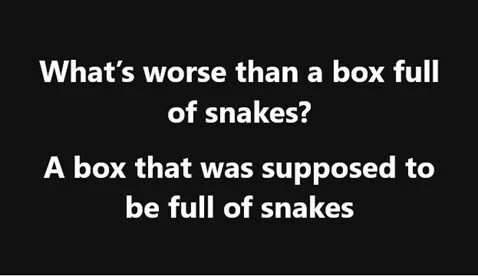
Mot: Its Not even Halloween Yet !!!!

Mot: .. What's Worse ~~~
Ariel: Iraq in the Green, Blockchain is Security and Stability
Ariel: Iraq in the Green, Blockchain is Security and Stability
9-26-2025
Iraq In The Green: Blockchain Is Security & Stability (Iran Out Of The Loop)
Ok, my people when the recent oil export deal between Iraq’s federal government and the Kurdistan Regional Government happened it marked a turning point for the country’s economy, and it’s worth unpacking what this means in straightforward terms.
Signed just days ago, the agreement restarts crude flows from Kurdish fields through the Kirkuk-Ceyhan pipeline to Turkey, pumping about 230,000 barrels per day starting tomorrow, September 27.
Ariel: Iraq in the Green, Blockchain is Security and Stability
9-26-2025
Iraq In The Green: Blockchain Is Security & Stability (Iran Out Of The Loop)
Ok, my people when the recent oil export deal between Iraq’s federal government and the Kurdistan Regional Government happened it marked a turning point for the country’s economy, and it’s worth unpacking what this means in straightforward terms.
Signed just days ago, the agreement restarts crude flows from Kurdish fields through the Kirkuk-Ceyhan pipeline to Turkey, pumping about 230,000 barrels per day starting tomorrow, September 27.
This isn’t just about oil it’s a hard-won truce after two years of shutdowns caused by legal battles and payment disputes, involving eight major international firms like ExxonMobil and Chevron.
The U.S. has already called it a win for Iraq’s sovereignty, as it funnels revenues directly into Baghdad’s coffers under the 2023-2025 budget law, potentially adding $18 billion annually to federal reserves.
Now, tie this to the banking angle you mentioned. Global banks are indeed circling Iraq more aggressively this year, with deals like the $1 billion investment pacts signed in mid-September with the World Bank’s International Finance Corporation.
These aren’t vague promises they’re targeted at modernizing Iraq’s creaky financial system, including electronic payments that kicked in for all government transactions back in June.
The Central Bank of Iraq is pushing digital infrastructure, including research into a central bank digital currency (CBDC) to replace cash and cut fraud. Which of course we are against in America.
Blockchain fits here as a tool for secure, transparent tracking of oil revenues and cross-border trades, making it tougher for neighbors like Iran to siphon funds through informal channels.
Iran’s been under SWIFT sanctions since 2012, and while there’s no confirmed “midnight disconnection” tonight that sounds like online chatter U.S. Treasury actions this summer have hammered Tehran’s shadow banking networks even harder, freezing assets tied to its Central Bank.
Iraq’s pivot to blockchain-like systems would lock out those backdoor routes, ensuring new oil money stays in Iraqi hands and bolsters economic independence.
As for the Iraqi Dinar’s exchange rate hitting Forex in a big way, let’s be direct: this deal sets the stage for stability, but don’t expect a dramatic revaluation overnight. The Dinar’s been pegged steady at around 1,310 to the dollar for months, and credible forecasts from places like Trading Economics point to it holding or even dipping slightly to 1,318 by year’s end.
The Kurdistan pact injects fresh liquidity oil makes up 90% of Iraq’s budget and could ease pressure on reserves, drawing more foreign direct investment from those global banks you noted. Some say this might nudge the CBI toward a gradual float or Forex integration by late 2025 or early 2026, especially with digital reforms aligning Iraq closer to international standards
But there is hype around a sudden “RV” (revaluation) that some view as mostly speculative noise from YouTube and forums; but of course real change comes from sustained revenue like this, not midnight announcements.
But are we in for a surprise? Because we should still look for the rate to come out at least 1:1. And wait for higher returns.
Read Full Article: https://www.patreon.com/posts/iraq-in-green-is-139831938
The 1866 Banking Collapse Nobody Knows About (But Should) | When "Too Big To Fail" Actually Failed
The 1866 Banking Collapse Nobody Knows About (But Should) | When "Too Big To Fail" Actually Failed
The Timeless Investor: 9-26-2025
The BIGGEST bank in the world collapsed in 12 hours.
Over 200 companies failed. Global markets crashed. Yet almost nobody today has heard of Black Friday 1866 - the banking disaster that created modern finance as we know it.
Overend, Gurney & Company wasn't just big. They were THE lender of last resort before central banks existed.
The 1866 Banking Collapse Nobody Knows About (But Should) | When "Too Big To Fail" Actually Failed
The Timeless Investor: 9-26-2025
The BIGGEST bank in the world collapsed in 12 hours.
Over 200 companies failed. Global markets crashed. Yet almost nobody today has heard of Black Friday 1866 - the banking disaster that created modern finance as we know it.
Overend, Gurney & Company wasn't just big. They were THE lender of last resort before central banks existed.
They were considered safer than the Bank of England itself. They'd been in business for 60 years. They had just IPO'd at 9X oversubscription. Then they collapsed in a single day.
This isn't just history - it's a WARNING. The same pattern that destroyed Overend Gurney is playing out RIGHT NOW in:
Regional banks reaching for yield Private credit funds acting like banks
Short-term debt funding long-term projects
Real estate syndicators promising liquidity on illiquid assets
Learn why Silicon Valley Bank's 12-hour collapse in 2023 was identical to Overend Gurney's fall in 1866 - and what that means for YOUR investments.
KEY TOPICS COVERED:
Shadow banking throughout history
Bank runs in the digital age Leverage + illiquid assets = death
Why boring businesses fail when they try to be exciting
The danger of "reputation lag" IPO red flags throughout history
Central banking evolution Victorian era finance
The birth of limited liability as a weapon
Seeds of Wisdom RV and Economics Updates Friday Afternoon 9-26-25
Good Afternoon Dinar Recaps,
BRICS mBridge Project: What It Is & How It Could Shift Dollar Dominance
Project mBridge signals a quietly growing infrastructure that may undercut the dollar’s power in cross-border finance, shaping the financial realignment now underway.
Good Afternoon Dinar Recaps,
BRICS mBridge Project: What It Is & How It Could Shift Dollar Dominance
Project mBridge signals a quietly growing infrastructure that may undercut the dollar’s power in cross-border finance, shaping the financial realignment now underway.
What Is Project mBridge and Its Progress
Launched in 2021, Project mBridge is a multi-central bank digital currency (CBDC) platform led by the BIS Innovation Hub, China’s Digital Currency Institute, the Central Bank of UAE, Bank of Thailand, and Hong Kong Monetary Authority; Saudi Arabia joined as full participant in June 2024. BIS, CoinDesk
As of mid-2024, the project reached its Minimum Viable Product (MVP) stage. Founding central banks have each deployed validating nodes; commercial banks are processing real-value cross-border transactions. Finance Middle East, BIS, BIS
The system uses its own blockchain (mBridge Ledger), supports wholesale CBDCs for cross-border payments, foreign exchange, and settlement with reduced reliance on intermediaries. BIS, Forbes
Key Technical & Functional Features
Real-value transactions in pilot: In 2022, commercial banks across four jurisdictions (China, Hong Kong, Thailand, UAE) conducted transactions totalling over $22 million in value, over various foreign exchange and payment operations. BIS,BIS
Governance & Legal Framework: A bespoke rulebook and legal structure has been developed to accommodate decentralized node operations, cross-jurisdiction regulation, and compliance norms. BIS
Observation & expansion: Over 30 institutions (central banks, commercial banks) are observers to mBridge. Several have expressed interest in joining or developing use cases. OMFIF, BIS, Central Banking
Risks, Uncertainties & Political Overtone
BIS’s Departure: The BIS announced in late 2024 that it would remove itself from “active participation,” not due to failure, but because it believes partner central banks are ready to carry on independently and the project has matured to that point. Reuters
Geopolitical sensitivity: Observers warn that even though BIS claims project is not designed to sidestep sanctions, its capabilities (bypassing SWIFT, enabling non-dollar settlement) make it of interest to countries seeking alternatives to Western financial hegemony. Finance Magnates, Financial Times, OMFIF
How mBridge Fits into Global Finance Restructuring
Dollar alternatives and de-dollarization: By enabling payments and settlements directly via wholesale CBDCs, mBridge helps reduce dependence on the U.S. dollar and the SWIFT network. This aligns with BRICS and other emerging economies trying to build parallel systems. Financial Times, BIS
Efficiency, cost, inclusion: Existing cross-border systems are slow, expensive, fragmented. mBridge aims to cut costs, speed up settlement, and make payments more accessible especially for countries underserved by correspondent banking. Finance Middle East, PYMNTS.com
Structural leverage: The legal, governance, and infrastructural backbone being built could become standards: which currencies, which nodes, who validates, which rules. Whoever shapes those standards gains leverage in global finance.
Why This Matters
mBridge isn’t just another fintech pilot—it represents a real shift in how cross-border value might move in the coming decade. If fully operational:
Participating countries could settle trade and finance outside of dollar dominance.
Institutions (central and commercial) would gain new infrastructure that bypasses traditional western messaging and clearing networks.
The narrative of alternatives to U.S. monetary leverage becomes more concrete, not theoretical.
This is not just politics — it’s global finance restructuring before our eyes.
@ Newshounds News™ Exclusive
Sources:
BIS: Project mBridge: connecting economies through CBDC (joint report) Bank for International Settlements
Reuters: Saudi Arabia joins BIS‐ and China-led central bank digital currency project Reuters
UAE media: CBUAE launches mBridge MVP platform for early adopters Finance Middle East
OMFIF: Central banks’ role in ring-fencing mBridge OMFIF
~~~~~~~~~
Seeds of Wisdom Team RV Currency Facts Youtube and Rumble
Newshound's News Telegram Room Link
Follow the Gold/Silver Rate COMEX
Follow Fast Facts
Seeds of Wisdom Team™ Website
Thank you Dinar Recaps
“Tidbits From TNT” Friday 9-26-2025
TNT:
Tishwash: Breakthrough Oil Export Deal in Iraqi Kurdistan: A New Dawn for Crude Flow
International oil companies in Iraqi Kurdistan have reached an agreement with Iraqi federal and Kurdish governments to resume oil exports. The framework, once signed, will allow for the export of 230,000 barrels per day through the Iraq-Turkey pipeline, suspended since March 2023. DNO and Genel Energy are yet to sign.
In a significant development, international oil companies operating in Iraqi Kurdistan have reached a preliminary deal with both the Iraqi federal and Kurdish regional governments to restart oil exports. This move comes after extensive negotiations, according to an IOC statement seen by Reuters.
TNT:
Tishwash: Breakthrough Oil Export Deal in Iraqi Kurdistan: A New Dawn for Crude Flow
International oil companies in Iraqi Kurdistan have reached an agreement with Iraqi federal and Kurdish governments to resume oil exports. The framework, once signed, will allow for the export of 230,000 barrels per day through the Iraq-Turkey pipeline, suspended since March 2023. DNO and Genel Energy are yet to sign.
In a significant development, international oil companies operating in Iraqi Kurdistan have reached a preliminary deal with both the Iraqi federal and Kurdish regional governments to restart oil exports. This move comes after extensive negotiations, according to an IOC statement seen by Reuters.
The agreed-upon framework will enable exports to resume "in the coming days" following its official signing and implementation. However, oil companies DNO and its partner Genel Energy have yet to formalize their participation, as reported by a reliable source with direct information on the matter.
The agreement, once fully executed, will facilitate the flow of approximately 230,000 barrels of crude daily through the Iraq-Turkey pipeline, a crucial artery that has been non-operational since March 2023. Efforts to reach DNO and Genel Energy for comments were not immediately successful. link
************
Tishwash: Miles Caggins: The Kurdistan Regional Government will export 230,000 barrels of oil per day.
Miles Caggins, spokesman for the Kurdistan Region's Petroleum Industry Association (APICOR), said on Thursday that today is a very important day. An agreement has been signed to resume oil exports, and the process is scheduled to begin in the next few days.
In an interview with Kurdistan 24, he added that exports are expected to begin within two or three days.
He pointed out that, according to the agreement, the Kurdistan Regional Government will export 230,000 barrels of oil per day through SOMO, while 50,000 to 60,000 barrels will be allocated for domestic consumption.
In the same context, the Kurdistan Region's Oil Industry Association (APICOR) said on Thursday that resuming oil exports from the region will contribute to strengthening global energy markets.
On the occasion of the tripartite agreement to resume exports, the association commended, in a statement, Kurdistan Regional Government Prime Minister Masrour Barzani and Federal Prime Minister Mohammed Shia al-Sudani.
APICORP emphasized that the resumption of Kurdistan Region oil exports will benefit all Iraqis and will play a role in supporting the position of global energy markets. It is expected that exports will begin within the next few days.
The Federal Ministry of Oil announced today, Thursday, an agreement stipulating the commencement of pumping and delivering all crude oil produced from the Kurdistan Region's fields, except for the quantities allocated for domestic consumption, to the State Oil Marketing Organization (SOMO), which will export it via the Iraq-Turkey pipeline via the Turkish port of Ceyhan.
The ministry indicated that the agreement was concluded in accordance with the approved legal procedures, the constitution, the provisions of the Federal General Budget Law, and Federal Court decisions.
The Ministry reiterated its unwavering commitment to managing oil resources in accordance with the principles of national sovereignty and the country's supreme interest, ensuring a fair distribution of wealth among all Iraqis, in accordance with the constitution. link
************
Tishwash: Vietnamese, Iraqi Presidents hail development of bilateral ties
President Cường affirmed that Việt Nam always treasures and wishes to strengthen multifaceted cooperation with Iraq, particularly in the areas of economy, trade, culture, tourism, and people-to-people exchanges.
Vietnamese President Lương Cường and his Iraqi counterpart Abdul Latif Rashid praised the progress of their countries’ long-standing friendship during a meeting in New York on the morning of Wednesday (local time).
The event took place on the sidelines of the High-Level General Debate of the 80th Session of the United Nations General Assembly and bilateral activities in the US.
President Cường affirmed that Việt Nam always treasures and wishes to strengthen multifaceted cooperation with Iraq, particularly in the areas of economy, trade, culture, tourism, and people-to-people exchanges.
He proposed increasing delegation exchanges, especially business missions, to explore cooperation opportunities in potential sectors and boost access to the Halal market.
He also expressed his hope that Iraq will create favourable conditions for Vietnamese enterprises to invest in areas aligned with Iraq’s reconstruction needs.
For his part, the Iraqi leader expressed admiration for Việt Nam’s achievements in national development, stressing that Iraq views Việt Nam as an important partner and wishes to advance cooperation in economy, trade, investment, water management, agriculture, and infrastructure development serving its reconstruction.
Both sides agreed to further improve the effectiveness of existing bilateral cooperation mechanisms, and consider the establishment of new ones and the signing of agreements in potential sectors.
On this occasion, the two leaders also consented to step up cooperation and mutual support at multilateral forums.
President Cường extended an invitation to President Abdul Latif Rashid to visit Việt Nam and attend the signing ceremony of the United Nations Convention against Cybercrime in Hà Nội next month. link
************
Mot: Now Ya Knows -- WHY!!!! ~~~~

Mot: . Give it a Try!!! -- It Might Work fer YOU Too!!!!

Seeds of Wisdom RV and Economics Updates Friday Morning 9-26-25
Good morning Dinar Recaps,
Trump Draws Line: No West Bank Annexation for Israel
Trump’s rejection of annexation signals both geopolitical pressure and financial recalibration, tying peace to the foundations of global restructuring.
Trump’s Firm Declaration
U.S. President Donald Trump delivered a clear message on September 25, 2025: he would not permit Israel to annex the West Bank, defying the demands of far-right members of Israeli Prime Minister Benjamin Netanyahu’s coalition.
Good Morning Dinar Recaps,
Trump Draws Line: No West Bank Annexation for Israel
Trump’s rejection of annexation signals both geopolitical pressure and financial recalibration, tying peace to the foundations of global restructuring.
Trump’s Firm Declaration
U.S. President Donald Trump delivered a clear message on September 25, 2025: he would not permit Israel to annex the West Bank, defying the demands of far-right members of Israeli Prime Minister Benjamin Netanyahu’s coalition.
“Not going to happen” — From the Oval Office, Trump stated: “I will not allow Israel to annex the West Bank. Nope, I will not allow it. It’s not going to happen.” [Reuters]
“Time to stop now” — He added: “There’s been enough. It’s time to stop now.”
This puts Trump directly at odds with Netanyahu’s coalition, where annexation has become a rallying cry — especially following recent moves by France and other Western countries to recognize a Palestinian state [NYT].
Context and Regional Pressure
Arab leaders’ influence: Trump’s declaration followed private assurances he made to Arab and Muslim leaders on the sidelines of the United Nations General Assembly. Officials reportedly warned that annexation would jeopardize regional stability and block future integration with Israel [Politico].
International Court of Justice: In July 2024, the ICJ ruled Israeli settlements in the West Bank illegal, increasing global legal and diplomatic pressure on Israel.
U.S. leverage: As Israel’s closest ally, the U.S. remains one of the only nations with real leverage to block annexation. Observers question, however, whether Trump’s stance will remain firm [Al Jazeera].
Strategic Calculations
Netanyahu’s bind: Netanyahu must balance between his far-right coalition partners demanding annexation and the U.S. position that firmly blocks it.
Trump’s peace agenda: This statement aligns with Trump’s push for a 21-point regional peace plan to end the war in Gaza and establish a framework for postwar governance.
Signal to financial reset watchers: Just as Jim Pugh recently noted in reset discussions — peace is the “long pole in the tent” before financial restructuring can move forward — Trump’s rejection of annexation is not just political. It is about creating the geopolitical stability required for economic and monetary realignment.
Why This Matters
Trump’s decision highlights how geopolitics and financial restructuring are inseparably linked:
Peace as a prerequisite: Blocking annexation is part of ensuring the region moves toward peace treaties — which reset analysts say are essential before any global monetary reset can proceed.
Regional integration = trade flows: If Israel can stabilize ties with Arab neighbors, trade, investment, and resource allocation in the Middle East become more predictable — a necessary step for capital flows in a tokenized, asset-backed system.
Dollar leverage at work: The U.S. is using political influence to maintain its strategic foothold in the Middle East, reinforcing the dollar’s role as tokenization and stablecoin regulation advance globally.
“This is not just politics — it’s global finance restructuring before our eyes.”
@ Newshounds News™ Exclusive
Source: Reuters, New York Times, Politico, Al Jazeera
~~~~~~~~~
Trump–Erdogan Talks: Turkey at the Center of Sanctions, Oil, and Global Realignment
The White House meeting underscored how U.S.–Turkey relations intersect energy security, defense sales, and the financial restructuring now reshaping global power.
Sanctions Relief and F-35s Back on the Table
President Donald Trump and Turkish President Recep Tayyip Erdogan met in Washington on September 25, 2025, marking Erdogan’s first White House visit in six years. Trump suggested he may lift U.S. sanctions on Turkey “almost immediately” if Ankara halts Russian oil purchases, paving the way for Turkey’s potential re-entry into the F-35 fighter jet program. Reuters
The move represents a sharp reversal of earlier policy, where Turkey was expelled in 2019 after acquiring Russian S-400 missile systems. Erdogan framed the meeting as “conclusive,” while Trump indicated that Ankara could soon access advanced U.S. defense hardware once again. Politics Today
Russian Oil Purchases at the Core
At the heart of the talks was Turkey’s role as one of the largest buyers of Russian energy. Trump pressed Erdogan to cut these imports, presenting it as a way to undermine Moscow’s war financing while simultaneously strengthening U.S.–Turkey ties.
Although Turkey recently inked a 20-year LNG deal with U.S. supplier Mercuria, it remains heavily reliant on Russian oil and gas. Erdogan’s willingness to diversify reflects the strategic balancing act between East and West. Atlantic Council
Middle East, Syria, and Gaza as Leverage Points
Beyond oil and defense, Trump and Erdogan also discussed conflicts in Syria and Gaza, with Trump signaling that Erdogan could serve as an intermediary in Ukraine peace efforts. Both leaders emphasized their renewed alignment on Syria, reversing tensions from earlier years. Brookings
Why This Matters: Energy and Finance Intertwined
Turkey’s position illustrates how geopolitical bargaining over oil, arms, and sanctions is directly shaping the global financial restructuring. Ankara’s choices ripple through:
Dollar hegemony – Will Turkey pivot toward U.S. LNG and defense deals, reinforcing Washington’s influence?
BRICS alternatives – Or will Turkey hedge by maintaining Russian oil ties, deepening its energy and trade links with Eurasian powers?
This episode highlights the fragility of U.S. dominance and how energy flows, sanctions relief, and military sales are becoming financial levers in the global order.
This is not just politics — it’s global finance restructuring before our eyes.
@ Newshounds News™ Exclusive
Sources: Reuters, Atlantic Council, Brookings, Politics Today, U.S. News
~~~~~~~~~
Trump and Pakistan: A Strategic Reset at the Edge of Energy and Finance
Trump’s outreach to Islamabad signals a deeper recalibration: holding Pakistan in the balance between dollar-based alliances and emerging non-Western financial orders.
Sharif’s White House Visit and U.S.–Pakistan Rapprochement
President Donald Trump hosted Pakistani Prime Minister Shehbaz Sharif at the White House on September 25, 2025, marking a thaw in U.S.–Pakistan relations. The meeting underscored Washington’s renewed interest in Pakistan’s strategic value. AP News, Reuters
Sharif used the visit to pitch American investment in key sectors—energy, agriculture, tech, and mining—inviting U.S. firms to tap Pakistan’s untapped potential. Reuters, The Indian Express
Energy Deals & Export Leverage
A major opportunity lies in energy and resource diplomacy. Islamabad has long relied on oil imports and external financing, making it vulnerable to leverage.
Pakistan struck a landmark trade deal with the U.S. in July 2025 to develop its oil reserves and reduce tariffs, aligning Islamabad more closely with U.S. energy interests. AP News
During his visit, Sharif emphasized both energy and mining as pillars for renewed U.S.-led investment. AP News, Al Jazeera, Indiatimes
Crucially, on September 8, Islamabad signed memoranda of understanding (MoUs) with a U.S.-based firm to develop critical minerals and rare earth elements, framed as strategic assets for both parties. Al Jazeera
These steps suggest Pakistan is repositioning itself from being a resource consumer to a supplier in the U.S.-influenced global resource network—altering the flow of capital, energy, and leverage.
Defense, Security & Regional Mediation
The Trump–Sharif meeting also addressed security cooperation and regional mediation:
They discussed counterterrorism and security alignment, reinforcing Pakistan’s role as a regional partner. AP News
Sharif praised Trump’s mediation during recent India–Pakistan tensions and invited the U.S. to play a bigger diplomatic role in South Asia. AP News, AP News
Importantly, Pakistan may leverage its strategic weight in the Middle East and South Asia, offering Turkey-like potential as a mediator in Gaza, Syria, and the Indo-Pacific.
This engagement signals a shift: diplomatic influence is being balanced with resource and financial alignment, not just military dependence.
Between Dollar and De-Dollarization
Where Pakistan sets itself in this moment may determine its financial trajectory:
If Islamabad doubles down on U.S. energy, defense, and resource deals, it re-enters the dollar-aligned orbit with renewed leverage from Washington.
But the push to develop critical minerals and rare earths hints at an alternate path: integrate into non-dollar, resource-backed networks leveraged by China, Russia, or BRICS actors.
Pakistan’s pivot can influence whether it becomes a node in the new financial infrastructure emerging outside U.S. hegemony.
This choice is not just economic—it is deeply financial.
Why This Matters
The Trump–Pakistan meeting is more than diplomacy. It is a move in an evolving global chessboard where energy, security, and finance intertwine. Islamabad’s alignment might tip the balance between:
Reinforcing U.S.-led global financial structures
Or accelerating a transition toward a multipolar, resource-backed order
This is not just politics — it’s global finance restructuring before our eyes.
@ Newshounds News™ Exclusive
Sources: Reuters, AP News, Al Jazeera, Wikipedia, Indiatimes
~~~~~~~~~
CFTC Moves to Allow Stablecoins as Collateral in U.S. Derivatives Markets
With the CFTC embracing stablecoins and tokenized collateral, U.S. policy is shifting toward integrating crypto into core financial plumbing, reshaping how value is stored, settled, and regulated globally.
The Initiative: What’s Changing
The CFTC has officially launched an initiative to allow tokenized collateral (including stablecoins like USDC and Tether) for derivatives trading. CFTC
Acting Chair Caroline Pham invited public feedback, with comments open until October 20, 2025. CFTC
This builds on prior CFTC efforts—the Crypto CEO Forum, the Global Markets Advisory Committee’s (GMAC) Digital Asset Markets Subcommittee, and the President’s Working Group on Digital Asset Markets recommendations. CFTC, Cointelegraph
Key Elements & Stakeholder Reactions
Under the proposal, stablecoins and tokenized assets could be treated similarly to cash or U.S. Treasuries when used as collateral. Cointelegraph
Industry players — including Circle, Coinbase, Ripple, Crypto.com — praised the move. They argue that stablecoin collateral will lower costs, reduce risk, and unlock liquidity in derivative markets. Cointelegraph
The push complements recently passed legislation (GENIUS Act) which regulates stablecoins and lays groundwork for their broader use in regulated financial systems. Cointelegraph
Implications:How This Fits Into Global Finance Restructuring
Efficiency & Capital Utilization — Allowing stablecoins as collateral means firms and market participants can use digital assets to free up liquidity. This could redefine margin practices, reduce friction, and shift how capital is allocated internationally.
Regulatory Recognition of Crypto’s Role — The CFTC’s move signals that stablecoins are not seen merely as speculative assets but now as infrastructural elements of finance. This adds legitimacy and encourages cross-border usage in trade, clearing, and settlement.
Competition with Alternative Financial Systems — As BRICS and other nations build out non-dollar, commodity-backed, or gold-backed systems, U.S. acceptance of tokenized collateral strengthens the dollar/crypto hybrid model. It’s part of the tug-of-war over who sets standards for global finance.
Risk & Oversight Challenges — With greater integration comes greater risk exposure: valuation, reserve backing, custody, settlement, governance of these stablecoins must be regulated tightly. Otherwise, financial stability could be compromised.
Why This Matters
This initiative by the CFTC isn’t just technical policy—it reflects a turning point. The financial order is evolving: derivatives markets may soon operate on rails that accept digital collateral; stablecoins may serve core functions in financial infrastructure; regulation is catching up to innovation.
This is not just politics — it’s global finance restructuring before our eyes.
@ Newshounds News™ Exclusive
Sources: CFTC, CoinDesk, Cointelegraph, pymnts.com
~~~~~~~~~
Seeds of Wisdom Team RV Currency Facts Youtube and Rumble
Newshound's News Telegram Room Link
Follow the Gold/Silver Rate COMEX
Follow Fast Facts
Seeds of Wisdom Team™ Website
Thank you Dinar Recaps
It’s Like Buying Gold For $1,000 An Ounce
It’s Like Buying Gold For $1,000 An Ounce
Notes From the Field By James Hickman (Simon Black) September 25, 2025
Gold just hit another all-time high this week, briefly touching $3,800 per ounce... which means it has more than doubled in the last two years.
When any asset continues hitting all-time highs, most people who haven’t bought it yet naturally believe that they missed out... or that they should wait for a pullback.
Of course, many people believed that when gold hit $2,400 in spring of 2024... and then $2,800 early this year... and $3,400 in April.
It’s Like Buying Gold For $1,000 An Ounce
Notes From the Field By James Hickman (Simon Black) September 25, 2025
Gold just hit another all-time high this week, briefly touching $3,800 per ounce... which means it has more than doubled in the last two years.
When any asset continues hitting all-time highs, most people who haven’t bought it yet naturally believe that they missed out... or that they should wait for a pullback.
Of course, many people believed that when gold hit $2,400 in spring of 2024... and then $2,800 early this year... and $3,400 in April.
As gold has continued its rise, however, we continued to suggest that this is still early days... and that the gold price could continue to surge much, much higher.
It’s not hard to understand why.
Foreign governments and central banks around the world are rapidly losing confidence in the US government... and by extension, in the US dollar.
The national debt is $37.5 trillion and rising. Deficits total $2 trillion each year, and there seems to be no appetite to cut spending. Worst of all, Congress can’t even manage to pass a budget... risking yet another government shutdown at the end of this month.
If that weren’t bad enough, the US federal government has also gotten in the habit of freezing assets of any foreign country that it doesn’t like.
At the moment, those same foreign governments (and foreign central banks) hold trillions worth of US dollar assets. So naturally any sensible foreign official is thinking about diversifying away from the US, and from the US dollar.
Unfortunately there simply aren’t too many options. No one trusts the Chinese Communist Party, so the yuan is out. Europe is its own economic basket case, so euro-denominated assets and European government bonds are not much better.
Out of the universe of options available, gold is one of the few assets that can solve this problem for foreign governments and central banks.
Gold isn’t controlled by any single government. No one can freeze them out of their gold or confiscate their holdings. Gold will hold its value against inflation. And the gold market is large enough that sovereign nations can purchase hundreds of billions of dollars worth.
This is why gold is at an all-time high: foreign governments and central banks have been buying it by the metric ton. And that extreme gold demand has pushed prices higher and higher.
We have been talking about this for 2+ years, since gold was below $2,000. And throughout gold’s rise, we kept saying that this trend will continue, i.e. foreign governments and central banks will buy more.
We still believe this is true, especially if you have a longer-term view over the next few years.
But we also presented an alternative to gold.
We wrote that the main demand driver for gold was from central banks. But central banks only buy physical gold. They do not buy gold stocks.
And we pointed out that while gold was at all time highs, the share prices of companies producing the gold were ridiculously low.
In January, for example, one gold company we follow was trading at roughly 1x forward earnings.
And we practically screamed from the rooftops that this opportunity would not last— people would realize how undervalued these businesses were, while their revenue was literally denominated in gold at all time high prices.
Well, the gold companies’ earnings reports starting rolling in this year, and the market saw just how much money these companies were making.
Investors finally woke up. And by April, that same gold company had doubled its January share price— but was still only trading at about 2x earnings.
Gold kept ripping higher, and so did this company’s profits— after all, the cost to mine gold didn’t increase, and this company was still pulling it out of the ground for about $1,000 an ounce.
So its profit margin went from $800 per ounce two years ago, to over $2,500 per ounce today.
Production costs have been flat. But their revenue per ounce has soared, up 50% this year alone.
Now, it’s share price has doubled again— 4x higher than in January.
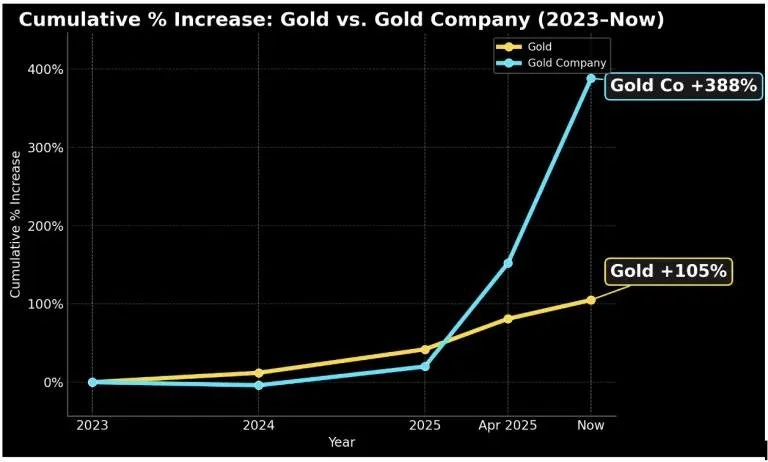
And next month it will release Q3 results, a period it could sell gold as high as $3,700 per ounce. Its profits could be simply ridiculous.
Here’s the crazy part: even though the share price has quadrupled this year, the company is making so much money that it is STILL only trading for 2x earnings.
Which is why we think, despite already multiplying by four this year, the share price is poised for even higher growth once Q3 earnings are released in a few weeks.
In other words, gold companies are STILL cheap compared to gold, and offer leverage beyond physical gold.
If you own shares in a company that can produce gold at $1,000 per ounce, in a way its like buying gold at $1,000 per ounce. And that’s a pretty fantastic deal these days.
Right now it’s still possible to buy into these gold companies at cheap valuations, delivering gains that could far outpace gold.
So we really want to encourage you to check out our premium investment research— it’s called The 4th Pillar, where we feature these undervalued gold companies... along with other real asset businesses ranging from silver to platinum to oil to industrial metals to agriculture.
Many of our picks are up 2-4x just this year alone, and based on our analysis, we think there’s scope for them to go much higher over the next few months based on Q3 earnings (which will be released in a few weeks).
We’re offering a limited time promotional discount to The 4th Pillar, along with our iron-clad money back guarantee. So definitely take a few minutes to learn more about it and consider joining.
To your freedom, James Hickman Co-Founder, Schiff Sovereign LLC
Debt Fiat System Is In Collapse As Gold Races Higher | Francis Hunt
Debt Fiat System Is In Collapse As Gold Races Higher | Francis Hunt
Liberty and Finance: 9-24-2025
Francis Hunt joins Liberty and Finance to share his latest outlook on gold and silver.
He explains that while both metals remain in a powerful long-term bull market, traders should expect a short-term pause after gold hit his key target near $3,769 and silver broke through the crucial $44 level.
Debt Fiat System Is In Collapse As Gold Races Higher | Francis Hunt
Liberty and Finance: 9-24-2025
Francis Hunt joins Liberty and Finance to share his latest outlook on gold and silver.
He explains that while both metals remain in a powerful long-term bull market, traders should expect a short-term pause after gold hit his key target near $3,769 and silver broke through the crucial $44 level.
Hunt highlights a massive cup-and-handle breakout in silver, projecting a long-term target of $330, though near-term pullbacks are possible.
He also warns that the global financial system is collapsing under debt and fiat debasement, with the dollar showing signs of temporary strength.
Ultimately, he stresses stacking physical metals while being prepared for a darker reset involving CBDCs and loss of freedoms.
INTERVIEW TIMELINE:
0:00 Intro
1:18 Gold & DXY
10:00 Silver
15:45 Debt crisis
25:00 Government control over currency
Seeds of Wisdom RV and Economics Updates Thursday Afternoon 9-25-25
Good Afternoon Dinar Recaps,
Pakistan and Vietnam Push Toward Preferential Trade Agreement
Islamabad and Hanoi are strengthening ties with a planned Preferential Trade Agreement (PTA) that could lift bilateral trade from under $1 billion to a $5 billion target.
Deepening Bilateral Relations
Pakistan and Vietnam have shared friendly diplomatic and trade ties since 1972, but relations have accelerated since the 2000s under Pakistan’s Vision East Asia strategy.
Good Afternoon Dinar Recaps,
Pakistan and Vietnam Push Toward Preferential Trade Agreement
Islamabad and Hanoi are strengthening ties with a planned Preferential Trade Agreement (PTA) that could lift bilateral trade from under $1 billion to a $5 billion target.
Deepening Bilateral Relations
Pakistan and Vietnam have shared friendly diplomatic and trade ties since 1972, but relations have accelerated since the 2000s under Pakistan’s Vision East Asia strategy.
Pakistan reopened its embassy in Hanoi in 2000; Vietnam followed with embassies and trade offices in Pakistan by 2005.
Leaders from both nations have exchanged visits, underscoring growing political and economic alignment.
Today, both countries are focused on expanding trade, investment, and security cooperation.
Vietnamese Ambassador Pham Anh Tuan recently emphasized at the Lahore Chamber of Commerce and Industry:
“Vietnam has the strong will to expand bilateral trade and ensure all possible support.”
Trade Potential and Strategic Leverage
Bilateral trade stood at $850 million in 2024 and is expected to cross $1 billion this year. But with the PTA, both sides aim for $5 billion in trade flows — a massive leap.
Pakistan’s exports: textiles, raw cotton, pharmaceuticals, leather, corn, and agricultural goods.
Vietnam’s exports: electronics, man-made filaments, coffee, tea, and spices.
Pakistan’s Special Investment Facilitation Council (SIFC) is pushing to attract foreign investors, while Vietnam is inviting Pakistani capital in manufacturing and technology.
Trump’s tariffs have reshaped global trade, and both Pakistan and Vietnam are leveraging U.S. protectionism to diversify partners and strengthen their resilience.
Mutual Advantages and Shared Growth
The PTA will help both nations address structural economic challenges while building synergies.
Pakistan brings low-cost labor, natural resources, and a growing export base.
Vietnam offers industrial expertise, rapid manufacturing, and global market access.
Cooperation ensures mutual gains while reducing over-reliance on Western markets.
This expansion is framed not as an alliance against others, but as a peaceful strategy to raise living standards, reduce poverty, and stabilize regional economies.
Why This Matters
The Pakistan–Vietnam PTA reflects the larger multipolar trend in global trade, where nations are building parallel economic frameworks outside U.S.-dominated supply chains.
For Pakistan, this is part of its “Vision East Asia” pivot — deepening links with ASEAN economies.
For Vietnam, the PTA represents diversification after U.S. tariffs destabilized export routes.
Together, both countries are embedding themselves into a BRICS–ASEAN economic corridor, connecting South Asia and Southeast Asia in ways that bypass traditional Western-controlled trade hubs.
This is not just politics — it’s global finance restructuring before our eyes.
@ Newshounds News™
Source: Modern Diplomacy
~~~~~~~~~
BRICS Startup Summit Links Russia and China for Global Growth
The Moscow summit from October 1–2 connects BRICS startups with over 600 investors, strengthening cross-border tech and financial networks between Russia and China.
Chinese Market Access for Russian Startups
Russia’s startups are gaining direct entry into China’s vast technology and investment markets, with AI and robotics emerging as key focus areas.
China is offering over $20 billion in subsidies for robotics and AI in 2024.
Russian startups can now tap into these funds and scale across one of the world’s largest consumer markets.
China consistently ranks third globally for venture capital, alongside the U.S. and U.K.
As Sberbank’s Alexander Vedyakhin explained:
“China is undoubtedly a very attractive market for startups, bringing them unique opportunities for scaling and developing tech businesses.”
Venture Capital Recovery Boosts BRICS
The global VC market has stabilized after pandemic shocks, creating a more supportive environment for BRICS startups.
VC funding peaked at $643 billion in 2021, halved in 2023, but recovered to $330 billion in 2024.
Early 2025 showed 25% year-on-year growth, with AI as the dominant investment category.
Nearly one-third of all VC funding in 2024 flowed into AI startups, with sectoral investment up 80%.
This trend reinforces BRICS’ focus on tech multipolarity, where capital flows matter as much as deal volumes.
AI and Innovation Lead the Agenda
The Moscow summit places generative AI at the center, aligning Russian innovation with China’s state-backed industrial strategy.
Over 150 speakers and a dedicated tech exhibition highlight both startup and corporate solutions.
AI-focused startups will receive pilot project proposals and cross-border investment offers.
Sberbank’s Sber500 accelerator program already reflects this pivot: 13% of its startups chose China for overseas expansion.
Vedyakhin summed up the momentum:
“Our agenda includes tangible mechanisms — startups will receive pilot project proposals and investment offers; corporations and investors will connect with promising projects.”
Why This Matters
This summit is about more than startup growth — it is BRICS building an alternative tech-finance axis outside of Western capital markets.
By combining Russia’s innovation base with China’s capital and subsidies, BRICS strengthens its position in both technology and finance.
Venture capital recovery and state-backed AI funding mean BRICS can divert global capital flows into their own innovation ecosystems.
The event highlights the multipolar shift, where startups and financial networks are no longer dependent on Silicon Valley or Western venture firms.
This is not just politics — it’s global finance restructuring before our eyes.
@ Newshounds News™
Source: Watcher.Guru
~~~~~~~~~
Seeds of Wisdom Team RV Currency Facts Youtube and Rumble
Newshound's News Telegram Room Link
Follow the Gold/Silver Rate COMEX
Follow Fast Facts
Seeds of Wisdom Team™ Website
Thank you Dinar Recaps
News, Rumors and Opinions Thursday 9-25-2025
KTFA
Clare: The President of the Republic meets his American counterpart on the sidelines of the United Nations General Assembly.
9/24/2025 Baghdad –
President Abdul Latif Jamal Rashid met with his US counterpart Donald Trump on Wednesday on the sidelines of the UN General Assembly in New York.
The Presidency's media department said in a statement received by the Iraqi News Agency (INA), "President Abdul Latif Jamal Rashid met with US President Donald Trump on the sidelines of the UN General Assembly in New York."
KTFA
Clare: The President of the Republic meets his American counterpart on the sidelines of the United Nations General Assembly.
9/24/2025 Baghdad –
President Abdul Latif Jamal Rashid met with his US counterpart Donald Trump on Wednesday on the sidelines of the UN General Assembly in New York.
The Presidency's media department said in a statement received by the Iraqi News Agency (INA), "President Abdul Latif Jamal Rashid met with US President Donald Trump on the sidelines of the UN General Assembly in New York." LINK
************
Clare: The President of the Republic receives an invitation to visit Vietnam.
9/24/2025 Baghdad –
President Abdul Latif Jamal Rashid received an official invitation from President of the Socialist Republic of Vietnam Luong Quong to visit Vietnam.
The media office of the President of the Republic stated in a statement received by the Iraqi News Agency (INA), that "President of the Republic, Abdul Latif Jamal Rashid, received at his residence in New York, the President of the Socialist Republic of Vietnam, Luong Quong."
According to the statement, the President of the Republic stressed "the importance of strengthening bilateral relations between the two countries, and expanding the scope of cooperation in various fields, especially agriculture, in a way that achieves the mutual interests of the two friendly peoples," pointing to "the historical relations between Iraq and Vietnam and the importance of investing in them to achieve the aspirations of the two countries for development and progress."
The President added, "The world is witnessing complex situations that require coordination and joint action to achieve international peace and security."
For his part, the Vietnamese President extended an invitation to the President of the Republic to visit Vietnam, and the President expressed his appreciation for this generous invitation.
President Leung also expressed his country's aspiration to strengthen joint cooperation with Iraq in various fields, and the need for international action to end wars and conflicts and build cooperative relations that serve the peoples of the world.
The meeting was attended by Deputy Prime Minister of the Kurdistan Region, Qubad Talabani, National Security Advisor, Qasim al-Araji, Chief of Staff of the Presidency, Kamil al-Dulaimi, and from the Vietnamese side, Minister of Industry and Trade, Nguyen Hong Dinh, in addition to a number of Iraqi and Vietnamese officials. LINK
************
Clare: On behalf of the Group of 77 and China, the Iraqi president calls for reforming the global financial system.
9/24/2025
Iraqi President Abdul Latif Jamal Rashid called on Wednesday evening for enhanced cooperation between multilateral institutions and all countries, in a spirit of solidarity and inclusiveness, to implement the 2030 Agenda and build a more just and resilient international financial system.
This came during his participation in the first bilateral summit on a sustainable, inclusive, and resilient global economy: implementing commitments related to financing the Sustainable Development Goals.
Rashid delivered a speech on behalf of the Group of 77 and China, currently chaired by Iraq, as part of his participation in the 80th session of the United Nations General Assembly, held in New York.
The Presidency of the Republic stated in a statement received by Shafaq News Agency that Rashid indicated in his speech that this summit is an important platform for promoting democracy in global economic governance and accelerating the implementation of commitments related to development financing.
Rashid highlighted the G77's assertion that global economic governance remains limited in its influence, with developing countries bearing the brunt of debt pressures, capital outflows, and declining aid flows.
He also stressed the need for this summit to galvanize collective will to ensure the mobilization of resources and their allocation towards achieving sustainable development.
The President concluded his speech by calling on the group to strengthen cooperation between multilateral institutions and all countries, in a spirit of solidarity and inclusiveness, to implement the 2030 Agenda and build a more just and resilient international financial system. LINK
************
Courtesy of Dinar Guru: https://www.dinarguru.com/
Walkingstick Capitalization is what Iraq is seeking. It's going down against the dollar. That is the goal in order to add purchasing power to the Iraqi dinar. Remember when the time comes for a new exchange rate it's a simple flip of the switch because it is now digital.
Frank26 Question "Once the three zeros are dropped will their currency be at $1.14?" It would be at a dollar but there's talk it may come out at the float just a little over a dollar because they're not going to be pegged to the American dollar.
Militia Man Interconnectivity...I believe it's going to be digitally done and I think it's going to be done with new technologies. I also think it's going to be done with a new exchange rate...fundamentally supported by a real effective exchange rate that's based off real fundamentals of the country.
************
The IQD is NOT the First Revalue Currency w Overnight Expectations
Edu Matrix: 9-25-2025
*What History Teaches Us About Currency Revaluation*
Have you ever wondered if the Iraqi dinar (IQD) could one day revalue?
History has shown us that currencies can change overnight — but only under the right conditions.
In this video, we explore the most famous examples of currency revaluations and resets, and what they teach us about the future of the IQD.
*Here’s what we cover:*
The Kuwait dinar revaluation after the Gulf War
Germany’s Deutsche Mark reset after World War II
Zimbabwe’s currency collapse and what went wrong
China’s gradual revaluation of the yuan
What these lessons mean for Iraq and IQD investors today